
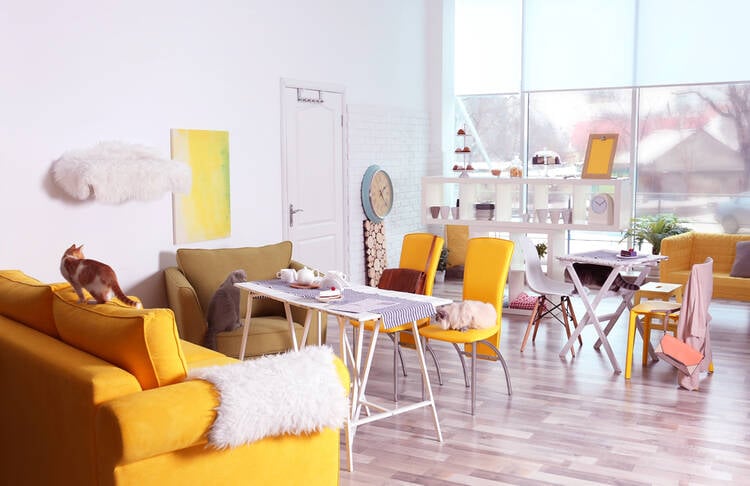
Cat cafés are known to offer a calming blend of comfort, companionship, and cozy café culture, where customers can relax while interacting with friendly cats.
This is why interior designs for any cat café should be considered a top priority.
The reason for this is not far-fetched – cats and guests alike need a safe, stress-free, and hygienic environment that encourages relaxation, play, and social connection without feeling overcrowded or chaotic.

In this article, we are going to look at some of the best cat café interior design ideas, along with practical interior layout and floor plan tips.
From zoning spaces for cats and humans to furniture placement, lighting, airflow, and traffic flow, these ideas will help you create a welcoming space that keeps both visitors and cats happy.
Best Cat Cafe Interior Design Ideas
-
Zoned Layout for Cats and Guests
A well-zoned layout is essential in a cat café to balance comfort, hygiene, and safety. Designate clear zones for dining, cat play, resting, and staff operations.
From a floor plan perspective, separate food preparation areas from cat zones using glass partitions or enclosed doors to meet health regulations.
Guest seating should flow naturally around cat-friendly spaces without forcing interaction.
Zoning reduces stress for cats, improves traffic flow, and allows customers to enjoy cats at their own pace, resulting in a calmer and more enjoyable café experience.
-
Cat-Friendly Vertical Spaces
Cats love vertical movement, so incorporating climbing shelves, wall perches, and cat trees is both functional and visually appealing.
From a layout standpoint, install vertical elements along walls to keep floor space open for guests. Ensure climbing structures do not block walkways or emergency exits.
Vertical design reduces crowding, gives cats a sense of control, and minimizes stress caused by constant human interaction.
This approach also enhances the interior aesthetic, making the café feel playful and engaging without compromising comfort or safety.
-
Open and Airy Floor Plan
An open floor plan helps maintain visibility, airflow, and cleanliness in a cat café.
Avoid heavy walls and instead use glass panels or low dividers to define areas.
Open designs prevent cats from feeling trapped and allow staff to monitor both guests and animals easily.
High ceilings, large windows, and neutral colors make the space feel larger and more inviting.
An airy layout also reduces odor buildup and improves ventilation, creating a healthier environment for both cats and customers.
-
Cozy, Cat-Safe Seating Areas
Comfortable seating encourages guests to stay longer, but furniture must be cat-safe and durable.
Choose scratch-resistant upholstery and rounded edges. Space seating far enough apart to allow cats to move freely between tables.
Incorporate a mix of sofas, chairs, and floor seating to suit different preferences.
Cozy seating paired with thoughtful spacing creates a welcoming atmosphere that supports relaxation and positive cat-human interactions.
-
Natural Lighting With Soft Ambience
Natural light enhances mood and makes cats feel more relaxed and alert. Design the floor plan to maximize window exposure while preventing direct glare on seating areas.
Use sheer curtains or UV-filtering glass for comfort and safety. Complement natural light with warm, soft artificial lighting to maintain a cozy ambiance during evenings.
A well-lit yet gentle lighting design improves the café’s atmosphere, encourages social media photos, and supports cats’ natural rhythms.
-
Dedicated Cat Rest and Retreat Zones
Cats need quiet spaces to retreat when overstimulated. Include dedicated rest zones such as enclosed cubbies, nap shelves, or hidden rooms.
Place these areas away from high-traffic paths and noisy equipment. Use signage to discourage guest interaction in these zones.
Providing retreat spaces helps reduce stress, improve cat well-being, and prevent behavioral issues.
When cats feel secure and rested, they are more likely to interact positively with guests, enhancing the overall café experience.
-
Easy-to-Clean Flooring and Surfaces
Hygiene is critical in a cat café, making material choice a top design priority.
Opt for non-slip, scratch-resistant, and waterproof flooring such as sealed concrete or vinyl.
From a floor plan standpoint, avoid tight corners where dirt and fur can accumulate. Use washable wall finishes and furniture covers.
Easy-to-clean layouts reduce maintenance time, ensure compliance with health regulations, and keep the café fresh and inviting. Clean environments also build customer trust and encourage repeat visits.
-
Smooth Traffic Flow Design
A thoughtful traffic flow prevents congestion and reduces stress for cats. Design clear entry and exit points, wide walkways, and logical seating arrangements.
From the floor plan stage, ensure staff paths do not cross cat resting zones frequently. Avoid placing food pickup counters near litter areas or play zones.
Smooth traffic flow improves safety, enhances guest comfort, and allows cats to roam freely without disruption.
-
Cat-Themed but Minimalist Décor
Cat-themed décor adds personality, but excessive decoration can overwhelm the space.
Use wall art, subtle murals, or themed color palettes instead of cluttered ornaments. Keep décor off the floor to maintain open movement.
Minimalist design reduces visual stress for cats and keeps the café looking clean and modern.
A balanced theme strengthens branding while ensuring the space remains calm, functional, and visually appealing to both cat lovers and first-time visitors.
-
Staff Visibility and Monitoring Layout
Staff should be able to observe both cats and guests at all times. Design the floor plan so service counters and staff stations have clear sightlines across the café. Avoid blind corners and overly enclosed rooms.
This layout allows staff to monitor cat behavior, enforce rules gently, and assist guests promptly. Good visibility improves safety, animal welfare, and customer service.
A well-monitored environment creates trust and ensures a smooth, enjoyable experience for everyone involved.
-
Separate Entry and Sanitization Area
A dedicated entry and sanitization area sets the tone for hygiene and safety.
Design a small foyer where guests can wash or sanitize their hands before entering the cat zone.
This area should act as a buffer between the outside and the main café space.
This layout protects the cats’ health, reassures customers, and supports compliance with local health regulations without disrupting the café’s relaxed atmosphere.
-
Cat-Friendly Furniture Integration
Furniture that doubles as cat enrichment is both practical and space-saving.
Incorporate benches with built-in hideouts, tables with cat tunnels underneath, or shelves that connect seating areas.
Place multifunctional furniture along walls or corners to keep walkways clear.
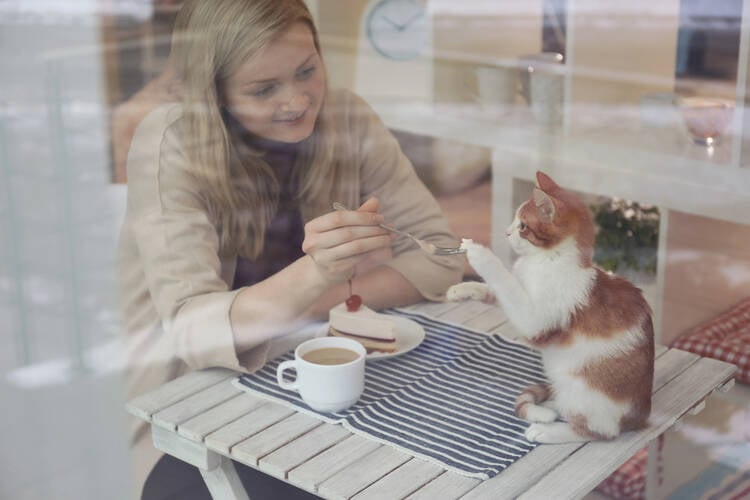
This design encourages natural interaction between cats and guests without forced handling.
Integrated furniture also reduces clutter, improves traffic flow, and creates a unique interior experience that sets your cat café apart from traditional cafés.
-
Litter Box Zones With Discreet Placement
Litter box placement is critical for cleanliness and odor control. Designate discreet litter zones away from dining and high-traffic areas.
From a floor plan angle, place these zones behind partial walls, cabinets, or decorative screens with proper ventilation. Ensure staff can access them easily for cleaning without disturbing guests.
Properly planned litter areas maintain hygiene standards, reduce stress for cats, and keep unpleasant sights and smells out of customer view, preserving a pleasant café environment.
-
Climate-Controlled Comfort Layout
Cats are sensitive to temperature and airflow, so climate control should influence your layout.
Avoid placing seating directly under vents or near doors. Position HVAC systems to distribute air evenly across the space.
Include warm, draft-free resting spots for cats near windows or sunlit areas.
A well-balanced climate improves cat comfort, reduces shedding stress, and keeps guests comfortable year-round.
-
Instagram-Friendly Design Corners
Social-media-friendly corners can drive free marketing for your cat café. Design specific photo zones with good lighting, branded backdrops, and cat-accessible platforms.
From a layout perspective, place these corners away from rest zones to avoid disturbing cats. Use durable materials and non-slip surfaces to ensure safety.
Instagram-friendly spots encourage guests to share their experience online, increase brand visibility, and attract new customers while maintaining a calm and organized interior flow.