
Building or reconstructing a cooking gas retail shop requires great attention to detail because safety, functionality, and customer accessibility are all critical factors.
The truth is that a well-planned layout not only ensures efficient operations but also helps prevent accidents and enhances customer confidence.
Proper ventilation, secure cylinder storage, and strategic placement of safety equipment are essential elements of a good design.
A professionally arranged shop also creates a more organized and appealing environment, which can help attract and retain customers.
If you are looking for some of the best cooking gas retail shop designs, layouts, and floor plans, we will explore how to structure your space to meet safety standards, boost operational efficiency, and improve overall aesthetics.
Cooking Gas Retail Shop Design
-
Shop Layout and Structure
The layout of your cooking gas retail shop should prioritize safety, functionality, and customer flow.
A good structure includes separate areas for gas storage, refilling, and customer service.
The main shop should be built with fire-resistant materials and adequate ventilation to prevent gas buildup.
Clear signage should guide customers and staff, while exits must be easily accessible in case of emergency.
The design should allow easy vehicle movement for cylinder deliveries and refills.
-
Cylinder Storage Area
The cylinder storage area is the most critical part of any cooking gas retail shop.
It must be designed to safely store filled and empty cylinders separately to prevent mix-ups and hazards.
This area should be well-ventilated, open, and located away from direct sunlight or ignition sources.
Cylinders should be arranged upright and secured with metal racks or chains to avoid tipping.
Proper signage indicating “No Smoking” or “Highly Flammable” should be displayed.
The flooring should be non-slip and fire-resistant. Following these safety standards minimizes risks and ensures smooth daily operations.
-
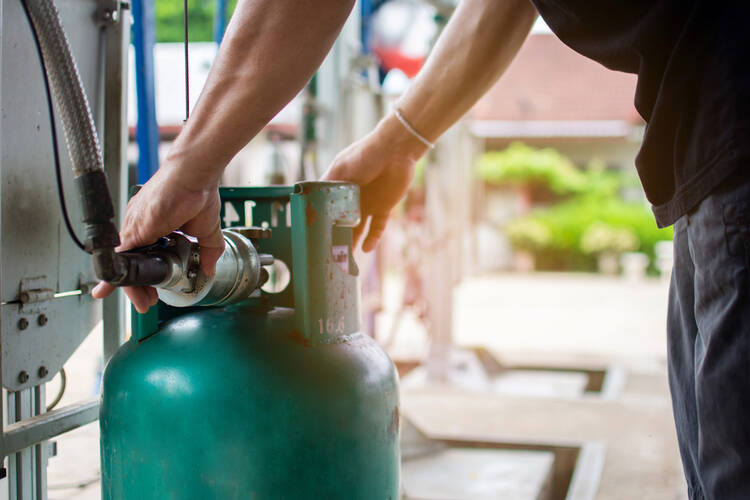
Refilling and Handling Zone
The refilling zone must be strategically designed to ensure efficiency and safety. This area should be fenced off and accessible only to trained personnel.
Installing automatic shut-off valves, gas detectors, and fire extinguishers nearby is essential.
The ground should be level, non-sparking, and made of concrete or other non-combustible materials.
Adequate spacing between cylinders and refilling equipment reduces the risk of leaks and explosions.
Proper lighting and signage improve visibility and awareness. A well-planned refilling section helps maintain a safe working environment while increasing the speed and accuracy of refilling operations.
-
Customer Waiting and Payment Area
The customer service section should be welcoming, clearly marked, and separate from gas-handling zones.
It must include a counter for payments, receipts, and inquiries, ensuring smooth transactions.
The waiting area should have proper ventilation, seating, and safety signage. Transparent barriers can enhance safety while maintaining visibility.
This section is also a good place to display safety posters or product information.
Providing a comfortable, organized space for customers improves their overall experience and encourages loyalty.
Designing this area thoughtfully reinforces professionalism and promotes a sense of trust and reliability.
-
Safety and Emergency Features
Safety should be integrated into every part of the cooking gas shop design.
Install fire extinguishers, gas leak detectors, and emergency alarms at strategic points. Clearly marked escape routes and visible safety signage are essential.
Keep first aid kits easily accessible and ensure all staff are trained in fire safety procedures.
The shop should have proper grounding and lightning protection systems to prevent sparks.
Conducting regular safety checks and maintaining equipment reduces risks. An efficient emergency plan ensures the protection of lives, property, and business reputation in case of an accident.
-
Office and Administrative Area
Including a small office area in your cooking gas retail shop allows you to handle administrative duties efficiently.
This space should be isolated from the main gas storage and refilling zones for safety.
It should contain desks, chairs, record-keeping cabinets, and computers for managing inventory, customer data, and finances.
Having a dedicated workspace enhances business organization and ensures proper documentation of daily transactions.
The office can also serve as a coordination point for deliveries and supplier communications.
-
Delivery and Loading Zone
A designated delivery and loading area is essential for smooth operations in a cooking gas retail shop.
This zone should be spacious enough to accommodate trucks safely while unloading filled cylinders.
It must be located away from customer areas and well-ventilated to minimize gas accumulation.
Installing ramps, protective barriers, and clear signage improves safety during loading and unloading.
Adequate lighting ensures visibility during early morning or evening deliveries.
Proper planning of this zone reduces accidents, streamlines inventory management, and allows staff to handle large volumes efficiently without disrupting customer service.
-
Signage and Branding
Clear and professional signage plays a crucial role in both safety and marketing.
Display warning signs like “No Smoking,” “Flammable Gas,” and emergency instructions in prominent locations.
Exterior signage should highlight your shop’s name, services, and hours, attracting potential customers.
Interior signs can guide clients through the payment, waiting, and pick-up areas, reducing confusion.
Branding elements such as logos and color schemes improve recognition and professionalism.
Thoughtful signage enhances operational efficiency, customer experience, and safety awareness, creating a cohesive, trustworthy, and visually appealing cooking gas retail environment.
-
Ventilation and Airflow System
Proper ventilation is critical in a cooking gas retail shop to prevent gas buildup and ensure a safe working environment.
Installing exhaust fans, vents, and open-air designs allows harmful fumes to escape, reducing fire hazards.
The airflow system should cover both storage and refilling areas, maintaining continuous circulation.
Regular inspection and maintenance of fans, ducts, and windows are essential for optimal performance.
Good ventilation not only improves safety but also enhances employee comfort, making operations smoother.
A well-ventilated shop is compliant with safety regulations and demonstrates professionalism to customers and regulatory authorities.
-
Lighting and Visibility
Adequate lighting is vital for both safety and operational efficiency in a cooking gas retail shop.
Well-lit areas reduce the risk of accidents during refilling, storage, and customer transactions.
Use a combination of natural lighting, overhead lights, and task-specific lamps to cover every section.
Emergency lighting should also be installed to guide staff and customers during power outages.
Bright, visible workspaces improve accuracy in handling cylinders and enhance overall professionalism.