
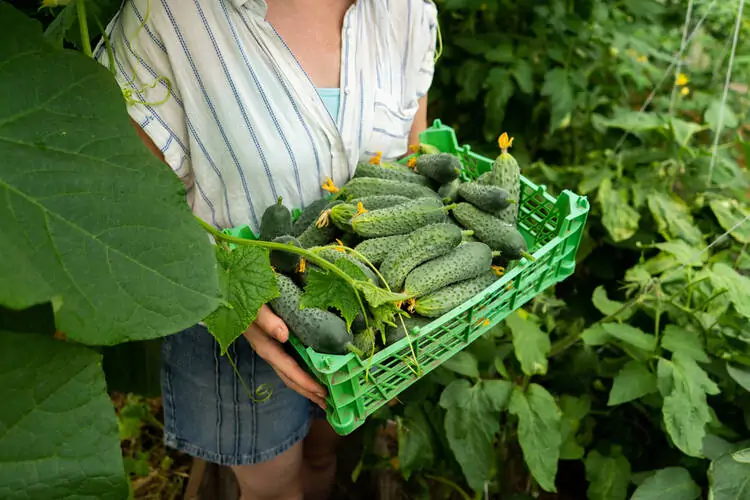
A cucumber farming business grows, harvests, grades, packs, and sells cucumbers to wholesalers, produce distributors, supermarkets, restaurants, foodservice companies, farmers’ markets, processors, and individual consumers.
Commercial cucumber farmers may grow:
- Slicing cucumbers
- Pickling cucumbers
- Seedless cucumbers
- Mini cucumbers
- Specialty cucumbers.
The exact production model depends on:
- Climate
- Market demand
- Land
- Irrigation
- Labor availability
- Buyer specifications.
Green Ridge Cucumber Farms LLC will concentrate primarily on fresh-market slicing cucumbers grown under plastic mulch with drip irrigation.
The company will also use limited protected cultivation to produce cucumbers before or after the principal field season.
Cucumber farming can look simple because the crop grows quickly. However, profitability depends heavily on:
- Yield
- Market price
- Harvest labor
- Disease pressure
- Water availability
- Grading quality
- Timing.
A farmer can grow an excellent crop and still lose money if the cucumbers mature during a period when the market is oversupplied.
Green Ridge will therefore stagger plantings instead of planting the entire acreage on one date. This allows harvesting to occur over a longer marketing window.
Entrepreneurs who want a broader production model can also review this Vegetable Farming Business Plan.
Steps on How to Write a Cucumber Farming Business Plan
-
Executive Summary
Green Ridge Cucumber Farms LLC is a proposed commercial cucumber farm based near Tifton, Georgia.
The business will lease approximately 35 acres of suitable agricultural land. The land will be allocated among:
- Commercial cucumber production
- Crop rotation
- Cover crops
- High-tunnel production
- Packing and cold storage
- Equipment storage
- Farm roads and drainage.
Green Ridge will not continuously plant all 35 acres with cucumbers. Depending on the year and crop rotation, approximately 15 to 25 acres may be in cucumber production during an individual growing season.
This reduces:
- Disease pressure
- Pest buildup
- Soil fatigue
- Operational risk.
The company will primarily grow:
- Fresh-market slicing cucumbers
- Selected seedless/specialty cucumbers in protected structures.
Primary production will use:
- Raised beds
- Plastic mulch
- Drip irrigation
- Fertigation
- Staggered planting
- Integrated pest management.
Green Ridge expects to produce both:
- Spring cucumbers
- Fall cucumbers.
A limited high-tunnel program will extend the selling season. The farm will initially sell through:
- Produce wholesalers
- Regional distributors
- Independent grocery stores
- Restaurants
- Farmers’ markets
- Direct commercial buyers.
The company will avoid relying on one buyer.
Fresh cucumbers are highly perishable, so the ability to quickly redirect produce to another customer is extremely important.
The proposed startup requirement is approximately $500,000. Projected revenue is:
| Financial Year | Projected Revenue | Projected Net Profit | Net Margin |
|---|---|---|---|
| FY1 | $480,000 | $38,400 | 8% |
| FY2 | $650,000 | $84,500 | 13% |
| FY3 | $825,000 | $140,250 | 17% |
The long-term objective is to develop Green Ridge Cucumber Farms LLC into a reliable southeastern produce supplier known for consistent quality, dependable delivery, disciplined food-safety procedures, and strong buyer relationships.
-
Company Profile
a. Our Products and Services
Green Ridge Cucumber Farms LLC will produce and sell the following:
Fresh-Market Slicing Cucumbers
This will be the primary commercial crop. Fresh-market cucumbers will be grown for sale to:
- Produce wholesalers
- Grocery distributors
- Independent supermarkets
- Restaurants
- Foodservice buyers.
The farm will select varieties based on:
- Yield
- Disease resistance
- Fruit uniformity
- Color
- Shelf life
- Buyer preference.
Premium Grade Cucumbers
The highest-quality cucumbers will be graded for premium buyers requiring:
- Good color
- Straight fruit
- Uniform sizing
- Minimal defects
- Good firmness.
These cucumbers may generate better prices than lower-grade bulk produce.
Food-service Cucumbers
Restaurants and institutional buyers may accept slightly different specifications from supermarket buyers. Food-service customers may purchase cucumbers for:
- Salads
- Sandwiches
- Fresh garnishes
- Meal preparation.
High-Tunnel Cucumbers
A limited area of protected production will help Green Ridge produce cucumbers outside the main field harvest window.
High tunnels can provide:
- Earlier harvest
- Later harvest
- Protection from excessive rainfall
- Higher-value specialty production.
The company will initially avoid investing heavily in large greenhouse infrastructure until protected-production economics are proven.
Entrepreneurs considering a larger protected-production operation can review this guide on how to start a greenhouse farming business.
Direct Farm Sales
A small percentage of premium produce may be sold through:
- Farm pickup
- Farmers’ markets
- Community buyers
- Selected produce-box programs.
Direct sales can generate a higher price per pound. However, Green Ridge will not attempt to retail its entire crop.
A commercial farm needs wholesale channels capable of moving large quantities quickly.
Graded Produce
Cucumbers will be sorted according to:
- Size
- Shape
- Color
- Physical defects
- Buyer specifications.
Produce failing premium grade may still be marketable through:
- Secondary wholesalers
- Foodservice buyers
- Processors
- Local markets.
The company will seek markets for cosmetically imperfect but safe cucumbers rather than automatically treating them as waste.
b. Nature of the Business
Green Ridge Cucumber Farms LLC will operate primarily as a business-to-business agricultural producer. Major customers will include:
- Produce distributors
- Wholesalers
- Retailers
- Restaurants
- Food-service companies.
A smaller business-to-consumer channel will provide:
- Farmers’ market sales
- Farm-direct sales.
c. The Industry
Green Ridge Cucumber Farms LLC will operate within the:
- Vegetable farming industry
- Fresh produce industry
- Commercial agriculture industry.
d. Mission Statement
“At Green Ridge Cucumber Farms LLC, our mission is to produce fresh, high-quality cucumbers through efficient irrigation, responsible crop management, disciplined food-safety practices, careful harvesting, and dependable service to produce buyers throughout the Southeast.”
e. Vision Statement
“Green Ridge Cucumber Farms LLC envisions becoming a trusted southeastern fresh-produce supplier known for consistent cucumber quality, reliable harvest programs, responsible production, strong buyer relationships, and efficient farm operations.”
f. Our Tagline
“Green Ridge Cucumbers – Fresh From the Field. Ready for Market.”
g. Legal Structure of the Business
Green Ridge Cucumber Farms LLC will operate as a Georgia limited liability company. The farm will maintain appropriate:
- Business registration
- Federal Employer Identification Number
- Agricultural registrations
- Workers’ compensation where applicable
- Farm liability insurance
- Commercial vehicle insurance
- Crop insurance where economically appropriate.
h. Organizational Structure
The initial organization will include:
- Managing Member/Farm Director
- Farm Manager
- Crop Production Supervisor
- Irrigation and Equipment Technician
- Harvest Crew Leader
- Seasonal Field and Harvest Workers
- Packing/Quality Control Lead
- Sales and Logistics Coordinator
- Bookkeeper/Administrative Support.
i. Ownership/Shareholder Structure and Board Members
The proposed ownership structure is:
- Daniel Green – Founder/Managing Member – 65 Percent
- Rebecca Green – Investor/Director – 20 Percent
- Michael Carter – Investor/Agricultural Advisor – 15 Percent.
-
SWOT Analysis
a. Strengths
- Two Production Seasons: Georgia conditions can allow the farm to target both spring and fall cucumber markets.
- Fast-Maturing Crop: Cucumbers reach harvest relatively quickly compared with many perennial crops.
- Strong Everyday Demand: Cucumbers are commonly used by households, restaurants, supermarkets, and foodservice companies.
- Drip Irrigation: Irrigation and fertigation allow more precise crop management.
- Multiple Markets: Produce can be sold through wholesale, food-service, retail, and direct channels.
- Protected Production: High tunnels provide some season-extension capability.
b. Weaknesses
- Cucumbers are highly perishable.
- Harvesting requires substantial labor.
- Prices can change quickly.
- Disease pressure can be severe.
- The crop requires dependable irrigation.
- Poor grading can reduce selling price.
- Harvest windows can be concentrated.
c. Opportunities
- Regional grocery supply
- Restaurant distribution
- Premium local produce
- High-tunnel cucumbers
- Food-service contracts
- Direct farm sales
- Expansion into other vegetables
- Private-label packing
- Produce aggregation.
i. How Big is the Industry?
Cucumbers are a well-established commercial vegetable crop. Demand comes from:
- Households
- Restaurants
- Supermarkets
- Food manufacturers
- Institutional foodservice.
Georgia is an established vegetable-producing state, which gives Green Ridge access to:
- Agricultural suppliers
- Produce brokers
- Farm labor
- Packing infrastructure
- Regional wholesale markets.
ii. Is the Industry Growing or Declining?
Fresh cucumber demand is relatively mature rather than a new high-growth market. Profitability depends less on explosive industry growth and more on:
- Efficient production
- Timing
- Quality
- Buyer relationships
- Cost control.
A farm producing the wrong size cucumber at the wrong time may struggle even when overall cucumber consumption remains strong.
iii. Future Trends in the Industry
Important trends include:
- Protected Production: More growers may use tunnels and greenhouses to extend production windows.
- Drip Irrigation: Efficient water and fertilizer delivery will remain important.
- Food Traceability: Commercial buyers increasingly expect stronger production and lot records.
- Retail Specifications: Uniform size, appearance, packaging, and dependable supply will remain important.
- Local Produce: Some consumers and foodservice companies value regionally grown vegetables.
- Mechanization: Growers will continue looking for ways to reduce labor requirements in bed preparation, spraying, packing, and materials handling.
- Data-Driven Farming: Larger growers increasingly track yield, labor, fertilizer, pesticide use, and profitability by field.
iv. Existing Niches
Cucumber farming niches include:
- Fresh slicing cucumbers
- Pickling cucumbers
- Seedless cucumbers
- Mini cucumbers
- Greenhouse cucumbers
- Organic cucumbers
- Local/direct-market cucumbers.
Green Ridge will initially specialize in:
- Fresh-market slicing cucumbers
- Limited protected specialty cucumbers.
v. Can You Sell a Franchise in the Future?
Commercial farms are not usually expanded through conventional franchising. Better growth options include:
- Leasing additional land
- Purchasing farms
- Contract growing
- Partner farms
- Produce aggregation
- Expanding packing operations.
d. Threats
- Hurricanes and tropical storms
- Excessive rain
- Drought
- Heat stress
- Plant disease
- Insect pressure
- Labor shortages
- Fuel-price increases
- Fertilizer-price increases
- Low market prices
- Imported produce competition
- Buyer rejection.
i. Who are the Major Competitors?
Green Ridge will compete with:
- Other Georgia cucumber growers
- Florida growers
- Other southeastern vegetable farms
- Large western U.S. produce suppliers
- Imported cucumbers.
Our competitive advantages will be:
- Harvest timing
- Quality
- Consistent sizing
- Reliable delivery
- Flexible customer service.
ii. Is There a Franchise for Cucumber Farming?
No conventional franchise is necessary. A grower is better served by developing:
- Production expertise
- Buyer relationships
- Equipment
- Land access
- Reliable labor.
iii. Policies, Regulations and Food-Safety Requirements
Green Ridge will maintain compliance with applicable:
- Georgia agricultural requirements
- Produce-safety requirements
- Pesticide rules
- Worker-protection requirements
- Water requirements
- Labor regulations
- Commercial vehicle regulations.
Produce Safety
Because cucumbers are sold for fresh consumption, food safety will be incorporated into farm operations. The farm will maintain procedures covering:
- Employee hygiene
- Handwashing
- Harvest containers
- Agricultural water
- Animal intrusion
- Sanitation
- Packing equipment
- Recordkeeping.
Management will complete applicable Georgia produce-farm registration and comply with the Produce Safety Rule where the farm falls within its requirements.
Agricultural Water
Irrigation and post-harvest water will be managed according to their intended use.
Water used directly on harvested cucumbers or food-contact surfaces will receive particularly careful management.
Pesticide Use
Crop-protection products will only be used:
- According to the label
- On approved crops
- At approved rates
- With required worker protections
- Within applicable pre-harvest intervals.
Application records will be maintained.
Worker Hygiene
Harvest employees will receive training concerning:
- Handwashing
- Illness reporting
- Toilet use
- Handling harvested produce
- Clean harvest containers.
-
Marketing Plan
a. Target Audience
The primary customers will be businesses rather than individual consumers.
i. Produce Wholesalers
Wholesalers can purchase large volumes and move produce quickly. Green Ridge will maintain relationships with several buyers instead of depending entirely on one broker.
ii. Grocery Distributors
Regional grocery distributors may require:
- Specific grades
- Consistent pack sizes
- Food-safety records
- Delivery schedules.
iii. Independent Grocery Stores
Independent stores may provide opportunities for:
- Local produce branding
- Direct delivery
- Smaller order sizes.
iv. Restaurants
Restaurants and food-service companies may buy:
- Premium cucumbers
- Food-service grades
- Regular weekly quantities.
v. Farmers’ Market Customers
Direct-market customers provide better selling prices but much lower volume.
Direct sales will therefore complement wholesale operations rather than replace them.
b. Advertising and Promotion Strategies
Green Ridge will use:
- Direct buyer outreach
- Produce broker relationships
- Farm visits
- Buyer samples
- Produce association networking
- Restaurant sales calls
- Farm branding
- Direct-market promotion.
i. Traditional Marketing Strategies
- Produce buyer calls
- Wholesale market relationships
- Farm visits
- Restaurant outreach
- Agricultural trade events
- Produce samples.
ii. Digital Marketing Strategies
The company website will provide:
- Crop availability
- Farm information
- Harvest windows
- Contact information
- Buyer inquiry form.
Digital marketing will primarily support buyer relationships rather than mass consumer advertising.
iii. Social Media Marketing Plan
Content may feature:
- Planting
- Harvest
- Irrigation
- Packing
- Farm employees
- Fresh produce
- High-tunnel production.
c. Pricing Strategy
Cucumber prices fluctuate according to:
- Supply
- Quality
- Season
- Size
- Buyer
- Packaging
- Market location.
Green Ridge will therefore use several sales channels.
| Sales Channel | Planning Price Range | Comments |
|---|---|---|
| Large-Volume Wholesale | $0.30 – $0.55/lb | Lower price but moves large volume quickly. |
| Regional Distributor | $0.45 – $0.75/lb | Depends on grade, pack and market. |
| Restaurant/Food-service Direct | $0.70 – $1.10/lb | Higher price but smaller orders and delivery cost. |
| Farmers’ Market/Farm Direct | $1.25 – $2.00+/lb | Highest unit price but limited volume and retail labor. |
These figures are planning assumptions rather than guaranteed market prices. Management will update pricing throughout the season.
-
Sales and Distribution Plan
a. Sales Channels
The farm will sell through:
- Produce brokers
- Wholesale distributors
- Regional grocery distributors
- Independent supermarkets
- Restaurants
- Farmers’ markets
- Farm-direct buyers.
b. Harvest and Inventory Strategy
Cucumbers cannot be stored like grain. The company’s objective is therefore to:
- Harvest only marketable maturity
- Grade quickly
- Cool promptly
- Move produce rapidly.
Plantings will be staggered so harvesting occurs over several weeks.
c. Payment Options
Commercial customers may pay by:
- ACH
- Check
- Approved electronic payment
- Short-term trade terms for approved customers.
New customers may be required to pay:
- At delivery
- Before shipment
- According to approved broker arrangements.
d. Rejection and Quality Policy
Buyer specifications will be confirmed before shipment. When produce is rejected, management will document:
- Reason
- Quantity
- Condition
- Photographs where appropriate
- Alternative sales opportunities.
e. Customer Support Strategy
Commercial buyers will receive:
- Availability forecasts
- Harvest updates
- Pack information
- Delivery scheduling
- Immediate communication concerning shortages.
-
Operational Plan
Cucumber farming is highly seasonal. Farm activity will intensify during:
- Land preparation
- Planting
- Crop protection
- Harvest.
a. What Happens During a Typical Production Cycle?
Land Preparation
Fields will be prepared through:
- Soil testing
- Liming where required
- Tillage
- Bed formation
- Fertilization
- Plastic mulch installation
- Drip-line installation.
Planting
The farm may use:
- Direct seeding
- Transplants
depending on crop timing and variety.
Plantings will be divided into blocks.
For example, rather than planting 20 acres on Monday, the farm may plant several smaller blocks over a planned window.
Irrigation and Fertigation
Drip irrigation will supply water close to the root zone.
Fertilizer may also be delivered through the irrigation system according to crop needs.
The farm will monitor:
- Soil moisture
- Rainfall
- Crop stage
- Weather.
Crop Monitoring
Fields will be inspected regularly for:
- Insects
- Disease symptoms
- Weeds
- Nutrient problems
- Irrigation issues.
Harvesting
Cucumbers may require repeated harvest passes. Workers will pick marketable cucumbers and move them to:
- Field bins
- Harvest containers
- Packing area.
Harvest crews will be trained not to:
- Throw produce
- Overfill containers
- Walk on harvested cucumbers.
Packing
Cucumbers will be:
- Received from the field.
- Inspected.
- Cleaned where appropriate.
- Graded.
- Sorted.
- Packed.
- Cooled.
- Shipped.
b. Crop Production Process
The complete production cycle is:
- Market planning.
- Seed selection.
- Soil testing.
- Land preparation.
- Bed preparation.
- Drip installation.
- Plastic mulch installation.
- Planting.
- Irrigation and fertility management.
- Integrated pest management.
- Harvest.
- Grading and packing.
- Cooling.
- Delivery.
c. Crop Rotation
Green Ridge will not repeatedly plant cucumbers on the same field without adequate rotation. Crop rotation and cover crops will help manage:
- Soilborne disease
- Nematodes
- Weeds
- Soil structure.
d. Supply Chain
Farm suppliers will include:
- Seed companies
- Fertilizer suppliers
- Crop-protection suppliers
- Plastic mulch suppliers
- Drip-irrigation companies
- Packaging suppliers
- Fuel providers
- Equipment dealers.
Alternative suppliers will be identified for critical materials.
e. Sources of Income
Green Ridge will generate revenue from:
- Wholesale fresh cucumbers
- Food-service cucumbers
- Premium-grade cucumbers
- High-tunnel cucumbers
- Direct-market cucumber sales
- Potential future vegetable crops.
-
Financial Plan
a. Amount Needed to Start the Business
Green Ridge Cucumber Farms LLC will require approximately $500,000 to establish the proposed operation.
A small cucumber farm using rented equipment and direct-market sales can begin for substantially less. Our model assumes:
- Commercial acreage
- Owned tractor and implements
- Drip irrigation
- Plastic-mulch equipment
- Cold storage
- Packing equipment
- Delivery vehicle
- Working capital.
b. Startup Costs
| Startup Item | Estimated Cost |
|---|---|
| Land Lease Deposits, Soil Testing and Initial Field Preparation | $35,000 |
| Tractor and Farm Implements | $95,000 |
| Irrigation Pump, Mainlines and Drip Infrastructure | $55,000 |
| Bedder, Plastic Mulch and Drip-Laying Equipment | $45,000 |
| High-Tunnel Structures | $40,000 |
| Packing Area, Wash/Grading Equipment and Cold Room | $70,000 |
| Harvest Bins, Crates and Field Containers | $15,000 |
| Used Delivery/Refrigerated Truck | $40,000 |
| Insurance, Registration, Training and Food-Safety Setup | $10,000 |
| Working Capital | $95,000 |
| Total Estimated Startup Requirement | $500,000 |
c. Do You Need to Buy Farmland?
No. Green Ridge will initially lease farmland. Leasing allows management to preserve capital for:
- Irrigation
- Equipment
- Packing
- Labor
- Working capital.
The long-term goal may include purchasing strategic farmland once the operation demonstrates consistent profitability.
d. Ongoing Expenses
| Operating Expense | Includes |
|---|---|
| Seed/Transplants | Commercial cucumber seed, transplants and replacement plants. |
| Crop Inputs | Fertilizer, lime, crop-protection products and soil amendments. |
| Plastic Culture | Plastic mulch, drip tape and bed preparation. |
| Labor | Planting, crop maintenance, harvesting, grading and packing. |
| Irrigation | Electricity/fuel, pumps, filters, repairs and water-management equipment. |
| Packing | Boxes, labels, pallets and cooling. |
| Equipment | Fuel, maintenance, tires and repairs. |
| Sales/Delivery | Brokerage, freight, local delivery and customer acquisition. |
e. Average Salary of Staff
| Position | Planning Compensation |
|---|---|
| Managing Member/Farm Director | $65,000 – $85,000/year after stabilization |
| Farm Manager | $55,000 – $75,000/year |
| Crop Production Supervisor | $48,000 – $65,000/year |
| Irrigation/Equipment Technician | $22 – $29/hour |
| Harvest Crew Leader | $20 – $26/hour |
| Seasonal Field/Harvest Worker | $16 – $22/hour or applicable agricultural program rate |
| Packing/Quality Lead | $20 – $27/hour |
| Sales/Logistics Coordinator | $45,000 – $60,000/year |
If temporary agricultural workers are recruited through a regulated labor program, Green Ridge will comply with all applicable wage, housing, transportation, recruitment, and employment requirements.
f. Funding Sources
| Funding Source | Amount |
|---|---|
| Founder/Investor Equity | $180,000 |
| Agricultural/Commercial Financing | $220,000 |
| Equipment Financing | $70,000 |
| Operating Line of Credit | $30,000 |
| Total Funding | $500,000 |
-
Financial Projection
a. Production Assumptions
Cucumber yield varies considerably according to:
- Variety
- Weather
- Disease
- Plant population
- Harvest frequency
- Market standards.
Green Ridge will therefore use conservative planning assumptions rather than assuming every field produces a record crop.
| Production Metric | FY1 | FY2 | FY3 |
|---|---|---|---|
| Spring Crop Acres | 20 | 25 | 25 |
| Fall Crop Acres | 15 | 20 | 25 |
| Total Annual Crop-Acres | 35 | 45 | 50 |
| Planning Marketable Yield | 18,000–21,000 lb/acre | 20,000–22,000 lb/acre | 21,000–24,000 lb/acre |
“Crop-acres” refers to acres planted during each crop cycle. The same physical farm acreage may support more than one seasonal crop during a year.
b. Sales and Profit Forecast
| Metric | FY1 | FY2 | FY3 |
|---|---|---|---|
| Projected Revenue | $480,000 | $650,000 | $825,000 |
| Estimated Net Profit | $38,400 | $84,500 | $140,250 |
| Net Profit Margin | 8% | 13% | 17% |
c. Profit Margin
Green Ridge will target stabilized net profit margins of approximately:
- 12 – 18 percent
in favorable production and marketing years. Agricultural profitability can vary substantially. A year with:
- Excellent yield
- Strong prices
- Low disease pressure
may generate materially higher profit.
A year with:
- Storm damage
- Poor market prices
- Crop disease
may produce little or no profit.
d. Revenue Mix Target
| Revenue Channel | FY3 Target |
|---|---|
| Wholesale/Broker Sales | 48% |
| Regional Distributor/Grocery Accounts | 27% |
| Restaurant/Food-service Direct | 12% |
| High-Tunnel/Specialty Production | 8% |
| Farm-Direct/Farmers’ Markets | 5% |
| Total | 100% |
e. Operating Targets
| Key Operating Metric | Target |
|---|---|
| Marketable Pack-Out | ≥85% of harvested volume |
| Harvest-to-Cooling Time | As quickly as operationally practical |
| Buyer Rejection Rate | <3% |
| Unmarketed Harvest/Waste | <7% |
| On-Time Commercial Deliveries | ≥95% |
| Revenue From Top Single Buyer | Preferably <30% |
f. Break-Even Thinking
Management will calculate break-even before every planting season. The question will not simply be:
“How many pounds can we grow?”
The better question is:
“What price per marketable pound do we need after considering growing, harvesting, packing, cooling, and selling costs?”
For example, if a field produces a high yield but:
- Harvest wages are high
- Pack-out is poor
- The market price collapses
that field may still lose money.
g. Key Performance Indicators
Management will monitor:
- Yield per acre
- Marketable yield per acre
- Revenue per acre
- Production cost per acre
- Harvest cost per pound
- Pack-out percentage
- Average realized selling price
- Labor hours per acre
- Buyer rejection rate
- Waste percentage
- Gross margin per crop
- Water use
- On-time delivery.
-
Growth Plan
a. How Do You Intend to Grow and Expand?
Green Ridge will grow in stages.
Stage One – Stabilize Cucumber Production
Management will focus on:
- Yield
- Crop quality
- Food safety
- Buyer relationships
- Accurate field records.
Stage Two – Increase Fall Production
Once spring production is stable, the company will increase fall acreage. This creates another revenue cycle without requiring another entire farm.
Stage Three – Expand High-Tunnel Production
Protected production will be expanded only if it delivers sufficiently higher prices to justify additional capital and labor.
Stage Four – Add Complementary Vegetables
Future rotation crops may include:
- Squash
- Peppers
- Beans
- Selected other vegetables.
The objective will be to improve:
- Land utilization
- Crop rotation
- Buyer relationships.
A broader operation can eventually resemble the model described in this Vegetable Farming Business Plan.
Stage Five – Expand Packing and Cooling
Additional cold-storage capacity may allow Green Ridge to:
- Handle higher production
- Improve quality
- Pack for neighboring growers.
Stage Six – Aggregate Produce
The company may eventually purchase or market cucumbers from approved neighboring farms.
This could allow Green Ridge to supply buyers requiring larger and more consistent volume.
Strict traceability and food-safety procedures will be required before implementing this model.
b. Where Do You Intend to Expand?
Initial expansion will remain within South Georgia. Management may:
- Lease additional nearby acreage
- Add contract growers
- Purchase strategic farmland.
Sales expansion will target buyers in:
- Atlanta
- Georgia
- Florida
- Alabama
- South Carolina
- Other southeastern markets.
The farm will not expand acreage faster than its ability to:
- Harvest
- Pack
- Cool
- Sell the crop.
-
Exit Plan
Green Ridge Cucumber Farms LLC will be developed as a commercial agricultural business capable of eventually being:
- Sold
- Transferred to family members
- Transferred to management
- Combined with another vegetable farm
- Acquired by a larger produce company.
Potential buyers may include:
- Neighboring vegetable farmers
- Produce distributors
- Agricultural investors
- Farm management companies
- Regional produce companies.
A future buyer will evaluate:
- Land access
- Water availability
- Irrigation infrastructure
- Farm equipment
- Packing facilities
- Cold storage
- Buyer relationships
- Food-safety records
- Historic yields
- Profitability.
Because Green Ridge initially leases much of its farmland, management will secure leases carefully.
Longer-term leases with reasonable renewal rights can increase the security of investments in:
- Irrigation
- Roads
- Packing infrastructure.
The company will also maintain field-level records documenting:
- Planting dates
- Varieties
- Input applications
- Harvest volume
- Yield
- Sales
- Buyer
- Price.
These records make the farm easier to value because a buyer can determine which fields, varieties, and seasons actually make money.
Green Ridge will also build buyer relationships at the company level instead of allowing all customer relationships to depend on one owner.
Another possible exit strategy is an internal management buyout. An experienced farm manager may eventually purchase the founders’ ownership while continuing operations.
Family succession may also be appropriate. If the founders transfer Green Ridge to the next generation, the transition will include:
- Production procedures
- Supplier contacts
- Buyer contracts
- Equipment records
- Food-safety systems
- Financial records.
Ultimately, Green Ridge Cucumber Farms LLC will be built as more than a piece of farmland where cucumbers happen to be planted.
The goal is to create a professionally managed produce business with dependable irrigation, disciplined crop rotation, efficient harvesting, strong food-safety systems, reliable commercial buyers, cold-chain capability, accurate field economics, and enough production flexibility to remain profitable when weather and cucumber prices inevitably change.