
A graphic design business helps companies, organizations, entrepreneurs, and individuals communicate visually through:
- Logos
- Brand identities
- Packaging
- Advertisements
- Brochures
- Social media graphics
- Presentations
- Signage
- Web graphics
- Illustrations
- Other visual communication materials.
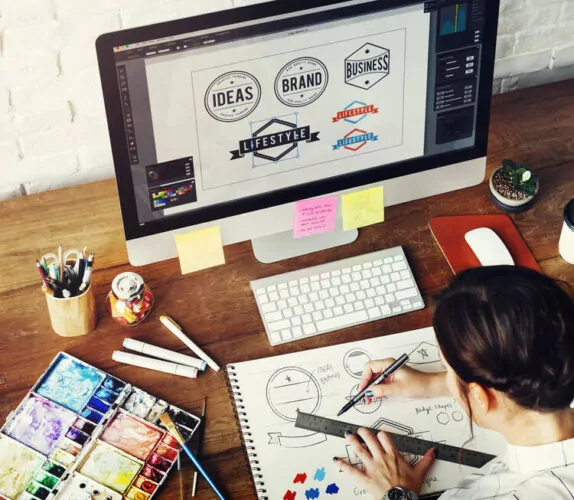
Modern graphic design is no longer limited to creating logos or preparing artwork for printed flyers.
A professional design studio may work with a client across an entire brand system, including:
- Visual identity
- Packaging
- Website graphics
- Sales presentations
- Advertising campaigns
- Social media
- Retail displays
- Corporate documents.
This creates an important opportunity for a company such as Louis & Levi Studio Inc.
Instead of depending on dozens of small one-time design jobs, the studio can build higher-value customer relationships where one client purchases design services repeatedly throughout the year.
Artificial intelligence is also changing the graphic design industry. AI tools can increasingly help with:
- Brainstorming
- Image generation
- Concept variations
- Background removal
- Copy drafts
- Production resizing.
However, successful businesses still need designers who understand:
- Brand strategy
- Typography
- Layout
- Customer psychology
- Visual consistency
- Printing
- Accessibility
- Commercial use.
Louis & Levi Studio Inc. will therefore use technology to improve productivity without positioning itself as an automated design factory. The studio’s value will come from combining:
- Human creative direction
- Strategic thinking
- Professional design execution
- Efficient technology.
Entrepreneurs interested in a smaller version of this business can also review this guide on how to start a graphic design business.
Steps on How to Write a Graphic Design Business Plan
-
Executive Summary
Louis & Levi Studio Inc. is a proposed full-service graphic design, branding, and creative services company based in Baltimore, Maryland.
The business will operate from an approximately 2,200-square-foot professional creative studio. The facility will include:
- Open design workspace
- Creative director offices
- Client presentation room
- Photography/content corner
- Print-proofing area
- Small production and storage area
- Administrative workspace.
The company will be founded by:
- Louis Clinton
- Levi Bradford
who will combine creative leadership, client strategy, branding, and business-development experience. Louis & Levi Studio Inc. will provide:
- Logo design
- Brand identity development
- Brand guidelines
- Packaging design
- Print design
- Advertising creative
- Social media graphics
- Presentation design
- Annual report design
- Website and landing-page graphics
- Signage and environmental graphics
- Illustration
- Infographics
- Design retainers
- Print-production coordination.
The company will target:
- Small businesses
- Growing companies
- Professional service firms
- Healthcare practices
- Real estate firms
- Restaurants
- Hospitality companies
- Nonprofit organizations
- Educational organizations
- Government contractors
- Technology companies.
Louis & Levi Studio Inc. will not build its future around inexpensive one-off logo projects. Instead, management will prioritize:
- Branding packages
- Campaign design
- Packaging projects
- Corporate communications
- Recurring monthly retainers.
The studio will initially employ approximately:
- 2 Founder/Directors
- 1 Senior Graphic Designer
- 2 Graphic Designers
- 1 Production Designer
- 1 Account/Project Manager
- 1 Business Development/Marketing Coordinator
- Contract specialists where needed.
Louis & Levi Studio Inc. will require approximately $450,000 in startup capital. Projected financial performance is:
| Financial Year | Projected Revenue | Projected Net Profit | Net Margin |
|---|---|---|---|
| FY1 | $900,000 | $72,000 | 8% |
| FY2 | $1,450,000 | $188,500 | 13% |
| FY3 | $2,100,000 | $357,000 | 17% |
The long-term objective is to build Louis & Levi Studio Inc. into one of Baltimore’s leading independent creative studios, serving clients throughout Maryland, Washington D.C., the Mid-Atlantic region, and eventually nationwide.
-
Company Profile
a. Our Products and Services
Logo Design
Louis & Levi Studio Inc. will design professional logos for:
- New businesses
- Existing businesses rebranding
- Products
- Events
- Nonprofits
- Organizations.
Logo projects will typically include:
- Discovery questionnaire
- Creative research
- Initial concepts
- Selected revisions
- Final logo files
- Basic usage guidance.
The studio will not compete aggressively with very low-cost logo marketplaces. Clients choosing Louis & Levi Studio Inc. will be paying for:
- Research
- Professional judgment
- Original creative direction
- Commercial usability.
Brand Identity Development
This will become one of the studio’s principal premium services.
A brand identity project may include:
- Logo
- Color palette
- Typography
- Iconography
- Photography direction
- Graphic elements
- Brand guidelines.
Large projects may also include:
- Business cards
- Email signatures
- Letterhead
- Social templates
- Presentation templates.
Brand Guidelines
Brand guidelines will help clients maintain visual consistency. Depending on project size, guidelines may cover:
- Logo usage
- Spacing
- Colors
- Typography
- Photography
- Icons
- Examples of incorrect usage.
Packaging Design
Louis & Levi Studio Inc. will design packaging for:
- Food products
- Beverages
- Beauty products
- Consumer packaged goods
- Retail products
- Gift products.
Services may include:
- Label design
- Boxes
- Pouches
- Sleeves
- Retail cartons
- Packaging systems.
Final files will be prepared according to printer or manufacturer specifications.
The studio will not independently make legal regulatory claims for clients. Clients remain responsible for confirming required:
- Nutrition information
- Ingredient information
- Warnings
- Other regulated packaging content.
Print Design
Print projects may include:
- Brochures
- Flyers
- Posters
- Menus
- Catalogs
- Booklets
- Direct-mail pieces
- Annual reports.
Louis & Levi Studio Inc. will provide:
- Layout
- Typography
- Image treatment
- Print-ready files
- Printer coordination where requested.
Advertising Creative
The company will produce graphics for:
- Digital advertising
- Print advertising
- Outdoor advertising
- Event campaigns
- Promotional campaigns.
Louis & Levi Studio Inc. may collaborate with advertising and marketing agencies rather than attempting to replace them.
Companies needing a broader advertising business model can review this guide on how to start an advertising agency.
Social Media Graphics
The studio will create:
- Post templates
- Story graphics
- Carousel designs
- Campaign graphics
- Paid-ad creative
- Event announcements.
Clients requiring frequent creative output will be encouraged to purchase monthly design retainers.
Presentation Design
Presentation services may include:
- Sales decks
- Investor presentations
- Conference presentations
- Training decks
- Board presentations
- Company profiles.
Presentation design will become an important B2B service because businesses frequently need polished materials on short deadlines.
Infographics and Data Visualization
The studio may transform:
- Research
- Statistics
- Survey data
- Reports
- Processes
into easier-to-understand visual communication.
Web and Landing-Page Graphics
Louis & Levi Studio Inc. will provide visual design assets including:
- Website graphics
- Hero images
- Icons
- Landing-page layouts
- Digital banners
- Interface graphics.
The company may collaborate with developers on implementation. Clients needing a full website-development operation can also review this Web Design Agency Business Plan.
Signage and Environmental Graphics
Services may include:
- Storefront signage concepts
- Office graphics
- Wall graphics
- Wayfinding
- Event signage
- Trade-show graphics.
Manufacturing and installation will typically be completed by approved sign vendors.
Illustration
The company may produce custom illustrations for:
- Advertising
- Editorial use
- Packaging
- Books
- Social campaigns
- Corporate communications.
Monthly Design Retainers
Recurring retainers will become one of the most important revenue sources. Clients may purchase a fixed block of design capacity every month for:
- Sales materials
- Social media
- Presentations
- Advertisements
- Internal communications
- Campaign graphics.
Retainers provide:
- Predictable revenue for Louis & Levi Studio Inc.
- Priority creative access for customers.
Print Production Management
Louis & Levi Studio Inc. may coordinate outside production for:
- Business cards
- Brochures
- Posters
- Packaging
- Signs
- Promotional materials.
The studio may earn:
- Project-management fees
- Approved production markups.
The company will generally avoid purchasing large commercial printing equipment.
Outside printers can provide better equipment utilization while Louis & Levi remains focused on design and client management.
b. Nature of the Business
Louis & Levi Studio Inc. will operate primarily as a:
- Business-to-business creative agency.
Clients will include:
- Companies
- Organizations
- Nonprofits
- Professional firms
- Public-sector contractors.
A smaller percentage of revenue may come from individual entrepreneurs.
c. The Industry
Louis & Levi Studio Inc. will operate within the:
- Graphic design industry
- Creative services industry
- Branding industry
- Advertising-support industry.
d. Mission Statement
“At Louis & Levi Studio Inc., our mission is to help businesses communicate clearly and look unmistakably professional through thoughtful branding, strategic graphic design, creative problem-solving, and dependable client service.”
e. Vision Statement
“Louis & Levi Studio Inc. envisions becoming one of Baltimore’s most respected independent creative studios, known for memorable brands, intelligent design, long-term client relationships, exceptional creative talent, and work that helps organizations communicate with greater confidence.”
f. Our Tagline
“Louis & Levi Studio – Ideas Made Visible.”
g. Legal Structure of the Business
Louis & Levi Studio Inc. will operate as a Maryland corporation. The company will maintain applicable:
- Maryland corporate registration
- Federal Employer Identification Number
- Annual business filings
- Baltimore occupancy/use approvals where applicable
- Employer registrations
- Business insurance.
h. Organizational Structure
The initial organization will include:
- Louis Clinton – Chief Executive Officer/Brand Strategy Director
- Levi Bradford – Creative Director
- Senior Graphic Designer
- Graphic Designers
- Production Designer
- Account/Project Manager
- Business Development/Marketing Coordinator
- Contract Web Developers
- Contract Copywriters
- Bookkeeper/Accountant.
i. Ownership/Shareholder Structure and Board Members
The proposed ownership structure is:
- Louis Clinton – Co-Founder/CEO – 45 Percent
- Levi Bradford – Co-Founder/Creative Director – 45 Percent
- Employee/Advisor Equity Pool – 10 Percent.
Louis Clinton and Levi Bradford will initially serve as principal board members.
-
SWOT Analysis
a. Strengths
- Low Inventory Requirement: The studio does not need large quantities of physical inventory.
- Multiple Services: Branding, packaging, presentations, social graphics, and print diversify revenue.
- Retainer Potential: Businesses need creative work repeatedly.
- Remote Delivery: Clients do not need to be located in Baltimore.
- High Gross Margin Potential: The principal product is professional creative labor rather than expensive merchandise.
- Scalability: Freelancers and specialist contractors can support peaks in workload.
- Strong Local Opportunity: Baltimore contains businesses, nonprofits, healthcare organizations, educational institutions, restaurants, and professional firms needing design support.
b. Weaknesses
- Graphic design is highly competitive.
- Freelancers can undercut agency pricing.
- Creative work can be difficult to estimate.
- Clients may request repeated revisions.
- Revenue can become dependent on founders.
- Hiring excellent designers can be difficult.
- AI is reducing the value of some basic production tasks.
c. Opportunities
- Brand strategy
- Packaging
- Presentation design
- Recurring creative retainers
- Healthcare design
- Nonprofit communications
- Real estate marketing
- Restaurant branding
- Government subcontracting
- Remote national clients.
i. How Big is the Industry?
Virtually every business needs some form of visual communication. Organizations require:
- Logos
- Websites
- Presentations
- Advertising
- Social content
- Sales materials
- Reports.
The opportunity therefore extends far beyond companies that specifically search for “graphic design.”
ii. Is the Industry Growing or Declining?
The industry is changing rather than disappearing. Basic production work such as:
- Simple social graphics
- Background removal
- Basic image variations
is increasingly automated. Higher-value work remains centered around:
- Creative direction
- Brand strategy
- Complex communication
- Distinctive visual systems
- Commercial judgment.
Louis & Levi Studio Inc. will therefore avoid building its business around low-value production work that software can increasingly perform.
iii. Future Trends in the Industry
Important trends include:
- AI-Assisted Design: Designers will increasingly use artificial intelligence during ideation and production.
- Brand Systems: Clients need adaptable visual systems rather than one isolated logo.
- Subscription Creative Services: Monthly retainers will become increasingly important.
- Motion Design: Brands need more animated and video-compatible creative assets.
- Presentation Design: Companies increasingly require polished decks for sales, investment, training, and events.
- Digital-First Branding: Identities must work on mobile screens, social platforms, websites, and apps.
- Accessibility: Designers increasingly need to consider readability, contrast, and inclusive visual communication.
- Remote Collaboration: Creative studios can increasingly serve customers anywhere.
iv. Existing Niches
Graphic design niches include:
- Brand identity
- Packaging
- Presentation design
- Editorial design
- Social media
- Healthcare design
- Real estate marketing
- Restaurant branding
- Environmental graphics
- Illustration.
Louis & Levi Studio Inc. will initially specialize in:
- Brand identity
- Packaging
- Corporate communications
- Recurring creative support.
v. Can You Sell a Franchise in the Future?
Technically, yes. However, franchising is not the preferred growth strategy. A creative studio can scale more efficiently through:
- Remote teams
- Additional creative directors
- Satellite offices
- Acquisition of smaller agencies.
d. Threats
- Artificial intelligence
- Low-cost freelancers
- International competition
- Economic downturns
- Client budget cuts
- Employee turnover
- Unpaid invoices
- Scope creep
- Copyright disputes
- Dependence on a few large accounts.
i. Who are the Major Competitors?
Louis & Levi Studio Inc. will compete with:
- Independent designers
- Baltimore creative agencies
- Advertising agencies
- Web agencies
- Online design platforms
- In-house design teams
- AI design tools.
The company’s advantage will come from:
- Creative quality
- Reliable project management
- Strategy
- Fast communication
- Long-term client relationships.
ii. Is There a Franchise for Graphic Design Businesses?
Franchise-related print and design businesses exist. However, Louis & Levi Studio Inc. will remain independently owned.
iii. Policies, Regulations and Business Requirements
Louis & Levi Studio Inc. will maintain compliance with applicable:
- Maryland business registration
- Annual corporate filings
- Employment regulations
- Tax requirements
- Local occupancy requirements
- Intellectual-property laws.
Copyright and Intellectual Property
Client contracts will clearly explain:
- When ownership transfers
- What intellectual property is included
- Whether fonts or stock images require separate licenses
- Whether working files are included
- Portfolio-display rights.
The studio will not assume that purchasing an image automatically permits every possible commercial use.
AI-Generated Content
If AI-assisted tools are used, the studio will maintain internal policies covering:
- Confidential client information
- Commercial-use restrictions
- Originality review
- Human quality control.
Sensitive client materials will not be casually uploaded to public AI systems without appropriate authorization.
Client Confidentiality
Some clients may share:
- Unreleased products
- Financial presentations
- Strategic plans
- Confidential campaigns.
Employees and contractors will follow appropriate confidentiality requirements.
-
Marketing Plan
a. Target Audience
The primary customer will be an organization rather than an individual consumer.
i. Small and Medium Businesses
Businesses may need:
- Branding
- Marketing collateral
- Social media
- Presentations
- Packaging.
ii. Professional Service Firms
Targets include:
- Law firms
- Accounting firms
- Consulting companies
- Financial firms
- Real estate businesses.
iii. Healthcare Organizations
Potential clients include:
- Medical practices
- Dental practices
- Healthcare companies
- Community health organizations.
iv. Restaurants and Hospitality Companies
These customers may need:
- Brand identities
- Menus
- Packaging
- Signage
- Social media
- Promotional campaigns.
v. Nonprofit Organizations
Baltimore has a substantial nonprofit and institutional market requiring:
- Annual reports
- Campaign graphics
- Event materials
- Presentations
- Fundraising communication.
vi. Geography
Initial sales activity will target:
- Baltimore
- Baltimore County
- Columbia
- Annapolis
- Washington D.C.
- Other Mid-Atlantic markets.
Remote delivery will allow nationwide expansion.
b. Advertising and Promotion Strategies
Louis & Levi Studio Inc. will use:
- Direct corporate outreach
- Professional networking
- Client referrals
- Agency partnerships
- Portfolio marketing
- Business associations
- Event sponsorships
- Strategic nonprofit relationships.
i. Traditional Marketing Strategies
- Networking events
- Business associations
- Professional referrals
- Printed capability presentations
- Client workshops
- Local business events.
ii. Digital Marketing Strategies
The company will use:
- Search optimization
- Portfolio case studies
- Email outreach
- Paid search
- LinkedIn prospecting
- Lead-generation landing pages
- Remarketing.
iii. Social Media Marketing Plan
Content will focus on:
- Brand transformations
- Packaging designs
- Before-and-after projects
- Typography
- Behind-the-scenes design process
- Creative education
- Client success stories.
c. Pricing Strategy
Louis & Levi Studio Inc. will not price every project by the hour. The studio will use:
- Fixed project pricing
- Retainers
- Day rates
- Hourly rates for selected production work.
| Design Service | Planning Price Range |
|---|---|
| Professional Logo Project | $2,500 – $7,500+ |
| Complete Brand Identity | $7,500 – $25,000+ |
| Brand Guidelines | $3,500 – $12,000+ |
| Packaging Design | $4,000 – $20,000+ |
| Brochure / Small Corporate Publication | $2,000 – $8,000+ |
| Presentation Design | $2,500 – $12,000+ |
| Annual Report / Large Publication | $8,000 – $30,000+ |
| Monthly Design Retainer | $3,500 – $15,000+/month |
| Senior Creative Hourly/Consulting Rate | $150 – $225+/hour |
The company will avoid competing primarily by lowering prices. Discounting will be used strategically for:
- Larger retainers
- Long-term relationships
- Bundled services.
-
Sales and Distribution Plan
a. Sales Channels
New business will come through:
- Website inquiries
- Referrals
- Direct outreach
- Professional networking
- Agency partnerships
- Repeat customers
- Requests for proposals.
b. Capacity Strategy
Louis & Levi Studio Inc. does not sell physical inventory. Its principal capacity consists of:
- Creative hours
- Strategy hours
- Project-management hours.
Management will track:
- Available hours
- Billable hours
- Project deadlines
- Designer workload.
The company will avoid accepting more work than the team can produce professionally.
c. Payment Options
Clients may pay through:
- ACH
- Bank transfer
- Business credit card
- Check
- Approved online payment systems.
d. Deposits and Payment Policy
Typical project payment schedules may include:
| Project Stage | Typical Payment |
|---|---|
| Project Approval / Deposit | 40% – 50% |
| Major Creative Milestone | 25% – 30% |
| Final Approval / Delivery | Remaining Balance |
Monthly retainers will generally be:
- Paid at the beginning of each service month.
e. Revision Policy
Project proposals will identify:
- Number of concepts
- Number of revision rounds
- Deliverables
- File formats
- Timeline.
Additional revisions or major changes in direction may require:
- Additional fees
- Change orders.
This protects the company from unlimited scope creep.
-
Operational Plan
Louis & Levi Studio Inc. will operate primarily:
- Monday – Friday: 8:30 AM – 5:30 PM.
A hybrid schedule may be used for selected design employees.
a. What Happens During a Typical Day?
The team begins with a short review of:
- Active projects
- Deadlines
- Client feedback
- Workload.
Designers then work on:
- Concept development
- Layout
- Illustration
- Production files
- Presentation preparation.
Project managers handle:
- Client communication
- Schedules
- Approvals
- Vendor coordination.
Creative directors review work before major presentations or final delivery.
b. Project Process
A typical project will follow:
- Client inquiry.
- Discovery call.
- Project brief.
- Proposal.
- Contract and deposit.
- Research.
- Creative concepts.
- Internal review.
- Client presentation.
- Revisions.
- Final approval.
- Production files.
- Delivery.
- Archive.
- Follow-up.
c. Quality-Control Procedure
Before delivery, projects may be reviewed for:
- Spelling
- Dimensions
- Color mode
- Image resolution
- Typography
- Alignment
- Bleed
- File format
- Brand consistency.
Important print files will be proofed before production.
d. Technology
The studio will maintain professional:
- Desktop and laptop computers
- Color-accurate displays
- Design software
- Cloud storage
- Project-management software
- Font management
- Backup systems
- Cybersecurity tools.
e. Sources of Income
Louis & Levi Studio Inc. will earn income from:
- Brand identities
- Logo design
- Packaging
- Print design
- Presentations
- Digital graphics
- Illustration
- Monthly retainers
- Print-production management
- Creative consulting.
-
Financial Plan
a. Amount Needed to Start Louis & Levi Studio Inc.
The company will require approximately: $450,000 to establish the proposed Baltimore studio with sufficient working capital. A single freelance designer can start for far less. Our model assumes:
- Professional studio space
- High-performance computers
- Several employees
- Creative software
- Marketing
- Working capital.
b. Startup Costs
| Startup Item | Estimated Cost |
|---|---|
| Lease Deposit, Initial Rent and Studio Build-Out | $65,000 |
| Computers, Laptops and Professional Displays | $70,000 |
| Printers, Proofing and Production Equipment | $25,000 |
| Software, Fonts, Cloud Systems and Initial Subscriptions | $20,000 |
| Furniture, Meeting Room and Studio Setup | $30,000 |
| Branding, Portfolio Website and Launch Materials | $25,000 |
| Legal, Insurance and Professional Setup | $15,000 |
| Recruitment and Training | $30,000 |
| Launch Marketing and Business Development | $35,000 |
| Working Capital | $135,000 |
| Total Estimated Startup Requirement | $450,000 |
c. Do You Need to Build a Facility?
No. Louis & Levi Studio Inc. will lease professional office/studio space. The company does not need an expensive ground-floor retail location. The preferred building should provide:
- Reliable high-speed internet
- Meeting space
- Natural light
- Secure access
- Convenient transportation
- Suitable commercial use.
d. Ongoing Expenses
| Expense Category | What It Covers |
|---|---|
| Payroll | Designers, account management, business development and administration. |
| Occupancy | Rent, utilities, internet and office-related expenses. |
| Software | Design applications, fonts, project management, stock resources and cloud storage. |
| Contract Talent | Developers, writers, illustrators, photographers and specialist designers. |
| Marketing | Portfolio photography, paid promotion, networking and sales activity. |
| Professional Costs | Insurance, accounting, legal services and business filings. |
e. Average Salary of Staff
| Position | Planning Compensation |
|---|---|
| CEO/Brand Strategy Director | $85,000 – $110,000/year after stabilization |
| Creative Director | $85,000 – $115,000/year |
| Senior Graphic Designer | $70,000 – $90,000/year |
| Graphic Designer | $55,000 – $72,000/year |
| Production Designer | $50,000 – $65,000/year |
| Account/Project Manager | $65,000 – $85,000/year |
| Business Development Coordinator | $55,000 – $75,000 + incentives |
f. Funding Sources
| Funding Source | Amount |
|---|---|
| Founder Equity | $200,000 |
| Commercial/SBA Financing | $200,000 |
| Business Line of Credit | $50,000 |
| Total Funding | $450,000 |
-
Financial Projection
a. Sales and Profit Forecast
| Financial Metric | FY1 | FY2 | FY3 |
|---|---|---|---|
| Revenue | $900,000 | $1,450,000 | $2,100,000 |
| Estimated Net Profit | $72,000 | $188,500 | $357,000 |
| Net Profit Margin | 8% | 13% | 17% |
| Recurring/Retainer Revenue | 30% | 42% | 50% |
b. Profit Margin
Once stabilized, Louis & Levi Studio Inc. will target approximately:
- 15 – 20 percent net profit margin.
The company’s profitability will depend heavily on:
- Billable utilization
- Project pricing
- Scope control
- Retainer revenue
- Employee productivity.
A $20,000 branding project can become unprofitable if:
- The client requests endless revisions.
- Meetings multiply.
- The project lasts six months instead of six weeks.
Every project must therefore have a controlled scope.
c. Revenue Mix Target
| Revenue Stream | FY3 Target |
|---|---|
| Monthly Creative Retainers | 35% |
| Brand Identity Projects | 20% |
| Packaging Design | 12% |
| Corporate Publications & Presentations | 13% |
| Digital/Social/Web Creative | 10% |
| Print Production & Other Services | 10% |
| Total | 100% |
d. Billable Utilization Target
Creative employees cannot realistically bill every hour they are paid. Time is also required for:
- Training
- Internal meetings
- Business development
- Administration
- Professional development.
| Operating KPI | FY1 | FY2 | FY3 |
|---|---|---|---|
| Designer Billable Utilization | 60–65% | 68–72% | 70–75% |
| Revenue From Recurring Clients | 30% | 42% | 50%+ |
| Projects Delivered On Time | ≥90% | ≥94% | ≥96% |
| Repeat/Referral Revenue | 35% | 50% | 60%+ |
e. Retainer Customer Targets
| Retainer Metric | FY1 | FY2 | FY3 |
|---|---|---|---|
| Active Monthly Retainer Clients | 6–8 | 12–16 | 20–25 |
| Average Monthly Retainer | $4,000 | $5,000 | $5,500+ |
| Annual Retainer Renewal Target | 70% | 80% | 85%+ |
f. Accounts Receivable
The company will monitor invoice collection carefully. Target outstanding receivables will generally remain below:
- 45 days.
Clients who repeatedly pay late may be moved to:
- Advance payment
- Retainer
- Credit-card-on-file arrangements.
g. Key Performance Indicators
Management will monitor:
- Total revenue
- Recurring monthly revenue
- Revenue per designer
- Billable utilization
- Average project value
- Gross margin by project
- Proposal conversion rate
- Client retention
- Retainer renewal rate
- Revision hours
- On-time delivery
- Accounts receivable days
- Revenue concentration by client.
-
Growth Plan
a. How Do You Intend to Grow and Expand?
Louis & Levi Studio Inc. will grow in stages.
Stage One – Build the Baltimore Studio
The initial objective will be developing:
- Strong portfolio
- Local clients
- Case studies
- Reliable project systems.
Stage Two – Increase Monthly Retainers
Management will actively convert suitable project clients into long-term creative partners. For example, after completing a rebrand, the client may need:
- Social graphics
- Presentations
- Advertising
- Sales materials
- Event graphics.
Stage Three – Build Industry Specialties
Specialist teams may eventually focus on:
- Healthcare
- Professional services
- Food and beverage
- Nonprofits
- Real estate.
Stage Four – Expand Washington D.C. Business
Baltimore’s proximity to Washington creates opportunities involving:
- Associations
- Nonprofits
- Professional organizations
- Government contractors.
Stage Five – Add Motion and Video Design
Future capabilities may include:
- Animated logos
- Motion graphics
- Short promotional videos
- Presentation animation.
Stage Six – Expand Nationally
Because services can be delivered remotely, the studio can pursue clients nationwide without immediately opening new offices.
Stage Seven – Acquire Smaller Creative Businesses
Louis & Levi Studio Inc. may eventually acquire:
- Small branding studios
- Presentation-design firms
- Specialist creative teams.
b. Where Do You Intend to Expand?
Initial expansion will target:
- Baltimore County
- Annapolis
- Columbia
- Washington D.C.
- Northern Virginia.
Long-term remote sales can reach:
- New York
- Philadelphia
- Atlanta
- Chicago
- Other major U.S. business markets.
A second office will only be opened if it creates a clear commercial advantage.
-
Exit Plan
Louis & Levi Studio Inc. will be developed as a creative-services business capable of eventually being:
- Sold
- Transferred to management
- Recapitalized
- Merged with another agency
- Acquired by an advertising or marketing group.
Potential buyers may include:
- Advertising agencies
- Digital marketing companies
- Web-development agencies
- Public relations firms
- Larger creative studios
- Private investors.
A future buyer will evaluate:
- Revenue
- Profit margin
- Recurring revenue
- Client retention
- Customer concentration
- Creative talent
- Management team
- Portfolio
- Brand reputation.
The company will therefore deliberately reduce founder dependence. Louis Clinton and Levi Bradford may initially:
- Win accounts
- Direct creative work
- Maintain important relationships.
However, over time, the business must develop:
- Account managers
- Senior designers
- Creative directors
- Documented project procedures.
The company will maintain organized systems covering:
- Creative briefs
- Proposals
- Contracts
- File naming
- Client approvals
- Revision procedures
- Final delivery
- Project archiving.
Client concentration will also be controlled. Ideally, no individual customer should eventually represent an excessive percentage of total revenue.
A creative studio generating 40 percent of its income from one client can experience serious financial stress if that account disappears. Management will therefore build a diversified client portfolio.
Another potential exit route is a management buyout. Senior creative and account-management employees may eventually acquire Louis and Levi’s ownership.
A strategic buyer may be particularly interested if Louis & Levi Studio Inc. develops:
- Strong recurring retainers
- Profitable industry niches
- A respected creative team
- Predictable client renewal.
Ultimately, Louis & Levi Studio Inc. will be developed as much more than a group of designers creating attractive pictures.
The goal is to create a professionally managed creative company with valuable client relationships, recurring revenue, strong brand strategy, disciplined project management, modern technology, excellent designers, and an operating model capable of growing beyond the personal workloads of its founders.