
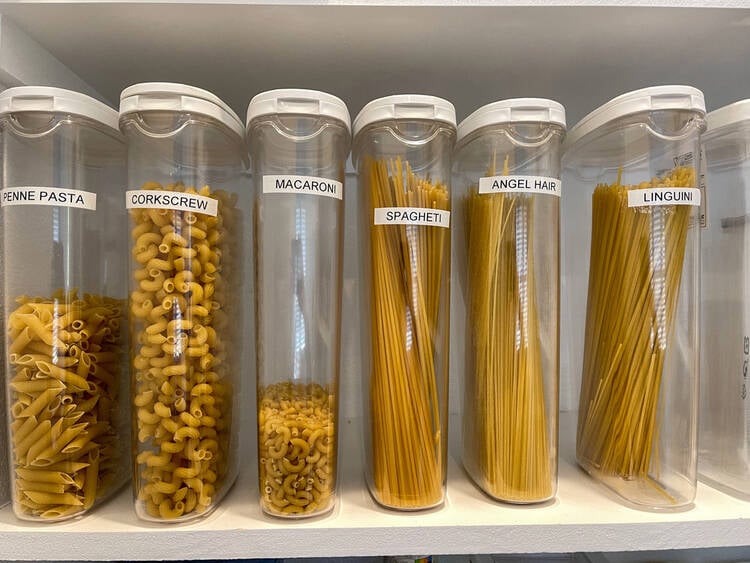
Storing pasta is one way to maintain its freshness, texture, and overall quality for an extended period.
Of course, proper storage not only prevents spoilage but also protects pasta from moisture, pests, and contamination.
Whether you are dealing with dry or fresh pasta, the way you store it can significantly affect its shelf life and taste.
Using the right containers and maintaining suitable environmental conditions are key factors in preserving product integrity.
If you are into wholesale distribution or retail sales of pasta, you need to know how best to store your inventory to reduce waste and maintain customer satisfaction.
Proper labeling, stock rotation, and climate control can make a noticeable difference.
Best Pasta Storage Ideas
-
Airtight Containers
Storing pasta in airtight containers protects it from moisture, pests, and odors. Glass, plastic, or metal containers with tight-sealing lids work well for both dry and cooked pasta. For meal prep, separate portions into smaller containers for convenience.
Label each container with the type of pasta and storage date to ensure rotation and freshness. Airtight storage preserves texture, prevents clumping, and helps maintain flavor, making it one of the simplest and most effective pasta storage solutions for both home cooks and retailers.
-
Original Packaging with Seals
For dry pasta, keeping it in its original packaging with a resealable clip or vacuum seal can extend shelf life. Ensure the package is stored in a cool, dry place away from sunlight. This method minimizes exposure to air and moisture while retaining manufacturer freshness.
For wholesalers and retailers, resealed packages help maintain product integrity during storage and shipping. It’s a convenient and cost-effective way to store large quantities of pasta without investing in additional containers.
-
Cool, Dry Pantry
A pantry or cupboard with low humidity and stable temperature is ideal for storing dry pasta. Avoid areas near stoves, ovens, or sinks where heat and moisture can compromise quality. Keeping pasta in a cool, dry environment prevents mold, discoloration, and flavor loss.
This method works for both short-term and long-term storage. Properly maintained pantries also help reduce pest infestation, making it an essential strategy for home cooks, retailers, and wholesale distributors.
-
Vacuum Sealing
Vacuum sealing removes air from pasta storage bags or containers, preventing oxidation, moisture, and pests. This method is especially useful for long-term storage or bulk purchases. Vacuum-sealed pasta maintains freshness and flavor for months, whether dry or cooked (for short-term freezing).
For retailers and wholesalers, vacuum sealing reduces waste and keeps inventory in optimal condition. It is an efficient, professional-grade storage solution that protects pasta integrity while minimizing packaging space.
-
Freezing Cooked Pasta
Cooked pasta can be frozen for future use, preserving texture and preventing spoilage. Portion pasta into airtight containers or freezer-safe bags, drizzle lightly with oil to prevent sticking, and remove excess air before sealing. Label with date and type for easy rotation.
Frozen pasta reheats quickly in boiling water or the microwave, making it ideal for meal prep and catering. This method extends usability while maintaining flavor, making it a practical solution for busy households or commercial kitchens.
-
Mason Jars or Glass Jars
Glass jars with tight lids provide an airtight, visible storage solution for dry pasta. Mason jars or decorative jars allow you to see contents easily, making organization simpler. They are reusable, eco-friendly, and prevent moisture from compromising the pasta.
For retailers, glass jars offer a premium display option while maintaining product quality. This method combines functionality with aesthetics, helping you organize, showcase, and protect your pasta simultaneously.
-
Stackable Storage Bins
Stackable bins maximize vertical space and improve organization in pantries, kitchens, or storage rooms. Choose bins with airtight lids to protect dry pasta from moisture and pests. For wholesale storage, labeled bins make inventory management easier and ensure quick rotation.
Stackable bins keep pasta organized, reduce clutter, and make large quantities more accessible. This method is particularly effective for commercial kitchens or bulk storage environments, ensuring both efficiency and preservation.
-
Portion-Controlled Bags
Dividing pasta into individual or family-sized portions and storing in airtight bags simplifies meal prep and reduces waste. Label each bag with type and date to maintain rotation. This method works well for both cooked and dry pasta, and is especially convenient for freezing or quick weekday meals.
Portion-controlled storage prevents overcooking or spoilage and ensures consistent serving sizes, making it a practical approach for households, meal preppers, and small food businesses.
-
Refrigerated Storage for Fresh Pasta
Fresh pasta, which has higher moisture content than dry pasta, should be stored in the refrigerator. Place it in airtight containers or tightly wrapped in plastic to prevent drying or absorbing odors. Consume within a few days to maintain flavor and texture.
Refrigerated storage is ideal for homemade pasta, fresh pasta sold in stores, or meal prep. Proper temperature and airtight protection are essential to prevent spoilage and ensure the pasta remains safe and enjoyable to eat.
-
Dark, Moisture-Free Shelving
Store dry pasta on dark, moisture-free shelves to prevent sunlight and humidity from degrading quality. Exposure to light can alter color and flavor, while moisture encourages mold and clumping. Shelving should be clean, elevated, and well-ventilated to ensure consistent conditions.
This method is especially important for bulk storage in wholesale or retail environments. Dark, moisture-free shelving maintains pasta integrity over extended periods, reduces waste, and ensures your product remains visually appealing.
-
Temperature-Controlled Storage
Maintaining a consistent, cool temperature is critical for both dry and fresh pasta. Ideal storage temperatures are around 50–70°F (10–21°C) for dry pasta and 35–40°F (2–4°C) for fresh pasta. Avoid heat sources like ovens or direct sunlight, which can degrade flavor and texture.
For wholesalers, climate-controlled storage rooms or refrigerators extend shelf life and reduce spoilage. Proper temperature management ensures your pasta stays fresh, safe, and appealing for customers over longer periods.
-
Low-Humidity Environments
Moisture is one of the biggest threats to pasta quality. Store pasta in low-humidity environments to prevent mold, clumping, and spoilage. Dry pasta is best kept below 60% relative humidity, while fresh pasta requires airtight refrigerated storage.
For commercial operations, consider dehumidifiers or humidity-controlled storage areas. Low-humidity conditions maintain texture, prevent bacterial growth, and preserve flavor, ensuring both retail and wholesale pasta remain in optimal condition.
-
Using Food-Grade Plastic Bins
Food-grade plastic bins offer durable, stackable storage for large quantities of dry pasta. These bins protect pasta from moisture, pests, and contamination while allowing for easy organization and labeling.
For retailers and wholesalers, bins with tight-fitting lids streamline inventory management and minimize waste. Clear bins also provide visibility of contents for quick stock checks. Using food-grade plastic ensures safety and hygiene, making it a reliable choice for bulk pasta storage.
-
Vacuum-Sealed Bulk Storage
Vacuum-sealing pasta in bulk protects it from oxygen, moisture, and pests, significantly extending shelf life. This is especially effective for wholesale or long-term storage. Use heavy-duty vacuum bags and remove all air before sealing.
Vacuum-sealed pasta can be stacked efficiently and reduces the need for additional preservatives. This method ensures your pasta maintains its flavor, color, and texture while minimizing loss due to spoilage or contamination.
-
FIFO (First In, First Out) Rotation
Implement a First In, First Out (FIFO) system to ensure older pasta inventory is used or sold before newer stock. Label all packages with delivery or production dates, and place older items at the front of shelves.
This method reduces waste, ensures consistent product quality, and maintains proper stock turnover. FIFO is particularly important for wholesalers, retailers, and commercial kitchens handling large quantities of pasta.
-
Clear Labeling and Organization
Labeling pasta with type, brand, production date, and expiration date helps maintain organization and prevents errors. For meal prep, home cooks can label portions with cooking instructions and storage dates.
Clear labeling also aids wholesalers and retailers in inventory management, ensuring products are used in the correct order. Organized storage improves efficiency, reduces waste, and helps maintain freshness across all pasta varieties.
-
Separate Storage by Pasta Type
Different pasta types whole wheat, gluten-free, fresh, or egg-based have varying storage requirements. Store each type separately to maintain optimal conditions and prevent cross-contamination. This ensures the correct temperature, humidity, and shelf life are maintained for each variety.
Separating pasta types also improves organization, makes inventory management easier, and prevents flavor or ingredient transfer between products, which is critical for both retail and wholesale operations.
-
Using Silica Gel Packs
For dry pasta, including food-safe silica gel packs in sealed containers or bulk packaging helps absorb residual moisture and maintain dryness. This prevents mold growth and clumping, especially in humid climates.
Ensure the silica packs are food-grade and do not come in direct contact with the pasta. This simple addition can significantly improve shelf life, especially for long-term storage or wholesale distribution in areas with higher humidity.