

Do you want to start a manufacturing business without building a multimillion-dollar factory?
If YES, here are 50 profitable small-scale manufacturing business ideas you can start modestly and expand as demand grows.
Manufacturing sounds expensive because people immediately imagine enormous factories, hundreds of workers and production lines running around the clock.

But you do not have to start that way. Many successful manufacturers begin with one product, a small workshop and a handful of customers.
Your first operation might involve producing 100 units per week rather than 100,000.
What matters is finding a product people repeatedly buy, learning how to make it consistently and creating enough margin between your production cost and selling price.

For a beginner, I would generally favor products that:
- Are purchased repeatedly;
- Do not spoil quickly;
- Can be manufactured with relatively simple equipment;
- Have several potential customer groups;
- Can initially be sold locally; and
- Allow you to increase production gradually.
You should also distinguish between making a product and manufacturing every component yourself.

For example, a small handbag manufacturer does not need to manufacture leather, zippers and buckles. You purchase the raw materials and manufacture the finished bag.
Likewise, a small electronics company might assemble approved components into a finished accessory instead of attempting to manufacture semiconductor chips. That approach makes small-scale manufacturing much more achievable.
Best Small-Scale Manufacturing Business Ideas
Household and Everyday Consumer Products
1. Soap Manufacturing
Soap is one of the more accessible manufacturing businesses because demand is continuous and you can begin with relatively simple equipment. You might produce:
- Laundry soap
- Bath soap
- Liquid hand soap
- Dishwashing soap
- Specialty scented soap
Your biggest challenge will not necessarily be production. It will be creating a product people prefer over the many established brands already available.
You can read our guide on starting a soap-making business if this idea interests you.
2. Household Detergent Production
You can manufacture laundry detergent, dishwashing liquids and multipurpose cleaning products for homes and commercial customers. Instead of immediately trying to compete nationally, you might supply:
- Hotels
- Cleaning companies
- Restaurants
- Laundromats
- Schools
- Local retailers
Commercial buyers can be particularly attractive because they purchase repeatedly and often care as much about performance and price as they do about a famous consumer brand.
3. Air Freshener Production
Air fresheners can be manufactured as sprays, gels, diffusers and other formats.
This is a business where branding and fragrance selection matter enormously.
You can target homes or develop commercial products for hotels, offices, restaurants, car washes and cleaning companies.
4. Candle and Wax Melt Manufacturing
Candles have evolved far beyond emergency lighting. Scented candles are sold as home décor, gifts and lifestyle products.
A small manufacturer can experiment with fragrances and packaging without investing in a large industrial plant. Gift sets can also increase the average amount customers spend per order.
5. Tissue and Toilet Paper Converting

You do not necessarily have to build a paper mill to enter the tissue business.
A smaller operator can purchase jumbo tissue rolls and convert them into consumer-sized toilet rolls, napkins or related products.
This significantly changes the capital requirement compared with producing paper from raw pulp.
If you want to investigate this model further, see our guide on starting a tissue paper manufacturing business.
6. Paper Bag Manufacturing
Restaurants, bakeries, retailers and gift stores all need packaging. A small paper-bag operation can initially concentrate on standardized bags and later add:
- Printed logos
- Custom sizes
- Food-service bags
- Premium shopping bags
B2B customers that reorder every month can make this more attractive than relying entirely on individual consumers.
7. Garbage and Waste Bag Production
Trash liners and waste bags are basic products purchased by homes, offices, restaurants and cleaning businesses.
Rather than competing only through supermarkets, you can pursue commercial customers that buy cartons in bulk.
Product strength and consistency matter because a cheap garbage bag that tears easily will struggle to retain customers.
8. Cleaning Brush and Mop Production
You can manufacture simple household cleaning tools such as:
- Mops
- Brushes
- Brooms
- Scrubbing tools
- Replacement mop heads
The business becomes more interesting when you supply janitorial companies, hotels and institutions rather than relying entirely on retail sales.
9. Plastic Household Products
With the appropriate molding equipment, you can manufacture products such as buckets, bowls, storage containers and household organizers.
This requires more machinery than businesses such as candle or soap production, but you can specialize in only a few products initially.
Avoid buying molds for dozens of products until you know which ones actually sell.
10. Recycled Plastic Products
Another option is to turn recovered plastic into new products. Depending on your equipment and feedstock, possibilities may include:
- Plastic lumber
- Outdoor furniture components
- Bins
- Pavers
- Simple household items
The business can solve two problems simultaneously: sourcing lower-cost material and finding productive uses for plastic waste.
Paper, Packaging and Office Products
11. Exercise Book and Notebook Production
Schools, offices and households still consume enormous quantities of notebooks even in a digital economy.
You can purchase paper, print or rule it, cut it, bind it and add branded covers.
Schools can become particularly valuable customers if you manufacture customized notebooks bearing the school’s name or logo. See our guide on starting an exercise book production business.
12. Envelopes and File Folder Manufacturing
This is a relatively straightforward paper-converting business. Your customers can include:
- Schools
- Law firms
- Government offices
- Hospitals
- Accountants
- Corporate offices
Standard office files face competition from digital storage, so customized presentation folders, document wallets and specialty packaging may provide better margins than relying only on ordinary manila folders.
13. Cardboard Box Manufacturing
E-commerce has made packaging increasingly important. Small manufacturers can supply boxes to:
- Online retailers
- Food producers
- Cosmetics brands
- Moving companies
- Local manufacturers
Custom-size boxes can solve an expensive problem for small businesses that otherwise have to use oversized standard cartons and excessive packing material.
14. Product Label and Sticker Production
Almost every small manufacturer eventually needs labels. You can produce labels for food jars, cosmetics, bottles, candles, clothing packaging and shipping.
This business pairs particularly well with the growth of small direct-to-consumer brands.
15. Custom Product Packaging
You can specialize in small production runs of:
- Gift boxes
- Cosmetic boxes
- Jewelry boxes
- Food packaging
- Product sleeves
Large packaging factories may not be interested in a customer ordering only 500 units.
That creates room for smaller manufacturers willing to serve emerging businesses.
Food and Agricultural Products
16. Spice and Seasoning Production
You can purchase spices in bulk, formulate blends and sell them under your own brand.
Instead of offering twenty different products immediately, you could begin with several distinctive blends for particular foods.
Examples might include seasoning for chicken, barbecue, seafood or vegetables.
Food manufacturing is regulated, so follow all applicable food-processing, labeling and facility requirements.
17. Nut Butter Production
Peanut butter and other nut or seed spreads can be manufactured on a relatively modest scale. Your differentiation might come from:
- Texture
- Flavor
- Ingredient simplicity
- Premium packaging
- Specialty formulations
Food safety and allergen controls are particularly important in this type of production.
18. Cooking Oil Processing
Where suitable raw materials are readily available, you can process products such as groundnut oil.
The commercial advantage is that cooking oil is a repeat-purchase product.
But profitability depends heavily on the price and reliable supply of your raw materials. See our guide on starting a groundnut oil processing business.
19. Sauce and Condiment Manufacturing
A good proprietary recipe can become the foundation of a food brand. You could produce:
- Hot sauce
- Barbecue sauce
- Marinades
- Dipping sauces
- Specialty condiments
The opportunity is not simply manufacturing the sauce. The real business is developing a product consumers repeatedly reorder.
20. Dried Fruit and Vegetable Production
Dehydration can turn perishable agricultural products into products with a longer shelf life.
You can sell dried fruit as snacks or supply dried ingredients to restaurants and food manufacturers.
This business can be particularly attractive in agricultural regions where fresh produce becomes inexpensive during peak harvest periods.
21. Snack Food Manufacturing
You can produce packaged snacks such as:
- Popcorn
- Roasted nuts
- Plantain chips
- Crackers
- Granola
- Other locally popular snacks
Small production is possible, but distribution determines how far the business can grow. A fantastic snack that rarely reaches stores will still struggle.
22. Ice Production
Bagged ice can have steady demand from restaurants, stores, event businesses and consumers.
Location matters because ice is heavy, low-priced and expensive to transport long distances.
Your production facility also needs a reliable source of potable water and appropriate sanitation.
23. Animal Feed Production
If you operate in an agricultural region, livestock and poultry feed can offer repeat B2B demand.
You can initially specialize in a particular market such as poultry, fish or livestock rather than attempting to serve every animal category.
Consistency is critical because customers depend on the nutritional quality of the product.
24. Organic Fertilizer Production
Agricultural residues and suitable organic waste can be converted into useful fertilizer or soil amendments. Your market might include:
- Farms
- Nurseries
- Landscapers
- Garden centers
- Home gardeners
You can learn more from our guide on starting an organic fertilizer production business.
Fashion and Personal Products
25. Handbag Manufacturing
You can start by manufacturing relatively small quantities rather than trying to compete with mass-produced imported bags. Your opportunity may be in:
- Leather bags
- Canvas bags
- Work bags
- Laptop bags
- Travel bags
- Fashion handbags
You can read our guide on starting a handbag manufacturing business.
26. Belt Manufacturing
Belts require relatively little storage space, and you can manufacture them from leather, synthetic materials or textiles.
You can sell directly to consumers or manufacture belts for fashion retailers under private-label arrangements. See our guide on starting a leather belt manufacturing business.
27. Slippers and Simple Footwear Production
Complex athletic shoes require sophisticated manufacturing, but simpler footwear can be produced on a much smaller scale. Possible niches include:
- Leather sandals
- House slippers
- Fashion slides
- Hotel slippers
Hotels can become useful B2B customers for simple disposable or reusable slippers.
28. Wigs and Hair Extension Production
Hair products can support a surprisingly substantial manufacturing operation. You may begin by assembling or manufacturing:
- Wigs
- Hairpieces
- Extensions
- Braided units
Quality consistency is particularly important because customers quickly notice shedding, poor construction and unrealistic appearance.
If this niche appeals to you, review our guide on starting a hair extension production business.
29. Fashion Jewelry Manufacturing
You do not have to manufacture precious gold jewelry to operate a jewelry business. You can make earrings, necklaces, bracelets and other accessories from:
- Beads
- Stainless steel
- Brass
- Wire
- Resin
- Other suitable materials
Small production runs also make it easier to test new designs before manufacturing large quantities.
See our guide on starting a jewelry line.
30. Clothing and Uniform Manufacturing
Instead of launching a broad fashion brand, consider manufacturing a product with predictable institutional demand. You could make uniforms for:
- Schools
- Restaurants
- Security companies
- Hospitals
- Factories
One institutional order can be much easier to manage than trying to find hundreds of individual fashion customers.
31. Reusable Shopping Bag Manufacturing
Reusable fabric and nonwoven bags can be sold to supermarkets, event companies, conferences and retailers.
Logo printing can turn a simple bag into an advertising product, allowing you to sell directly to businesses rather than competing only on retail shelves.
Furniture and Home Products
32. Furniture Manufacturing
Furniture is one of the best examples of manufacturing that can begin in a small workshop. You can specialize in:
- Tables
- Chairs
- Desks
- Cabinets
- Bed frames
- Custom storage
Custom production can also reduce your need to hold large quantities of finished inventory. See our guide on starting a furniture manufacturing business.
33. Picture Frame Manufacturing
Picture frames require relatively straightforward production equipment and can be customized by size, material and finish.
Your customers can include photographers, artists, interior designers, galleries and consumers.
Custom framing can produce higher margins than competing only with inexpensive mass-market frames.
34. Pillow and Cushion Manufacturing
Instead of starting with an entire mattress factory, you can begin with pillows, throw cushions and cushion inserts. You can supply:
- Furniture stores
- Hotels
- Interior decorators
- Online retailers
- Consumers
Decorative covers can also increase margins.
35. Mattress Manufacturing

This requires more capital than pillows or cushions, but regional mattress manufacturing can still be attractive because mattresses are bulky and expensive to transport.
You can initially focus on a limited range of standard sizes rather than producing dozens of models.
36. Wooden Pallet Manufacturing
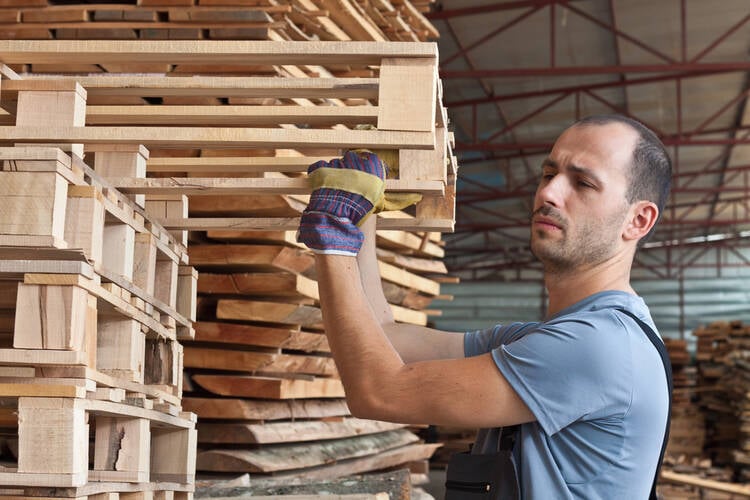
Manufacturers, warehouses and logistics companies continuously use pallets.
This is not a glamorous product, but that can be an advantage. Your customer cares primarily about:
- Dimensions
- Strength
- Reliability
- Delivery
- Price
You can also develop a pallet-repair operation alongside new production.
Construction and Building Products
37. Concrete Block Manufacturing

Blocks are heavy, which means transportation costs encourage buyers to purchase from nearby manufacturers. That gives smaller local producers an opportunity.
Quality is essential. Cutting cement content to make blocks cheaper can destroy your reputation and potentially create dangerous construction products.
38. Concrete Paver Manufacturing
Pavers can be used for:
- Driveways
- Walkways
- Compounds
- Commercial landscaping
You can begin with a limited number of molds and add styles and colors as demand grows.
39. Door Manufacturing
Doors can be manufactured from wood, steel, aluminum and other materials.
A small producer may be better off specializing rather than trying to cover every market.
For example, you could make custom wooden interior doors or security doors for residential builders.
40. Aluminum Window and Door Fabrication
You can purchase aluminum profiles and glass, then fabricate finished doors and windows according to customer measurements.
This is different from manufacturing raw aluminum itself and makes the business achievable on a much smaller scale. Builders and property developers can become important repeat customers.
41. Roofing Sheet Production
With roll-forming equipment, coated metal coils can be converted into roofing profiles.
This requires more capital than many ideas in this list but can still be established as a regional operation rather than a giant steel factory.
Before buying equipment, study which roofing profiles, thicknesses and colors are most commonly used in your market.
42. Construction Nail Manufacturing
Nails are simple products with enormous usage across construction, carpentry and furniture making.
A wire-nail production line can manufacture several nail sizes once the correct equipment is installed. Volume matters because individual nails have tiny margins.
You can read our guide on starting a construction nail manufacturing business.
Modern and Specialized Manufacturing Ideas
43. Custom 3D-Printed Products

3D printing allows a small manufacturer to produce items without investing in expensive industrial molds. You can manufacture:
- Prototypes
- Replacement components
- Organizers
- Hobby products
- Customized accessories
- Small production runs
The best opportunity is often solving a specific problem rather than printing random novelty objects.
44. Laser-Cut Signs and Decorative Products
Laser equipment can be used to produce signs, plaques, decorative panels, branded displays and personalized products from suitable materials.
You can sell both to consumers and businesses. Corporate signage and repeat commercial orders can provide more predictable revenue than relying entirely on personalized gifts.
45. Phone Case Manufacturing and Customization
The smartphone accessory market is enormous, but competing with generic imported products purely on price is difficult. A smaller manufacturer should consider:
- Custom cases
- Corporate-branded cases
- Locally themed designs
- Personalized products
This gives customers a reason to buy from you rather than ordering a generic case from a global marketplace.
46. Pet Accessory Manufacturing
You can manufacture products such as:
- Dog collars
- Leashes
- Pet beds
- Simple toys
- Pet clothing
Many of these products are well suited to small production runs and ecommerce. Customization with a pet’s name can also support premium pricing.
47. Promotional Product Manufacturing
Businesses continually buy branded products for employees, conferences, customers and events. You can manufacture or customize:
- Tote bags
- Notebooks
- Key holders
- Drinkware
- Corporate gift sets
The advantage is that one customer may order hundreds or thousands of units at a time.
48. Wooden Educational Toy Manufacturing
Instead of trying to manufacture complex electronic toys, you can specialize in relatively simple wooden educational products. Examples include:
- Puzzles
- Alphabet boards
- Building sets
- Shape-sorters
- Counting toys
Children’s products can be subject to strict safety requirements, particularly regarding choking hazards, paints, coatings and small parts.
Do not sell toys before understanding the product-safety rules in your target market.
49. Safety Clothing and Reflective Wear Manufacturing
Rather than attempting to manufacture technically demanding safety helmets immediately, a smaller company can start with sewn products such as:
- Reflective vests
- Workwear
- Industrial overalls
- High-visibility jackets
Construction companies, logistics firms, factories and contractors can provide recurring B2B orders.
Where a product is marketed as protective equipment, make sure it meets the standards required for its intended use.
50. Contract Manufacturing for Small Brands
This may be one of the most overlooked manufacturing opportunities. You do not necessarily have to build your own consumer brand.
You can manufacture products for other companies. For example, a small retailer may want to launch its own branded soap but have no interest in operating a factory.
Your company could manufacture, package and label the product for them. The same principle can work with:
- Cleaning products
- Candles
- Food products
- Clothing
- Packaging
- Accessories
Once your production systems are reliable, several private-label customers can keep the same equipment productive without requiring you to acquire every end consumer yourself.
Which Manufacturing Businesses Are Cheapest to Start?
If your capital is limited, I would look first at businesses where production can begin manually or with relatively inexpensive equipment. Examples include:
- Candles
- Soap
- Air fresheners
- Spice blends
- Snack foods
- Fashion jewelry
- Picture frames
- Reusable bags
- Wigs
- Pet accessories
Products involving injection molding, heavy metalworking, automated converting or large construction materials require more equipment and working capital.
Manufacturing Businesses I Would Not Recommend as “Low-Capital”
Some manufacturing businesses can certainly be profitable but should not be presented to a beginner as inexpensive small-scale opportunities. Examples include:
- Pharmaceutical manufacturing
- Tire manufacturing
- Cement production
- Raw glass manufacturing
- Large-scale textile mills
- Ceramic tile plants
- Industrial chemical manufacturing
- Full-scale electrical cable manufacturing
These can require expensive plants, technical specialists, environmental controls, testing laboratories, substantial working capital and regulatory approvals.
There is nothing wrong with entering those industries if you have the capital and experience.
They simply belong in a different category from someone looking for an affordable manufacturing business.
How Do You Choose the Right Product to Manufacture?
Do not choose merely because the product sounds profitable. Before buying equipment, answer five questions.
Who Will Buy It?
Be specific.
“Everybody” is not a target customer.
A better answer is “independent restaurants within 50 miles that buy commercial cleaning chemicals.”
How Much Are Buyers Currently Paying?
This tells you what price the market may realistically accept.
What Will One Unit Cost You to Produce?
Include:
- Raw materials
- Packaging
- Labor
- Electricity
- Waste
- Delivery
How Much Equipment Do You Really Need?
Do not automatically buy the largest production line available. A machine capable of producing 100,000 units per month is a liability if you currently have customers for only 5,000.
Can You Get Raw Materials Reliably?
A profitable product becomes impossible to manufacture when your key raw material disappears for three months.
Supplier availability should therefore be part of your decision about where to locate your manufacturing facility.