
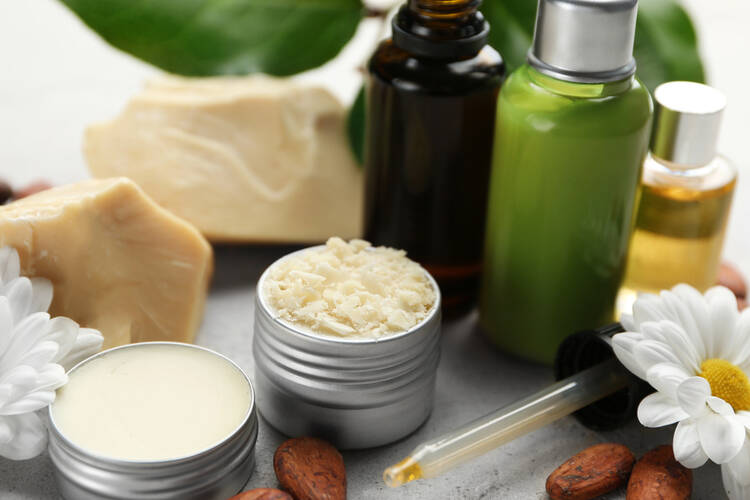
A body butter business is a niche within the personal care/cosmetics industry that develops, manufactures, packages, and sells rich moisturizers typically made using plant butters (such as shea, cocoa, mango, and aloe vera) designed to hydrate the skin deeply.
These products are thicker and more emollient than lotions, forming a barrier to lock in moisture.
Brands often focus on clean, natural, cruelty-free, organic, or vegan formulations, appealing to consumers concerned about skin health, environmental sustainability, and ingredient transparency.
Key activities include sourcing raw materials, product formulation, packaging design (often eco-friendly), regulatory compliance, marketing (online, retail, direct sales), and distribution.
From recent market data: the global body butter market was valued around USD 1.9-2.0 billion in 2024, and is forecast to grow (CAGR 4.6-7.5%) over the coming years. For instance, one report projects it will reach USD 2.77 billion by 2032.
Demand is being driven by rising consumer awareness about skincare, increased disposable income, and a shift toward natural/organic offerings. Regions such as North America and the Asia-Pacific are strong growth areas.
Steps on How to Start a Body Butter Business
-
Conduct Market Research
Conducting market research for a body butter business begins with identifying your target market.
Determine who is most likely to buy your products by considering factors such as age, gender, income level, skin type, lifestyle, and purchasing habits.
For example, consumers interested in organic, cruelty-free skincare may be a key segment.
You can gather insights through surveys, online polls, focus groups, or by analyzing skincare forums and social media communities to understand customer preferences and needs.
Next, analyze industry trends and data to understand market potential. Look at reports on the global body butter and skincare industry to assess demand, growth rates, and consumer behavior patterns.
According to Market Growth Reports, the global body butter market is expected to grow steadily, reaching approximately USD 2.77 billion by 2032.
Pay attention to ingredient trends (e.g., shea butter, mango butter, essential oils), packaging preferences (eco-friendly, minimal), and emerging niches like vegan or fragrance-free products.
You should also study competitors to find market gaps. Identify key brands, both large skincare companies and small artisanal businesses, and analyze their product offerings, price points, branding strategies, distribution channels, and customer reviews.
This helps you differentiate your business through unique selling points such as ingredients, scent combinations, or personalized blends.
Finally, evaluate distribution and marketing opportunities. Assess where your target customers shop online marketplaces, local farmers’ markets, beauty supply stores, or boutiques, and decide the best channels for your business.
Combine this with digital marketing research, such as keyword analysis and social media engagement, to build a strategic entry plan.
a. Who is the Target Market for a Body Butter Business?
The target market for a body butter business typically includes health-conscious consumers, skincare enthusiasts, and individuals seeking natural or luxurious moisturizing solutions.
These customers often prioritize ingredients, preferring products made with shea, cocoa, or mango butter, essential oils, and plant-based additives.
This market can be segmented further by demographics and lifestyle. Women between the ages of 18 and 45 are a core audience, as they are the most frequent buyers of skincare products.
However, the segment also includes men interested in grooming, people with sensitive or dry skin, and those with conditions like eczema or psoriasis seeking deep hydration.
b. Is Body Butter Business a Profitable Business?
Yes, a body butter business can be profitable due to low production costs, high markups, and increasing consumer demand for natural skincare products.
With the global body butter market projected to reach USD 2.77 billion by 2032, there’s strong growth potential.
Profitability depends on factors like branding, product quality, marketing, and distribution strategies.
c. Are There Existing Niches in the Industry?
No, there are no existing niches when it comes to the body butter business.
d. Who are the Major Competitors?
- The Body Shop
- Bath & Body Works
- Tree Hut
- SheaMoisture
- Nubian Heritage
- Palmer’s
- Josie Maran Cosmetics
- Lush Cosmetics
- Burt’s Bees
- Jergens
- Hempz
- Pacifica Beauty
- EOS (Evolution of Smooth)
- Alaffia
- Kiehl’s
- Raw Sugar Living
- 100% Pure
- Bliss
- Carol’s Daughter
- Soap & Glory.
e. Are There County or State Regulations or Zoning Laws for Body Butter Business in the United States?
Yes, there are county and state regulations and zoning laws that apply to body butter businesses in the United States.
These rules vary depending on the location and scale of the business, whether it is home-based, retail, or manufacturing.
Local zoning laws may restrict where you can produce or sell cosmetics, so it is essential to check with your city or county planning department before starting operations to ensure your chosen location complies with zoning requirements.
In many states, body butter is considered a cosmetic product, so businesses must comply with federal guidelines under the U.S. Food and Drug Administration (FDA).
While the FDA does not require pre-market approval for cosmetics, products must be safe for use, properly labeled, and free from misbranding.
States may also have their own cosmetic registration, labeling, or ingredient disclosure requirements to ensure consumer safety.
Health and safety regulations may apply if you are manufacturing body butter from home or in a commercial space.
Depending on the jurisdiction, you may need business permits, fire safety inspections, or health department approvals.
Some counties also regulate the storage of ingredients, waste disposal, and ventilation systems to maintain sanitary conditions.
Lastly, business licensing and sales tax registration are required in most states. You may need a state seller’s permit to collect sales tax on products.
Some states require additional permits for operating retail stores, farmers’ market booths, or e-commerce.
f. Is There a Franchise for Body Butter Business?
No, there are no franchise opportunities for the body butter business.
g. What Do You Need to Start a Body Butter Business?
- Business plan
- Product formulations and recipes
- High-quality ingredients (e.g., shea butter, oils, essential oils)
- Mixing and production equipment
- Packaging materials and labels
- Workspace or production area
- Business license and permits
- Branding and logo
- Website or e-commerce platform
- Marketing strategy
- Insurance coverage
- Record-keeping and inventory system.
-
Choose a Memorable Business Name
When looking to start a business, before you can begin to file the necessary documents with the constituted authorities or start your website, it is necessary that you come up with a name that you will be recognized with.
It is essential that the name you come up with can easily be pronounced, is unique and easily memorable.
Some of the catchy business name ideas suitable for a body butter business are;
- Royal Dutch® Body Butter Company, Inc.
- Green Life® Body Butter Company, Co.
- Joy McPherson® Body Butter Company, Inc.
- Nora Spiff® Body Butter Company, Inc.
- Adah Abraham® Body Butter Company, Inc.
- Theodora Edison® Body Butter Company, Inc.
- Ariel Darlington® Body Butter Company, LLC
- Amos Wycliff® Body Butter Company, Inc.
- Rowland Norman® Body Butter Company, LLC
- Chloe Chapman™ Body Butter Company, Inc.
- Tracie Paulson® Body Butter Company, Inc.
- Magritte Foods® Body Butter Company, Inc.
- Gordon Bobson™ Body Butter Company, Inc.
- Rita Rhodes® Body Butter Company, Inc.
- Grace Court® Body Butter Company, LLC
- Golden Skin® Body Butter Company, Inc.
- Janice Yorke® Body Butter Company, Inc.
- Georgia Victor™ Body Butter Company, Inc.
- Shavonne Stallone® Body Butter Company, Inc.
- Ruth Samson® Body Butter Company, Inc.
-
Register Your Business
a. What Type of Business Structure is Best for the Body Butter Business?
The ideal business structure for body butter company is determined by a variety of factors, including the size of the company, the number of owners, the level of personal liability the owners are ready to accept, and the tax consequences of the various business structures.
However, we normally recommend a limited liability company structure. An LLC is a hybrid corporate form that provides the flexibility of a partnership while also providing its owners with limited liability protection.
An LLC can have one or more owners, and the owners are not personally accountable for the debts or liabilities of the business.
b. Steps to Form an LLC
- Choose a Name for Your LLC.
- File Articles of Organization.
- Choose a registered agent.
- Decide on member vs. manager management.
- Create an LLC operating agreement.
- Comply with other tax and regulatory requirements.
- File annual reports.
c. What Type of License is Needed to Open Body Butter Business?
- Business license
- Environmental permit
- Health department permit
- Fire safety permit
- Business License or Permit
- FDA Cosmetic Labeling Compliance
- Good Manufacturing Practice (GMP) Certification
- Seller’s Permit or Sales Tax Permit
- Organic Certification (if applicable)
- Zoning permit
- Water usage permit
- Transportation permits (if applicable)
- Trade license
- Import/export license.
d. What Type of Certification is Needed to Open Body Butter Business?
- Good Manufacturing Practice (GMP) Certification
- Organic Certification (if applicable).
e. What Documents are Needed to Open Body Butter Business?
- Business plan
- Business registration documents
- Employer Identification Number (EIN)
- Business license
- Seller’s permit or sales tax permit
- Zoning and land use permits
- FDA cosmetic labeling compliance documents
- Product formulations and ingredient lists
- Good Manufacturing Practice (GMP) records
- Insurance policy documents
- Supplier agreements and invoices
- Packaging and labeling proofs
- Health and safety inspection reports
- Operating agreements or partnership contracts
- Marketing and branding materials.
f. Do You Need a Trademark, Copyright, or Patent?
Trademark:
A trademark is essential for protecting your brand name, logo, or slogan associated with your body butter business.
It helps distinguish your products from those of other businesses in the market.
Registering a trademark with the relevant intellectual property office provides legal protection and exclusive rights to use that mark in connection with your products.
Copyright:
Copyright protection is not typically applied to body butter products themselves, but may be relevant for creative content associated with your business, such as marketing materials, website content, or promotional videos.
Copyright protection arises automatically upon the creation of original works, but registering copyrights with the appropriate authorities can offer additional legal benefits.
Patent:
Patents are generally not applicable to the production of body butter products, as it is a natural product.
Patents are more relevant for inventions or processes that are novel, non-obvious, and have a specific industrial application.
-
Cost Analysis and Budgeting
a. How Much Does It Cost to Start a Body Butter Business?
The cost to start a body butter business can vary widely depending on factors such as the size of the business, location, equipment and supplies needed, staffing costs, marketing expenses, and more.
However, a rough estimate could range from $15,000 to over $500,000, depending on the size and scope of the business.
b. What are the Costs Involved in Starting a Body Butter Business
- Legal and administrative costs (the cost of obtaining business licenses and permits, registering the business, and consulting with attorneys and accountants): $7,500
- Equipment and supplies: $150,000
- Staffing costs: $65,000 (first 2 months)
- Rent/lease: $85,000
- Marketing and advertising costs: $3,000
- Insurance costs: $2,800
- Miscellaneous Expenses: $5,000
c. What Factors Determine the Cost of Opening Body Butter Business?
- Business Scale & Equipment – Costs vary based on whether it’s home-based or commercial and the type of machinery used.
- Ingredients & Packaging – Quality, sourcing, and packaging design significantly impact expenses.
- Branding & Marketing – Logo design, advertising, and promotional activities affect startup costs.
- Licensing & Compliance – Permits, certifications, and regulatory requirements add to initial expenses.
- Space & Utilities – Rental fees, utilities, and overhead depend on the location and size of the operation.
- Labor & Insurance – Hiring staff and obtaining proper insurance influence ongoing costs.
- Inventory & Distribution – Storing ingredients, managing stock, and setting up shipping or retail channels affect total investment.
d. Do You Need to Build a Facility?
It is not necessary to build a new facility for your body butter business, but, if you have the required finance, it will pay you to build your own facility.
The truth is that building or reconstructing a facility for your body butter business will help you come up with a facility that will perfectly fit into your overall business goals and vision.
e. What are the Ongoing Expenses of Body Butter Business?
- Raw materials and ingredient replenishment
- Packaging and labeling supplies
- Production equipment maintenance
- Rent or facility lease
- Utilities (electricity, water, internet)
- Labor and staff wages
- Marketing and advertising campaigns
- Website hosting and e-commerce fees
- Business insurance premiums
- Licenses and certification renewals
- Shipping and distribution costs
- Inventory storage and management.
f. What is the Average Salary of your Staff?
- General Manager – $75,000 per year
- Quality Control Staff – $60,000 per year
- Administrative Assistant (Cashier) – $45,000 per year
- Processing and Production Staff – $50,000 per year
- Logistics and Shipping Staff – $55,000 per year
- Customer Service Executive -$40,000 per year
g. How Do You Get Funding to Start Body Butter Business?
- Raising money from personal savings and sale of personal stocks and properties
- Raising money from investors and business partners
- Sell shares to interested investors
- Applying for a loan from your bank/banks
- Pitching your business idea and applying for business grants and seed funding from the government, donor organizations, and angel investors
- Source for soft loans from your family members and your friends.
-
Write a Business Plan
a. Executive Summary
Chloe Chapman™ Body Butter Company, Inc., based in Houston, Texas, is a skincare business specializing in the production and sale of premium, natural body butters.
The company focuses on using high-quality ingredients such as shea butter, cocoa butter, essential oils, and plant-based extracts to create deeply moisturizing products.
Its mission is to provide consumers with luxurious, eco-friendly skincare solutions that nourish the skin while promoting sustainable beauty practices.
The business aims to serve a growing market of health-conscious consumers seeking clean, cruelty-free, and effective skincare alternatives.
With increasing demand for natural cosmetics and the global body butter market projected to reach USD 2.77 billion by 2032, Chloe Chapman™ Body Butter Company is positioned to capture a share of this expanding industry.
The company plans to target both online and offline sales channels, including e-commerce platforms, local retailers, and wellness events.
To achieve growth, Chloe Chapman™ Body Butter Company, Inc. will focus on strong branding, exceptional product quality, and strategic marketing.
The company’s operations will emphasize regulatory compliance, ethical sourcing, and customer satisfaction.
By combining innovation with sustainability, the business intends to build a loyal customer base and establish itself as a trusted skincare brand in Texas and beyond.
b. Products and Services
At Chloe Chapman™ Body Butter Company, Inc., our products focus on high-quality, natural body butters designed to deeply moisturize and nourish the skin.
We use premium ingredients such as shea butter, cocoa butter, essential oils, and plant extracts, ensuring each product is cruelty-free, eco-friendly, and suitable for all skin types.
Our offerings include a variety of scented and unscented body butters, catering to customers seeking both luxury and effective skincare solutions.
In addition to our products, we provide personalized customer experiences, including consultations for selecting the right body butter and options for custom blends.
Our services also extend to gift sets, wellness events, and collaborations with local boutiques.
By combining exceptional products with attentive service, Chloe Chapman™ Body Butter Company aims to deliver skincare solutions that enhance self-care routines while promoting sustainability and ethical beauty practices.
c. Mission Statement
“At Chloe Chapman™ Body Butter Company, Inc., our mission is to provide high-quality, natural, and eco-friendly body butters that nourish and protect the skin.
We are committed to sustainability, ethical sourcing, and cruelty-free practices, while delivering luxurious skincare experiences.
Our goal is to empower customers to embrace self-care, promote healthy skin, and enjoy products that are both effective and environmentally responsible.”
Vision Statement:
“Our vision at Chloe Chapman™ Body Butter Company, Inc. is to become a leading brand in natural skincare, recognized for luxurious, eco-friendly body butters.
We aim to inspire self-care, promote sustainability, and create a loyal community of customers who value high-quality, ethically made products that enhance skin health and well-being.”
d. Goals and Objectives
At Chloe Chapman™ Body Butter Company, Inc., our primary goal is to establish a trusted brand in the natural skincare market by offering high-quality, eco-friendly body butters.
We aim to build a loyal customer base through exceptional products, sustainable practices, and ethical sourcing.
Our objectives include expanding market reach via online and retail channels, creating innovative product lines, and providing personalized customer experiences.
Additionally, we strive to promote wellness, self-care, and environmental responsibility while achieving steady business growth and profitability.
e. Organizational Structure
- Chief Executive Officer
- General Manager
- Quality Control Staff
- Administrative Assistant (Cashier)
- Processing and Production Staff
- Logistics and Shipping Staff
- Customer Service Executive.
Marketing Plan
a. SWOT Analysis
Strength
- High-quality, natural ingredients – Products formulated with shea butter, cocoa butter, essential oils, and plant extracts attract health-conscious consumers.
- Eco-friendly and cruelty-free – Appeals to the growing market of ethical and sustainable skincare buyers.
- Strong brand identity – Focus on luxury, self-care, and wellness sets the company apart from generic cosmetic brands.
- Flexibility in product offerings – Ability to offer custom blends, gift sets, and scented or unscented body butters.
- Local presence in Houston, Texas – Access to a growing urban consumer base and potential partnerships with local retailers and wellness events.
Weakness
- High production costs – Premium ingredients and sustainable packaging increase expenses.
- Limited brand recognition – As a new business, it may struggle to compete with established skincare brands.
- Dependence on niche market – Primarily appeals to eco-conscious and luxury-focused consumers, limiting immediate mass-market reach.
- Small marketing budget – May constrain awareness-building and online visibility.
Opportunities
- Growing natural skincare market – Global demand for body butters and organic products is increasing.
- E-commerce expansion – Online sales channels allow broader reach and scalability.
- Collaborations with wellness and spa centers – Partnerships can enhance brand visibility and sales.
- Custom and personalized products – Trends in bespoke skincare offer potential differentiation.
Threats
- Intense competition – Both large cosmetic brands and small artisanal businesses compete in the natural skincare market.
- Regulatory changes – FDA guidelines, labeling requirements, and state regulations could increase compliance costs.
- Supply chain disruptions – Dependence on quality ingredients may be affected by market fluctuations or import restrictions.
- Economic downturns – Luxury and non-essential skincare products are often impacted during periods of reduced consumer spending.
b. How does Body Butter Business Make Money?
Body butter businesses make money by selling high-margin skincare products made from natural ingredients like shea and cocoa butter.
Revenue comes from direct sales, online stores, retail partnerships, and gift sets.
Profitability is driven by brand differentiation, premium pricing, repeat customers, and upselling options such as custom blends, subscription boxes, or seasonal product lines.
c. Payment Options
- Credit and Debit Cards
- PayPal
- Apple Pay and Google Wallet
- Gift Cards and Store Credit
- Cash on delivery.
d. Sales & Advertising Strategies
- Social Media Marketing – Promote products on Instagram, TikTok, Facebook, and Pinterest with engaging content, tutorials, and influencer partnerships.
- E-commerce Optimization – Create a user-friendly website with online shopping, subscription options, and promotions.
- Email Marketing – Send newsletters, product updates, and special offers to build customer loyalty.
- Local Events & Pop-Ups – Sell at farmers’ markets, fairs, and wellness events to gain visibility.
- Collaborations & Partnerships – Partner with spas, boutiques, or wellness centers to reach new audiences.
- Referral Programs – Encourage existing customers to refer friends in exchange for discounts or free products.
- Content Marketing – Publish blog posts, skincare tips, and videos to educate customers and improve search engine visibility.
- Paid Advertising – Use Google Ads, social media ads, or influencer sponsorships to drive targeted traffic.
- Loyalty Programs – Reward repeat customers with points, discounts, or exclusive products.
- Seasonal Promotions & Bundles – Offer themed gift sets or limited-edition products during holidays to boost sales.
Financial Projection
a. How Much Should You Charge for Your Product/Service?
We will sell our premium, natural, or organic body butters from $10 to $35 per 4–8 oz jar.
b. How Much Profit Do Body Butter Business Owners Make a Year?
The profit of body butter business owners varies widely depending on factors such as production costs, pricing strategies, sales volume, and operational efficiency.
On average, owners can aim to make a yearly profit ranging from tens of thousands to hundreds of thousands of dollars, with potential for significant growth over time.
c. What Factors Determine the Amount of Profit to Be Made?
- Cost of Production – Expenses for raw materials, packaging, labor, and overhead directly affect profit margins. Lower costs with quality ingredients increase profitability.
- Pricing Strategy – Competitive pricing, premium positioning, and markups determine how much revenue exceeds costs.
- Sales Volume – Higher sales, repeat customers, and bulk orders increase total profit.
- Market Demand – Consumer interest in natural, organic, or luxury skincare products influences revenue potential.
- Marketing Effectiveness – Successful advertising, promotions, and branding can drive more sales and customer loyalty.
- Distribution Channels – Selling through online stores, retail partnerships, or events affects margins and reach.
- Operational Efficiency – Efficient production, inventory management, and cost control enhance profitability.
- Product Differentiation – Unique formulations, scents, or custom options can justify higher prices and attract loyal customers.
- Economic Conditions – Disposable income and consumer spending trends impact sales of non-essential luxury products.
d. What is the Profit Margin of Body Butter Business Product/Service?
In general, a profitable body butter business may have a profit margin ranging from 15 percent to 30 percent or more.
However, this can vary widely depending on the specific business and market.
e. What is the Sales Forecast?
- First Fiscal Year (FY1): $ 250,000
- Second Fiscal Year (FY2): $600,000
- Third Fiscal Year (FY3): $1.5 million
-
Set Up your Shop/Office
a. How Do You Choose a Perfect Location for Body Butter Business?
- Target Market Proximity – Choose a location near your ideal customers, such as urban areas, wellness communities, or shopping districts.
- Foot Traffic & Visibility – High-traffic areas increase walk-in sales and brand exposure.
- Accessibility & Parking – Ensure the location is easy to reach with adequate parking or public transport options.
- Cost & Affordability – Balance rental or purchase costs with expected revenue to maintain profitability.
- Complementary Businesses – Being near spas, boutiques, or health stores can drive cross-traffic and partnership opportunities.
b. What State and City is Best to Open Body Butter Business?
- Sacramento, California
- Little Rock, Arkansas
- Houston, Texas
- New Orleans, Louisiana
- Minneapolis, Minnesota
- Chicago, Illinois
- Greenville, Mississippi
- Miami, Florida
- Sacramento, California
- Kansas City, Missouri.
c. What Equipment is Needed to Operate the Body Butter Business?
- Mixing Bowls and Spoons – For combining ingredients manually.
- Double Boiler or Melting Pots – To safely melt butters and oils without burning.
- Hand Mixer or Stand Mixer – For whipping body butter to a smooth, fluffy texture.
- Measuring Cups and Scales – For accurate ingredient proportions.
- Heat-Resistant Containers – To hold and pour melted ingredients.
- Spatulas – For scraping, mixing, and filling jars.
- Jars and Containers – For packaging the finished product.
- Labels and Label Printer – For product identification and branding.
- Storage Shelves or Racks – To organize ingredients and finished products.
- Sanitizing Supplies – Cleaning agents and tools to maintain hygiene standards.
- Gloves and Hairnets – For safe and sanitary production.
- Thermometers – To monitor melting and cooling temperatures for consistency.
Optional: Commercial-grade mixers or filling machines if scaling production for larger batches.
-
Hire Employees
Hiring competent employees for a new body butter company is important for ensuring smooth operations, maintaining product quality, and driving business growth.
Competent employees bring expertise, efficiency, and reliability to the workplace, contributing to overall productivity and success.
When hiring, prioritize qualities such as industry experience, technical proficiency, attention to detail, adaptability, and communication skills.
Look for candidates who demonstrate a strong work ethic, teamwork abilities, and a commitment to upholding quality and safety standards.
By assembling a skilled and dedicated team, the body butter company can effectively navigate challenges, capitalize on opportunities, and achieve long-term success in the industry.
-
Launch the Business Proper
Organizing a launch party for a new body butter business is important for building brand awareness, fostering connections with potential customers, and creating a positive first impression.
The event provides an opportunity to showcase the product’s quality, flavor profiles, and the brand’s commitment to excellence.
A well-executed launch party can generate media coverage, social media buzz, and word-of-mouth marketing.
It allows stakeholders, including customers, distributors, and partners, to experience the brand firsthand, leading to increased loyalty and market recognition.
Overall, a launch party is a strategic investment in establishing a strong foundation for the brand and cultivating a thriving customer base.
a. What Makes Body Butter Business Successful?
- Quality Control: Maintaining consistent and high-quality products through stringent quality control measures.
- Efficiency: Optimizing production processes to minimize wastage, reduce costs, and maximize productivity.
- Market Understanding: Identifying and responding to market demands, trends, and consumer preferences effectively.
- Innovation: Embracing technological advancements and implementing innovative practices to stay competitive and enhance operations.
- Customer Satisfaction: Prioritizing customer needs, delivering exceptional service, and building strong relationships to foster loyalty and repeat business.
b. What Happens During a Typical Day at Body Butter Business?
A typical day at a body butter business begins with preparing the workspace and ingredients.
Staff check inventory, sanitize equipment, and measure raw materials such as shea butter, cocoa butter, oils, and essential oils.
Production involves melting, mixing, and whipping ingredients to create smooth, luxurious body butters, followed by filling jars or containers, labeling, and packaging products for sale or shipment.
The day also includes administrative and customer-focused tasks such as managing orders, updating online stores, responding to customer inquiries, and planning marketing activities.
Business owners often engage in social media promotion, product photography, and collaboration efforts with retailers or local events.
End-of-day tasks may include inventory updates, cleaning, and preparing production schedules for the following day.
c. What Skills and Experience Do You Need to Build a Body Butter Business?
- Understanding of body butter processes, market dynamics, and industry trends.
- Proficiency in strategic planning, financial management, and business operations.
- Knowledge of body butter equipment, maintenance procedures, and technological advancements.
- Skills in sourcing raw materials, managing inventory, and optimizing supply chain logistics.
- Familiarity with safety regulations, environmental standards, and industry compliance requirements.
- Strong leadership skills to inspire and motivate teams, delegate tasks, and drive business objectives.
- Ability to identify challenges, troubleshoot issues, and implement effective solutions.
- Dedication to meeting customer needs, delivering exceptional service, and building lasting relationships.