
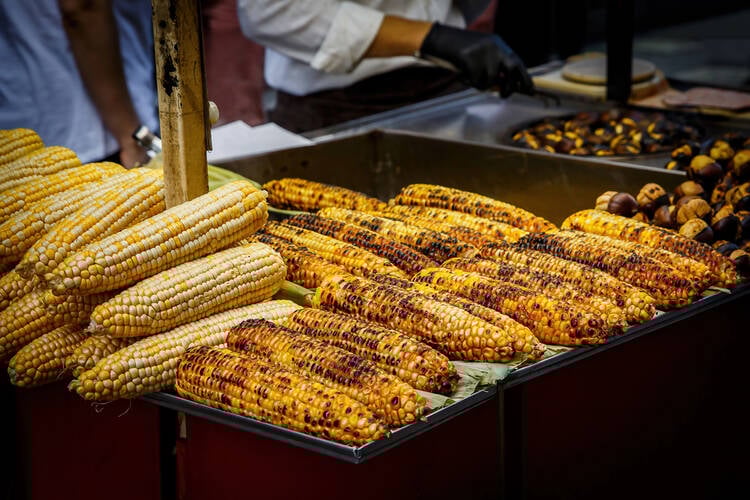
A corn-roasting business is essentially a mobile or event-based food concession that specializes in roasting fresh ears of corn on the cob (often in husk) and selling them with seasonings and toppings.
The equipment typically includes a large roaster drum or conveyor style that uses propane or charcoal to cook multiple ears at once, making it suitable for fairs, festivals, farmers’ markets, or street-food settings.
Vendors may also serve variations, add toppings, and position themselves at high-foot-traffic locations.
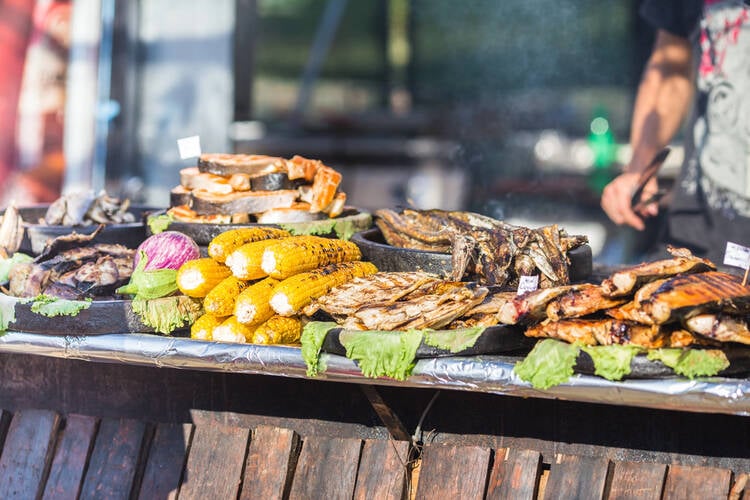
From a business perspective, the model is relatively low-to-moderate cost and seasonal in many cases.
One estimate places startup costs for a boiled (or roasted) corn stand at roughly between US $5 000-25,000, covering equipment, permits, and inventory.
On the market side, the global roasted corn market is projected to reach about US $4.1 billion by 2032, with a growth rate of around 4.9% annually from 2024 to 2032.
On the flip side, it can suffer from seasonality, inconsistent work volume, equipment, and liability issues.
Steps on How to Start a Corn Roasting Business
-
Conduct Market Research
Conducting market research for a corn roasting business begins with identifying your target market.
Start by analyzing local demographics, event calendars, and food trends to understand who is most likely to purchase roasted corn.
Consider factors such as age, cultural preferences, dietary habits, and spending power.
Families at fairs, health-conscious individuals, and festival attendees are often drawn to roasted corn as a quick, affordable, and healthy snack option.
Next, study the competition in your area. Visit farmers’ markets, fairs, and food festivals to observe other corn vendors or similar food stalls.
Take note of their pricing, presentation, portion sizes, seasonings, and peak hours. Assess how crowded their stalls are and what sets them apart.
This on-the-ground research helps you identify gaps in the market, such as underserved locations, unique seasoning blends, or superior customer service that your business can capitalize on.
Third, evaluate location opportunities and seasonal patterns. Corn roasting businesses often thrive in high foot-traffic areas like parks, street fairs, carnivals, and busy intersections.
Analyze local regulations for vending, required permits, and potential event partnerships.
Finally, collect feedback through surveys, interviews, and online polls. Ask potential customers about preferred flavors, price points, and purchasing frequency.
Use this data to fine-tune your offerings, pricing strategy, and marketing message.
a. Who is the Target Market for Corn Roasting Business?
The target market for a corn roasting business typically includes the following groups:
- Commuters and Travelers – People driving along highways, busy roads, or rural routes often look for quick, hearty meals.
- Local Workers and Laborers – Construction crews, delivery drivers, factory workers, and farmers who need filling, affordable meals during work breaks are key repeat customers.
- Event Attendees – Setting up near fairs, festivals, sports events, or weekend markets can attract crowds seeking casual, comfort food.
- Families and Groups – Families on road trips or locals seeking an informal meal together can be drawn in by family-sized portions, combo deals, or picnic-friendly service.
b. Is Corn roasting a Profitable Business?
Yes, a corn-roasting business can be profitable, though results depend heavily on location, operations, and volume.
The global roasted corn market was valued at around USD 3.32 billion in 2024, and is projected to reach about USD 5.47 billion by 2034, growing at a CAGR of 5.1%.
At the micro level, some vendors report net profit margins between 40% and 70%, thanks to low input costs (corn is inexpensive) and fairly strong demand in the right settings.
Startup costs can be modest compared to brick-and-mortar restaurants, making this an appealing niche.
c. Are There Existing Niches in the Industry?
No, there are no existing niches when it comes to the corn roasting business.
d. Who are the Major Competitors?
- Aw Shucks Roasted Corn — Allentown, Pennsylvania
- Shux Y’all Fire Roasted Corn & More — Mobile, Alabama
- Roasted Corn & Company — Chicagoland, Illinois
- Carolina Corn Roasters — Greensboro/Triad, North Carolina
- QuintAnnas Roasted Corn — Colorado Springs, Colorado
- Muther Shuckers Roasted Cowboy Corn — Dallas, Texas
- The Orange Roaster — Minneapolis, Minnesota
- Custom Corn & More — Julian / Guilford County, North Carolina
- Corn Roast (Stand) – Minnesota State Fair
- Aww Shucks Fire Roasted Corn — Birmingham, Alabama
- The Roasted Corn Stand — Houston, Texas
- Elote Fuego — Los Angeles, California
- Dura’s Roasted Corn On The Cob
- RoastWorks Flame Roasted Corn
- Rolling Thunder Snack Company – Roasted Corn
- Hog Wild BBQ (roasted corn vendor at fair)
- “Corn Roast King of the Fair” Stand
- Roasted Corn & Company – Chicago (Event Catering)
- Aw Shucks Roasted Corn – Festival Events — (Repeat location but festival-events variant)
- Custom Corn & More – Julian, NC (Street Corn & More).
e. Are There County or State Regulations or Zoning Laws for Corn Roasting Business in the United States?
Yes, corn roasting businesses in the United States are subject to various county and state regulations, including health, safety, and zoning laws.
Health departments at the county or city level typically require food vendors to obtain food handler permits, pass inspections, and comply with sanitation standards.
These regulations ensure safe food preparation, proper storage, and clean operating conditions.
Some counties may restrict food vending to certain commercial or mixed-use zones.
You will need to check with your local zoning office to ensure your chosen location is compliant.
Operating on public property, like roadsides or parks, may require special permits or leases. Private land use typically requires written permission from the owner.
In addition, you may need a business license, a sales tax permit, and a mobile food vendor permit, depending on your state.
Some states, like Texas or California, have specific rules due to fire risks associated with roasting corn.
Fire department approval and use of certified propane or wood-burning equipment may be required.
It is important to contact your local county health and planning departments before launching.
f. Is There a Franchise for the Corn Roasting Business?
No, there are no franchises for corn roasting businesses.
g. What Do You Need to Start a Corn Roasting Business?
- Commercial corn roaster
- Propane tanks and fuel supply
- Corn inventory (fresh ears of corn)
- Seasonings and toppings
- Serving equipment (tongs, trays, napkins)
- Mobile cart, trailer, or booth setup
- Business licenses and permits
- Cash register or POS system
- Signage and branding materials
- Cleaning and sanitation supplies.
-
Choose a Memorable Business Name
When looking to start a business, before you can begin to file the necessary documents with the constituted authorities or start your website, it is necessary that you come up with a name that you will be recognized with.
It is essential that the name you come up with can easily be pronounced, is unique and easily memorable.
Some of the catchy business name ideas suitable for a corn roasting business are;
- Connie Whyte® Corn Roasting, Inc.
- All Africana™ Corn Roasting, LLC
- New Jamaica© Corn Roasting, Inc.
- Sean Lawson® Corn Roasting, Inc.
- Doris Thomson® Corn Roasting, LLC
- Patty Edwards™ Corn Roasting, Inc.
- Lucia Wayne® Corn Roasting, Inc.
- Ruth Keith™ Corn Roasting, LLC
- Jessica Lawrence© Corn Roasting, Inc.
- Grace Brown® Corn Roasting, Inc.
- Shelly Hulk® Corn Roasting, Inc.
- Anna Hilton™ Corn Roasting, Inc.
- Mexico Farms™ Corn Roasting, LLC
- Jean McGlone® Corn Roasting, Inc.
- Camelia Foods® Corn Roasting, Inc.
- Michael Scofield© Corn Roasting, Inc.
- Felicia Foods® Corn Roasting, Inc.
- Crunchie Foods© Corn Roasting, LLC
- Indian Bazaar® Corn Roasting, Inc.
- Loveland Williams® Corn Roasting, Inc.
-
Register Your Business
a. What Type of Business Structure is Best for a Corn Roasting Business?
The ideal business structure for a corn roasting business is determined by a variety of factors, including the size of the company, the number of owners, the level of personal liability the owners are ready to accept, and the tax consequences of the various business structures.
However, we normally recommend that you start the business with minimal liability.
An LLC is a hybrid corporate form that provides the flexibility of a partnership while also providing its owners with limited liability protection.
An LLC can have one or more owners, and the owners are not personally accountable for the debts or liabilities of the business.
b. Steps to Form an LLC
- Choose a Name for Your LLC.
- File Articles of Organization.
- Choose a registered agent.
- Decide on member vs. manager management.
- Create an LLC operating agreement.
- Comply with other tax and regulatory requirements.
- File annual reports.
c. What Type of License is Needed to Open a Corn Roasting Business?
- General Business License
- Seller’s Permit
- Food service license
- Music License
- Health department permit
- Building permit
- Zonal Permit
- Signage Permit
d. What Type of Certification is Needed to Open a Corn Roasting Business?
Apart from a food handler’s certificate, you do not need any certifications to open a corn roasting business; it is a business that is open to all and sundry.
e. What Documents are Needed to Open a Corn Roasting Business?
- DBA
- EIN
- Business and liability insurance
- Federal Tax Payer’s ID
- Certificate of Incorporation
- Business License
- Business Plan
- Operating Agreement for LLCs
- Insurance Policy
- Music License
- Seller’s Permit
- Food service license (if applicable)
- Seller’s Permit
- Health department permit
- Building permit
- Zonal Permit
- Signage Permit
f. Do You Need a Trademark, Copyright, or Patent?
A corn roasting business may or may not need a trademark, copyright, or patent, and this is dependent on the specific products, services, and branding associated with the business.
Be that as it may, a corn roasting business can obtain a trademark for its business name or logo to prevent others from using similar names or logos.
The business may consider obtaining a copyright for its original marketing materials or other creative content that it produces.
It can consider obtaining a patent if it has invented a unique piece of equipment or technology that is used in its business operations.
-
Cost Analysis and Budgeting
a. How Much Does It Cost to Start a Corn Roasting Business?
The cost to start a corn roasting business can vary widely depending on factors such as the size of the business, location, equipment and supplies needed, staffing costs, marketing expenses, and more.
However, a rough estimate could range from $2,000 to $80,000 or more, depending on the size and scope of the business.
b. What are the Costs Involved in Starting a Corn Roasting Business
- Legal and administrative costs (the cost of obtaining business licenses and permits, registering the business, and consulting with attorneys and accountants): $2,500
- Equipment and supplies: $65,000
- Staffing costs: $25,000
- Rent/lease: $10,000 (paying for space and storage facility inclusive)
- Marketing and advertising costs: $3,000
- Insurance costs: $2,800
- Transportation cost: $3,000
- Miscellaneous Expenses: $5,000.
c. What Factors Determine the Cost of Opening a Corn Roasting Business?
- Type and size of corn roaster equipment
- Cost of permits, licenses, and insurance
- Location and vending fees
- Initial inventory and supply expenses
- Cart, trailer, or booth setup costs
- Marketing and signage expenses
- Labor and operational setup costs.
d. Do You Need to Build a Facility? If YES, How Much Will It Cost?
No, you do not need to build a facility for a corn roasting business because the business is a portable setup designed to sell roasted corn, food, and drinks at temporary or permanent locations like fairs, sports events, or festivals.
Its mobility and simplicity allow entrepreneurs to operate with minimal overhead and quickly adapt to various venues without a fixed building.
e. What are the Ongoing Expenses of a Corn Roasting Business?
- Corn and seasoning inventory replenishment
- Propane or fuel costs
- Permit renewals and insurance premiums
- Equipment maintenance and repairs
- Labor and staff wages
- Event or location rental fees
- Marketing and promotional expenses
- Packaging and serving supplies
- Transportation and vehicle costs
- Cleaning and sanitation supplies.
f. What is the Average Salary of your Staff?
- Manager/Supervisor: $35,000 – $50,000 annually
- Cook/Grill Operator: $12 – $18 per hour
- Cashier/Server: $10 – $15 per hour
- Prep Cook: $11 – $16 per hour
- Dishwasher/Cleaner: $9 – $13 per hour.
g. How Do You Get Funding to Start a Corn Roasting Business
- Raising money from personal savings and the sale of personal stocks and properties
- Raising money from investors and business partners
- Sell shares to interested investors
- Applying for a loan from your bank/banks
- Pitching your business idea and applying for business grants and seed funding from, government, donor organizations, and angel investors
- Source for soft loans from your family members and your friends.
-
Write a Business Plan
a. Executive Summary
Camelia Foods™ Corn Roasting, Inc. is a San Diego–based mobile food business specializing in freshly roasted corn, seasoned with a variety of flavorful toppings.
Positioned to serve festivals, farmers’ markets, fairs, and busy public areas, the company aims to deliver a fun, authentic, and healthy snacking experience.
Its mission is to become a recognized local favorite by combining high-quality ingredients with excellent customer service.
The business will operate with a mobile cart setup, allowing flexibility to reach high foot-traffic locations and seasonal events across Southern California.
By focusing on fresh, locally sourced corn and diverse seasoning options, Camelia Foods™ seeks to appeal to health-conscious consumers and festival-goers alike.
With low overhead, modest startup costs, and strong local demand for street food, Camelia Foods™ anticipates steady growth and profitability.
The company’s strategy includes targeting major local events, building a loyal customer base, and expanding operations as brand recognition grows.
b. Products and Services
At Camelia Foods™ Corn Roasting, Inc., our products focus on freshly roasted corn on the cob, prepared using high-quality, locally sourced corn and a variety of signature seasonings and toppings.
We offer customizable options for customers, including classic butter and salt, spicy chili blends, cheese, and gourmet flavored coatings.
In addition to individual servings, we provide catering services for events, fairs, festivals, and private gatherings, ensuring a memorable and flavorful snacking experience.
Our goal is to combine convenience, quality, and taste to attract both casual consumers and event organizers.
Our services extend beyond food preparation to include a visually appealing mobile cart setup, fast and friendly customer service, and on-site event coordination.
By emphasizing fresh ingredients, creative flavors, and engaging service, Camelia Foods™ aims to establish a strong brand presence and build a loyal customer base.
c. Mission Statement
At Camelia Foods™ Corn Roasting, Inc., our mission is to provide San Diego residents and visitors with a delicious, healthy, and memorable snacking experience through freshly roasted corn on the cob.
We strive to combine high-quality ingredients, creative flavors, and exceptional customer service while promoting local sourcing and sustainability.
Our goal is to become a trusted, beloved brand known for flavor, fun, and community engagement.
Vision Statement
Our vision at Camelia Foods™ Corn Roasting, Inc. is to become the leading corn roasting brand in Southern California, recognized for exceptional quality, innovative flavors, and memorable customer experiences.
We aim to expand our presence at local events, festivals, and markets while fostering strong community connections.
d. Goals and Objectives
At Camelia Foods™ Corn Roasting, Inc., our goals and objectives include delivering high-quality roasted corn with fast, friendly service, building a loyal customer base in San Diego, and achieving profitability within the first year.
We aim to expand to multiple roadside locations across California within five years, establish a strong brand presence through local marketing, and develop a reliable catering service.
e. Organizational Structure
- Manager/Supervisor
- Cook/Grill Operator
- Cashier/Server
- Prep Cook
- Dishwasher/Cleaner.
Marketing Plan
a. SWOT Analysis
Strength
- High-quality products: Fresh, locally sourced corn and a variety of unique seasonings set the business apart.
- Mobile operations: Flexibility to serve at festivals, fairs, and high-traffic locations.
- Strong customer service: Friendly, fast, and engaging staff enhance the customer experience.
- Low startup costs: Compared to traditional restaurants, mobile corn roasting has modest initial investment requirements.
- Brand identity: Camelia Foods™ emphasizes creativity, freshness, and community engagement, fostering brand loyalty.
Weakness
- Seasonal demand: Business may fluctuate during off-peak months or unfavorable weather.
- Limited menu: Focusing on corn may restrict appeal to customers seeking variety.
- Dependence on events: Revenue is heavily reliant on securing spots at festivals, fairs, and markets.
- Small-scale operations: Limited production capacity may constrain growth during high-demand periods.
Opportunities
- Expansion into catering: Private events, corporate functions, and parties.
- New flavor offerings: Introduce trending or seasonal toppings to attract more customers.
- Partnerships with local farms: Promote sustainability and strengthen community presence.
- Social media marketing: Increase visibility and customer engagement.
Threats
- Competition: Other street food vendors and snack providers in San Diego.
- Rising ingredient costs: Fluctuations in corn or seasoning prices.
- Regulatory challenges: Permits, health codes, and local ordinances may limit operations.
- Weather dependence: Outdoor events affected by rain or extreme heat can impact sales.
b. How does the Corn Roasting Business Make Money?
Corn roasting businesses make money by selling freshly roasted corn on the cob at high-traffic locations such as festivals, farmers’ markets, fairs, and street corners.
Revenue is generated through individual sales, bulk orders, and catering services for private events.
Additional income can come from offering specialty toppings, gourmet flavors, or packaged roasted corn products.
Low production costs, combined with strong demand for convenient, flavorful, and healthy snacks, allow these businesses to achieve healthy profit margins.
c. Payment Options
- Cash
- Credit cards
- Debit cards
- Mobile payments (Apple Pay, Google Pay)
- Contactless payment terminals
- QR code payment apps (e.g., Venmo, Cash App)
- Gift cards or prepaid vouchers.
d. Sales & Advertising Strategies
- Event Participation: Set up at local fairs, farmers’ markets, festivals, and street events to reach high foot traffic.
- Social Media Marketing: Promote products, flavors, and event locations on Instagram, Facebook, TikTok, and Twitter.
- Loyalty Programs: Offer discounts or free items after a certain number of purchases to retain repeat customers.
- Collaborations: Partner with local businesses, food trucks, or community events to expand reach.
- Seasonal Promotions: Introduce limited-time flavors or holiday-themed toppings to attract new customers.
- Catering Services: Market to private events, corporate gatherings, and parties for bulk sales.
- Signage & Branding: Use eye-catching banners, menu boards, and branded carts to draw attention.
- Sampling: Offer free bites to entice customers and encourage impulse purchases.
- Local Advertising: Utilize community bulletin boards, local newspapers, and radio stations.
- Referral Programs: Encourage existing customers to bring friends with incentives or discounts.
Financial Projection
a. How Much Should You Charge for Your Product/Service?
Pricing for a corn roasting business should balance cost, competition, and perceived value.
Typically, individual ears of roasted corn sell for $3–$7, depending on toppings and location, while bulk or event orders can be priced higher.
b. How Much Profit Do Corn Roasting Business Owners Make a Year?
Corn roasting business owners can earn $30,000 to $70,000 annually on average, depending on location, event frequency, and sales volume.
High-demand areas and participation in festivals or large events can increase revenue, while low-traffic periods may reduce earnings.
Profit margins are typically strong, often 40 to 70%, due to low ingredient costs and minimal overhead, making it a potentially lucrative small business opportunity.
c. What Factors Determine the Amount of Profit to Be Made?
- Location and foot traffic: High-traffic areas and popular events increase sales potential.
- Pricing strategy: Competitive yet profitable pricing affects revenue and margins.
- Operating costs: Expenses for ingredients, fuel, permits, labor, and equipment impact net profit.
- Product quality and variety: Fresh, flavorful corn and unique toppings attract more customers.
- Marketing and promotion: Effective advertising, social media presence, and customer engagement drive repeat sales and brand recognition.
d. What is the Profit Margin of a Corn Roasting Business?
Profit margins for corn roasting businesses typically range from 40% to 70% of total revenue.
However, note that these figures can vary based on factors such as the size of the business, cost structure, efficiency of operations, competition, and market demand.
e. What is the Sales Forecast?
- First Fiscal Year (FY1): $120,000
- Second Fiscal Year (FY2): $260,000
- Third Fiscal Year (FY3): $300,000
-
Set Up your Shop/Office
a. How Do You Choose a Perfect Location for Corn Roasting Business?
- The demography of the location, especially as it relates to people who eat meat
- The demand for meat in the location
- The purchasing power of businesses and residents of the location
- Accessibility of the location
- The number of corn roasting businesses and related businesses in the location
- The local laws and regulations in the community/state
- Traffic, parking, and security et al
b. What State and City is Best to Open a Corn Roasting Business?
- Fort Worth, Texas
- Seattle, Washington
- Hoboken, New Jersey
- Washington, D.C.
- Miami, Florida
- Chicago, Illinois
- Los Angeles, California
- Las Vegas, Nevada
- New York City, New York
- Nashville, Tennessee
c. What Equipment is Needed to Operate a Corn Roasting Business?
- Commercial corn roaster
- Propane tanks or fuel source
- Mobile cart, trailer, or booth
- Serving tools
- Food storage containers
- Seasoning and topping dispensers
- Cleaning supplies – Brushes, sanitizers, and towels to maintain hygiene.
- Point-of-sale system or cash register – For processing sales.
- Signage and branding materials – Banners, menus, and promotional displays.
- Protective gear – Aprons, gloves, and heat-resistant equipment for staff safety.
-
Hire Employees
The decision to hire or not to hire employees for a corn roasting business depends on the size and scale of the operation.
If the business is small and operates on a small scale, the owner can handle all aspects of the business on their own.
However, as the business grows and the sales increase, it may become necessary to hire employees to handle various aspects of the operation.
-
Launch the Business Proper
Launching a new business is crucial to building early momentum, and the corn roasting business is no exception.
A well-planned launch party creates buzz, draws attention to your brand, and gives the community a chance to experience your products firsthand.
By hosting the event in a popular local park, sports venue, or festival setting, you can attract families, event-goers, and food lovers in your target market.
Offering free samples, live entertainment, and discounts on first purchases can generate excitement and encourage word-of-mouth promotion.
a. What Makes a Corn Roasting Business Successful?
- High-quality products: Using fresh, flavorful corn and unique seasonings that stand out.
- Prime location: Operating in high-traffic areas, festivals, and popular events.
- Effective marketing: Leveraging social media, signage, and local promotions to attract customers.
- Customer service: Friendly, fast, and engaging service that encourages repeat business.
- Consistent operations: Reliable product quality and efficient service at all times.
- Menu variety: Offering diverse flavors, toppings, or combo options to appeal to different tastes.
- Cost management: Controlling expenses and maximizing profit margins through smart sourcing and operations.
b. What Happens During a Typical Day at a Corn Roasting Business?
A typical day at a corn roasting business begins with preparation and setup.
Fresh corn is sourced, washed, and prepped for roasting. Staff prepare the roaster, seasonings, and serving station, ensuring all equipment is functioning safely.
The mobile cart or booth is transported to the chosen location, whether a farmers’ market, festival, or busy street corner. Signage and branding materials are arranged to attract customers.
During operational hours, staff roast corn continuously, adding toppings and seasoning based on customer preferences.
Sales transactions are handled via cash or POS systems, and customer engagement is prioritized to encourage repeat visits.
At the end of the day, the equipment is cleaned, leftovers are stored or disposed of safely, and inventory levels are reviewed.
c. What Skills and Experience Do You Need to Build a Corn Roasting Business?
- Food preparation skills: Ability to roast corn evenly and handle toppings safely.
- Customer service skills: Friendly, efficient, and engaging interaction with customers.
- Basic business management: Understanding finances, pricing, and operational planning.
- Marketing knowledge: Promoting the business through social media, events, and local advertising.
- Event planning experience: Coordinating locations, permits, and festival participation.
- Inventory management: Tracking corn, seasonings, and supplies efficiently.
- Health and safety knowledge: Food handling, sanitation, and compliance with local regulations.
- Problem-solving abilities: Handling unexpected challenges like weather, equipment issues, or supply shortages.
- Networking and partnership skills: Building relationships with vendors, event organizers, and local suppliers.