
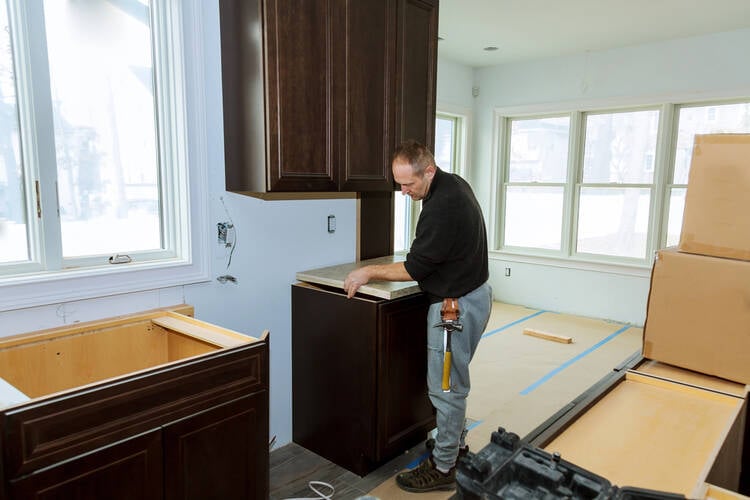
Countertop business is a business that specializes in the design, fabrication, sale, and installation of countertops used in kitchens, bathrooms, laboratories, and commercial workspaces.
These businesses typically work with materials such as granite, quartz, marble, laminate, wood, and solid surfaces.
Their services often include measuring spaces, cutting and polishing slabs, customizing edges and sink openings, and installing finished countertops for residential or commercial clients.
Countertop businesses commonly serve homeowners, contractors, interior designers, and real estate developers involved in construction or renovation projects.
The countertop industry is a major segment of the global construction and interior design market.
The global market was valued at about $131–$157 billion between 2024 and 2025 and is projected to exceed $185 billion by 2032 as housing construction and remodeling activities increase.
Residential projects account for over 70% of countertop demand, with kitchens representing the largest application segment worldwide.
Steps on How to Start a Countertop Business
-
Conduct Market Research
Conducting market research for a countertop business begins with defining your target market and service area.
Identify whether you will serve homeowners, real estate developers, contractors, or commercial property managers.
It is also important to study local housing trends, renovation activities, and population growth in your region.
Areas experiencing increased home construction or remodeling projects usually create stronger demand for countertop services.
The next step is to analyze competitors in your local market. Study other countertop fabricators, kitchen remodeling companies, and home improvement stores that sell or install countertops.
Evaluate their pricing, product offerings, materials used (such as granite, quartz, marble, or laminate), marketing strategies, and customer reviews.
This helps you identify service gaps and opportunities to differentiate your business. You should also study customer preferences and purchasing behavior.
Conduct surveys, interviews, or online polls to learn what materials, colors, and price ranges customers prefer.
Pay attention to trends such as the growing demand for quartz countertops, eco-friendly materials, and custom kitchen designs.
Finally, analyze pricing trends and industry demand. Review supplier costs, fabrication equipment expenses, and installation fees to determine competitive pricing.
You can also gather insights from construction reports, home improvement statistics, and real estate data.
Combining these insights will help you estimate market size, forecast demand, and develop a strong business strategy for your countertop company.
a. Who is the Target Market for Countertop Business?
The target market for a countertop business typically includes:
- Homeowners remodeling kitchens, bathrooms, or laundry rooms
- Residential home builders and construction companies
- Kitchen and bathroom remodeling contractors
- Interior designers and home decorators
- Architects and building design firms
- Real estate developers and property investors
- Property management companies and landlords
- Restaurants, cafés, and other food service businesses
- Hotels and hospitality establishments
- Commercial construction companies and office building owners.
b. Is Countertop Business a Profitable Business?
Yes, a countertop business can be profitable due to steady demand from construction and home remodeling.
The global countertop market was valued at about $52.4 billion in 2022 and is projected to grow steadily at around 5% annually, driven by kitchen renovations and new housing developments.
In the United States alone, countertop fabrication revenue reached about $12.5 billion in 2023, showing continued industry demand.
Many countertop businesses generate strong margins when operations are efficient.
Industry estimates show gross profit margins of 70–80% and net profit margins of around 15–25%, with some small shops earning $120,000 to $288,000 annually depending on project volume and pricing.
c. Are There Existing Niches in the Industry?
Yes, there are existing niches in the countertop industry. Here are 5:
- Luxury stone countertops (granite, marble, quartzite)
- Eco-friendly and recycled material countertops
- Custom countertop fabrication and installation
- Commercial and restaurant countertop solutions
- Outdoor kitchen and weather-resistant countertops
d. Who are the Major Competitors?
- Cambria
- Caesarstone
- Coldspring
- Allied Marble & Granite
- Rock of Ages Corporation
- Wilsonart
- DuPont
- MS International (MSI)
- Cosentino Group
- LG Hausys America
- IceStone
- Pental Surfaces
- Daltile
- Granite Transformations
- HanStone Quartz
- Santa Margherita USA
- Compac
- Okite
- Raphael Stone
e. Are There County or State Regulations or Zoning Laws for Countertop Business in the United States?
Yes, countertop businesses in the United States are subject to county and state regulations, zoning laws, and permitting requirements.
However, most of these rules are enforced primarily at the local (city or county) level, and they determine where and how the business can legally operate.
First, zoning laws regulate the type of activities allowed in specific locations.
Countertop fabrication shops usually involve cutting stone, machinery, and heavy materials, so they are typically permitted only in commercial or industrial zoning districts, not residential areas.
Operating such a business in the wrong zone can lead to fines or forced closure.
Second, a countertop business may need several permits and licenses before operating.
These often include a business license, sales tax permit, building permit, and certificate of occupancy, which confirms that the facility meets local building, safety, and zoning standards.
In some cases, special-use or conditional permits may be required if the activity is not automatically allowed in a specific zone.
Third, environmental and safety regulations may apply if the fabrication process produces dust, chemicals, or waste materials.
Businesses handling solvents, adhesives, or stone dust may need to follow environmental rules and proper waste-disposal standards regulated by federal or state agencies.
In summary, countertop businesses must comply with local zoning laws, permits, building codes, and environmental regulations.
Because rules vary widely by state and municipality, entrepreneurs should consult their local planning department or zoning office before choosing a location or starting operations.
f. Is There a Franchise for Countertop Business?
No, there are no franchise opportunities for countertop business.
g. What Do You Need to Start a Countertop Business?
- Business plan
- Business registration and licenses
- Commercial or industrial workspace
- Stone fabrication and cutting equipment
- Raw materials (granite, quartz, marble, etc.)
- Skilled workers or fabricators
- Delivery and installation vehicle
- Safety equipment and protective gear
- Supplier and distributor partnerships
- Marketing and advertising strategy.
-
Choose a Memorable Business Name
When looking to start a business, before you can begin to file the necessary documents with the constituted authorities or start your website, it is necessary that you come up with a name that you will be recognized with.
It is essential that the name you come up with can easily be pronounced, is unique and easily memorable.
Some of the catchy business name ideas suitable for a countertop business are:
- Four Corners© Countertop Company, Inc.
- Fine Finish® Countertop Company, LLC
- George Martins© Countertop Company, Inc.
- Real Solutions® Countertop Company, Inc.
- Perfect Square™ Countertop Company, Inc.
- Moses ED™ Countertop Company, LLC.
- Quartz & Solid© Countertop Company, LLC
- Lincoln Allen® Countertop Company, Inc.
- Perfect Touch© Countertop Company, Inc.
- Bernad© Countertop Company, Inc.
- Sleek Design® Countertop Company, LLC
- Boar Group® Countertop Company, LLC
- West Ends™ Countertop Company, LLC
- The Nation© Countertop Company, Inc.
- Red Woods® Countertop Manufacturing, Inc.
- Santos Marcos™ Countertop Manufacturing, Inc.
- Emmanuel Anthony™ Countertop Manufacturing, Inc.
- Reil Tims© Countertop Designers, Inc.
- David and Daniel® Countertop Company, LLC
- Dallas Kings™ Countertop Company, Inc.
-
Register Your Business
a. What Type of Business Structure is Best for Countertop Business?
Even though there are several options when it comes to the business structure of a countertop business, the one that most players in this line of business consider is an LLC.
It is common to consider an LLC because a provider wants to protect themselves from any lawsuits.
Please note that an LLC will need an EIN if it has any employees or if it will be required to file any of the excise tax forms listed below.
Most new single-member LLCs classified as disregarded entities will need to obtain an EIN.
b. Steps to Form an LLC
- Choose a Name for Your LLC.
- File Articles of Organization.
- Choose a registered agent.
- Decide on member vs. manager management.
- Create an LLC operating agreement.
- Comply with other tax and regulatory requirements.
- File annual reports.
c. What Type of License is Needed to Open a Countertop Business?
- General Business License
- Sales Tax Permit
- Contractor’s License (if offering installation services)
- Home Occupation Permit (if operating from home, in some areas)
- Building Permit
- Certificate of Occupancy
- Environmental Permit (if handling chemicals or waste)
- Occupational Safety and Health Administration (OSHA) Compliance Certification.
d. What Type of Certification is Needed to Open a Countertop Business?
Here are 5 types of certifications that can be valuable when opening a countertop business:
- Stone Fabrication Certification (e.g., Natural Stone Institute)
- Quartz and Solid Surface Installation Certification
- OSHA Safety Training Certification
- EPA Hazardous Materials Handling Certification
- Contractor or Trade Association Membership Certification.
e. What Documents are Needed to Open a Countertop Business?
These are some of the basic legal documents that you are expected to have in place if you want to legally run a countertop business in the United States of America;
- Business plan
- Business registration certificate
- Federal Employer Identification Number (EIN)
- State tax registration documents
- Sales tax permit
- Zoning approval or permit
- Certificate of occupancy
- Contractor’s license (if installing countertops)
- Environmental permits (if applicable)
- Insurance policies (liability, workers’ compensation, etc.)
- Bank account documentation
- Supplier contracts or agreements
- Lease or property ownership documents
- OSHA compliance records
- Employee identification and payroll records.
f. Do You Need a Trademark, Copyright, or Patent?
For a countertop business, protecting your brand and designs is important but involves different types of intellectual property.
A trademark is useful for safeguarding your business name, logo, or slogan, helping distinguish your countertops from competitors and building brand recognition.
Registering a trademark provides legal protection against unauthorized use.
Copyright can protect original countertop designs, patterns, or artistic works incorporated into your products.
This prevents others from copying your designs without permission. However, copyright does not cover the functional aspects of the countertop process itself.
A patent is less common in countertop unless you invent a new manufacturing method, tool, or technology.
Patents protect inventions and processes but generally don’t apply to traditional countertop designs or business branding.
Overall, trademarks and copyrights are the most relevant protections for countertop business.
-
Cost Analysis and Budgeting
a. How Much Does It Cost to Start a Countertop Business?
When it comes to starting a countertop business, the startup costs range from $200,000 to $2 million and above depending on how much equipment the business owner decides to purchase, the number of employees and the size of the workshop facility.
Please note that small setups can start on the lower end, while larger manufacturing operations need more capital for machinery and staffing.
b. What are the Costs Involved in Starting a Countertop Business
- Business Registration & Licenses – $200 to $1,000
- Commercial Space Lease or Purchase – $1,500 to $5,000/month (lease) or $100,000+ (purchase)
- Fabrication Equipment & Machinery – $20,000 to $150,000
- Raw Materials (Stone, Quartz, Laminate, etc.) – $5,000 to $50,000 initially
- Delivery & Installation Vehicle – $25,000 to $60,000
- Insurance (Liability, Workers’ Comp) – $1,500 to $5,000 annually
- Employee Salaries & Training – $30,000 to $80,000 per employee/year
- Marketing & Advertising – $1,000 to $10,000
- Safety Equipment & Protective Gear – $500 to $3,000
- Utilities & Operational Expenses – $1,000 to $3,000/month
- Miscellaneous – $2,500
c. What Factors Determine the Cost of Opening a Countertop Business?
- Location and rental or purchase cost of commercial space
- Size and scale of the business operation
- Type and quality of materials stocked (granite, quartz, marble, laminate)
- Cost of fabrication and cutting equipment
- Number of employees and labor expenses
- Delivery and installation vehicle requirements
- Licensing, permits, and certification fees
- Marketing, branding, and advertising budget
- Utility and operational costs (electricity, water, waste management)
- Safety equipment and compliance with OSHA and environmental regulations.
d. Do You Need to Build a Facility? If YES, How Much Will It Cost?
Actually, it is not compulsory to build a new facility for your countertop business, but, if you have the required finance, it will pay you to build your own facility.
The truth is that building or reconstructing a facility will help you come up with a facility that will perfectly fit into your overall business goals and vision.
e. What are the Ongoing Expenses of a Countertop Business?
- Employee salaries and benefits
- Rent or mortgage for commercial space
- Utility bills (electricity, water, gas, internet)
- Raw material replenishment (stone, quartz, laminate, etc.)
- Equipment maintenance and repairs
- Vehicle maintenance and fuel for deliveries/installation
- Insurance premiums (liability, workers’ compensation, property)
- Marketing and advertising campaigns
- Permits, licenses, and regulatory compliance fees
- Office supplies and administrative costs.
f. What is the Average Salary of your Staff?
- Estimator/Project Manager – $55,000 to $80,000
- Shop Manager/Foreman – $50,000 to $75,000
- Safety Compliance Officer/OSHA Coordinator – $50,000 to $70,000
- Marketing Specialist – $45,000 to $70,000
- Sales Representative – $40,000 to $65,000
- Countertop Fabricator – $35,000 to $55,000
- Installer/Technician – $30,000 to $50,000
- Delivery Driver – $30,000 to $45,000
- Customer Service Representative – $30,000 to $45,000
- Administrative Assistant – $28,000 to $40,000.
g. How Do You Get Funding to Start a Countertop Business?
- Raising money from personal savings and sale of personal stocks and properties
- Raising money from investors and business partners
- Sell shares to interested investors
- Applying for a loan from your bank/banks
- Pitching your business idea and applying for business grants and seed funding from, government, donor organizations, and angel investors
- Source for soft loans from your family members and your friends.
-
Write a Business Plan
a. Executive Summary
George Martins™ Countertop Manufacturing Company, Inc., based in Atlanta, Georgia, is a startup dedicated to designing, fabricating, and installing high-quality countertops for residential and commercial clients.
The company specializes in premium materials such as granite, quartz, marble, and solid surfaces, offering customized solutions that combine durability, style, and functionality.
By focusing on precision craftsmanship and exceptional customer service, the business aims to become a leading provider in the Atlanta metropolitan area.
The company will target homeowners, interior designers, contractors, and real estate developers who seek high-quality, durable countertops for kitchens, bathrooms, and commercial spaces.
George Martins™ will differentiate itself through personalized design consultations, timely installations, and a strong emphasis on quality control, ensuring client satisfaction and repeat business.
b. Products and Service
Our products and services at George Martins™ Countertop Manufacturing Company, Inc. include:
- Custom Countertop Fabrication – Designing and crafting countertops in granite, quartz, marble, laminate, and solid surfaces tailored to client specifications.
- Countertop Installation Services – Professional measurement, cutting, polishing, and installation for kitchens, bathrooms, laundry rooms, and commercial spaces.
- Remodeling and Renovation Solutions – Replacing or upgrading existing countertops with new materials and designs.
- Outdoor Countertops – Durable surfaces for patios, outdoor kitchens, and commercial outdoor areas.
- Edge and Finish Customization – Personalized edge profiles, surface finishes, and detailing for aesthetic and functional appeal.
- Consultation and Design Services – Expert advice on material selection, color, layout, and style to match client needs.
- Commercial Projects – Countertops for restaurants, hotels, offices, and retail spaces with high durability and design appeal.
- Maintenance and Repair – Polishing, sealing, and repairing countertops to maintain appearance and longevity.
Please note that this combination of products and services ensures full-service solutions for both residential and commercial clients.
c. Mission Statement
At George Martins™ Countertop Manufacturing Company, Inc., our mission is to deliver high-quality, durable, and beautifully crafted countertops that enhance the functionality and aesthetic of residential and commercial spaces.
We are committed to providing exceptional customer service, precision fabrication, and timely installation, ensuring every project exceeds client expectations.
Vision Statement
Our vision is to become Atlanta’s leading countertop manufacturing and installation company, recognized for innovation, craftsmanship, and reliability.
We aim to set the standard for excellence in materials, design, and service, creating lasting value for our clients while fostering growth, sustainability, and a skilled workforce within the countertop industry.
d. Goals and Objectives
The goals of a countertop business are to provide high-quality, durable, and visually appealing countertops that meet the needs of residential and commercial clients.
The business aims to build a strong reputation for craftsmanship, reliability, and exceptional customer service, ensuring client satisfaction and repeat business.
Objectives include expanding market reach within the local area, increasing sales revenue, and maintaining efficient operations.
Additionally, the business strives to innovate with materials and designs, train skilled staff, and establish long-term partnerships with contractors, designers, and suppliers.
e. Organizational Structure
- Estimator/Project Manager
- Shop Manager/Foreman
- Safety Compliance Officer/OSHA Coordinator
- Marketing Specialist
- Sales Representative
- Countertop Fabricator
- Installer/Technician
- Delivery Driver
- Customer Service Representative
- Administrative Assistant.
Marketing Plan
a. SWOT Analysis
Strengths:
- High-quality materials and craftsmanship – Specializing in granite, quartz, marble, and solid surfaces ensures premium products.
- Full-service offerings – From design consultation to fabrication and installation, providing a seamless client experience.
- Strategic location in Atlanta – Access to a growing housing market and commercial construction projects.
- Skilled and experienced staff – Expertise in fabrication, installation, and customer service.
- Strong brand identity – Professional branding with a focus on quality and customer satisfaction.
Weaknesses:
- High startup costs – Equipment, workspace, and skilled labor require significant investment.
- Limited initial market presence – New brand competing with established countertop companies.
- Dependence on local construction trends – Business growth tied to housing and renovation activity in Atlanta.
- Inventory management – Costs and risks associated with maintaining large stock of raw materials.
Opportunities:
- Growing demand for home renovations – Increase in kitchen and bathroom remodeling projects.
- Commercial sector expansion – Opportunities with restaurants, hotels, offices, and retail spaces.
- Eco-friendly materials – Rising interest in sustainable, recycled, and low-maintenance countertop options.
- Partnerships with designers and contractors – Collaborations can generate recurring projects and referrals.
- Technological advancements – CNC machinery and modern fabrication tools improve efficiency and precision.
Threats:
- Strong competition – Established countertop companies and big-box retailers dominate the market.
- Fluctuating material costs – Granite, quartz, and marble prices may increase due to supply chain issues.
- Economic downturns – Housing and renovation slowdowns can reduce demand.
- Regulatory changes – Zoning, environmental, or safety regulations may increase operational costs.
- Skilled labor shortage – Difficulty in hiring and retaining trained fabricators and installers.
b. How Do Countertop Businesses Make Money?
Countertop businesses make money by selling and installing high-quality countertops for residential and commercial clients.
Revenue comes from material sales, fabrication fees, and installation services, often with premium pricing for custom designs.
Additional income can come from maintenance, repairs, and renovations, as well as partnerships with contractors, interior designers, and real estate developers, creating recurring and high-margin opportunities.
c. Payment Options
- Credit and Debit Cards
- Cash Payments
- Mobile Payment Apps (e.g., Apple Pay, Google Pay)
- Bank Transfers or Wire Transfers
- PayPal and Other Online Payment Gateways
- Financing or Installment Plans
- Checks or Money Orders.
d. Sales & Advertising Strategies
- Introduce your business by sending introductory letters alongside your brochure to households, construction companies, home staging companies, shipping companies, and players in the construction and real estate industry amongst others with your location of operation
- Open your countertop company with a party so as to capture the attention of residents who are your first targets
- Advertise your services in community-based newspapers, local TV and radio stations
- List your business and products on yellow pages ads (local directories)
- Leverage on the internet to promote your countertop company
- Engage in direct marketing and sales
- Encourage the use of word-of-mouth marketing (referrals)
- Leverage on the internet to promote your business (when you blog regularly on key issues as it relates to your business, people who consider you an expert in the field)
- Join local chambers of commerce and industries around you with the main aim of networking and marketing your products; you are likely going to get referrals from such networks.
- Engage the services of marketing executives and business developers to carry out direct marketing for you.
Financial Projection
a. How Much Should You Charge for your Product/Service?
- Granite Countertops – $40 to $100 per square foot, depending on quality and origin
- Quartz Countertops – $50 to $120 per square foot, engineered with durability and variety
- Marble Countertops – $60 to $150 per square foot, premium and high-end aesthetic
- Laminate Countertops – $15 to $40 per square foot, budget-friendly and versatile
- Solid Surface Countertops (e.g., Corian) – $45 to $85 per square foot
- Outdoor Countertops (weather-resistant stone) – $50 to $120 per square foot
- Edge and Finish Customization – $5 to $25 extra per linear foot
- Countertop Installation Services – $35 to $75 per hour or $300–$800 per typical kitchen installation
- Repairs and Maintenance – $100 to $500 per service call, depending on complexity
- Custom Design Consultation Fees – $50 to $200 per consultation (sometimes credited toward final purchase)
These prices vary based on material choice, customization, location, and installation complexity, but they give a realistic range for planning a countertop business in the U.S.
b. How Much Profit Do Countertop Business Owners Make a Year?
Countertop business owners can earn significant profits depending on scale, location, and project volume.
Small to mid-sized shops typically generate $120,000 to $300,000 annually, while larger operations with commercial contracts can exceed $500,000 per year.
c. What Factors Determine the Amount of Profit to Be Made?
- Production Costs: Expenses for materials, labor, and equipment directly affect profit margins.
- Pricing Strategy: Competitive yet profitable pricing impacts overall earnings.
- Market Demand: Higher demand for countertops or specific styles increases sales potential.
- Business Scale: Larger operations benefit from economies of scale, boosting profitability.
- Marketing Effectiveness: Strong branding and outreach can drive more sales.
- Operational Efficiency: Streamlined processes reduce waste and lower costs.
- Distribution Channels Access to diverse sales channels (retail, wholesale, online) influences revenue streams.
d. What is the Profit Margin of a Countertop Business?
The profit margin of a countertop business is not fixed; to a large extent, it depends on factors unique to your location such as local demand, competition, and cost of materials.
Gross profit margins often range from 70 – 80%, with net profits around 15 – 25%, making the business highly lucrative when managed efficiently.
e. What is the Sales Forecast?
Below is the sales forecast for a Countertop business. It is based on the location of the business and other factors as it relates to such startups in the United States;
- First Fiscal Year: $550,000
- Second Fiscal Year: $1.5 million
- Third Fiscal Year: $2.5 million
-
Set Up your Shop / Office
a. How Do You Choose a Perfect Location for Countertop Business?
- The demography of the location especially as it relates to activities in the real estate market
- The demand for the countertops in the location
- The purchasing power of businesses and residents of the location
- Accessibility of the location
- The number of countertops making businesses in the location
- The local laws and regulations in the community/state
- Traffic, parking and security et al
b. What State and City is Best to Open a Countertop Business?
- Charlotte, North Carolina
- Los Angeles, California
- Austin, Texas
- New York City, New York
- Atlanta, Georgia
- Miami, Florida
- Chicago, Illinois
- Portland, Oregon
- Seattle, Washington
- Boston, Massachusetts.
c. What Equipment is Needed to Operate a Countertop Business?
- Bridge saws – For cutting stone slabs accurately
- CNC machines – Computer-controlled cutting and shaping for custom designs
- Polishing machines – For smooth, glossy finishes on stone surfaces
- Edge profiling tools – Create custom edge designs (bullnose, beveled, ogee)
- Hand tools – Grinders, routers, hammers, chisels for detailed work
- Worktables and supports – Heavy-duty surfaces for cutting and assembly
- Measuring and leveling tools – Laser levels, tape measures, and templates
- Dust collection system – Controls stone dust and keeps the workspace safe
- Material handling equipment – Forklifts, dollies, and suction lifters for slabs
- Installation tools – Adhesives, clamps, and sealing equipment for on-site work.
-
Hire Employees
When it comes to hiring employees for a standard countertop business, you should make plans to recruit skilled fabricators, installers, and technicians who have experience working with materials like granite, quartz, and marble.
Precision, attention to detail, and knowledge of fabrication machinery are essential to ensure high-quality products and installations that satisfy clients.
In addition to technical staff, consider hiring sales representatives, project managers, and customer service personnel.
These roles help manage client relationships, coordinate projects, and drive business growth.
Offering competitive wages, training programs, and a safe work environment will attract and retain the best talent for your countertop business.
-
Launch the Business Proper
In recent times, no countertop business opens its door for business without first organizing an opening party to officially launch the business.
You can choose to do a soft opening party if you are operating on a low budget or you can go for a grand opening party.
The bottom line is that with a proper launching of the countertop business, you will be able to officially inform businesses and people in your city that you are open for business.
a. What Makes a Countertop Business Successful?
- High-Quality Materials and Craftsmanship
- Skilled and Experienced Staff
- Strong Customer Service
- Effective Marketing and Branding
- Competitive Pricing and Profit Margins
- Efficient Operations and Project Management
b. What Happens During a Typical Day at a Countertop Business?
A typical day at a countertop business begins with reviewing orders and project schedules, coordinating fabrication, delivery, and installation tasks.
Fabricators cut, polish, and shape stone or engineered surfaces according to client specifications, while installers prepare job sites and ensure accurate placement.
Staff may also conduct client consultations to finalize material choices, edge profiles, and design details.
Throughout the day, management oversees workflow, handles supplier communications, and monitors inventory to maintain smooth operations.
Customer service addresses inquiries, schedules appointments, and resolves issues.
By the end of the day, completed projects are delivered or installed, ensuring quality and client satisfaction, keeping the business efficient and profitable.
c. What Skills and Experience Do You Need to Build a Countertop Business?
- Stone Fabrication and Installation Skills – Experience working with granite, quartz, marble, and laminate.
- Business Management Experience – Knowledge of running operations, finances, and staffing.
- Customer Service Skills – Ability to communicate effectively and maintain strong client relationships.
- Sales and Marketing Expertise – Promoting services and generating leads.
- Project Management Skills – Coordinating multiple orders, installations, and timelines efficiently.
- Design and Interior Knowledge – Understanding layouts, color schemes, and aesthetics.
- Technical and Machinery Proficiency – Operating saws, CNC machines, and polishing equipment safely.
- Problem-Solving Abilities – Handling installation challenges, defects, or client concerns.
- Financial Literacy – Budgeting, cost estimation, and pricing strategies.
- Regulatory and Safety Knowledge – Understanding zoning laws, OSHA regulations, and environmental compliance.