
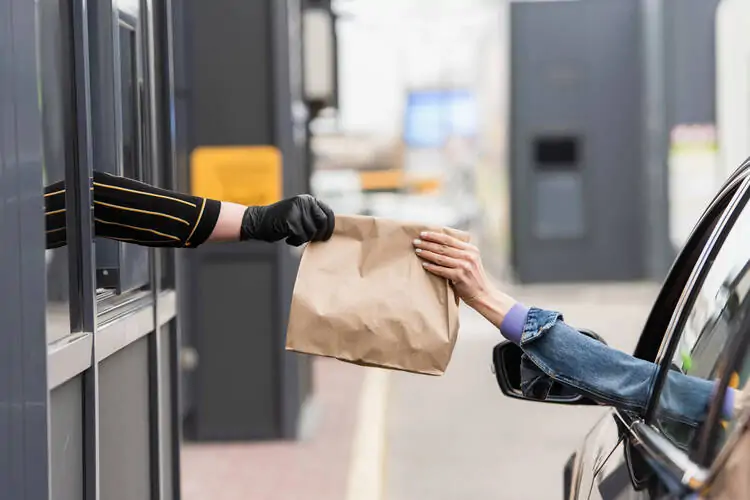
A drive thru convenience store is a retail business that allows customers to purchase everyday products without leaving their vehicles.
Depending on the design, customers may place an order at a window, use an ordering screen, submit an order through a mobile app, or drive through a covered lane where employees collect the products they request.
The store can sell packaged beverages, snacks, candy, grocery basics, coffee, prepared foods, ice, household essentials, personal-care products, automotive items, over-the-counter products, and other convenience merchandise.
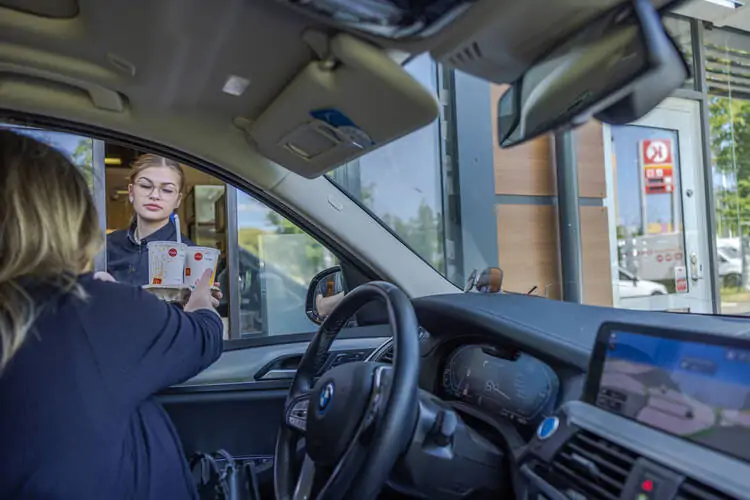
Depending on your licenses and local laws, you may also choose to sell products such as lottery tickets, beer, wine, or tobacco. The biggest attraction of the business is obvious: convenience.
A parent with children in the car may prefer not to unbuckle everyone simply to buy milk and bread.
A delivery driver may need an energy drink without losing time parking. A commuter may want coffee and breakfast on the way to work.
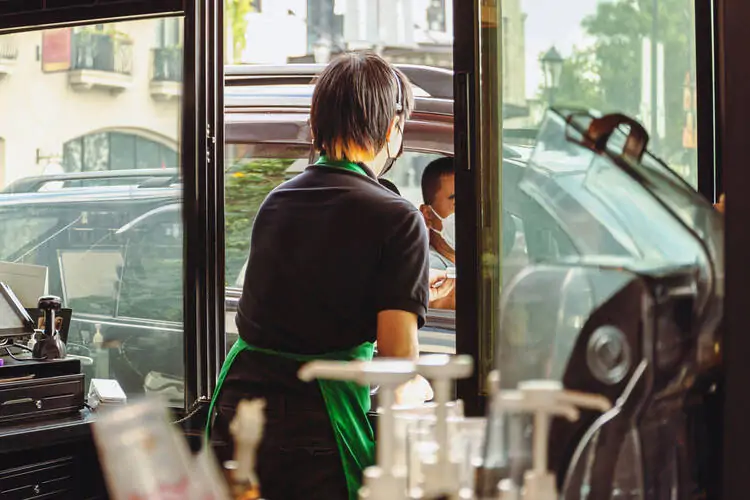
Your business is therefore selling more than products. You are selling speed. This also means that the drive-thru cannot be treated as an afterthought.
If customers wait ten minutes while employees walk around the store searching for products, you have removed the main reason they chose the drive-thru in the first place.
Successful operators design the store, inventory, ordering system, employee positions, and drive-thru lane around fast fulfillment.
A drive thru convenience store can operate as a drive-thru-only building or as a conventional convenience store with both walk-in shopping and a drive-thru lane.
For the purpose of this guide, we will mainly use a hybrid model: a compact convenience store with a strong drive-thru operation and no gasoline pumps.
Fuel is excluded from the main financial model because underground storage tanks, pumps, environmental requirements, canopies, land, and site construction can change the startup budget dramatically.
Steps on How to Start a Drive Thru Convenience Store
-
Conduct Market Research
Market research is particularly important because a drive thru convenience store is heavily dependent on location and vehicle traffic.
A beautiful store in the wrong location can struggle even if the products and service are excellent.
You can start by studying how people move through the neighborhood where you intend to operate. Do not only count the number of cars on the road.
Find out which direction traffic travels during morning and evening rush periods, whether vehicles can enter and leave your property easily, where nearby traffic lights are located, and whether customers would have to make an awkward turn to reach your store.
A location with heavy traffic on the wrong side of a divided road may perform worse than a location with fewer cars but much easier access.
You should also study your competitors. Visit convenience stores, gas stations, coffee shops, pharmacies, fast-food restaurants, grocery stores, and drive-thru businesses within your proposed trade area.
Watch what customers buy. Pay attention to which businesses become crowded during breakfast, lunchtime, school pickup, evening commutes, and late nights.
Then think about the situations in which a customer would prefer your drive-thru rather than entering another store. A drive-thru customer is usually looking for something fast.
This makes products such as drinks, coffee, breakfast items, snacks, candy, milk, bread, ice, tobacco where legally sold, prepared foods, and frequently purchased household essentials especially useful.
Do not try to carry the same inventory as a supermarket. A drive-thru customer asking for a gallon of milk wants the transaction completed quickly.
The customer is not expecting to compare twelve different milk brands. You should therefore identify a relatively small group of high-frequency items and make them extremely easy for employees to retrieve.
Talk to potential customers before spending money. Ask commuters, parents, delivery drivers, nearby workers, apartment residents, taxi and rideshare drivers, and tradespeople what they regularly stop to purchase while driving.
The answers can influence your product selection far more accurately than guessing.
a. Who is the Target Market for a Drive Thru Convenience Store?
- Daily commuters
- Neighborhood residents
- Busy parents
- Families with children
- Delivery drivers
- Rideshare drivers
- Taxi drivers
- Construction workers
- Tradespeople
- Office workers
- Students
- Late-night and shift workers
- Tourists and travelers
- Customers with limited mobility
- Customers making quick grocery purchases
- Local businesses purchasing drinks, snacks, ice, or supplies.
b. Is a Drive Thru Convenience Store a Profitable Business?
Yes, a drive thru convenience store can be profitable, but convenience retail is not a business where you should confuse gross sales with profit. Some product categories have relatively modest margins.
You may sell a large amount of merchandise and still have a relatively small percentage remaining after product costs, payroll, rent, card-processing fees, utilities, theft, insurance, maintenance, and other expenses.
This is one reason product mix matters. Prepared food, coffee, fountain beverages, frozen drinks, and other food-service products can make an important contribution to gross profit when managed correctly.
Packaged drinks, snacks, grocery essentials, tobacco products where sold, lottery, and other categories may play different roles in attracting customer traffic and increasing the average transaction.
A profitable store therefore needs to understand both sales and margin. It is also important to measure drive-thru speed.
If the average drive-thru transaction takes too long, fewer cars can be served during the busiest periods.
A busy morning commuter location may have only a short period in which demand is extremely strong.
Your ability to serve more vehicles during that period can make a major difference to daily sales.
c. Are There Existing Niches in the Industry?
Yes. A drive thru convenience store can specialize in different customer needs. Examples include:
- Drive-thru grocery essentials
- Drive-thru coffee and breakfast
- Drive-thru snacks and beverages
- Drive-thru beer and wine where legally permitted
- Drive-thru tobacco retail where legally permitted
- Drive-thru ice and beverage stores
- Drive-thru prepared foods
- Drive-thru dairy and bakery products
- Drive-thru neighborhood markets
- Late-night convenience stores
- Drive-thru stores serving industrial workers
- Drive-thru stores near colleges
- Drive-thru family convenience stores
- Mobile-order pickup convenience stores.
You do not need to become a specialist if your location supports a broad convenience assortment.
However, understanding the main reason customers will visit can help determine which products should be placed closest to the drive-thru fulfillment area.
d. Who are the Major Competitors?
Your direct and indirect competitors may include:
- Farm Stores
- Wawa
- RaceTrac
- 7-Eleven
- Circle K
- Sheetz
- QuikTrip
- Speedway
- Independent convenience stores
- Gas station convenience stores
- Drive-thru coffee shops
- Fast-food restaurants
- Drugstores
- Small grocery stores
- Delivery apps.
The fact that another convenience store does not have a drive-thru does not mean it is not your competitor.
If customers can park, enter the store, buy what they need, and leave faster than they can use your drive-thru, that business may still provide a more convenient experience.
e. Are There County, State, or Federal Regulations for a Drive Thru Convenience Store in the United States?
Yes. A drive thru convenience store may require more local approvals than an ordinary retail shop because you are dealing with both retail operations and vehicle movement.
Local zoning is one of the first issues to investigate. Some municipalities restrict drive-thru businesses to particular commercial districts or require special-use approval.
The local planning department may evaluate lane location, traffic circulation, drive-thru stacking capacity, entrances and exits, pedestrian safety, lighting, noise, landscaping, signage, and the effect on nearby properties.
You may also need approval for curb cuts or changes to road access. Do not sign a long-term lease assuming that you can simply cut a drive-thru window into the side of a building.
Confirm that the property can legally support the use first. If you sell prepared food, refrigerated foods, fountain drinks, coffee, or other regulated food products, state and local food-safety rules may apply.
The FDA Food Code serves as a model for many state and local retail food regulations, but your local health authority is generally the agency you will work with directly.
Food-service requirements can cover refrigeration, hot holding, handwashing, sanitation, employee hygiene, food storage, pest control, equipment, and food-handler training.
If you decide to sell tobacco products, additional rules apply. Federal law prohibits retailers from selling tobacco products to anyone younger than 21.
Retailers must also check photographic identification for customers under the federal age-verification threshold applicable to tobacco sales.
Your state or locality may impose additional tobacco retailer licensing and compliance requirements.
If you sell beer, wine, or other alcoholic beverages, you will need the appropriate alcohol licenses and must comply with the rules governing age verification, hours of sale, product types, and drive-thru alcohol transactions in your jurisdiction.
Some locations may permit certain drive-thru alcohol sales while others may prohibit them completely.
If you sell lottery tickets, you will need approval from the appropriate state lottery authority.
If you accept SNAP benefits, you must satisfy the applicable program requirements and obtain authorization.
If you add gasoline later, environmental and fuel-system regulations become another major compliance area.
Underground storage tanks, leak detection, spill prevention, fuel-system inspections, fire codes, and environmental requirements can significantly increase the complexity and cost of the project.
f. Is There a Franchise for a Drive Thru Convenience Store?
Yes. Farm Stores is one of the most recognizable franchise concepts built specifically around the drive-thru convenience market.
The company combines convenience-store products, grocery essentials, bakery items, beverages, and prepared foods with drive-thru service.
There are also convenience-store franchise systems that may operate different store formats depending on the property and market.
If you are considering a franchise, review the Franchise Disclosure Document carefully. Pay particular attention to:
- Initial franchise fee
- Total development cost
- Royalty fees
- Advertising contributions
- Required suppliers
- Minimum inventory
- Technology fees
- Territory protection
- Real estate requirements
- Store design requirements
- Remodeling obligations
- Franchise renewal conditions.
A recognized brand can help attract customers, but franchise fees and required systems must still leave enough room for the store to generate an acceptable return.
g. What Do You Need to Start a Drive Thru Convenience Store?
- A feasibility study
- A strong vehicle-access location
- Approved zoning
- A suitable store building
- A properly designed drive-thru lane
- Business registration
- Required licenses and permits
- Commercial insurance
- Opening inventory
- Refrigeration
- Retail shelving
- Point-of-sale system
- Drive-thru ordering and communication equipment
- Security cameras
- Exterior lighting
- Business signage
- Employees
- Reliable wholesale suppliers
- Working capital.
-
Choose a Memorable Business Name
Your name should communicate speed, convenience, neighborhood access, or easy shopping.
Customers may see the name for only a few seconds while driving past, so avoid something difficult to pronounce or remember.
Before spending money on exterior signs, check your state’s business database, search for potential trademark conflicts, and verify that an appropriate domain name and social media handles are available.
Some catchy business name ideas suitable for a drive thru convenience store are:
- QuickLane Market, LLC
- Grab & Go Drive Thru, LLC
- EasyStop Market, LLC
- QuickCart Drive Thru, LLC
- Fast Basket Market, LLC
- DriveRight Convenience, LLC
- Express Pantry, LLC
- Neighborhood Lane Market, LLC
- QuickPick Convenience, LLC
- EasyLane Market, LLC
- Stop & Roll Convenience, LLC
- DriveUp Market, LLC
- Rapid Basket Convenience, LLC
- QuickCup & Market, LLC
- FastStop Drive Thru, LLC
- Daily Lane Convenience, LLC
- Express Shelf Market, LLC
- QuickRoute Convenience, LLC
- Rolling Basket Market, LLC
- Minute Market Drive Thru, LLC.
-
Register Your Business
a. What Type of Business Structure is Best for a Drive Thru Convenience Store?
The appropriate structure depends on ownership, taxes, financing, and expansion plans.
Many independent convenience-store owners choose a limited liability company.
An LLC provides legal separation between the business and its owner while remaining relatively straightforward to manage.
However, operating a store with employees, customers, vehicles, food products, and valuable inventory creates several liability risks.
An LLC should therefore be combined with appropriate insurance rather than treated as a substitute for insurance.
If you plan to purchase real estate, add investors, or develop multiple locations, discuss the ownership structure with an accountant and attorney before making major investments.
b. Steps to Form an LLC
- Choose an available LLC name
- File formation documents with your state
- Choose a registered agent
- Create an operating agreement
- Obtain an EIN where required
- Register for state and local taxes
- Obtain sales-tax registration
- Open a business bank account
- Apply for licenses and permits
- Maintain required annual reports and filings.
c. What Type of License is Needed to Start a Drive Thru Convenience Store?
Depending on your location and product mix, you may need:
- General business license
- Retail business license
- Sales-tax or seller’s permit
- Zoning approval
- Drive-thru or special-use approval
- Building permit
- Certificate of occupancy
- Sign permit
- Fire inspection approval
- Health department permit if selling regulated food
- Food handler or food manager documentation where required
- Tobacco retailer license if selling tobacco
- Alcohol license if selling alcoholic beverages
- State lottery retailer approval if selling lottery products
- SNAP retailer authorization if accepting SNAP
- Fuel and environmental permits if adding gasoline.
d. What Type of Certification is Needed to Start a Drive Thru Convenience Store?
There is no single national certificate required simply because the business has a drive-thru.
However, depending on the products you sell, useful or required certifications may include:
- Food handler certification
- Certified food protection manager certification
- Alcohol seller/server training
- Tobacco retailer compliance training
- Workplace safety training
- First aid and CPR
- Food allergen awareness training
- Robbery and security-response training.
e. What Documents are Needed to Start a Drive Thru Convenience Store?
- Business formation documents
- Employer Identification Number where applicable
- Business license
- Sales-tax registration
- Commercial lease or property documents
- Zoning approval
- Site plan
- Drive-thru approval
- Building permits
- Certificate of occupancy
- Insurance policies
- Supplier agreements
- Wholesale invoices
- Employee records
- Food permits where applicable
- Alcohol license where applicable
- Tobacco license where applicable
- Lottery retailer documentation where applicable
- SNAP authorization where applicable
- Security procedures
- Emergency procedures.
f. Do You Need a Trademark, Copyright, or Patent?
You normally do not need a patent to operate a drive thru convenience store.
A trademark can become useful for protecting your store name, logo, slogan, or private-label products.
Copyright can protect original website content, product photographs, advertising materials, videos, graphics, and training documents.
If you eventually develop proprietary drive-thru ordering technology or a genuinely new technical system, additional intellectual-property protection may become relevant.
-
Cost Analysis and Budgeting
a. How Much Does It Cost to Start a Drive Thru Convenience Store?
The startup cost depends heavily on whether you lease an existing drive-thru property, convert a conventional retail building, or construct a new store.
A small operation taking over an existing drive-thru-compatible site may require approximately $100,000 to $200,000.
A medium-scale store requiring a more substantial renovation, refrigeration, drive-thru lane work, technology, and larger inventory may require approximately $300,000 to $500,000.
A larger ground-up non-fuel drive-thru convenience store can require approximately $700,000 to $1.2 million or more, particularly when substantial site work and construction are involved.
For this guide, we will use the following planning budgets:
- Small-scale drive thru convenience store: approximately $150,000
- Medium-scale drive thru convenience store: approximately $400,000
- Large-scale drive thru convenience store: approximately $900,000.
These estimates exclude the purchase price of land and the cost of adding a new gasoline fueling system.
b. What are the Costs Involved in Starting a Drive Thru Convenience Store?
Small-Scale Drive Thru Convenience Store – Approximately $150,000
- Lease deposit and light building renovation – $40,000
- Drive-thru window, lane, and basic site modifications – $20,000
- Refrigeration, shelving, counters, and fixtures – $25,000
- Opening inventory – $30,000
- Initial working capital – $20,000
- POS, security cameras, and technology – $8,000
- Licenses, insurance, and professional fees – $4,000
- Signage and opening marketing – $3,000
- Estimated Total – $150,000.
This model assumes you are taking over a property that already has suitable vehicle access and does not require major construction.
Medium-Scale Drive Thru Convenience Store – Approximately $400,000
- Lease deposit, site preparation, and store buildout – $120,000
- Drive-thru lane, service window, menu boards, and traffic improvements – $55,000
- Refrigeration, shelving, counters, and store fixtures – $70,000
- Opening inventory – $60,000
- Working capital reserve – $55,000
- POS, inventory system, security, cameras, and ordering technology – $20,000
- Licenses, insurance, permits, and professional fees – $10,000
- Exterior signage, branding, and launch marketing – $10,000
- Estimated Total – $400,000.
This is the model used in the financial projections later in this article.
Large-Scale Drive Thru Convenience Store – Approximately $900,000
- Building construction and major site development – $380,000
- Refrigeration, retail fixtures, counters, and equipment – $130,000
- Drive-thru lanes, windows, exterior lighting, signage, and traffic improvements – $90,000
- Opening inventory – $100,000
- Working capital and payroll reserve – $100,000
- POS, security, inventory technology, and ordering systems – $35,000
- Permits, professional services, insurance, and inspections – $35,000
- Branding, recruiting, training, and grand-opening marketing – $30,000
- Estimated Total – $900,000.
If you purchase land or install gasoline pumps and underground fuel tanks, the total project cost can move well beyond this budget.
c. What Factors Determine the Cost of Starting a Drive Thru Convenience Store?
- Location
- Existing versus newly constructed building
- Local drive-thru zoning requirements
- Traffic and site work
- Number of drive-thru lanes
- Refrigeration requirements
- Store size
- Inventory selection
- Prepared food program
- Security system
- Technology
- Employee count
- Licenses and permits
- Whether alcohol or tobacco is sold
- Whether gasoline is sold
- Working capital.
d. Do You Need to Build a Facility? If YES, How Much Will It Cost?
No. One of the smartest ways to reduce startup cost is to locate an existing property with drive-thru infrastructure.
Former banks, pharmacies, coffee shops, fast-food restaurants, and other drive-thru retail buildings may sometimes be suitable for conversion.
However, do not assume that an existing drive-thru approval automatically transfers to your use.
Your municipality may require new zoning or site-plan approval. If you build a new facility, drive-thru stacking lanes, drainage, lighting, signage, traffic flow, landscaping, utilities, parking, and building construction can make the project expensive.
A first-time owner should compare the cost of conversion with ground-up construction before making a decision.
e. What are the Ongoing Expenses of a Drive Thru Convenience Store?
- Inventory replenishment
- Employee wages
- Payroll taxes
- Rent or mortgage
- Utilities
- Refrigeration electricity
- Insurance
- Credit and debit card processing fees
- POS software
- Drive-thru technology
- Security services
- Inventory shrinkage and theft
- Repairs
- Refrigeration maintenance
- Exterior lighting
- Cleaning
- Trash removal
- Advertising
- License renewals
- Accounting and bookkeeping
- Property maintenance.
f. What is the Average Salary of Your Staff?
Employee wages vary by state and city. A small store may operate with the owner, shift supervisors, and several sales associates. A larger operation may employ:
- General Manager
- Assistant Manager
- Shift Supervisors
- Drive-Thru Order Attendants
- Cashiers
- Stock Associates
- Food-service Employees
- Cleaning Staff
- Bookkeeper
- Maintenance Personnel.
Research current wage rates in your local market when creating your actual payroll budget.
g. How Do You Get Funding to Start a Drive Thru Convenience Store?
- Personal savings
- Small-business loans
- Commercial real estate financing
- Equipment financing
- Business lines of credit
- Private investors
- Business partners
- Family financing
- Seller financing when purchasing an existing store
- Franchise financing programs where available.
Do not invest every dollar in construction and inventory. A store needs cash after opening to pay employees, replace inventory, cover card fees, repair refrigeration, and survive the period before customer traffic reaches the level you expected.
-
Write a Business Plan
a. Executive Summary
QuickLane Market, LLC is a proposed drive thru convenience store based in Columbus, Ohio.
The business will operate a compact convenience store with a walk-in retail area and a dedicated drive-thru lane that allows customers to purchase frequently needed products without leaving their vehicles.
The store will target commuters, nearby residents, delivery drivers, busy parents, shift workers, tradespeople, and other customers who value speed.
QuickLane Market will sell packaged beverages, coffee, snacks, candy, basic grocery products, dairy products, ice, personal-care products, automotive essentials, prepared grab-and-go foods, and household convenience items.
Regulated products will only be added after management has secured the licenses required for the specific location. The company will launch with approximately $400,000 in startup capital.
The drive-thru operation will be designed around a carefully selected group of high-frequency products positioned close to the fulfillment station so employees can complete orders quickly.
The company will generate revenue through in-store retail sales, drive-thru purchases, mobile preorder pickup, prepared food, coffee and beverages, and selected business accounts.
The long-term goal is to establish a profitable first location, develop a recognizable neighborhood brand, refine a repeatable drive-thru operating system, and eventually consider additional locations.
b. Products and Services
QuickLane Market, LLC will offer:
- Bottled water
- Soft drinks
- Energy drinks
- Coffee
- Fountain beverages
- Breakfast foods
- Grab-and-go sandwiches
- Packaged snacks
- Candy
- Ice cream
- Milk and dairy products
- Bread
- Eggs
- Basic grocery items
- Personal-care products
- Over-the-counter convenience items
- Automotive products
- Ice
- Mobile preorder pickup
- Drive-thru ordering.
c. Mission Statement
“At QuickLane Market, LLC, our mission is to make everyday shopping faster by providing essential products, fresh food, beverages, and friendly service through a convenient drive-thru experience customers can rely on.”
Vision Statement
“Our vision is to build QuickLane Market into a trusted neighborhood convenience brand known for speed, reliability, safe operations, smart product selection, and excellent customer service.”
d. Goals and Objectives
The company’s first objective is to prove that the initial location can generate consistent profit before opening additional stores.
Management will measure transaction speed, average customer spend, inventory turnover, customer traffic by time of day, gross margin by category, labor cost, shrinkage, and drive-thru abandonment.
High-demand products will be positioned close to the drive-thru fulfillment point.
Slow-moving products will not be allowed to occupy valuable storage space simply because management believes every convenience store should carry them.
Another objective is to build a strong foodservice and beverage program.
Coffee, breakfast foods, sandwiches, fountain drinks, and grab-and-go items can give customers reasons to visit the store frequently rather than only when they urgently need a household product.
Long-term objectives include mobile ordering, loyalty rewards, business accounts, additional drive-thru lanes where feasible, and expansion into additional locations.
e. Organizational Structure
- Owner/General Manager
- Store Manager
- Assistant Manager
- Shift Supervisors
- Drive-Thru Attendants
- Cashiers
- Stock Associates
- Foodservice Employees
- Cleaning Staff
- Bookkeeper/Accountant.
Marketing Plan
a. SWOT Analysis
Strengths
The main strength is convenience. Customers can purchase products without parking and entering a store.
This can be especially attractive to parents, commuters, customers with limited mobility, delivery drivers, and customers traveling during bad weather.
The store can also combine convenience retail with prepared food and beverages.
Weaknesses
The drive-thru creates operational pressure. Employees must retrieve products quickly even though the store may contain hundreds or thousands of individual items.
A badly designed fulfillment area can produce long lines. The business is also highly dependent on location, traffic flow, employee reliability, and inventory availability.
Opportunities
Mobile ordering can make drive-thru fulfillment even faster. Prepared food, coffee, delivery-driver loyalty programs, family convenience products, corporate accounts, and neighborhood grocery essentials can create additional sales.
Operators may also develop smaller stores on sites that would be difficult for conventional large-format retailers.
Threats
Competition can come from gas stations, convenience chains, quick-service restaurants, grocery stores, pharmacies, delivery apps, and drive-thru coffee businesses.
Other risks include theft, employee turnover, rising wages, card fees, rent increases, product shortages, refrigeration failures, and local restrictions on drive-thru development.
b. How Do Drive Thru Convenience Stores Make Money?
The store earns money primarily from the margin between the wholesale cost of products and their selling price. Revenue can come from:
- Packaged beverages
- Coffee
- Fountain beverages
- Prepared food
- Snacks
- Candy
- Grocery essentials
- Dairy products
- Household items
- Personal-care products
- Automotive products
- Ice
- Regulated products where legally licensed
- Lottery commissions where approved
- Mobile preorder pickup.
One useful strategy is to sell products that customers purchase frequently alongside products that generate stronger margins.
A customer visiting for a gallon of milk may also purchase coffee, snacks, and a prepared breakfast item.
c. Payment Options
- Credit cards
- Debit cards
- Cash
- Apple Pay
- Google Pay
- Mobile app payments
- Gift cards
- SNAP/EBT where authorized
- Approved business accounts.
d. Sales and Advertising Strategies
- Install highly visible road signage
- Create a Google Business Profile
- Promote drive-thru speed and convenience
- Offer morning coffee and breakfast bundles
- Create commuter loyalty rewards
- Offer fountain drink promotions
- Create a mobile preorder system
- Partner with nearby offices
- Offer discounts to local delivery and rideshare drivers
- Promote family convenience bundles
- Use neighborhood direct mail
- Advertise on local social media
- Create late-night promotions where appropriate
- Offer seasonal products
- Use digital menu boards
- Collect customer email or SMS subscriptions with permission
- Encourage online reviews.
Financial Projection
a. How Much Should You Charge for Your Products?
You should price merchandise by category rather than using the same markup on everything.
Customers are highly price-sensitive on familiar products such as milk, bottled drinks, and major snack brands.
You may have more pricing flexibility on prepared foods, specialty beverages, convenience items, and products purchased primarily because the customer needs them immediately. A useful formula is:
Gross Margin = (Selling Price – Product Cost) ÷ Selling Price × 100.
You should monitor gross margin by product category and net profit for the store as a whole. Do not assume that a product with a low margin is automatically bad.
Some products bring customers to the store frequently and create opportunities to sell additional items.
b. How Much Revenue Can a Drive Thru Convenience Store Generate?
Revenue depends heavily on traffic, location, operating hours, product mix, average transaction value, prepared food, and drive-thru capacity. For planning purposes:
- Small drive thru convenience store: approximately $350,000 to $600,000 in annual gross sales
- Medium drive thru convenience store: approximately $600,000 to $1 million in annual gross sales
- Large high-traffic operation: approximately $1 million to $2 million or more in annual gross sales.
These are planning estimates rather than guaranteed results. The financial projection below uses the $400,000 medium-scale startup model.
The store is projected to generate approximately $700,000 in first-year revenue.
c. Five-Year Revenue and Profit Projection
The projection assumes that customer traffic improves gradually, the food-service program develops, repeat customers increase, and management improves purchasing and labor efficiency.
| Fiscal Year | Revenue | Total Expenses | Net Profit | Net Margin |
|---|---|---|---|---|
| Year 1 | $700,000 | $665,000 | $35,000 | 5.0% |
| Year 2 | $800,000 | $756,000 | $44,000 | 5.5% |
| Year 3 | $920,000 | $856,000 | $64,000 | 7.0% |
| Year 4 | $1,060,000 | $979,000 | $81,000 | 7.6% |
| Year 5 | $1,220,000 | $1,117,000 | $103,000 | 8.4% |
Under this model, cumulative five-year revenue would be approximately $4.7 million, while cumulative projected net profit would be approximately $327,000.
The figures deliberately use relatively modest net margins because convenience retail can produce substantial sales while still carrying high merchandise, labor, occupancy, and payment-processing costs.
d. Sample Five-Year Profit and Loss Projection
| Item | Year 1 | Year 2 | Year 3 | Year 4 | Year 5 |
|---|---|---|---|---|---|
| Revenue | $700,000 | $800,000 | $920,000 | $1,060,000 | $1,220,000 |
| Cost of Merchandise and Food | $420,000 | $475,000 | $540,000 | $620,000 | $700,000 |
| Payroll and Employee Costs | $90,000 | $102,000 | $118,000 | $138,000 | $162,000 |
| Rent and Occupancy | $54,000 | $56,000 | $58,000 | $61,000 | $64,000 |
| Utilities | $20,000 | $22,000 | $24,000 | $27,000 | $30,000 |
| Card Processing, POS and Technology | $18,000 | $21,000 | $24,000 | $28,000 | $32,000 |
| Insurance, Licenses and Permits | $10,000 | $11,000 | $12,000 | $13,000 | $14,000 |
| Security and Inventory Shrinkage | $16,000 | $18,000 | $20,000 | $22,000 | $24,000 |
| Marketing | $12,000 | $14,000 | $16,000 | $18,000 | $20,000 |
| Repairs and Maintenance | $10,000 | $11,000 | $13,000 | $15,000 | $17,000 |
| Administration and Other Operating Expenses | $15,000 | $26,000 | $31,000 | $37,000 | $54,000 |
| Total Expenses | $665,000 | $756,000 | $856,000 | $979,000 | $1,117,000 |
| Projected Net Profit | $35,000 | $44,000 | $64,000 | $81,000 | $103,000 |
The projected improvement in profit assumes the store develops a stronger mix of prepared food, beverages, and other profitable categories while increasing customer volume and controlling labor and shrinkage.
e. How Much Profit Do Drive Thru Convenience Store Owners Make a Year?
There is no single amount that every owner earns.A small owner-operated store with low occupancy costs can sometimes produce more personal i ncome than a larger store carrying heavy debt and payroll.
Using the medium-scale projection in this guide, projected business profit begins at approximately $35,000 in Year 1 and increases toward approximately $103,000 in Year 5.
The owner’s actual personal income depends on wages, distributions, debt service, taxes, and how much profit is reinvested into the business.
f. What Factors Determine the Amount of Profit to Be Made?
- Vehicle traffic
- Ease of property access
- Number of transactions
- Average transaction value
- Product mix
- Gross margin
- Prepared food sales
- Beverage sales
- Drive-thru transaction speed
- Payroll
- Rent
- Card-processing fees
- Inventory shrinkage
- Opening hours
- Supplier pricing
- Customer retention
- Competition.
g. What is the Profit Margin of a Drive Thru Convenience Store?
Convenience-store net margins can be much lower than the margin on individual products. Calculate your actual net margin using:
Net Profit Margin = Net Profit ÷ Total Revenue × 100.
The medium-scale model used in this article begins at approximately 5% and improves toward approximately 8%.
This should be treated as a planning model rather than an industry guarantee.
h. What is the Sales Forecast?
- First Fiscal Year: $700,000
- Second Fiscal Year: $800,000
- Third Fiscal Year: $920,000
- Fourth Fiscal Year: $1,060,000
- Fifth Fiscal Year: $1,220,000.
-
Set Up Your Store
a. How Do You Choose a Perfect Location for a Drive Thru Convenience Store?
Location can determine whether this business succeeds or fails. Consider:
- Traffic volume – You need a steady flow of potential customers.
- Traffic direction – Your entrance should be convenient during important commuting periods.
- Easy access – Avoid sites where customers must make difficult turns.
- Drive-thru stacking – Cars need enough space to wait without blocking the road or parking lot.
- Visibility – Drivers should be able to identify the store early enough to enter safely.
- Nearby homes – Dense residential communities can create repeat customers.
- Nearby employment – Offices, warehouses, hospitals, schools, and industrial businesses can create traffic.
- Competition – Study nearby c-stores and QSRs.
- Rent – A great location still has to make financial sense.
- Zoning – Confirm the drive-thru is permitted before committing.
b. What State and City is Best to Start a Drive Thru Convenience Store?
There is no universally best city. Suburban and growing metropolitan areas with heavy automobile use can be particularly attractive because the concept is designed around customers who are already driving. Markets worth researching include:
- Columbus, Ohio
- Dallas-Fort Worth, Texas
- Houston, Texas
- Phoenix, Arizona
- Charlotte, North Carolina
- Atlanta, Georgia
- Indianapolis, Indiana
- Orlando, Florida
- Nashville, Tennessee
- Oklahoma City, Oklahoma.
The specific intersection and neighborhood matter far more than the city name.
c. What Equipment is Needed to Operate a Drive Thru Convenience Store?
- Walk-in beverage cooler
- Reach-in refrigerators
- Freezers
- Retail shelving
- Checkout counters
- POS terminals
- Barcode scanners
- Receipt printers
- Cash drawers
- Inventory-management system
- Drive-thru service window
- Headset or intercom system
- Digital menu board
- Order-display screens
- Security cameras
- Exterior lighting
- Safe
- Alarm system
- Coffee equipment
- Fountain beverage equipment
- Ice machine
- Grab-and-go food displays
- Commercial food equipment where applicable
- Shopping baskets
- Storage shelving
- Cleaning equipment.
Store layout should place the products most frequently requested through the drive-thru close to the service area.
Do not make an employee walk across the entire building every time someone asks for a soft drink.
-
Hire Employees
A drive-thru convenience store depends heavily on employees because service speed is part of the product.
You need staff who can communicate clearly, retrieve merchandise quickly, process payments accurately, and remain calm when several vehicles arrive at the same time. Train employees on:
- Drive-thru order taking
- POS operation
- Inventory location
- Customer service
- Food safety
- Age verification for regulated products
- Cash handling
- Robbery procedures
- Shoplifting procedures
- Emergency response
- Cleaning
- Stock rotation
- Drive-thru traffic safety.
Employees should never be encouraged to physically confront a suspected thief or place themselves in danger over merchandise.
Your security system, policies, cameras, and law-enforcement procedures should be designed around protecting people first.
-
Launch the Business Proper
Before the official grand opening, conduct a soft launch. Invite a limited number of customers and deliberately test the drive-thru during busy periods.
Have several vehicles place different types of orders at the same time. Measure how long it takes from the moment the order is placed until the vehicle leaves. Watch what slows the employees down.
You may discover that drinks are too far from the window, products are difficult to locate, payment terminals are positioned badly, or employees cannot hear customers clearly through the intercom.
Fix these problems before spending heavily on advertising. After launch, monitor sales by hour.
You may discover that morning customers mainly purchase coffee and breakfast, afternoon customers buy drinks and snacks, and evening customers want grocery essentials.
Use that information to schedule employees and stock the fulfillment area appropriately.
a. What Makes a Drive Thru Convenience Store Successful?
- Great location – Customers must be able to reach you easily.
- Fast service – Speed is the main competitive advantage.
- Correct inventory – Stock products customers actually request.
- Reliable refrigeration – Cold drinks are a major convenience-store category.
- Strong food-service – Coffee and prepared food can improve the sales mix.
- Good employees – The drive-thru experience depends on them.
- Security – Protect employees, cash, and inventory.
- Good signage – Drivers need to understand where to enter and what they can buy.
- Inventory control – Theft and shrinkage can quietly consume profit.
- Technology – Mobile ordering and digital systems can make fulfillment faster.
- Customer service – Convenience does not excuse rude service.
b. What Happens During a Typical Day at a Drive Thru Convenience Store?
The day usually begins by checking cash registers, refrigeration, coffee equipment, prepared food, inventory, and drive-thru communication equipment.
Employees restock the products most frequently ordered through the drive-thru.
During the morning rush, customers may order coffee, breakfast products, bottled drinks, tobacco where sold legally, snacks, or basic groceries.
An employee receives the order, retrieves the items, confirms any required age identification, processes payment, and hands the products through the service window.
Inside the store, other employees receive deliveries, stock shelves, rotate dated products, monitor refrigeration, clean the facility, and prepare food where applicable.
The manager monitors the line. If vehicles begin waiting too long, employees may need to change positions or temporarily assign another worker to drive-thru fulfillment.
During slower periods, staff restock the fulfillment area so the busiest products are ready for the next rush.
The owner or manager may also review sales reports, inventory shortages, employee schedules, supplier orders, security footage, food-service performance, and customer feedback.
At closing—or during a shift change if the store operates around the clock—cash is reconciled, the store is cleaned, high-value inventory is secured, and the next shift is prepared.
c. What Skills and Experience Do You Need to Build a Drive Thru Convenience Store?
- Retail management – You must understand purchasing, inventory, and customer service.
- Inventory management – Thousands of dollars can disappear into slow-moving stock.
- Financial management – High sales do not guarantee high profit.
- Employee management – The store may operate long hours with multiple shifts.
- Customer service – Fast and friendly service encourages repeat visits.
- Traffic-flow awareness – The drive-thru lane must function safely.
- Loss prevention – Convenience stores can be vulnerable to theft and shrinkage.
- Food-safety knowledge – Important when operating a foodservice program.
- Merchandising – Product selection and placement affect sales.
- Supplier negotiation – Purchasing terms influence margins.
- Technology skills – POS, inventory, mobile ordering, and security systems need to work together.
- Marketing – Customers need a reason to change their existing stopping habits.
If you have never owned a convenience store before, spend time learning the business before investing heavily.
Visit stores during different dayparts. Watch the products customers buy. Learn how distributors work.
Study inventory shrinkage. Understand gross margin. Learn how often refrigerated products need to be restocked. Most importantly, think about the store from the driver’s perspective.
- Can customers see your entrance?
- Can they understand the ordering system immediately?
- Can employees retrieve the most popular products quickly?
- Can a customer order milk, coffee, snacks, and a breakfast sandwich without waiting while an employee walks around the entire store?
The whole business model depends on making an already convenient type of retail store even more convenient.
If you choose the right location, design an efficient drive-thru, carry the products customers actually want, control inventory and labor, maintain good security, and make speed part of your operating culture, you can build a successful drive thru convenience store even if you started with no previous industry experience.