

A beauty supply store is a retail business that sells hair-care products, wigs, hair extensions, cosmetics, skincare products, nail supplies, barbering products, styling tools, salon equipment, and other beauty-related merchandise to consumers and beauty professionals.
The business can operate from a traditional storefront, online, or through a combination of both.
Unlike a salon, you do not necessarily make money by performing beauty services.

Your main job is to make sure customers can find the products they need at prices that leave enough margin for the store to cover rent, payroll, inventory losses, marketing, and other operating expenses.
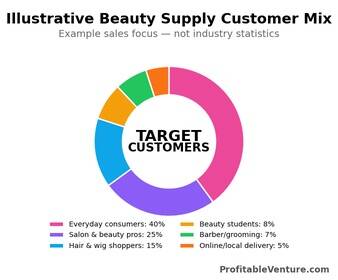
A beauty supply store can serve several different customers at the same time.
A woman may walk in looking for shampoo and hair extensions, while a hairstylist buys professional color products, a barber purchases clippers and blades, and a nail technician shops for supplies.
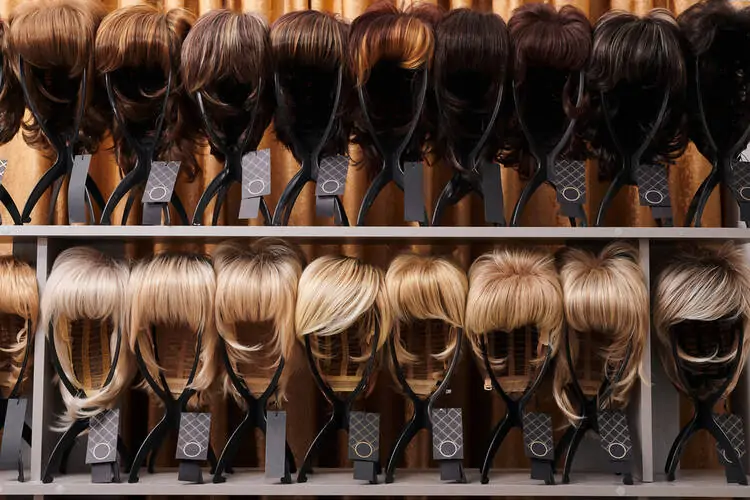
This variety creates an opportunity to generate repeat business because many beauty products are consumable and must eventually be replaced.
However, inventory is also one of the biggest risks in the business. It is easy for a beginner to spend thousands of dollars filling shelves with products that look attractive but do not actually sell in that neighborhood.
For this reason, your first goal should not be to open the largest beauty store in town.

Your goal should be to understand who shops in your market, what products they already buy, which brands they ask for, what they cannot easily find locally, and how much inventory you can afford to carry without tying up all your cash.
Steps on How to Start a Beauty Supply Store Business
-
Conduct Market Research
Good market research can save you from one of the most expensive mistakes in beauty retail: buying the wrong inventory.
Start by visiting beauty supply stores within the area where you intend to operate.
Look at the products customers are buying, which brands receive the most shelf space, the price range, store layout, opening hours, customer service, parking, security, and whether the store serves mainly consumers or beauty professionals. Pay particular attention to hair products.
Hair textures, styling habits, local demographics, salon activity, fashion trends, and cultural preferences can strongly influence which shampoos, conditioners, relaxers, braiding hair, wigs, extensions, dyes, oils, gels, and styling products sell.
The same principle applies to skincare, nails, barbering, lashes, and cosmetics.
Do not assume customers want a product merely because it is popular on social media. Talk to actual shoppers.
Ask salon owners, hairstylists, barbers, nail technicians, beauty students, wig installers, makeup artists, and ordinary consumers where they currently buy supplies and what they have difficulty finding.
You may discover that the opportunity is not another general beauty store. It might be a store with a better selection of wigs, professional hair color, textured-hair products, Korean skincare, nail supplies, barber equipment, or professional products for local salons.
You should also investigate nearby competitors that do not look like traditional beauty supply stores.
Drugstores, supermarkets, big-box retailers, department stores, Amazon, specialty beauty chains, salon distributors, and online beauty retailers can all compete for the same customer’s money.
Finally, research the economics of the proposed location. Estimate rent, common-area charges, utilities, insurance, security, employee costs, sales taxes, store fixtures, and how much inventory will be required to make the store look sufficiently stocked.
An inexpensive store with poor traffic is not automatically better than a more expensive location surrounded by your ideal customers.
a. Who is the Target Market for a Beauty Supply Store?
- Women and men purchasing personal beauty products
- Hairstylists
- Hair salon owners
- Barbers and barbershop owners
- Wig installers and wig makers
- Braiders
- Nail technicians
- Makeup artists
- Estheticians
- Cosmetology students
- Beauty schools
- Freelance beauty professionals
- Customers purchasing wigs and hair extensions
- Parents purchasing children’s hair-care products
- Customers shopping for skincare and cosmetics.
b. Is a Beauty Supply Store a Profitable Business?
Yes, a beauty supply store can be profitable, especially when it develops a strong base of repeat customers.
Products such as shampoo, conditioner, styling gel, hair color, nail supplies, skincare products, lashes, barber blades, and many salon consumables eventually need to be replaced.
This gives a well-positioned store the opportunity to earn repeat revenue rather than depending entirely on one-time purchases.
Profitability, however, depends heavily on inventory management. A store can have thousands of products on its shelves and still struggle financially if too much money is tied up in slow-moving merchandise.
Successful operators monitor what sells quickly, reorder those products efficiently, reduce overstock, negotiate good supplier pricing, and avoid chasing every temporary beauty trend.
You also need to protect your margins. Discounting products simply to match every online competitor can leave you with plenty of sales but very little profit.
c. Are There Existing Niches in the Industry?
Yes. There are many niches within the beauty supply industry. Some examples include:
- Natural and textured-hair products
- Wigs and hair extensions
- Braiding hair
- Professional salon supplies
- Barber supplies and equipment
- Nail products
- Skincare products
- Korean and Asian beauty products
- Makeup and cosmetics
- Organic or naturally positioned beauty products
- Men’s grooming products
- Lashes and brow products
- Salon furniture and equipment
- Beauty-school supplies
- Professional hair color
- Budget beauty products
- Premium and prestige beauty products
- Online beauty supply retailing.
A niche can help a smaller store compete with businesses that have much larger inventories.
You do not have to stock everything if customers know your store is particularly good at supplying the products they care about.
d. Who are the Major Competitors?
Your competitors may include:
- Sally Beauty
- CosmoProf
- Ulta Beauty
- Sephora
- Independent neighborhood beauty supply stores
- Professional salon distributors
- Amazon
- Walmart
- Target
- Drugstore chains
- Beauty-brand websites
- Online wig and hair-extension retailers.
Do not try to defeat every competitor on every product. An independent store can compete by carrying products that match its neighborhood, keeping popular items in stock, offering knowledgeable service, supplying local professionals, providing same-day pickup, and responding faster to local demand.
e. Are There County, State, or Federal Regulations for a Beauty Supply Store in the United States?
Yes, but the requirements depend heavily on where you operate and what exactly your store does.
A normal beauty supply store will generally need the state and local licenses required for a retail business.
These may include a general business license, sales-tax registration, resale or seller documentation, certificate of occupancy, zoning approval, signage permits, and fire-safety approval.
Retail requirements vary by state, county, and city, so you should confirm them with your local and state authorities before signing a long-term lease. Cosmetics themselves are also regulated federally.
If you are simply purchasing finished, properly labeled cosmetic products from legitimate suppliers and selling them to consumers, your regulatory position is very different from a company manufacturing its own products.
Under the federal cosmetics framework, ordinary cosmetic retailers are generally excluded from the definition of a cosmetic manufacturing facility unless they engage in manufacturing or processing activities that bring them within the law.
If you create your own private-label cosmetics, manufacture products, process cosmetics, import certain products, or become the manufacturer, packer, or distributor whose name appears on the product label, additional FDA obligations may apply.
You should also be careful when selling products that are legally classified as drugs rather than ordinary cosmetics.
Products making certain therapeutic claims or containing drug ingredients can be subject to additional requirements.
The safest approach for a beginner is to purchase products from reputable manufacturers and authorized wholesalers that can provide proper invoices and product information.
f. Is There a Franchise for a Beauty Supply Store?
Franchise and licensed beauty retail opportunities do exist, but they are less standardized than restaurant or service franchises.
Some beauty distribution networks have operated franchised locations in certain markets, while many of the best-known beauty supply stores are predominantly corporate-owned or independently operated.
If you find a beauty supply franchise opportunity, do not buy it simply because you recognize the brand. Review the Franchise Disclosure Document carefully.
Find out what inventory you are required to purchase, approved suppliers, minimum store size, royalty fees, advertising contributions, protected territory, pricing restrictions, and whether the franchisor can force you to carry slow-moving products.
g. What Do You Need to Start a Beauty Supply Store?
- A well-researched beauty retail concept
- A suitable retail location
- Business registration
- Retail licenses and permits
- Sales-tax and resale registrations where applicable
- A commercial lease
- Opening inventory
- Reliable wholesalers and distributors
- Shelving and display fixtures
- Point-of-sale system
- Barcode scanner
- Inventory-management software
- Security cameras and anti-theft measures
- Commercial insurance
- Website or online store
- Shopping bags and packaging
- Store signage
- Working capital
- Employees where needed.
-
Choose a Memorable Business Name
Your beauty supply store name should be easy to pronounce, easy to remember, and broad enough to accommodate future growth.
A name such as “Tina’s Wig Shop” may work perfectly if wigs will always be your main business.
However, it may feel restrictive later if you decide to sell cosmetics, nail supplies, skincare, barber equipment, and salon products.
Before ordering signage or printing bags, search your state’s business database, check domain-name availability, search social media, and investigate potential trademark conflicts.
Some catchy business name ideas suitable for a beauty supply store are:
- LuxeLane Beauty Supply, LLC
- Glow District Beauty, LLC
- Beauty Harbor Supply, LLC
- Crown & Curl Beauty Supply, LLC
- Velvet Beauty Market, LLC
- Radiant Shelf Beauty Supply, LLC
- Urban Crown Beauty, LLC
- Beauty Avenue Supply, LLC
- Glam House Beauty Market, LLC
- Pure Glow Beauty Supply, LLC
- Beauty Vault Supply, LLC
- Crown Culture Beauty, LLC
- Style Source Beauty Supply, LLC
- Glamour Lane Beauty, LLC
- Beauty Basket Supply, LLC
- Heritage Beauty Market, LLC
- GlowPoint Beauty Supply, LLC
- Beauty Loft Supply, LLC
- Crown & Color Beauty Market, LLC
- Radiant Roots Beauty Supply, LLC.
-
Register Your Business
a. What Type of Business Structure is Best for a Beauty Supply Store?
The best business structure depends on the number of owners, tax considerations, plans for expansion, and the amount of liability protection you want.
Many independent beauty supply businesses choose a limited liability company.
An LLC can provide separation between the owner’s personal affairs and the business while remaining relatively straightforward to manage.
That protection is not absolute. You still need appropriate insurance, proper contracts, good accounting, and responsible business practices.
If you plan to bring in investors, open several locations, or build a larger retail chain, discuss the structure with an accountant or business attorney.
b. Steps to Form an LLC
- Choose an available LLC name
- File formation documents with your state
- Choose a registered agent
- Create an operating agreement
- Obtain an EIN when needed
- Register for applicable state and local taxes
- Obtain sales-tax or seller registration where applicable
- Open a business bank account
- Apply for the required retail licenses and permits
- Maintain annual reports and other compliance requirements.
c. What Type of License is Needed to Start a Beauty Supply Store?
Requirements vary by location, but you may need:
- General business license
- Retail business license
- Sales-tax permit or seller’s permit where applicable
- Resale certificate or equivalent documentation
- Certificate of occupancy
- Zoning approval
- Fire inspection approval
- Sign permit
- Employer registrations if hiring staff
- Additional approvals if offering salon, barbering, or cosmetology services.
Simply selling beauty products usually does not mean you need a cosmetology license.
However, if your store begins performing regulated salon, barbering, nail, esthetic, or other beauty services, professional and establishment licensing requirements may apply.
d. What Type of Certification is Needed to Start a Beauty Supply Store?
There is no universal “beauty supply store certification” required throughout the United States. Useful training may include:
- Retail management training
- Inventory-management training
- Product knowledge training
- Loss-prevention training
- Customer service training
- Workplace safety training
- First aid and CPR
- Cosmetic ingredient and product education
- Supplier-provided professional product training.
If you also operate a salon or offer regulated beauty services, the employees performing those services may need appropriate state professional licenses.
e. What Documents are Needed to Start a Beauty Supply Store?
- Business formation documents
- Employer Identification Number where applicable
- State tax registration
- Retail or general business license
- Seller’s permit or sales-tax documentation where applicable
- Resale certificate
- Commercial lease agreement
- Certificate of occupancy
- Zoning approval
- Insurance policies
- Supplier agreements
- Wholesale invoices
- Employee records
- Inventory records
- Sales records
- Product return and refund policy
- Security procedures
- Website terms and privacy policies if selling online.
f. Do You Need a Trademark, Copyright, or Patent?
You normally do not need a patent to open a beauty supply store. A trademark can become useful for protecting your store name, logo, slogan, or private-label brand.
Copyright may protect original website copy, photographs, product guides, videos, and marketing materials that your business creates.
If you eventually develop an original cosmetic formula, packaging innovation, or technical invention, additional intellectual-property protection may become relevant.
For a new retailer, however, the immediate priorities should be securing a good location, purchasing the right inventory, obtaining licenses, building supplier relationships, and attracting customers.
-
Cost Analysis and Budgeting
a. How Much Does It Cost to Start a Beauty Supply Store?
The cost of starting a beauty supply store depends largely on store size, location, renovation requirements, and how much opening inventory you purchase.
A small niche beauty store may be launched with approximately $45,000 to $70,000.
A medium-sized store with a broader product selection, professional fixtures, security systems, and stronger working capital may require approximately $100,000 to $160,000.
A larger beauty supply store with extensive wigs, extensions, professional products, premium fixtures, multiple employees, and a stronger online operation may require approximately $250,000 to $400,000 or more.
For this guide, we will use the following planning budgets:
- Small-scale beauty supply store: approximately $55,000
- Medium-scale beauty supply store: approximately $125,000
- Large-scale beauty supply store: approximately $300,000.
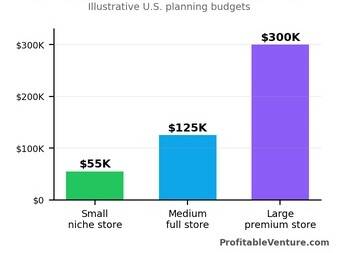
These figures are planning estimates rather than guaranteed market prices.
A store can spend considerably more if it leases expensive retail space, orders premium fixtures, or opens with a very large assortment of wigs, extensions, cosmetics, and professional salon products.
b. What are the Costs Involved in Starting a Beauty Supply Store?
Small-Scale Beauty Supply Store – Approximately $55,000
- Opening inventory – $25,000
- Lease deposit and initial rent – $6,000
- Shelving, displays, counters, and basic buildout – $7,000
- POS, barcode equipment, and security cameras – $3,000
- Licenses and initial insurance – $2,000
- Website, signage, bags, and branding – $2,000
- Working capital reserve – $10,000
- Estimated Total – $55,000.
This model is suitable for a relatively small store with a carefully selected inventory rather than thousands of different products.
Medium-Scale Beauty Supply Store – Approximately $125,000
- Opening inventory – $55,000
- Buildout, shelving, displays, lighting, and fixtures – $20,000
- Working capital reserve – $25,000
- Lease deposit and initial occupancy costs – $10,000
- POS, barcode system, computers, and security – $6,000
- Website, e-commerce setup, signage, and branding – $5,000
- Licenses, professional fees, and initial insurance – $4,000
- Estimated Total – $125,000.
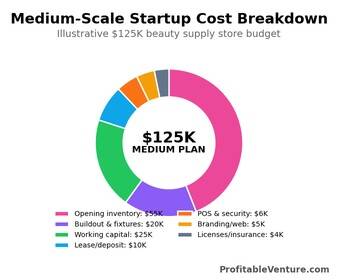
This is the model used for the five-year financial projection later in this article.
Large-Scale Beauty Supply Store – Approximately $300,000
- Opening inventory – $135,000
- Store renovation, fixtures, display systems, and lighting – $45,000
- Working capital and payroll reserve – $55,000
- Lease deposit and occupancy costs – $20,000
- POS, inventory technology, computers, and security – $12,000
- Website, e-commerce, marketing, and branding – $12,000
- Licenses, insurance, professional fees, and setup costs – $6,000
- Storage, delivery equipment, and other launch expenses – $15,000
- Estimated Total – $300,000.
A large inventory does not automatically make a beauty supply store better.
If half your merchandise remains on the shelves for a year, you have effectively turned valuable cash into products that are not generating income.
c. What Factors Determine the Cost of Starting a Beauty Supply Store?
- Store size – Larger premises require more fixtures and more merchandise to avoid looking empty.
- Location – Prime retail areas usually involve higher rent and deposits.
- Inventory selection – Wigs, human hair, extensions, appliances, and salon equipment can require much more capital than basic cosmetics.
- Store renovation – Flooring, lighting, electrical work, signage, counters, and displays can increase costs quickly.
- Security – High-value and small beauty products can require cameras, mirrors, security tags, and controlled displays.
- E-commerce – A professional online store, photography, shipping supplies, and fulfillment systems add to startup expenses.
- Employees – A larger operation needs more payroll reserve.
- Supplier minimum orders – Some distributors or brands require minimum purchases.
- Working capital – Money must remain available for restocking fast-selling products.
d. Do You Need to Build a Facility? If YES, How Much Will It Cost?
You normally do not need to construct a new building. Most beauty supply stores lease space within shopping centers, neighborhood retail strips, standalone commercial properties, or mixed-use developments.
The amount you spend on improvements depends on the condition of the premises.
A former retail store may already have suitable flooring, lighting, restrooms, electrical systems, and customer entrances. An unfinished commercial shell may require a substantial buildout.
Before signing the lease, make sure the proposed use is permitted and understand who will pay for construction, signage, HVAC repairs, utilities, property expenses, and maintenance.
e. What are the Ongoing Expenses of a Beauty Supply Store?
- Inventory replenishment
- Store rent
- Common-area charges where applicable
- Employee wages
- Payroll taxes
- Utilities
- Business insurance
- Credit-card processing fees
- POS and inventory software
- Website and e-commerce expenses
- Shipping and packaging
- Advertising
- Security services
- Shoplifting and inventory shrinkage
- Damaged or expired merchandise
- Cleaning
- Accounting and bookkeeping
- License renewals
- Repairs and maintenance
- Professional fees.
f. What is the Average Salary of Your Staff?
Employee wages vary widely by city and state, so a single nationwide salary figure can quickly become misleading.
A small store may initially operate with the owner and one retail associate. A larger operation may employ:
- Store Manager
- Assistant Manager
- Sales Associates
- Cashiers
- Inventory/Stock Associates
- Wig or Hair Product Specialist
- E-commerce Fulfillment Staff
- Bookkeeper
- Marketing Assistant.
Research prevailing wages in your local labor market when building your actual budget.
Remember that the cost of an employee can include payroll taxes, workers’ compensation, training, benefits, overtime, and employee turnover in addition to wages.
g. How Do You Get Funding to Start a Beauty Supply Store?
- Personal savings
- Small-business loans
- Business lines of credit
- Inventory financing where appropriate
- Equipment financing
- Investors or business partners
- Family financing
- Landlord tenant-improvement allowances
- Starting with a smaller store and reinvesting profits
- Launching online first before opening a larger storefront.
A beauty retailer needs enough cash not only to open the doors but also to reorder successful products.
If you spend your entire budget filling the store on opening day, you may struggle when the best-selling products need to be reordered two weeks later.
-
Write a Business Plan
a. Executive Summary
LuxeLane Beauty Supply, LLC is a proposed specialty beauty retailer based in Atlanta, Georgia.
The store will provide consumers and beauty professionals with a curated selection of hair-care products, wigs, extensions, braiding hair, skincare products, cosmetics, nail supplies, barber products, styling tools, and salon essentials.
The company will serve both walk-in retail customers and professional buyers such as hairstylists, braiders, wig installers, barbers, makeup artists, and salon owners.
The business will launch as a medium-scale beauty supply store with approximately $125,000 in startup capital.
Management will prioritize fast-moving merchandise rather than attempting to carry every beauty product available.
Customer requests, POS sales data, product turnover, margins, and supplier lead times will determine which products receive additional shelf space.
The company will generate income from in-store sales, online sales, professional accounts, local pickup, selected local delivery, wigs and extensions, salon supplies, and seasonal beauty promotions.
The long-term objective is to develop a strong neighborhood brand, increase direct relationships with professional beauty customers, build a profitable online store, and consider additional locations only after the first operation demonstrates consistent profitability.
b. Products and Services
LuxeLane Beauty Supply, LLC will offer products such as:
- Shampoo and conditioner
- Hair oils and treatments
- Styling gels and edge-control products
- Hair color
- Natural and textured-hair products
- Braiding hair
- Human and synthetic wigs
- Hair extensions
- Wig caps and installation supplies
- Barber clippers and accessories
- Skincare products
- Makeup
- Lashes
- Nail-care products
- Styling tools
- Hair dryers and flat irons
- Salon capes and accessories
- Professional salon supplies
- Beauty-school supplies
- Online ordering and local pickup.
c. Mission Statement
“At LuxeLane Beauty Supply, LLC, our mission is to make quality beauty products easy to find by combining a carefully selected product range, knowledgeable customer service, fair pricing, and a welcoming shopping experience for consumers and beauty professionals.”
Vision Statement
“Our vision is to build LuxeLane Beauty Supply into a trusted beauty retail brand known for understanding its customers, keeping the right products in stock, supporting beauty professionals, and making beauty shopping convenient both in-store and online.”
d. Goals and Objectives
The company’s first goal is to build a profitable single-store operation. That means learning which products sell consistently, keeping popular items in stock, improving inventory turnover, reducing theft and shrinkage, building supplier relationships, and creating repeat customers.
Another major objective is to develop relationships with local beauty professionals.
A salon stylist or barber who purchases supplies several times a month can be more valuable over time than a customer who visits the store once.
The company will therefore create professional customer accounts, volume incentives where profitable, preorder services, and convenient pickup options.
The store will also build an online sales channel. The objective is not to compete with every national online beauty retailer on price.
Instead, the website will make it easier for existing customers to check products, reorder familiar items, reserve merchandise, and discover new products.
Long-term goals may include private-label products, wholesale accounts, a second retail location, a larger e-commerce operation, or partnerships with salons and beauty schools.
e. Organizational Structure
- Owner/General Manager
- Store Manager
- Assistant Manager
- Sales Associates
- Cashiers
- Inventory/Stock Associate
- Beauty Product Specialist
- E-commerce Fulfillment Staff
- Marketing Assistant
- Bookkeeper/Accountant.
A new store does not need every position immediately. The owner may manage purchasing, marketing, accounting coordination, and supplier relationships while a small team handles sales and inventory.
Marketing Plan
a. SWOT Analysis
Strengths
A locally focused beauty supply store can adapt its inventory much faster than a national chain.
Management can listen directly to customers and add products that reflect neighborhood preferences.
The store can also build close relationships with local stylists, barbers, salons, wig installers, and beauty schools.
A strong product selection combined with knowledgeable employees can create customer loyalty that is difficult to achieve through anonymous online shopping.
Weaknesses
Inventory requires a substantial amount of capital. A new owner may struggle to determine which products deserve shelf space and how much of each item to order.
Independent stores may also lack the purchasing power of large chains. The business can be vulnerable to theft, slow-moving stock, changing beauty trends, and dependence on certain brands or distributors.
Opportunities
The store can expand beyond ordinary walk-in retail sales. Professional accounts, e-commerce, local delivery, beauty-school packages, wig sales, salon products, barber supplies, private-label merchandise, and partnerships with beauty professionals can increase revenue.
Social media also gives independent stores the opportunity to demonstrate new products and reach customers without depending entirely on expensive traditional advertising.
Threats
Major beauty retailers, mass merchants, Amazon, brand websites, and discount online sellers create significant competition.
Other risks include shoplifting, counterfeit products from unreliable suppliers, rapidly changing product trends, supplier shortages, rising rent, and declining margins caused by excessive discounting.
A poorly chosen inventory can also become a serious financial threat because merchandise sitting on the shelf represents money the business cannot use elsewhere.
b. How Do Beauty Supply Stores Make Money?
The primary source of income is the markup between the wholesale cost of merchandise and the retail selling price. Beauty supply stores can earn money from:
- Hair-care products
- Wigs
- Hair extensions
- Braiding hair
- Cosmetics
- Skincare
- Nail supplies
- Barber products
- Styling appliances
- Salon equipment
- Professional customer accounts
- Online orders
- Local pickup and delivery
- Private-label products.
Not every category produces the same margin or turnover. A product with a large markup is not automatically attractive if it sells once every six months.
Inventory that turns quickly and produces a reasonable margin can be more valuable than a higher-margin product that sits on the shelf.
c. Payment Options
- Credit cards
- Debit cards
- Cash
- Apple Pay
- Google Pay
- Online payments
- Gift cards
- Approved business accounts for professional customers where appropriate.
d. Sales and Advertising Strategies
- Create a Google Business Profile
- Build an online beauty store
- Post product demonstrations on Instagram and TikTok
- Partner with local hairstylists and barbers
- Work with wig installers and braiders
- Offer professional customer accounts
- Create loyalty rewards
- Send restock alerts for popular products
- Collect customer email addresses
- Use SMS marketing with customer permission
- Promote new-product arrivals
- Host product demonstrations
- Partner with beauty schools
- Offer student starter kits
- Create referral incentives
- Offer online ordering with store pickup
- Ask satisfied customers for reviews
- Use attractive window displays
- Run seasonal hair, nail, and skincare promotions.
One of the simplest marketing strategies is also one of the most valuable: listen when customers ask for a product you do not stock.
If several unrelated customers request the same product, that information can be more useful than guessing what to buy from a wholesaler’s catalog.
Financial Projection
a. How Much Should You Charge for Your Products?
You should price merchandise based on landed product cost, competitive prices, customer expectations, and the margin your store needs to survive. Do not calculate the cost using only the supplier’s invoice price.
Your actual cost may also include freight, payment fees, customs or import-related costs where applicable, damage, shrinkage, and storage. A useful calculation is:
Gross Margin = (Selling Price – Product Cost) ÷ Selling Price × 100.
Suppose you buy a product for $10 and sell it for $16. Your gross profit is $6, but that $6 is not your final business profit.
Rent, wages, insurance, advertising, merchant fees, utilities, theft, taxes, and other overhead still need to be paid.
You should monitor both markup and gross margin rather than using one blanket pricing rule for every product.
b. How Much Revenue Can a Beauty Supply Store Generate?
Revenue depends on store size, location, inventory, average transaction value, customer traffic, professional accounts, and online sales. For planning purposes, a reasonable model might look like this:
- Small niche beauty supply store: approximately $200,000 to $320,000 in annual gross sales
- Medium full-line beauty supply store: approximately $380,000 to $550,000 in annual gross sales
- Large store or multi-channel operation: approximately $800,000 to $1.3 million or more in annual gross sales.
These are planning estimates rather than guaranteed earnings. For the projection below, we will use the $125,000 medium-scale startup model and assume approximately $420,000 in first-year revenue.
c. Five-Year Revenue and Profit Projection
The following model assumes the store improves its inventory selection, gains repeat customers, develops professional accounts, and gradually grows online sales.
| Fiscal Year | Revenue | Total Expenses | Net Profit | Net Margin |
|---|---|---|---|---|
| Year 1 | $420,000 | $392,000 | $28,000 | 6.7% |
| Year 2 | $470,000 | $431,000 | $39,000 | 8.3% |
| Year 3 | $540,000 | $486,000 | $54,000 | 10.0% |
| Year 4 | $620,000 | $551,000 | $69,000 | 11.1% |
| Year 5 | $710,000 | $627,000 | $83,000 | 11.7% |
Under this example, cumulative revenue over five years would be approximately $2.76 million, while cumulative projected net profit would be approximately $273,000.
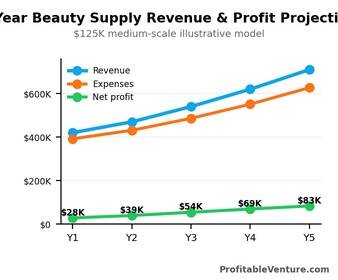
The figures are business-planning estimates, not guaranteed results.
d. Sample Five-Year Profit and Loss Projection
| Item | Year 1 | Year 2 | Year 3 | Year 4 | Year 5 |
|---|---|---|---|---|---|
| Revenue | $420,000 | $470,000 | $540,000 | $620,000 | $710,000 |
| Cost of Merchandise Sold | $220,000 | $240,000 | $270,000 | $306,000 | $348,000 |
| Payroll and Staff Costs | $70,000 | $80,000 | $92,000 | $105,000 | $120,000 |
| Rent and Occupancy | $36,000 | $38,000 | $40,000 | $43,000 | $46,000 |
| Marketing | $12,000 | $14,000 | $16,000 | $18,000 | $20,000 |
| Insurance, Licenses and Permits | $6,000 | $7,000 | $8,000 | $9,000 | $10,000 |
| POS, E-commerce and Payment Fees | $14,000 | $16,000 | $19,000 | $22,000 | $25,000 |
| Utilities and Administration | $12,000 | $13,000 | $15,000 | $17,000 | $19,000 |
| Shrinkage and Damaged Inventory | $8,000 | $9,000 | $10,000 | $11,000 | $12,000 |
| Equipment and Depreciation | $6,000 | $6,000 | $8,000 | $8,000 | $10,000 |
| Other Operating Expenses | $8,000 | $8,000 | $8,000 | $12,000 | $17,000 |
| Total Expenses | $392,000 | $431,000 | $486,000 | $551,000 | $627,000 |
| Projected Net Profit | $28,000 | $39,000 | $54,000 | $69,000 | $83,000 |
This projection assumes better inventory turnover and stronger purchasing discipline as the business matures.
If the store buys too much merchandise that does not sell, gross sales may still look impressive while cash flow becomes increasingly difficult.
e. How Much Profit Do Beauty Supply Store Owners Make a Year?
There is no single amount that every owner earns. A small owner-operated store with low rent can sometimes leave more income for its owner than a larger store with excessive payroll and slow inventory.
Using the medium-scale financial model in this guide, projected business profit begins at approximately $28,000 during Year 1 and increases toward approximately $83,000 in Year 5.
This is business profit after the operating expenses shown in the model. The actual owner’s personal income will depend on how the business is structured, whether the owner draws wages, debt payments, taxes, reinvestment, and other financial decisions.
f. What Factors Determine the Amount of Profit to Be Made?
- Store location
- Customer traffic
- Average transaction value
- Wholesale purchasing cost
- Gross margin
- Inventory turnover
- Amount of slow-moving stock
- Rent
- Payroll
- Shoplifting and shrinkage
- Supplier terms
- Product selection
- Online sales
- Professional customer accounts
- Competition
- Advertising effectiveness
- Repeat customer rate.
g. What is the Profit Margin of a Beauty Supply Store?
Profit margins vary according to product mix, purchasing power, rent, labor, and operating efficiency. Calculate your actual margin regularly using:
Net Profit Margin = Net Profit ÷ Revenue × 100.
The medium-scale model in this article produces a projected net margin of approximately 7% in the first year, gradually improving toward approximately 12%.
This should be treated as a planning target rather than an industry guarantee.
h. What is the Sales Forecast?
Based on the medium-scale business used in our example:
- First Fiscal Year: $420,000
- Second Fiscal Year: $470,000
- Third Fiscal Year: $540,000
- Fourth Fiscal Year: $620,000
- Fifth Fiscal Year: $710,000.
The increase assumes that the store develops repeat customers, improves product availability, grows professional accounts, and generates additional online sales.
-
Set Up Your Store
a. How Do You Choose a Perfect Location for a Beauty Supply Store?
A strong location puts you close to people who regularly buy the products you sell. Consider:
- Target-market concentration – The surrounding community should match your product selection.
- Salon and barbershop activity – Nearby professionals can become frequent customers.
- Visibility – Customers should be able to see the store easily.
- Parking – Convenient parking can make repeat shopping easier.
- Pedestrian traffic – Walkable retail districts can create additional sales.
- Rent – The location must generate enough revenue to justify occupancy costs.
- Competition – Some competition proves demand, but too many similar stores can make the market difficult.
- Security – Consider lighting, theft risk, cameras, and employee safety.
- Space – You need enough room for inventory without paying for unnecessary square footage.
b. What State and City is Best to Start a Beauty Supply Store?
There is no universally best city. A smaller city with affordable rent and limited competition may offer a better opportunity than a huge metropolitan area filled with established beauty retailers. Markets worth researching include:
- Atlanta, Georgia
- Houston, Texas
- Dallas-Fort Worth, Texas
- Charlotte, North Carolina
- Baltimore, Maryland
- Philadelphia, Pennsylvania
- Chicago, Illinois
- Detroit, Michigan
- Memphis, Tennessee
- Orlando, Florida.
Do not choose a location based only on a city name. Beauty retail is neighborhood-driven. Study the actual trade area surrounding the storefront.
c. What Equipment is Needed to Operate a Beauty Supply Store?
- Retail shelving
- Slatwall displays
- Glass display cases
- Wig stands and mannequins
- Hair-extension displays
- Checkout counter
- Point-of-sale system
- Barcode scanners
- Receipt printer
- Cash drawer
- Computers or tablets
- Inventory-management software
- Security cameras
- Security mirrors
- Electronic security tags where appropriate
- Store safe
- Shopping baskets
- Storage shelves
- Pricing labels
- Shopping bags
- Store signage
- Office furniture
- Cleaning equipment.
Your inventory system is particularly important. You should be able to tell which products are selling, which are nearly out of stock, and which have been sitting on the shelf for months without manually counting every item.
-
Hire Employees
A small beauty supply store can begin with the owner and one or two sales associates. Do not hire employees simply to stand behind the counter.
Good beauty retail employees should learn the store’s products well enough to help customers find what they need without pretending to provide medical advice or services outside their qualifications.
Train employees on the POS system, returns, theft prevention, customer complaints, stock receiving, shelf organization, online pickup orders, and how to identify products that need reordering.
Customer service is particularly important in beauty retail.
A shopper who feels embarrassed because an employee does not understand her hair-care needs may simply buy elsewhere next time.
Employees should be respectful, curious, and willing to learn about different hair types, beauty routines, brands, and professional needs.
You should also have clear procedures for suspected shoplifting. Employees should never be encouraged to put themselves in physical danger simply to save merchandise.
-
Launch the Business Proper
Before the official opening, organize a soft launch. Invite local stylists, barbers, braiders, wig installers, nail technicians, beauty students, neighborhood residents, and potential customers to visit the store.
Use the event to identify problems before the grand opening. You may discover that customers cannot find products, prices are difficult to read, the checkout line is awkward, certain brands are missing, or your employees need more product training.
Fix those issues quickly. For the grand opening, you can offer demonstrations, giveaways, selected discounts, loyalty-program enrollment, professional account registration, product samples where permitted, and partnerships with local beauty professionals.
The objective is not merely to have a crowded opening day. The real goal is to convince first-time visitors to return after the discounts disappear.
a. What Makes a Beauty Supply Store Successful?
- Correct inventory – Stock what customers actually buy rather than what you personally like.
- Strong supplier relationships – Reliable supply helps keep important products available.
- Inventory control – Avoid tying too much cash up in slow-moving stock.
- Good customer service – Knowledgeable employees encourage repeat visits.
- Convenient location – Customers should be able to find and access the store easily.
- Competitive pricing – Prices must make sense without destroying margins.
- Professional customers – Stylists, salons, and barbers can create frequent repeat sales.
- Security – Theft and shrinkage must be controlled.
- Online presence – Customers increasingly expect to check products and availability online.
- Fast reordering – Popular products should not remain out of stock for long periods.
b. What Happens During a Typical Day at a Beauty Supply Store?
A typical day begins before customers arrive. Staff check the store, prepare registers, review online orders, restock shelves, verify that displays are neat, and make sure high-demand products are available.
During the day, employees help customers find products, answer questions, process sales, receive deliveries, restock merchandise, organize displays, and handle returns.
The manager monitors sales and inventory reports. If a popular hair product has sold unusually quickly, it may need to be reordered immediately.
If another product has barely moved for months, the store may stop ordering it or discount remaining units to free up cash and shelf space.
Professional customers may call ahead to reserve products or request bulk quantities.
Online orders may need to be picked, packed, and prepared for pickup or shipment. Employees also watch for damaged products and suspicious theft activity.
At closing, the store balances registers, secures high-value merchandise, cleans the shop, organizes stock, reviews outstanding online orders, and prepares for the next day.
The owner may still need to place supplier orders, review advertising, pay bills, reconcile accounts, analyze product margins, respond to customer messages, and decide which new products deserve to be tested.
c. What Skills and Experience Do You Need to Build a Beauty Supply Store?
- Retail management – You need to understand daily store operations.
- Inventory management – This may be the most important financial skill in the business.
- Product knowledge – Customers expect employees to understand what the store sells.
- Customer service – Beauty is personal, and customers value respectful assistance.
- Financial management – You must understand margins, cash flow, expenses, and inventory investment.
- Supplier negotiation – Better purchasing terms can improve profitability.
- Loss prevention – You need systems for controlling shrinkage and theft.
- Merchandising – Attractive displays help customers discover products.
- Marketing – Social media and local partnerships can generate traffic.
- E-commerce knowledge – Online ordering can extend your reach beyond the physical store.
- Leadership – Employees need clear expectations and good training.
- Trend awareness – Beauty preferences change, but you must distinguish real demand from short-lived hype.
If you have never worked in the beauty industry, that does not mean you cannot start a beauty supply store.
It does mean you should spend more time learning before placing large inventory orders.
Visit stores. Talk to stylists. Speak with customers. Attend beauty trade events. Meet distributors.
Learn the major product categories. Understand hair types and common beauty routines. Study your POS reports once the business opens.
Most importantly, listen to customers. A beauty supply store can survive without carrying every new product on the market.
It cannot survive for long if customers repeatedly walk in looking for basic products they need and leave empty-handed.
If you combine the right inventory with a good location, dependable suppliers, strong customer service, careful financial management, and disciplined stock control, you can build a successful beauty supply store even if you entered the industry with no previous experience.