
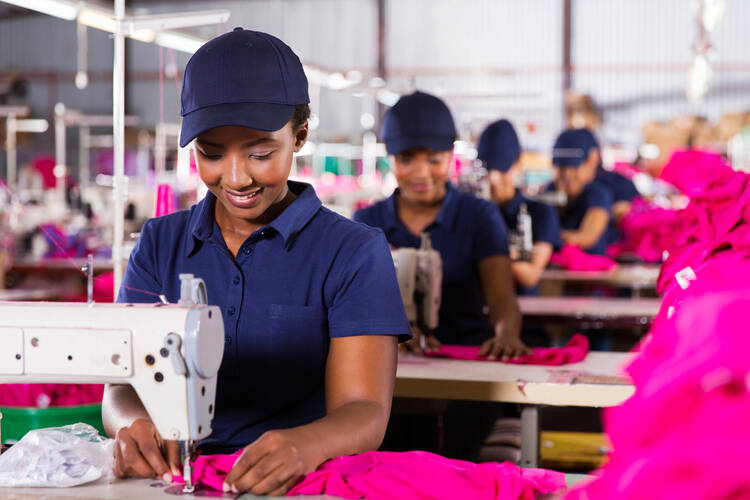
A school uniform sewing business involves designing, cutting, stitching, and supplying uniforms required by schools.
This can be done either by contracting with schools in bulk or by offering bespoke sizes to parents and students.
According to industry data, the global school uniform market was valued at around USD 18.9 billion in 2024 and is expected to grow to about USD 33.1 billion by 2034 (CAGR 5.8%).
In the U.S., approximately 18.8% of public schools and 57% of private schools mandate uniforms.

In the operations of such a business, startup costs can be modest, ranging from under $1,000 to several tens of thousands, depending on scale, equipment, and production volume.
Key benefits include high customer retention (schools tend to order year after year) and a clear, recurring demand tied to the academic cycle.
Challenges include seasonal demand peaks, tighter margins in mass production, and the need for timely delivery and durable materials.
Steps on How to Start a School Uniform Sewing Business
-
Conduct Market Research
Conducting market research for a school uniform sewing business begins with identifying your target market.
Start by listing schools in your area, including public, private, and charter institutions.
Research their enrollment numbers, uniform requirements, and purchasing procedures.
For example, in the U.S., over 20% of public schools and nearly 60% of private schools require uniforms, indicating strong demand.
Gathering demographic data such as student population size and family income levels helps you understand potential sales volume and pricing strategies.
Next, analyze competitors within your geographic area. Visit local tailors, sewing shops, and uniform suppliers to observe their pricing, styles, and turnaround times.
Take note of their marketing strategies, product quality, and customer service.
Online research, customer reviews, and social media can also reveal gaps you can fill such as offering more durable fabrics or faster delivery.
Then, gather insights directly from customers school administrators, parents, and students.
Conduct surveys, interviews, or focus groups to learn about pain points, preferences, and spending habits.
This information can guide your product design, pricing, and branding decisions.
For example, many parents prioritize affordability and quality, while schools may focus on consistency and bulk discounts.
Finally, evaluate broader market trends and policies. Look into school board decisions, government guidelines, and fashion trends in uniforms.
Review industry reports to forecast demand and identify seasonal peaks, usually during back-to-school months.
Combining this data with your local findings will help you position your business strategically and develop a sustainable competitive edge.
a. Who is the Target Market for the School Uniform Sewing Business?
- Public Schools – Many require standardized uniforms and place bulk orders annually.
- Private Schools – Often have stricter uniform policies and higher customization needs.
- Charter Schools – Frequently adopt uniforms to promote equality and school identity.
- Religious Schools – Require specific uniform styles that reflect their values and traditions.
- Parents and Guardians – Purchase additional or replacement uniforms for their children throughout the school year.
- Retailers and School Supply Stores – Act as distribution points for ready-made uniforms.
b. Is School Uniform Sewing Business a Profitable Business?
Yes, a school uniform sewing business can be profitable, especially when the wider market supports strong demand.
The global school uniform market is projected to reach around US $33.1 billion by 2034, growing at a compound annual growth rate (CAGR) of about 5.8% from 2025 to 2034.
The recurring nature of orders (schools renewing uniforms each year) and the presence of large bulk-buyers (schools, districts) mean that securing institutional contracts can provide reliable revenue streams.
This steady demand helps offset some of the seasonality and initial investment in equipment and fabric.
c. Are There Existing Niches in the Industry?
No, there are no existing niches when it comes to the school uniform sewing business.
d. Who are the Major Competitors?
- FlynnO’Hara Uniforms
- Metro School Uniforms
- Michael’s Uniforms
- Sew Perfect Uniforms
- Educational Outfitters
- School Apparel
- Risse Brothers School Uniforms
- Luers Uniforms
- K12 Gear School Uniforms
- French Toast Official School Wear
- McCarthy Uniforms
- School Uniforms by Tommy Hilfiger
- Wholesale Uniforms 4 School
- All Uniform Wear
- Oasis Uniform
- Affix Apparel
- Zega Apparel
- Wholesale School Wear
- McCarthy Uniforms (Secondary)
e. Are There County or State Regulations or Zoning Laws for School Uniform Sewing Businesses in the United States?
In the United States, school uniform sewing businesses are generally regulated at the state and local levels, rather than by federal law.
Most states require such businesses to comply with general business regulations, including business licensing, sales tax collection, and labor laws.
If the business involves manufacturing uniforms on a larger scale, it may also need to follow state guidelines on workplace safety, labeling, and textile standards.
Zoning laws vary by county and city. Home-based sewing businesses may need a home occupation permit, depending on the jurisdiction.
Some areas restrict the number of employees, customer visits, or use of commercial equipment in residential neighborhoods.
If operating from a commercial facility, the location must be zoned for light manufacturing or retail, depending on the business model.
In addition, state and local building and fire codes may apply if the business operates in a physical shop or workshop.
Requirements may include proper ventilation, fire safety measures, and accessible entryways for customers and employees.
Some counties also require environmental permits for textile waste disposal.
Finally, occupational regulations such as health and safety standards set by OSHA may apply to larger sewing operations with multiple employees.
Businesses must also comply with employment laws, including minimum wage and workers’ compensation.
Since regulations differ by state and county, it is important to check with local zoning offices and state business departments before launching operations.
f. Is There a Franchise for School Uniform Sewing Business?
No, there are no franchise opportunities for a school uniform sewing business.
g. What Do You Need to Start a School Uniform Sewing Business?
- Business registration and permits
- Sewing machines (industrial and domestic)
- Cutting tables and tools
- Measuring tools and mannequins
- Fabric and textile supplies
- Threads, buttons, zippers, and accessories
- Pattern templates and design software
- Workspace or workshop
- Skilled tailors or sewing staff
- Marketing and branding materials
- Packaging and labeling supplies
- Accounting and inventory management system.
-
Choose a Memorable Business Name
When looking to start a business, before you can begin to file the necessary documents with the constituted authorities or start your website, it is necessary that you come up with a name that you will be recognized with.
It is essential that the name you come up with can easily be pronounced, is unique and easily memorable.
Some of the catchy business name ideas suitable for a school uniform sewing business are;
- Adel James® School Uniform Sewing Company, Inc.
- Monica Smarts® School Uniform Sewing Company, Co.
- Joan Merlyn® School Uniform Sewing Shop, Inc.
- Thora Phi® School Uniform Sewing Company, Inc.
- Sam Stars® School Uniform Sewing Company, Inc.
- May Ambrose® School Uniform Sewing Company, Inc.
- Amber Lake® School Uniform Sewing Company, LLC
- Kyle Boorman® School Uniform Sewing Company, Inc.
- Elke Hillard® School Uniform Sewing Company, LLC
- Georgia Victor™ School Uniform Sewing Company, Inc.
- Jacinta Powel® School Uniform Sewing Company, Inc.
- Andriel Johnson® School Uniform Sewing Company, Inc.
- Silver Sky™ School Uniform Sewing Company, Inc.
- Green November® School Uniform Sewing Company, Inc.
- Master Craft® School Uniform Sewing Company, LLC
- Chelsea Matinees® School Uniform Sewing Company, Inc.
- Gladys Noel® School Uniform Sewing Company, Inc.
- Rose Redknapp™ School Uniform Sewing Company, Inc.
- Lovelyn Signature® School Uniform Sewing Company, Inc.
- Jovita Signature® School Uniform Sewing Company, Inc.
-
Register Your Business
a. What Type of Business Structure is Best for a School Uniform Sewing Business?
The best type of business structure for a school uniform sewing business depends on several factors, including the size of the business, the number of owners, and the level of personal liability exposure the owners are willing to accept.
However, we usually recommend a limited liability company (LLC). An LLC is a popular choice for startup businesses because it offers personal liability protection for the owners while allowing them to be taxed as a pass-through entity.
This means that the profits and losses of the business are passed through to the owners’ personal tax returns, avoiding double taxation.
b. Steps to Form an LLC
- Choose a Name for Your LLC.
- File Articles of Organization.
- Choose a registered agent.
- Decide on member vs. manager management.
- Create an LLC operating agreement.
- Comply with other tax and regulatory requirements.
- File annual reports.
c. What Type of License is needed to open a School uniform sewing Business?
- General Business License
- Sales Tax Permit
- Home Occupation Permit (if applicable)
- Health and Safety Permits
- Environmental Permits
- Zonal Permit
- Signage Permit
d. What Type of Certification is Needed to Open a School Uniform Sewing Business?
You do not need any special certification to start a school uniform sewing business.
e. What Documents are Needed to Open a School Uniform Sewing Business?
- Business registration certificate
- Employer Identification Number (EIN) (if applicable)
- Business license
- Seller’s permit
- DBA (Doing Business As) registration (if using a different business name)
- Zoning and home occupation permit (if operating from home)
- Federal Trade Commission (FTC) compliance documents (if selling fine jewelry)
- Trademark registration (if protecting brand name or logo)
- State tax ID (for sales tax collection)
- Business insurance policy
- Supplier agreements/contracts
- Website terms and conditions (if selling online)
- Privacy policy (for online customer data protection)
- Payment processing agreement (PayPal, Stripe, etc.)
- Employment documents (if hiring staff).
f. Do You Need a Trademark, Copyright, or Patent?
A school uniform sewing business may benefit from trademarks, copyrights, and patents, but the necessity depends on the brand’s uniqueness and product designs.
A trademark is essential for protecting your business name, logo, and slogan, preventing competitors from using similar branding.
Copyrights apply to original artistic works, such as custom school uniform sewing designs, packaging artwork, or promotional materials.
While individual school uniform sewing designs may not always qualify for copyright protection, unique patterns, engravings, or artistic elements can be protected under copyright law.
A patent is only necessary if your school uniform sewing features a new and innovative design, technology, or function, such as a clasp with a unique locking mechanism.
Design patents protect the visual appearance of a product, while utility patents cover new functional aspects.
-
Cost Analysis and Budgeting
a. How Much Does It Cost to Start a School Uniform Sewing Business?
The cost to start a school uniform sewing business can vary widely depending on factors such as the size of the business, location, equipment, and supplies needed, staffing costs, marketing expenses, and more.
However, a rough estimate could range from $10,000 to $100,000 or more, depending on the size and scope of the business.
b. What are the Costs Involved in Starting a School Uniform Sewing Business?
- Legal and administrative costs (the cost of obtaining business licenses and permits, registering the business, and consulting with attorneys and accountants): $4,500
- Equipment and supplies: $75,000
- Staffing costs: $55,000
- Rent/lease: $25,000
- Marketing and advertising costs: $2,000
- Insurance costs: $2,800
- Miscellaneous Expenses: $2,000.
c. What Factors Determine the Cost of Opening a School Uniform Sewing Business?
- Location and Rent – Cost varies between home-based, commercial, or industrial spaces.
- Equipment and Machinery – Sewing machines, cutting tables, and other tools affect startup expenses.
- Fabric and Materials – Quality, quantity, and variety of textiles influence costs.
- Labor Costs – Hiring skilled tailors or staff adds to operational expenses.
- Licensing and Permits – Business registration, zoning approvals, and compliance fees.
- Marketing and Branding – Website, advertising, and promotional materials require investment.
- Utilities and Overhead – Electricity, water, maintenance, and other recurring operational costs.
d. Do You Need to Build a Facility?
It is not mandatory to build a new facility for your school uniform sewing business, but if you have the required finances, it will pay you to build your own facility.
The truth is that building or reconstructing a facility for your school uniform sewing business will allow you to come up with a facility that will perfectly fit into your overall business goals and vision.
e. What are the Ongoing Expenses of a School Uniform Sewing Business?
- Raw Materials and Supplies
- Labor Costs
- Utilities – Electricity, water, heating/cooling, and internet services.
- Equipment Maintenance
- Rent or Mortgage
- Marketing and Advertising
- Packaging and Shipping
- Insurance
- Software and Administrative Costs
- Taxes and Licensing Renewals
f. What is the Average Salary of your Staff?
- Apparel Production Manager – $113,874
- Textile Designer – $71,364
- Pattern Maker – $53,156
- Seamstress – $53,344
- Tailor – $42,349
- Quality Control Inspector – $47,460
- Sewing Machine Operator – $29,690.
g. How Do You Get Funding to Start a School Uniform Sewing Business?
- Raising money from personal savings and the sale of personal stocks and properties
- Raising money from investors and business partners
- Sell shares to interested investors
- Applying for a loan from your bank/banks
- Pitching your business idea and applying for business grants and seed funding from, government, donor organizations, and angel investors
- Source for soft loans from your family members and your friends.
-
Write a Business Plan
a. Executive Summary
Silver Sky™ School Uniform Sewing Company, Inc., based in Boston, Massachusetts, is a startup dedicated to designing, producing, and supplying high-quality school uniforms for public, private, and charter schools in the Greater Boston area.
The company focuses on delivering durable, stylish, and comfortable uniforms tailored to meet the specific requirements of each school.
By leveraging skilled tailors, modern sewing equipment, and premium fabrics, Silver Sky™ aims to become the preferred supplier for institutions seeking consistency, quality, and timely delivery.
The business model combines bulk contracts with schools and direct-to-parent sales to ensure multiple revenue streams.
With recurring demand each academic year and a growing local student population, Silver Sky™ anticipates stable income and opportunities for expansion.
Key competitive advantages include customization services, attention to detail, fast turnaround times, and excellent customer service, which differentiate the company from generic uniform suppliers and mass retailers.
Silver Sky™ plans to operate from a well-equipped workshop in Boston, supported by an efficient inventory and order management system.
Marketing strategies will include partnerships with schools, local community outreach, and digital promotion targeting parents.
With careful cost management and high-quality production, Silver Sky™ is positioned for profitability while addressing a consistent, high-demand niche in the education sector.
b. Products and Services
Silver Sky™ School Uniform Sewing Company, Inc. offers high-quality, durable, and comfortable school uniforms tailored to meet the specific requirements of each institution.
Services include custom sizing, bulk production for schools, and direct-to-parent sales.
The company emphasizes precision stitching, premium fabrics, and timely delivery, ensuring consistent quality.
Additional offerings include alteration services, pattern design, and personalized embroidery to enhance school identity and satisfaction.
c. Mission Statement:
At Silver Sky™ School Uniform Sewing Company, Inc., our mission is to provide schools and families with high-quality, durable, and comfortable uniforms that promote student confidence and school pride.
We strive to combine exceptional craftsmanship, timely delivery, and personalized service, ensuring every garment meets the unique needs of our clients.
Our goal is to become the trusted, go-to uniform provider in the Boston community.
Vision Statement:
Our vision at Silver Sky™ School Uniform Sewing Company, Inc. is to be the leading provider of school uniforms in Boston and beyond, recognized for exceptional quality, innovative designs, and outstanding customer service.
We aim to set industry standards for durability, comfort, and style, while fostering strong partnerships with schools and families.
d. Goals and Objectives
At Silver Sky™ School Uniform Sewing Company, Inc., our goals and objectives are to provide high-quality, durable, and stylish school uniforms while ensuring exceptional customer satisfaction.
We aim to secure long-term contracts with schools, expand our market reach, and maintain efficient production processes.
Our objectives include offering customization services, timely delivery, and competitive pricing, while building strong community relationships and establishing Silver Sky™ as a trusted, reliable, and leading uniform supplier in Boston.
e. Organizational Structure
- Apparel Production Manager
- Textile Designer
- Pattern Makers
- Seamstress
- Tailors
- Quality Control Inspector
- Sewing Machine Operators.
Marketing Plan
a. SWOT Analysis
Strength
- High-Quality Products – Durable fabrics and precise stitching enhance brand reputation.
- Customization Services – Ability to offer tailored uniforms and embroidery for schools.
- Strategic Location – Based in Boston, with access to numerous public, private, and charter schools.
- Skilled Workforce – Experienced tailors and designers ensure consistent quality.
- Reliable Delivery – Efficient production and logistics system builds trust with schools and parents.
Weakness
- High Startup Costs – Equipment, materials, and labor require significant initial investment.
- Limited Brand Awareness – Being a new business, establishing market presence will take time.
- Seasonal Demand – Peaks during back-to-school periods may result in uneven cash flow.
- Dependence on Local Market – Heavy reliance on Boston-area schools could limit growth without expansion.
Opportunities
- Growing School Enrollment – Increasing student populations create higher uniform demand.
- Expansion to Neighboring Cities – Regional growth could increase market share.
- Online Sales & Direct-to-Parent Market – E-commerce can complement bulk school contracts.
- Partnerships with Schools – Long-term agreements ensure recurring revenue.
Threats
- Competition – Established uniform suppliers may have loyal school contracts.
- Economic Downturns – Families may reduce spending on premium uniforms.
- Supply Chain Disruptions – Fabric or accessory shortages could delay production.
- Changing Fashion Trends in Uniforms – Schools may adopt new styles, requiring adaptation.
b. How Do School Uniform Sewing businesses make Money?
A school uniform sewing business makes money primarily by producing and selling uniforms to schools, students, and parents. Here is how the revenue streams typically work:
- Bulk Orders from Schools – Schools often require large quantities of uniforms each academic year. By securing contracts, the business earns predictable, recurring revenue.
- Direct-to-Parent Sales – Parents purchase individual uniforms, especially for replacement due to growth or wear, increasing sales volume outside school contracts.
- Customization Services – Offering embroidery, logos, or tailored fittings allows the business to charge premiums.
- Retail Partnerships – Supplying local stores or uniform shops expands distribution and generates wholesale income.
- Seasonal Promotions – Back-to-school periods boost sales through targeted marketing campaigns and package deals.
- Alteration and Repair Services – Charging for adjustments or repairs provides an additional revenue stream.
- E-Commerce Sales – Selling online directly to parents or schools.
c. Payment Options
- Credit and debit cards
- PayPal
- Apple Pay and Google Wallet
- Gift cards and store credit
- Cash on delivery.
d. Sales & Advertising Strategies
- Partnerships with Schools – Establish long-term contracts and bulk deals with local schools for recurring orders.
- Local Community Outreach – Attend school fairs, PTA meetings, and community events to promote products directly to parents.
- Social Media Marketing – Use platforms like Facebook, Instagram, and TikTok to showcase uniforms, highlight quality, and share customer testimonials.
- Referral Programs – Encourage satisfied parents and schools to refer others, offering discounts or incentives for successful referrals.
- Seasonal Promotions – Offer back-to-school discounts, bundle deals, or early-order incentives to boost sales during peak periods.
- Online Store & E-Commerce – Create a user-friendly website for direct orders, customizations, and home delivery.
- Print & Local Advertising – Use flyers, local newspapers, and school newsletters to reach parents who prefer traditional media.
Financial Projection
a. How Much Should You Charge for Your Product/Service?
- Shirts/Blouses: $15 – $40 per piece, depending on fabric quality and tailoring.
- Pants/Trousers: $20 – $50 per piece, influenced by material and durability.
- Skirts/Jumpers: $20 – $45 per piece, with premium fabrics costing more.
- Blazers/Jackets: $50 – $120 per piece, depending on design and lining quality.
- Sweaters/Vests: $25 – $60 per piece, depending on knit quality and brand.
- Ties/Scarves: $8 – $25 per piece, with custom embroidery or logos adding cost.
- Custom Embroidery/Logos: $5 – $15 per garment, based on complexity and size.
- Alterations & Repairs: $10 – $30 per piece, depending on the type of adjustment.
Please note that these prices vary by volume and client requirements. Schools placing bulk orders often receive discounted rates, while direct-to-parent sales may be at higher individual prices.
Premium fabrics and specialized customization increase cost but also offer higher profit margins.
b. How Much Profit Do School Uniform Sewing Business Owners Make a Year?
The profit that school uniform sewing business owners can make in a year can vary significantly depending on various factors such as the scale of the business, sales volume, pricing strategy, overhead costs, market demand, and overall business management.
It is important to note that individual results may vary, and it is challenging to provide an exact figure as it depends on many variables.
c. What Factors Determine the Amount of Profit to Be Made?
- Cost of Materials
- Labor Expenses
- Pricing Strategy
- Order Volume
- Operational Efficiency
- Marketing Effectiveness
- Overhead Costs
d. What is the Profit Margin of a School Uniform Sewing Business?
The profit margin for school uniform sewing can range from 10 percent to 30 percent.
e. What is the Sales Forecast?
- First Fiscal Year (FY1): $350,000
- Second Fiscal Year (FY2): $850,000
- Third Fiscal Year (FY3): $1.6 million
-
Set Up your Shop/Office
a. How Do You Choose a Perfect Location for a School Uniform Sewing Business?
- Proximity to Schools – Being close to public, private, and charter schools reduces delivery time and builds strong client relationships.
- Accessibility for Customers – Easy access for parents and school representatives encourages walk-in sales and pickups.
- Zoning Compliance – Ensure the area allows commercial or light manufacturing activities, especially for home-based operations.
- Cost of Rent/Lease – Balance affordability with space requirements for production, storage, and office operations.
- Visibility and Foot Traffic – Locations near busy streets or shopping areas increase brand exposure and potential retail sales.
b. What State and City is Best to Open a School Uniform Sewing Business?
- New York City, New York
- Los Angeles, California
- Dallas, Texas
- Miami, Florida
- San Francisco, California
- Chicago, Illinois
- Portland, Oregon
- Nashville, Tennessee
- Austin, Texas
- Seattle, Washington.
c. What Equipment is Needed to Operate a School Uniform Sewing Business?
- Sewing Machines
- Overlock/Serger Machines
- Cutting Tables
- Fabric Scissors & Rotary Cutters
- Measuring Tools
- Mannequins & Dress Forms
- Ironing & Pressing Equipment
- Pattern Templates
- Thread, Needles, and Accessories
- Storage Solutions
- Computer & Design Software
- Packaging Supplies
-
Hire Employees
The decision to hire employees or not depends on the size and scale of your operation. If the business is small and operates on a small scale, the owner may be able to handle all aspects of the business on their own.
However, as the business grows and sales increase, it may become necessary to hire employees.
-
Launch the Business Proper
Launching a business will allow you to announce your company and products to schools and key stakeholders in and around your city.
These people are your potential first customers, and they may likely become your brand ambassadors.
a. What Makes a School Uniform Sewing Business Successful?
- High-Quality Products – Durable fabrics, precise stitching, and consistent sizing build trust and repeat business.
- Reliable Delivery – Timely production and on-time deliveries strengthen relationships with schools and parents.
- Strong Relationships with Schools
- Customization Options – Offering embroidery, logos, and tailored fits adds value and attracts more clients.
- Competitive Pricing – Balancing affordability with quality keeps the business attractive to both schools and parents.
- Effective Marketing
- Operational Efficiency
b. What Happens During a Typical Day at a School Uniform Sewing Business?
A typical day at a school uniform sewing business begins with preparing and organizing materials, including fabrics, threads, buttons, and zippers.
Staff review orders from schools and parents, prioritize tasks, and assign work to tailors, seamstresses, and pattern makers.
Production involves cutting, stitching, finishing, and quality-checking each uniform to ensure consistency and durability.
Throughout the day, customer inquiries are handled, alterations and customizations are completed, and inventory is monitored to maintain adequate stock. The day concludes with packaging finished uniforms for delivery or pickup.
Efficient workflow, attention to detail, and communication with clients are critical to maintaining high standards and meeting deadlines consistently.
c. What Skills and Experience Do You Need to Build a School Uniform Sewing Business?
- Sewing and Tailoring Skills
- Pattern Making – Ability to create and modify uniform templates accurately.
- Fabric Knowledge – Understanding different textiles, durability, and maintenance.
- Business Management – Skills in planning, operations, and resource allocation.
- Marketing and Sales – Promoting products, securing contracts, and building client relationships.
- Financial Management – Budgeting, pricing, and controlling costs for profitability.
- Customer Service
- Inventory Management
- Time Management
- Leadership and Team Management – Supervising staff, coordinating production, and maintaining motivation.