
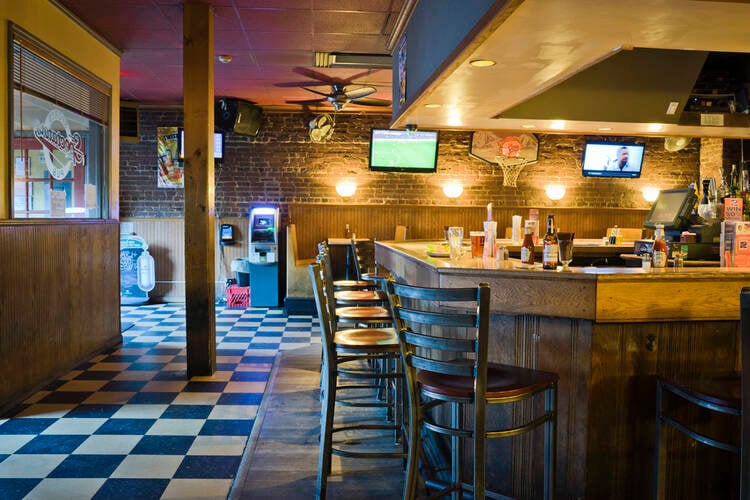
Interior of a sports bar plays a major role in shaping customer experience and overall brand identity.
As a matter of fact, sports bar interior designs are carefully planned to balance comfort, visibility, and excitement, ensuring guests can enjoy the games from every seat.
In this article, we are going to look at some of the best sports bar interior design ideas, along with practical floor plan and layout tips.

From strategic TV placement and seating arrangements to lighting, décor, and traffic flow, these ideas will help you create a welcoming, high-energy space that keeps customers coming back.
Best Sports Bar Interior Design Ideas

-
Stadium-Style Seating Layout
A stadium-style seating design recreates the excitement of a live sports arena.
Arrange seating in slightly elevated tiers or angled rows facing the main screens to ensure unobstructed views. Use bar-height tables, booths, and communal benches to add variety.
From a floor plan perspective, place the largest screens at focal points and orient seating toward them.
This layout works well for high-energy game nights, maximizes viewing comfort, and encourages longer stays.
-
Central Bar as the Visual Anchor
Placing the bar at the center of the floor plan makes it the heart of the sports bar.
Surround it with TVs mounted overhead or on nearby columns so guests can watch games from every angle.
This layout improves traffic flow, allows bartenders to serve efficiently, and creates a lively atmosphere.
Add bar stools for quick visits and nearby lounge seating for groups. Keep walkways wide to prevent congestion, especially during peak hours.
A central bar also encourages social interaction and keeps energy levels high.
-
Multiple Viewing Zones
Designing multiple viewing zones allows you to cater to different customer preferences.
Create high-energy areas near the bar, quieter seating zones for casual viewers, and private corners for small groups.
From a layout standpoint, divide the space using furniture placement, lighting, or low partitions instead of walls to maintain openness. Mount TVs strategically in each zone to avoid overcrowding one area.
This approach improves customer satisfaction by offering flexibility and helps manage crowd flow during major sporting events.
-
Open Floor Plan With Flexible Seating
An open floor plan gives your sports bar adaptability for busy game nights and special events.
Use movable tables, lightweight chairs, and modular furniture that can be rearranged easily.
This layout allows you to accommodate large crowds without making the space feel cramped.
Keep service stations evenly distributed to reduce wait times. Open layouts also improve the visibility of TVs and create a vibrant atmosphere.
Make sure emergency exits and walkways remain clear at all times for safety and compliance.
-
Booth Seating for Comfort and Privacy
Booths provide comfort, privacy, and longer dwell times, making them a valuable design feature.
Place booths along walls to maximize floor space and reduce traffic interference.
Position TVs directly in front of or slightly above the booth’s eye level for easy viewing.
Booths work well for families, groups, and regular customers who prefer a relaxed experience.
From a layout perspective, alternate booth sizes to accommodate different groups while maintaining consistent spacing for server access.
-
Wall-to-Wall TV Display Design
A wall-to-wall TV setup ensures that no guest misses a moment of the action. Install multiple screens at varying heights to cover all seating angles.
In the floor plan, align seating rows directly toward the TV walls and avoid placing tall décor that blocks views.
Use slim mounts and cable management systems to keep the design clean and professional.
This layout is ideal for showing multiple games simultaneously and appeals to hardcore sports fans who want nonstop coverage.
-
High-Top Tables for Social Interaction
High-top tables encourage mingling and are perfect for quick drinks or casual viewing.
Place them near the bar or in open areas where guests can stand or sit comfortably.
From a layout standpoint, space high-tops evenly to prevent crowding while still promoting interaction.
These tables are ideal for smaller groups and create a lively, social atmosphere.
Pair them with clear TV sightlines and adequate lighting to enhance both comfort and functionality.
-
Sports-Themed Décor With Functional Flow
Sports memorabilia, team colors, and themed décor add character, but they should never disrupt traffic flow.
Incorporate décor on walls, ceilings, and columns rather than on the floor. Keep pathways clear and wide to support smooth movement during busy hours.
From a floor plan perspective, use décor to subtly guide customers toward seating areas, restrooms, or the bar.
Well-placed themes strengthen brand identity while maintaining a clean, organized layout.
-
Acoustic-Friendly Design Layout
Sports bars can get loud, so acoustic planning is essential. Use sound-absorbing materials like padded booths, acoustic panels, and textured walls.
From a layout angle, separate high-noise areas from quieter zones to improve comfort. Position speakers evenly to avoid overpowering specific sections.
Good acoustics allow guests to enjoy commentary without excessive echo, making conversations easier.
This design enhances the overall experience and keeps customers comfortable during both peak and off-peak hours.
-
Efficient Traffic Flow and Service Zones
A successful sports bar layout prioritizes smooth traffic flow. Clearly define entry points, seating areas, service paths, and exits. Avoid bottlenecks near the bar, restrooms, or kitchen doors.
From the floor plan stage, ensure servers can reach tables quickly without crossing guest walkways.
Efficient layouts reduce wait times, improve safety, and enhance customer satisfaction.
Thoughtful spacing and zoning also allow staff to work efficiently, especially during major sporting events.
-
Private Viewing Rooms or VIP Sections
Private viewing rooms or VIP sections are ideal for group bookings, watch parties, and premium experiences.
From a layout standpoint, place these rooms along the perimeter to reduce noise spillover into the main bar.
Use glass partitions to maintain an open feel while controlling sound. Equip each room with dedicated TVs, comfortable seating, and adjustable lighting.
This design boosts revenue through reservations and packages while offering guests exclusivity.
Ensure easy access to service stations so staff can attend to VIP guests without disrupting other areas.
-
Indoor–Outdoor Viewing Integration
If space allows, integrate indoor and outdoor seating for a seamless viewing experience.
Position large screens near doors or windows so games remain visible from both areas.
The floor plan should include wide entry points to prevent congestion during high-traffic times.
Use weather-resistant furniture and mounted outdoor TVs for durability. This layout increases seating capacity and enhances atmosphere during warmer seasons.
Clear zoning between indoor and outdoor areas helps manage noise while offering guests flexibility and variety.
-
Kitchen-Visible Layout Concept
An open or semi-open kitchen adds energy and transparency to a sports bar.
Position the kitchen where guests can see food preparation without blocking walkways.
From a layout perspective, separate kitchen traffic from guest paths to avoid accidents. Use partial walls or glass panels to control noise and heat.
This design builds trust, enhances ambiance, and allows the aroma of food to enhance the guest experience.
Ensure service stations are nearby to streamline food delivery and improve efficiency.
-
Multi-Level or Split-Floor Design
A multi-level or split-floor layout adds visual interest and maximizes limited space.
Slight elevation changes can create premium seating zones with improved TV views.
From a floor plan angle, ensure all levels have clear sightlines to major screens.
Install railings that are low enough not to obstruct views. Proper lighting and stair placement are crucial for safety and accessibility.
This design creates distinct zones without walls and adds a dynamic, upscale feel to your sports bar.
-
Minimalist Layout With Bold Lighting
A minimalist layout focuses on clean lines, open space, and strategic lighting.
Use neutral colors and uncluttered furniture while highlighting key areas with LED accent lighting around TVs, bars, and walkways.
From a layout standpoint, minimalism improves traffic flow and visibility. Fewer obstacles make the space feel larger and more organized.
Bold lighting adds energy without overcrowding the design. This approach works well for modern sports bars aiming for a sleek, contemporary atmosphere.