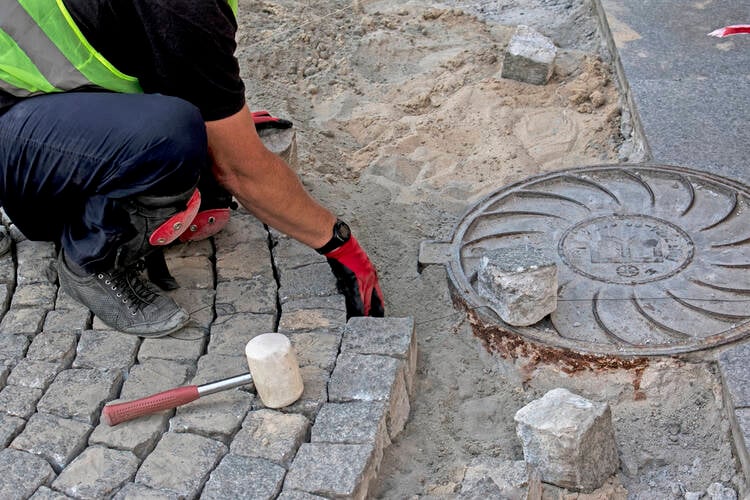
A paving business specializes in the installation, maintenance, and repair of surfaces such as driveways, parking lots, sidewalks, and roads using materials like asphalt, concrete, or pavers.
These businesses serve residential, commercial, and municipal clients and offer services such as sealcoating, line striping, resurfacing, and crack filling.
The work often requires heavy machinery and skilled labor and can be seasonal depending on climate conditions.
In the U.S., the paving industry is part of the larger $30+ billion asphalt paving market and employs over 100,000 workers.
Demand is driven by infrastructure development, commercial property expansion, and residential improvements.
According to IBISWorld, the industry has experienced steady growth due to ongoing road repair needs and increased investment in public infrastructure.
Profit margins can vary, but businesses with efficient operations and local government contracts often perform well financially.
Steps on How to Start a Paving Business
-
Conduct Market Research
Conducting thorough market research is essential for the success of your paving business.
It helps you understand your target market, competition, and potential opportunities.
First, you need to clearly define what you want to achieve with your market research.
Are you looking to identify your target customer segments, understand competitors, determine pricing strategies, or assess market demand?
Are you targeting residential homeowners, commercial property managers, industrial facilities, or a combination of these? Consider factors such as location, property type, and size.
If possible, conduct surveys, interviews, or focus groups to gather insights from potential customers.
Understand their needs, pain points, and preferences regarding paving services.
Research the pricing strategies of your competitors and compare them to the value you’re offering.
Consider factors such as the area size, material type, project complexity, and turnaround time.
Lastly, conduct a SWOT (Strengths, Weaknesses, Opportunities, Threats) analysis for your paving business.
This will help you identify areas where you can excel and areas that may need improvement.
Based on your market research findings, refine your business plan. Clearly define your target market, competitive positioning, pricing strategy, marketing approach, and growth plans.
a. Who is the Target Market for the Paving Business?
- Residential Homeowners
- Commercial properties
- Industrial Facilities
- City governments, municipalities, and government agencies responsible for maintaining roads, streets, and public parking areas
- Institutions like schools, universities, hospitals, and churches
- Small businesses with limited parking areas, such as local shops and restaurants
- Builders and developers who construct new properties or renovate existing ones
- Property management companies that handle a portfolio of properties for different clients.
b. Is Paving Business a Profitable Business?
A paving business can be profitable, with most contractors reporting net profit margins ranging from 6% to over 15% depending on size and efficiency.
According to research and top‑contractor surveys, firms in the Top 50 paving segment often achieve margins over 15%, with many averaging 16–20% gross margin.
Industry-wide, U.S. paving contractors average about 6.4–6.8% margins, despite revenue declines in recent years.
Annual revenues vary: small to mid‑sized paving companies typically generate $500,000 to $3 million in revenue, while larger firms easily exceed $10 million, especially when handling municipal or commercial contracts.
Success depends on volume, project type, efficient operations, and a strong reputation.
c. Are There Existing Niches in the Industry?
No, there are no niche ideas when it comes to the paving business.
d. Who are the Major Competitors?
- Granite Construction Incorporated
- Graniterock (Granite Rock Company)
- Vulcan Materials Company
- Oldcastle Materials Inc.
- Dayton Superior Corporation
- Construction Partners (ROAD)
- Fort Myer Construction
- The Blue Book
- PaveMasters Family of Companies
- The Surface Masters
- T&K Asphalt Services
- O’Leary Asphalt
- C & R Asphalt (Central Kentucky)
- Delta Companies
- George Reed (Central California)
- Hardy & Harper (Southern California)
- Howard Companies (Midwest)
- Kaplan Pavement Services (Chicago area)
- Mission Paving and Sealing (Southern California)
- The Surface Masters, Inc.
e. Are There County or State Regulations or Zoning Laws for Paving Businesses in the United States?
Yes, there are policies, regulations, and zoning laws that can affect the operation of a paving business in the United States.
However, it’s important to note that specific rules and requirements may vary depending on the state, county, and local jurisdiction where the business operates.
For example, in some states, paving businesses may be required to obtain the necessary business licenses and permits to operate legally.
These licenses and permits can vary based on the location and may include general business licenses, contractor licenses, environmental permits, and more.
Paving products may contain chemicals that are subject to environmental regulations.
These regulations can include guidelines for proper storage, handling, disposal, and application of paving materials to minimize environmental impact.
Some areas have regulations governing the management of stormwater runoff, including requirements for containment and proper disposal of runoff to prevent contamination of water sources.
So also in some states, paving businesses may need to comply with zoning restrictions that determine the permissible location for such operations.
f. Is There a Franchise for Paving Business?
Yes, there are franchise opportunities for paving business,es and here are some of them:
- Seal Pro
- Eco Paving
- Seacoast Driveways
- Systems Paving, Inc.
- Enviro Paving
- NextGen Great Sealcoating
- Ultralot Paving Systems
- Driveway Impressions
- Image Pros Property Maintenance
- Concrete Technology, Inc.
g. What Do You Need to Start a Paving Business?
- Business License and Registration
- Contractor’s License (if required in your state)
- Insurance (Liability, Workers’ Comp, Equipment)
- Paving Equipment (e.g., paver, roller, dump truck)
- Materials (asphalt, concrete, gravel, sealants)
- Skilled Labor or Crew Members
- Business Bank Account and Accounting System
- Marketing Materials (website, signage, business cards)
- Project Estimation Tools or Software
- Safety Gear and Training Certifications
- Client Contracts and Service Agreements
- Storage Facility or Yard for Equipment and Materials.
-
Choose a Memorable Business Name
When looking to start a business, before you can begin to file the necessary documents with the constituted authorities or start your website, it is necessary that you come up with a name that you will be recognized with.
It is essential that the name you come up with can easily be pronounced, is unique and easily memorable.
Some of the catchy business name ideas suitable for a paving business are;`
- Gracias Marcos® Paving Company, Inc.
- Clem Mark® Paving Company, Inc.
- Eleena Victor™ Paving Company, LLC
- Pro Coater® Paving Company, Inc.
- Fresh Slab® Paving Company, Inc.
- Sharon Martins® Paving Company, LLC
- Bright Eden™ Paving Company, LLC
- Master Coater® Paving Company, Inc.
- Alex OT© Paving Company, Inc.
- Clear Path® Paving Company, Inc.
- Perfect Coat™ Paving Company, Inc.
- Teddy Batz™ Paving Company, LLC
- Julius Meela® Paving Company, LLC
- Smart Merak® Paving Company, Inc.
- Clavin and Melvin™ Paving Company, Inc.
- Perfect Square® Paving Company, LLC
- Rufus Benjamin™ Paving Company, LLC
- Ace Coater® Paving Company, Inc.
- Opel Andriel™ Paving Company, LLC
- Humprey Deco® Paving Company, Inc.
-
Register Your Business
a. What Type of Business Structure is Best for a Paving Business?
The best type of business structure for a paving business depends on several factors, including the size of the business, the number of owners, and the level of personal liability exposure the owners are willing to accept.
However, we usually recommend a limited liability company. An LLC is a popular choice for startup businesses because it offers personal liability protection for the owners while allowing them to be taxed as a pass-through entity.
This means that the profits and losses of the business are passed through to the owners’ personal tax returns, avoiding double taxation.
Ultimately, the best business structure for a paving business will depend on factors such as the ownership structure, the club’s goals and objectives, and the type of services and activities offered.
b. Steps to Form an LLC
- Choose a Name for Your LLC.
- File Articles of Organization.
- Choose a registered agent.
- Decide on member vs. manager management.
- Create an LLC operating agreement.
- Comply with other tax and regulatory requirements.
- File annual reports.
c. What Type of License is Needed to Open a Paving Business?
- Business License
- Contractor’s License (if required)
- Environmental Permits (if using certain materials)
- Occupational Safety and Health Administration (OSHA) Compliance (for safety regulations)
- Stormwater Management Permit (if applicable)
- State and Local Sales Tax Permits
- Fire Department Permits (for equipment and materials)
- Signage Permits (for advertising)
- Home Occupation Permit (if operating from home)
- Special Use Permits (if operating in a specific zone).
d. What Type of Certification is Needed to Open a Paving Business?
- Asphalt Paving Certification (if available)
- Pavement Maintenance Certification (if available)
- Environmental Compliance Certification (if using specific materials)
- Occupational Safety and Health Administration (OSHA) Certification (for safety protocols)
- Small Business or Entrepreneurship Certification (optional)
- First Aid/CPR Certification (for safety preparedness).
e. What Documents are Needed to Open a Paving Business?
- Business License
- Contractor’s License
- Employer Identification Number (EIN)
- Certificate of Incorporation or LLC Formation
- Operating Agreement or Bylaws
- General Liability Insurance Certificate
- Workers’ Compensation Insurance Policy
- Equipment Lease or Purchase Agreements
- Business Bank Account Documents
- Zoning and Land Use Permits
- Safety Compliance Certifications (e.g., OSHA)
- Sales Tax Permit (if applicable)
- DOT Number (if operating large commercial vehicles)
- Environmental Compliance Permits
- Signed Employment Agreements or Labor Contracts.
f. Do You Need a Trademark, Copyright, or Patent?
For a paving business, you would generally be more concerned with trademark and possibly copyright protections.
Trademarks protect your business’s branding elements, such as your business name, logo, slogans, and any other distinctive marks that identify your paving business.
Registering a trademark can help prevent others from using similar marks that might confuse customers.
Copyright is typically not a primary concern for a paving business unless you have created original written content, graphics, or other creative works that you want to protect.
For example, if you have a unique guide or manual related to paving techniques that you’ve written, you might consider copyright protection.
Patents are not commonly applicable to paving businesses, as patents primarily protect new and inventive products or processes.
Since paving itself is a well-established practice and typically involves the application of existing materials, patents are less likely to be relevant.
-
Cost Analysis and Budgeting
a. How Much Does It Cost to Start a Paving Business?
When it comes to starting a paving business, the startup costs vary and could range from as low as $50,000 to $250,000 or more.
b. What are the Cost Involved in Starting a Paving Business
- Business Registration Fees – $750.
- Legal expenses for obtaining licenses and permits – $2,800.
- Marketing, Branding, and Promotions – $1,200.
- Business Consultant Fee – $2,500.
- Insurance – $1,800.
- Rent/Lease – $50,000
- Operational Cost (salaries of employees, payments of bills et al) – $40,000
- Equipment and Supplies – $50,000
- Website: $600
- Opening party: $3,000
- Miscellaneous: $3,000
c. What Factors Determine the Cost of Opening a Paving Business?
- Equipment Purchase or Lease
- Business Location and Facility
- Licensing and Permits
- Insurance Coverage
- Initial Inventory and Materials
- Labor and Staffing Costs
- Marketing and Branding
- Vehicle and Transportation
- Professional Services – Legal, accounting, and consulting fees for setup and compliance.
- Technology and Software
d. Do You Need to Build a Facility? If YES, How Much Will It Cost?
Whether you need to build a facility for your paving business depends on various factors, such as the scale of your operations, the services you provide, and whether you choose to operate from a fixed location or offer mobile services.
If you decide to rent, lease, or build a dedicated facility for your paving business, you’ll need a space where you can store equipment, materials, and potentially offer administrative functions.
The costs can vary widely based on factors like location, size, and whether you’re leasing or building from scratch.
e. What are the Ongoing Expenses of a Paving Business?
- Employee Salaries and Wages
- Fuel and Vehicle Maintenance
- Materials and Supplies
- Insurance Premiums
- Equipment Maintenance and Repairs
- Marketing and Advertising
- Utility Bills
- Office Supplies and Software
- Loan Repayments
- Permit Renewals and Licensing Fees
- Professional Services
- Waste Disposal and Site Clean-Up
f. What is the Average Salary of your Staff?
- Chief Executive Officer – $85,000 Per Year
- Project Manager – $60,000 Per Year
- Sales and Marketing Officer – $50,000 Per Year
- Accountant – $50,000 Per Year
- Seal Coating Technicians – $55,500 Per Year
- Customer Service Executive (Front Desk Officer) – $40,000 Per Year
- Drivers – $45,000 Per Year
g. How Do You Get Funding to Start a Paving Business
- Raising money from personal savings and the sale of personal stocks and properties
- Raising money from investors and business partners
- Sell shares to interested investors
- Applying for a loan from your bank/banks
- Source for soft loans from your family members and your friends.
-
Write a Business Plan
a. Executive Summary
Perfect Square® Paving Company, Inc., based in New York City, New York, is a professional paving contractor committed to delivering high-quality asphalt and concrete paving solutions to residential, commercial, and municipal clients.
Our core services include driveway installations, parking lot construction, road resurfacing, sealcoating, and pavement repairs.
We aim to set the industry standard through exceptional workmanship, advanced equipment, and outstanding customer service.
As urban infrastructure continues to grow, our company is strategically positioned to meet rising demand in New York City and surrounding areas.
We will serve property managers, homeowners, businesses, and government entities, offering cost-effective and timely paving solutions tailored to each client’s needs.
With a skilled workforce, modern equipment, and a solid marketing strategy, Perfect Square® aims to become a leading name in the New York paving industry.
b. Products and Services
Perfect Square® Paving Company, Inc. offers a comprehensive range of paving solutions tailored for residential, commercial, and municipal clients.
Our primary services include asphalt paving, concrete paving, driveway installation, parking lot construction, and road resurfacing.
We also specialize in sealcoating and crack repair to extend pavement life and improve durability.
In addition, we provide site preparation services such as grading and excavation, ensuring a solid foundation for all paving projects.
Our team is equipped to handle both small-scale residential jobs and large commercial or municipal contracts, delivering customized, high-quality workmanship with attention to detail and safety.
c. Mission Statement
At Perfect Square® Paving Company, Inc., our mission is to deliver top-quality paving solutions that enhance the safety, functionality, and appearance of every project we undertake.
We are committed to using the best materials, advanced technology, and skilled craftsmanship to exceed client expectations.
Vision Statement:
Our vision at Perfect Square® Paving Company, Inc. is to lead the paving industry in New York City by setting the highest standards for quality, innovation, and sustainability.
We aspire to be the trusted partner for residential, commercial, and municipal paving projects, recognized for our commitment to excellence, safety, and environmental responsibility.
d. Goals and Objectives
Our goals and objectives at Perfect Square® Paving Company, Inc. are to consistently deliver superior paving services that exceed client expectations through quality workmanship and timely project completion.
We aim to expand our market presence in New York City by building strong relationships with residential, commercial, and municipal clients. Investing in the latest technology and training ensures our team remains skilled and efficient.
We are committed to sustainable practices that minimize environmental impact while maintaining safety and durability.
We strive to achieve steady revenue growth, enhance customer satisfaction, and establish Perfect Square® as a trusted industry leader known for reliability and professionalism.
e. Organizational Structure
- Chief Executive Officer (President)
- Project Manager
- Sales and Marketing Officer
- Accountant
- Paving Technicians
- Customer Service Executives (Front Desk Officer)
- Drivers
Marketing Plan
a. SWOT Analysis
Strength:
- Experienced Team: Skilled workforce with extensive paving and construction expertise.
- Modern Equipment: Use of advanced machinery for efficient, high-quality work.
- Strong Local Presence: Based in New York City, serving a large and diverse market.
- Comprehensive Services: Wide range of offerings including asphalt, concrete, sealcoating, and repairs.
- Customer Focus: Commitment to excellent customer service and satisfaction.
- Safety Standards: Strict adherence to industry safety regulations and best practices.
Weakness:
- High Operating Costs: Equipment maintenance and city regulations increase expenses.
- Seasonal Demand: Weather-related limitations can cause seasonal slowdowns.
- Brand Recognition: As a newer company, we may have limited brand awareness compared to established competitors.
- Capital Intensive: High initial investment required for equipment and materials.
Opportunities:
- Urban Infrastructure Growth: NYC’s continuous development creates ongoing demand for paving.
- Green Paving Solutions: Growing market for environmentally friendly and sustainable paving options.
- Government Contracts: Potential for lucrative municipal projects and infrastructure contracts.
- Technological Innovation: Adoption of new materials and methods to improve efficiency and durability.
- Expansion: Opportunity to expand service area or add complementary services like landscaping or snow removal.
Threat:
- Intense Competition: Numerous established paving companies in the NYC area.
- Economic Downturns: Reduced public and private spending on construction affects demand.
- Regulatory Changes: Stricter environmental or safety regulations could increase costs.
- Supply Chain Disruptions: Delays or price spikes in materials like asphalt or concrete.
- Labor Shortages: Difficulty in recruiting and retaining skilled laborers.
b. How Does a Paving Business Make Money?
The primary source of revenue for a paving business comes from providing paving services such as asphalt and concrete installation, repair, and maintenance for residential, commercial, and municipal clients.
This includes driveway paving, parking lot construction, road resurfacing, sealcoating, crack filling, and patching.
Additional revenue streams may come from site preparation services like grading and excavation, as well as from ongoing maintenance contracts.
Revenue depends largely on project size, complexity, material costs, and labor, with larger commercial and municipal contracts typically generating higher income compared to smaller residential jobs.
c. Payment Options
- Credit or Debit Card
- Cash
- Electronic Payment Systems such as PayPal or Venmo
- Checks
- Bank Transfers.
d. Sales & Advertising Strategies
- Establish a professional website that showcases your services, portfolio, client testimonials, and contact information.
- Claim and optimize your business on Google My Business and other online directories.
- Build relationships with property managers, real estate agents, contractors, and other local businesses that might refer clients to you.
- Design and distribute well-designed flyers or direct mail materials to homes, businesses, and property management companies in your service area.
- Encourage satisfied customers to leave reviews on platforms like Google, Yelp, and Facebook.
- Seasonal Promotions: Offer special promotions or discounts during the off-peak season to incentivize customers to schedule paving services.
Financial Projection
a. How Much Should You Charge for Your Product/Service?
- Asphalt Paving (per square foot): $2.50 – $5.00
- Concrete Paving (per square foot): $4.00 – $8.00
- Driveway Paving (asphalt, average size 600 sq ft): $1,500 – $3,000
- Parking Lot Paving (per square foot): $2.00 – $4.00
- Sealcoating (per square foot): $0.10 – $0.30
- Crack Filling (per linear foot): $0.50 – $3.00
- Pavement Repair (patching, per square foot): $3.00 – $7.00
- Driveway Resurfacing (asphalt, per square foot): $1.00 – $3.00
- Concrete Sidewalk Installation (per linear foot): $8.00 – $15.00
- Site Preparation (grading and excavation, per hour): $50 – $150
Please note that prices vary by region, project complexity, material quality, and company.
Large commercial or municipal projects may be quoted on a contract basis.
b. How Much Profit Do Paving Business Owners Make a Year?
The profit that paving business owners can make in a year can vary widely based on several factors, including the size of the business, the size of the projects handled, the number of clients served, pricing strategies, operational costs, and the local market conditions.
Because there are so many variables, it’s challenging to provide a specific annual profit figure for paving business owners.
Some paving businesses may generate modest profits, while others with larger operations and efficient strategies could potentially achieve higher profitability.
c. What Factors Determine the Amount of Profit to Be Made?
- Project Size and Volume – Larger and more frequent projects increase revenue potential.
- Pricing Strategy – Competitive yet profitable pricing impacts margins.
- Operational Efficiency – Effective use of labor, equipment, and materials reduces costs.
- Material Costs – Fluctuations in asphalt, concrete, and supplies affect profit.
- Labor Costs – Skilled labor availability and wages influence expenses.
- Equipment Maintenance – Well-maintained machinery lowers downtime and repair costs.
- Market Demand – Local economic conditions and infrastructure investment drive business volume.
- Customer Mix – Balancing residential, commercial, and government contracts can stabilize income.
- Regulatory Compliance – Costs related to permits, safety, and environmental rules impact profitability.
d. What is the Profit Margin of a Paving Business?
On average, the profit margin for paving business products ranges from 20% to 30%, depending on the location and service offerings.
e. What is the Sales Forecast?
Below is the sales forecast for a paving business. It is based on the location of the business and other factors as it relates to such startups in the United States.
- First Fiscal Year (FY1): $550,000
- Second Fiscal Year (FY2): $1.5 million
- Third Fiscal Year (FY3): $3.2 million
-
Set Up your Shop/Office
a. How Do You Choose a Perfect Location for Paving Business?
- Proximity to Target Customers – Locate near residential neighborhoods, commercial hubs, and municipal areas to reduce travel time and costs.
- Access to Major Roads and Highways – Easy access facilitates quick transport of equipment and materials.
- Zoning and Land Use Regulations – Ensure the site complies with local zoning laws for industrial or commercial operations.
- Space for Equipment and Materials – Adequate outdoor storage and workspace for heavy machinery and raw materials.
- Cost and Availability – Balance the affordability of rent with strategic location benefits to optimize operational efficiency.
b. What State and City is Best to Open a Paving Business?
- Atlanta, Georgia
- Houston, Texas
- Washington, D.C.
- San Francisco, California
- Dallas, Texas
- Miami, Florida
- Boston, Massachusetts
- Los Angeles, California
- New York City, New York
- Chicago, Illinois.
c. What Equipment is Needed to Operate a Paving Business?
- Asphalt Paver
- Road Roller (Compactor)
- Dump Trucks
- Skid Steer Loader
- Grader
- Asphalt Milling Machine
- Concrete Mixer
- Sealcoating Machine
- Crack Filling Machine
- Hand Tools (Shovels, rakes, wheelbarrows, and tampers for manual work).
- Asphalt Cleaning Equipment
- Safety Gear (Masks, Gloves, Boots, etc.)
- Traffic Cones and Barricades
- Personal Protective Equipment (PPE)
- First Aid Kit
- Safety Signs.
-
Hire Employees
If you are looking to start a paving business, then you should make plans to hire employees.
This is because the services offered, such as asphalt laying, road resurfacing, sealcoating, and repairs requires a skilled team to handle different tasks simultaneously.
Hiring a crew with diverse skills, including machine operators, laborers, and project managers, ensures projects are completed efficiently and safely.
A strong team also helps maintain high-quality workmanship, meet deadlines, and manage multiple jobs, ultimately contributing to business growth and customer satisfaction.
-
Launch the Business Proper
Organizing an opening party for a new paving business can be a great way to introduce your company to the community and create awareness about your services.
If you decide to host a launch event, be sure to invite local business owners, potential clients, city officials, suppliers, and industry professionals.
Also, include neighbors and community leaders to build goodwill. Prepare informative materials about your services and offer demonstrations or presentations to showcase your expertise.
Providing refreshments and promotional giveaways can encourage attendance and leave a positive impression.
a. What Makes a Paving Business Successful?
- Being consistently reliable builds trust with clients, which can lead to repeat business and referrals.
- Excellent customer service
- Excellent service delivery
- Emphasis on safety
- Efficient operations
- Compliance with regulations
- Hiring skilled and knowledgeable employees and providing ongoing training will ensure that you deliver high-quality services.
b. What Happens During a Typical Day at a Paving Business?
- The office is open for the day
- Documentation and other administrative work are conducted throughout the day
- Marketers go out in the field to market our services
- If there is an ongoing paving service project, the required team and machinery are sent to the field to carry out the project.
- The team and machinery return to base (office) after the day’s job
- The report for the day is written and submitted
- The office is closed for the day.
c. What Skills and Experience Do You Need to Build a Paving Business?
- Knowledge of paving techniques and equipment
- Basic business and financial management skills
- Sales and marketing skills
- Understanding of local regulations and compliance standards
- Project management and organization skills
- Customer service and communication skills
- Ability to operate paving machines and equipment
- Knowledge of pavement marking materials and products
- Leadership and team management skills
- Problem-solving and decision-making abilities.