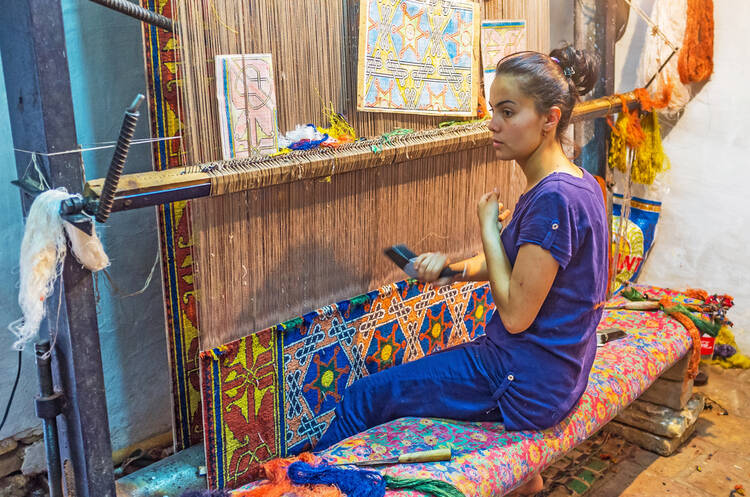
A rug-making business produces decorative, often artisanal, floor coverings that serve both functional and aesthetic purposes.
Globally, the carpets and rugs industry is a multibillion-dollar market, valued at roughly USD 56 billion in 2024, expected to grow at an 8% CAGR to reach nearly USD 88 billion by 2030.
Other forecasts estimate the market at USD 59 billion in 2024, climbing to USD 133 billion by 2032, with North America holding about 37% of the market share.
Rugs and carpets are primarily used in residential spaces, accounting for about 61% of U.S. revenue in 2024; commercial demand is forecasted to grow at 8% CAGR through 2030.
Polyester is the largest material segment (over 30% market share), while wool products are projected to grow at 8.6% CAGR from 2025 to 2030.
Key players include Mohawk Industries (the world’s largest flooring manufacturer) and Shaw Industries, both headquartered in Georgia and generating billions in annual revenue.
Steps on How to Start a Rug Making Business
-
Conduct Market Research
Conducting market research for a rug-making business begins with identifying your target market.
This includes determining whether your focus will be on residential customers, commercial spaces, hospitality establishments, or a mix of these.
Each segment has unique needs, for example, homeowners may seek custom-designed, handwoven rugs to match décor, while hotels may prioritize durable, easy-to-clean options.
Understanding these differences will help you tailor your designs, materials, and pricing strategies.
Next, analyze your competition. Identify other rug-making companies and retailers in your target area, and study their product range, pricing, quality, customer base, and brand positioning.
Use online reviews, social media pages, craft marketplaces, and industry reports to assess what they do well and where they fall short.
This analysis will help you pinpoint gaps in the market, such as demand for eco-friendly rugs or personalized designs.
The third step is to assess demand trends and market size. Research statistics on home décor spending, housing market growth, and interior design trends in your region.
Industry databases, trade publications, and government reports can offer useful insights.
Speaking directly with interior designers, real estate agents, or home staging professionals can also help you understand current and future demand.
Finally, gather customer insights through surveys, focus groups, or one-on-one interviews.
Ask potential buyers about their preferred styles, materials, price ranges, and purchasing habits.
This firsthand feedback will guide your product development, marketing, and sales strategies, ensuring your rug-making business meets real market needs.
a. Who is the Target Market for Rug Making Business?
The target market for a rug-making business typically includes several key customer segments, each with different buying motivations and priorities:
- Homeowners and Renters – Individuals furnishing or redecorating their homes.
- Interior Designers and Home Staging Professionals – These professionals purchase rugs for client projects or to enhance property appeal in real estate sales.
- Commercial and Hospitality Clients – Hotels, restaurants, offices, and retail spaces need rugs for aesthetics, branding, and comfort.
- Collectors and Art Buyers – Some customers purchase rugs as collectible art pieces, especially handmade, vintage, or culturally significant designs.
- Eco-Conscious Consumers – A growing segment seeks sustainably sourced, natural fiber, or recycled material rugs.
b. Is Rug Making Business a Profitable Business?
Yes, a rug-making business can be highly profitable. Typical rug store gross margins range between 40 % and 60 %, with net profit margins commonly falling between 10 % and 20 %.
Hand-crafted or luxury rugs often yield the highest returns, while mass-produced rugs deliver more modest margins.
One tufting business reported profit margins around 30 % to 50 %, with some notably higher, all indicating strong earning potential in this industry.
c. Are There Existing Niches in the Industry?
Yes, there are several profitable and creative niches in the rug-making industry. Here are five notable ones:
- Handmade & Artisan Rugs – Focused on craftsmanship, unique designs, and traditional weaving techniques, often appealing to collectors and luxury buyers.
- Eco-Friendly & Sustainable Rugs – Made from organic, recycled, or biodegradable materials for environmentally conscious consumers.
- Custom & Personalized Rugs – Offering bespoke sizes, colors, patterns, or monograms tailored to individual customer preferences.
- Luxury & Designer Rugs – High-end pieces created with premium materials such as silk or fine wool, targeting upscale residential and commercial clients.
- Cultural & Vintage Rugs – Rugs with heritage value, such as Persian, Moroccan, or Oriental styles.
d. Who are the Major Competitors?
- Mohawk Industries
- Shaw Industries
- Nourison
- Karastan
- Stanton Carpet Corporation
- Loloi Rugs
- Surya
- Feizy Rugs
- Jaipur Living
- Kaleen Rugs
- Dalyn Rug Company
- Capel Rugs
- The Rug Company USA
- Orian Rugs
- Rizzy Home
- American Rug Craftsmen
- Oriental Weavers USA
- Momeni Rugs
- Safavieh
- Tamarian Rugs.
e. Are There County or State Regulations or Zoning Laws for Rug Making Business in the United States?
In the United States, starting a rug-making business often requires compliance with county and state regulations that vary by location.
At the most basic level, you’ll need to secure a general business license and register your business entity with the state.
If you operate from home, many counties require a home occupation permit, especially if production equipment, inventory storage, or customer visits are involved.
Zoning compliance is particularly important if your operation involves machinery, frequent deliveries, or high foot traffic.
Some jurisdictions may require you to obtain a special use permit if your business falls outside standard zoning allowances.
For larger workshops, adherence to fire codes, building safety standards, and occupancy limits is mandatory.
Counties may also have specific rules for signage, parking, or waste disposal.
If your rug-making process uses dyes, adhesives, or other chemicals, certain states enforce environmental regulations that require permits for hazardous material handling and wastewater disposal.
These rules aim to protect water supplies and reduce chemical pollution. For businesses with employees, both federal and state labor and workplace safety laws apply, including OSHA standards.
Sales tax collection rules vary by state, so online and out-of-state sales must comply with those requirements.
f. Is There a Franchise for Rug Making Business?
Yes, there are franchise opportunities for rug-making businesses, and here are some of them;
- The Rug Company
- Carpet One Floor & Home
- Empire Today
- Dream Rugs
- Area Rugs Direct
- Rugs USA.
g. What Do You Need to Start a Rug Making Business?
- Business plan
- Initial capital or funding
- Suitable workspace or workshop
- Rug-making equipment (loom, tufting guns, spinning wheels)
- Raw materials (yarn, fabric, dyes)
- Skilled labor or rug-making expertise
- Business licenses and permits
- Marketing and sales strategy
- Inventory management system
- Supplier and vendor relationships.
-
Choose a Memorable Business Name
When looking to start a business, before you can begin to file the necessary documents with the constituted authorities or start your website, it is necessary that you come up with a name that you will be recognized with.
It is essential that the name you come up with can easily be pronounced, is unique and easily memorable.
Some of the catchy business name ideas suitable for a rug making business are;
- Four Corners© Rug Making Company, Inc.
- Fine Finish® Rug Making Company, LLC
- King of Cabins© Rug Making Company, Inc.
- Rug Solutions® Rug Making Company, Inc.
- Perfect Square™ Rug Making Company, Inc.
- Moses ED™ Rug Making Company, LLC.
- Day Light© Rug Making Company, LLC
- Lincoln Allen® Rug Making Company, Inc.
- Perfect Touch© Rug Making Company, Inc.
- Bernad© Rug Making Company, Inc.
- Sleek Design® Rug Making Company, LLC
- Boar Group® Rug Making Company, LLC
- West Ends™ Rug Making Company, LLC
- The Nation© Rug Making Company, Inc.
- Red Woods® Rug Manufacturing, Inc.
- Santos Marcos™ Rug Manufacturing, Inc.
- Emmanuel Anthony™ Rug Manufacturing, Inc.
- Reil Tims© Rug Designers, Inc.
- David and Davids® Rug Company, LLC
- Dallas Kings™ Rug Making Company, Inc.
-
Register Your Business
a. What Type of Business Structure is Best for a Rug Making Business?
Even though there are several options, the one that most players in this line of business consider is an LLC. It is common to consider an LLC because it protects them from lawsuits.
Please note that an LLC will need an EIN if it has any employees or if it will be required to file any of the excise tax forms listed below. Most new single-member LLCs classified as disregarded entities will need to obtain an EIN.
b. Steps to Form an LLC
- Choose a Name for Your LLC.
- File Articles of Organization.
- Choose a registered agent.
- Decide on member vs. manager management.
- Create an LLC operating agreement.
- Comply with other tax and regulatory requirements.
- File annual reports.
c. What Type of License is Needed to Open a Rug Making Business?
- General Business License
- Home Occupation Permit (if operating from home)
- Sales Tax Permit or Resale Certificate
- Zoning Permit
- Employer Identification Number (EIN)
- Health and Safety Permits (if applicable)
- Environmental Permits (if using chemicals or dyes)
- Fire Department Permit (for certain production facilities).
d. What Type of Certification is Needed to Open a Rug Making Business?
Here are 5 types of certifications that can be valuable when opening a rug-making business:
- Small Business Certification (e.g., SBA certification)
- Organic or Eco-Friendly Product Certification (for sustainable rugs)
- Fair Trade Certification (if sourcing materials ethically)
- Handmade or Artisan Craft Certification
- Occupational Safety and Health Certification (for workplace safety compliance).
e. What Documents are Needed to Open a Rug Making Business?
These are some of the basic legal documents that you are expected to have in place if you want to legally run your own rug-making business in the United States of America.
- Business Plan
- Business License
- Employer Identification Number (EIN)
- Articles of Incorporation or Organization
- Operating Agreement or Bylaws (for LLCs or corporations)
- Zoning Permits
- Sales Tax Permit or Resale Certificate
- Home Occupation Permit (if operating from home)
- Environmental Permits (if applicable)
- Fire Safety Compliance Certificate
- Health and Safety Permits
- Supplier and Vendor Contracts
- Lease or Property Ownership Documents
- Insurance Policies (liability, property, workers’ compensation)
- Employee Records and Payroll Documentation (if hiring staff).
f. Do You Need a Trademark, Copyright, or Patent?
For a rug-making business, protecting your brand and designs is important, but it involves different types of intellectual property.
A trademark is useful for safeguarding your business name, logo, or slogan, helping distinguish your rugs from competitors and building brand recognition.
Registering a trademark provides legal protection against unauthorized use.
Copyright can protect original rug designs, patterns, or artistic works incorporated into your products.
This prevents others from copying your unique designs without permission.
However, copyright does not cover the functional aspects of the rug-making process itself.
A patent is less common in rug-making unless you invent a new manufacturing method, tool, or technology.
Patents protect inventions and processes, but generally don’t apply to traditional rug designs or business branding.
Overall, trademarks and copyrights are the most relevant protections for rug makers.
-
Cost Analysis and Budgeting
a. How Much Does It Cost to Start a Rug-Making Business?
When it comes to starting a rug-making business, the startup costs range from $20,000 to $200,000 and above, depending on how much equipment the business owner decides to purchase, the number of employees, and the size of the workshop facility.
Please note that Handmade or artisan-focused businesses may require a higher initial investment.
b. What are the Costs Involved in Starting a Rug Making Business
- Workspace Rent or Setup – $500 to $2,000/month
- Rug-Making Equipment (looms, tufting guns, spinning wheels) – $3,000 to $15,000
- Raw Materials (yarn, fabric, dyes) – $1,000 to $5,000 initial stock
- Business Licenses and Permits – $100 to $500
- Marketing and Branding – $500 to $3,000
- Website Development and E-commerce Setup – $1,000 to $4,000
- Utilities (electricity, water, internet) – $200 to $600/month
- Insurance (liability, property) – $500 to $1,500 annually
- Labor Costs (if hiring employees or contractors) – Varies, $2,000+ monthly
- Packaging and Shipping Supplies – $300 to $1,000
- Miscellaneous – $2,500
c. What Factors Determine the Cost of Opening a Rug Making Business?
- Business Scale
- Production Method
- Workspace Location
- Raw Material Quality
- Equipment Needs
- Licensing and Permits
- Marketing and Branding
- Labor Costs
- Inventory Size
- Regulatory Compliance
d. Do You Need to Build a Facility? If YES, How Much Will It Cost?
It is not compulsory to build a new facility for your rug-making business, but if you have the required finance, it will pay you to build your own facility.
The truth is that building or reconstructing a facility will allow you to come up with a facility that will perfectly fit into your overall business goals and vision.
e. What are the Ongoing Expenses of a Rug Making Business?
- Raw Materials
- Labor Costs
- Rent or Mortgage
- Utilities
- Equipment Maintenance
- Marketing and Advertising
- Inventory Storage
- Shipping and Packaging
- Insurance
- Licensing and Permits Renewal
f. What is the Average Salary of your Staff?
- Production Manager – $55,000 to $75,000 annually
- Lead Artisan/Master Weaver – $40,000 to $60,000 annually
- Sales and Marketing Manager – $38,000 to $55,000 annually
- Skilled Rug Maker/Technician – $30,000 to $45,000 annually
- Entry-Level Assistant/Laborer – $25,000 to $35,000 annually.
-
How Do You Get Funding to Start a Rug-Making Business
- Raising money from personal savings and the sale of personal stocks and properties
- Raising money from investors and business partners
- Sell shares to interested investors
- Applying for a loan from your bank/banks
- Pitching your business idea and applying for business grants and seed funding from, government, donor organizations, and angel investors
- Source for soft loans from your family members and your friends.
-
Write a Business Plan
a. Executive Summary
Prince Mahon™ Rug Manufacturing Company, Inc., based in Charlotte, North Carolina, is a premium rug-making business specializing in handcrafted, high-quality rugs that blend traditional craftsmanship with modern designs.
The company aims to serve both residential and commercial markets, focusing on custom, durable, and aesthetically pleasing products.
Leveraging skilled artisans and sustainable materials, Prince Mahon™ seeks to differentiate itself through exceptional quality and eco-friendly production processes.
With a strategic location in Charlotte, the company benefits from access to key transportation hubs and a growing regional market.
Prince Mahon™ plans to establish strong distribution channels through direct sales, partnerships with interior designers, and e-commerce platforms.
Financial projections indicate steady growth supported by increasing demand for bespoke home décor and sustainable products.
The business is positioned to capitalize on market trends, emphasizing craftsmanship and environmental responsibility.
b. Products and Services
Our products and services at Prince Mahon™ Rug Manufacturing Company, Inc. include:
- Handcrafted Rugs – Custom-designed rugs made using traditional weaving and tufting techniques, available in various sizes, patterns, and materials.
- Eco-Friendly Rug Options – Rugs created from sustainable and organic fibers, catering to environmentally conscious customers.
- Commercial Rug Solutions – Durable, high-quality rugs tailored for offices, hotels, and retail spaces with customizable branding options.
- Rug Repair and Restoration – Professional services to clean, repair, and restore antique or damaged rugs to extend their lifespan.
- Custom Design Consultation – Personalized design services to help clients create unique rugs that fit their specific aesthetic and functional needs.
- Wholesale and Bulk Orders – Flexible ordering options for interior designers, retailers, and corporate clients.
Prince Mahon™ is committed to quality craftsmanship, sustainability, and customer satisfaction across all offerings.
c. Mission Statement
Our mission is to build a world-class rug-making business renowned for exceptional craftsmanship and innovative designs.
We aim to serve customers across the United States with high-quality, sustainable rugs while expanding our reach internationally through strategic exports.
By blending tradition with modern techniques, we strive to set new standards in the global rug industry.
Vision Statement
Our vision is to become the leading brand in the rug manufacturing industry in the United States and beyond, recognized for exceptional quality, innovative designs, and sustainable practices that inspire trust and loyalty among customers worldwide.
d. Goals and Objectives
The goals and objectives of a rug-making business are to produce high-quality, durable, and aesthetically appealing rugs that meet diverse customer needs.
This includes offering a wide range of designs, materials, and custom options to satisfy both residential and commercial clients.
e. Organizational Structure
- Chief Executive Office (Owner)
- Production Manager
- Lead Artisan/Master Weaver
- Sales and Marketing Manager
- Skilled Rug Maker/Technician
- Entry-Level Assistant/Laborer.
Marketing Plan
a. SWOT Analysis
Strengths:
- Skilled artisans produce high-quality, handcrafted rugs that differentiate the brand.
- Use of sustainable and eco-friendly materials appealing to growing environmentally conscious markets.
- Strategic location in Charlotte, North Carolina, with access to transportation hubs and regional markets.
- Customized design services enabling tailored products that meet specific customer needs.
Weaknesses:
- Higher production costs due to handcrafted processes and premium materials.
- Limited brand awareness as a new entrant in a competitive rug manufacturing industry.
- Dependence on skilled labor may limit scaling and production speed.
- Initial capital investment requirements may constrain marketing and expansion efforts.
Opportunities:
- Rising consumer demand for sustainable and artisan home décor products.
- Expansion into international export markets to diversify revenue streams.
- Growth in online retail and direct-to-consumer sales channels.
- Collaboration opportunities with interior designers, architects, and commercial clients.
Threats:
- Intense competition from established rug manufacturers and low-cost imports.
- Fluctuating raw material prices impact production costs and profit margins.
- Changes in trade policies or tariffs affecting export potential.
- Economic downturns reduce consumer spending on luxury and non-essential home goods.
b. How Do Rug Making Businesses Make Money?
Rug-making businesses make money by producing and selling rugs through various channels such as retail stores, online platforms, and wholesale to interior designers or commercial clients.
They generate profit by offering custom designs, premium materials, and unique craftsmanship that justify higher prices.
Some rug-making businesses may also make money from rug repair, restoration services, and bulk orders.
Effective marketing, efficient production, and building strong customer relationships are key to maximizing profitability.
c. Payment Options
- Credit and Debit Cards
- Cash Payments
- Mobile Payment Apps (e.g., Apple Pay, Google Pay)
- Bank Transfers or Wire Transfers
- PayPal and Other Online Payment Gateways
- Financing or Installment Plans
- Checks or Money Orders.
d. Sales & Advertising Strategies
- Introduce your business by sending introductory letters alongside your brochure to households, construction companies, home staging companies, shipping companies, and players in the construction and real estate industry among others, within your location of operation
- Engage in roadshows in targeted communities from time to time to market your services
- Advertise your services in community-based newspapers, local TV, and radio stations
- List your business and products on the yellow pages ads (local directories)
- Leverage the internet to promote your rug-making company
- Engage in direct marketing and sales
- Encourage the use of word-of-mouth marketing (referrals)
- Join local chambers of commerce and industries around you with the main aim of networking and marketing your services.
- Engage the services of marketing executives and business developers to carry out direct marketing for you.
Financial Projection
a. How Much Should You Charge for Your Product/Service?
- Handmade Artisan Rugs – $500 to $10,000+ depending on size, materials, and craftsmanship
- Machine-Made Rugs – $100 to $1,000, more affordable and mass-produced
- Custom-Designed Rugs – $800 to $5,000 based on design complexity and size
- Eco-Friendly or Organic Fiber Rugs – $300 to $3,000 due to sustainable materials
- Vintage or Antique Rugs – $1,000 to $20,000+, prices vary widely by rarity and condition
- Small Accent Rugs or Mats – $50 to $300 for decorative, smaller pieces
- Commercial-Grade Rugs – $200 to $2,500, designed for durability and high-traffic areas.
b. How Much Profit Do Rug Making Business Owners Make a Year?
Rug-making business owners typically earn annual profits ranging from 10% to 20% of revenue.
Depending on scale and efficiency, this can translate to $20,000 to over $100,000 yearly, with handcrafted and custom rug makers often earning higher margins.
c. What Factors Determine the Amount of Profit to Be Made?
- Production Costs: Expenses for materials, labor, and equipment directly affect profit margins.
- Pricing Strategy: Competitive yet profitable pricing impacts overall earnings.
- Market Demand: Higher demand for rugs or specific styles increases sales potential.
- Business Scale: Larger operations benefit from economies of scale, boosting profitability.
- Marketing Effectiveness: Strong branding and outreach can drive more sales.
- Operational Efficiency: Streamlined processes reduce waste and lower costs.
- Distribution Channels Access to diverse sales channels (retail, wholesale, online) influences revenue streams.
d. What is the Profit Margin of a Rug Making Business?
Margins can range from 10% to 30%, with artisan or custom rugs typically achieving higher profits.
Efficient operations and strong marketing can further improve profitability regardless of location.
e. What is the Sales Forecast?
Below is the sales forecast for a rug-making business. It is based on the location of the business and other factors as they relate to such startups in the United States.
- First Fiscal Year: $350,000
- Second Fiscal Year: $450,000
- Third Fiscal Year: $670,000
-
Set Up your Shop/Office
a. How Do You Choose a Perfect Location for Rug Making Business?
- The demography of the location, especially as it relates to activities in the real estate market
- The demand for rugs in the location
- The purchasing power of businesses and residents of the location
- Accessibility of the location
- The number of rug-making businesses in the location
- The local laws and regulations in the community/state
- Traffic, parking, and security et al
b. What State and City is Best to Open a Rug Making Business?
- Charlotte, North Carolina
- Los Angeles, California
- Austin, Texas
- New York City, New York
- Atlanta, Georgia
- Miami, Florida
- Chicago, Illinois
- Portland, Oregon
- Seattle, Washington
- Boston, Massachusetts.
c. What Equipment is Needed to Operate a Rug Making Business?
- Looms (For weaving rugs by hand or machine.)
- Tufting Guns (To quickly create tufted rugs with yarn.)
- Spinning Wheels or Yarn Winders (For preparing yarn.)
- Cutting Tools and Scissors (To trim and shape rugs.)
- Dyeing Equipment (For coloring yarn or fabric.)
- Hooking Frames (Used in rug hooking techniques.)
- Stretching and Blocking Tools (To shape and finish rugs.)
- Sewing Machines (For binding edges or attaching backing.)
- Work Tables and Benches (For assembling and crafting.)
- Measuring Tools (Rulers, tape measures for accuracy)
-
Hire Employees
You should make plans to recruit skilled artisans, production workers, and quality control staff who understand various rug-making techniques.
In addition, hiring sales, marketing, and customer service personnel will help grow the business and manage client relationships.
It’s important to provide training to maintain craftsmanship standards and efficiency.
Also, plan for administrative roles like accounting and inventory management to ensure smooth daily operations and regulatory compliance.
-
Launch the Business Proper
In recent times, no rug-making business opens its door for business without first organizing an opening party to officially launch the business.
You can choose to do a soft opening party if you are operating on a low budget, or you can go for a grand opening party.
The bottom line is that with a proper launch of the rug-making business, you will be able to officially inform people that you are now open for business.
a. What Makes a Rug-Making Business Successful?
- Choose a good location and workshop facility to launch the business
- Throw an open house grand party before officially opening the rug-making business
- Be deliberate with your marketing and sales approach
- Encourage the use of word of mouth to promote your rug-making business
- Leverage all available online and offline platforms to promote your business
b. What Happens During a Typical Day at a Rug Making Business?
- The workshop is open, and the team gathers for a morning briefing
- The day’s production schedule and orders are reviewed, and materials are prepared
- Artisans design, weave, tuft, or hook rugs according to specifications
- Quality control checks are performed on finished rugs
- Rugs are packaged, labeled, and prepared for shipping or delivery
- Sales and customer service teams handle inquiries and process orders
- Staff complete inventory updates and maintenance of equipment
- Reports on production progress and sales are compiled and submitted
- The workshop and offices are cleaned, and the business is closed for the day.
c. What Skills and Experience Do You Need to Build a Rug Making Business?
- Rug-Making Techniques: Knowledge of weaving, tufting, hooking, or knitting methods.
- Design Skills: Ability to create appealing patterns and color combinations.
- Business Management: Understanding of running daily operations and finances.
- Marketing and Sales: Skills to promote products and attract customers.
- Supply Chain Management: Experience sourcing quality raw materials reliably.
- Quality Control: Ensuring products meet high standards consistently.
- Customer Service: Handling client inquiries and maintaining satisfaction.
- Inventory Management: Tracking materials and finished goods efficiently.
- Regulatory Compliance: Knowledge of licenses, permits, and safety standards.
- Team Leadership: Managing and motivating employees or artisans effectively.