
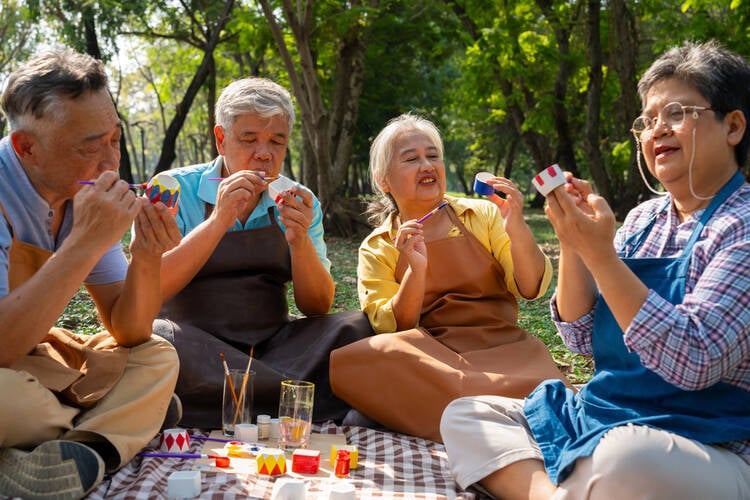
Thanksgiving crafts can give assisted living residents much more than something to do for an afternoon.
A good craft session can encourage conversation, creativity, hand movement, reminiscence, choice, and a sense of accomplishment.
The finished projects can also be used around the facility as table decorations, door displays, gifts, greeting cards, or keepsakes for family members.
If you own or manage an assisted living facility, the best projects are usually the ones residents can complete successfully without staff taking over most of the work.
You should therefore choose crafts according to residents’ abilities rather than simply selecting the most impressive project you can find.
Large pieces, pre-cut materials, easy-grip markers, stickers, glue dots, washable paint, and simple step-by-step instructions can make many Thanksgiving crafts easier to enjoy.
Thanksgiving Craft Week Plan for Assisted Living Residents
You do not need to complete every Thanksgiving project in one day. Spreading crafts across the week gives residents variety and also allows some of the finished projects to be used during the Thanksgiving meal.
| Day | Craft | What You Can Do With It | Difficulty |
|---|---|---|---|
| Monday | Gratitude Leaves | Start the community Thankful Tree | Easy |
| Tuesday | Leaf-Stamped Placemats | Use during the Thanksgiving meal | Easy |
| Wednesday | Autumn Centerpieces | Decorate dining tables | Moderate |
| Thursday | Thanksgiving Cards | Give to family, staff or other residents | Easy |
| Friday | Painted Mini Pumpkins | Room or common-area decorations | Easy |
| Saturday | Autumn Wreaths | Decorate doors and hallways | Moderate |
| Sunday | Thanksgiving Memory Collage | Display residents’ memories and photographs | Easy to Moderate |
Best Thanksgiving Craft Ideas for Seniors in Assisted Living
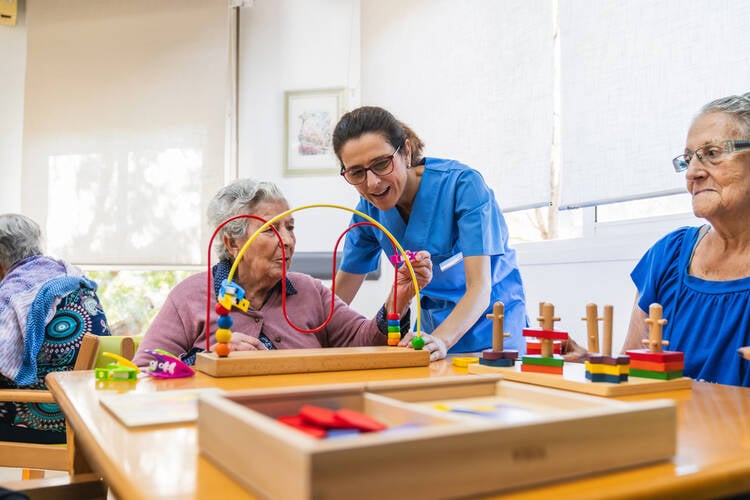
1. Gratitude Leaf Tree
Create a large paper tree or use a sturdy arrangement of branches in a safe container.
Provide large paper leaves and invite residents to write something they appreciate on each one.
Residents who cannot write comfortably can dictate their message to a staff member or choose a photograph or picture instead.
Possible prompts include:
- A person I am thankful for
- A happy memory
- Something that made me smile this week
- A place I loved visiting
- Something I still enjoy doing.
Add leaves throughout Thanksgiving week until the tree becomes a shared community display.
2. Thanksgiving Wreaths

Use lightweight wreath rings or cardboard circles together with faux leaves, ribbons, paper pumpkins, fabric pieces and other autumn decorations.
Residents can select their own colors and arrange the pieces before staff help attach anything that requires stronger adhesive.
Finished wreaths can decorate bedroom doors, activity rooms, hallways or common spaces.
For residents with limited dexterity, use larger embellishments instead of small beads, pins or intricate pieces.
3. Leaf-Stamped Placemats
Leaf stamping is simple but can produce attractive results. Apply washable paint to large real or artificial leaves and press them onto heavy paper or cardstock.
Residents can combine red, orange, brown, gold and yellow prints to create autumn patterns.
After the artwork dries, the sheets can be laminated or placed under clear reusable covers and used as placemats for the Thanksgiving meal.
This gives the craft a practical purpose and allows residents to see their work being used.
4. Painted Mini Pumpkins

Painting small pumpkins is often easier than carving them. Residents can use washable paint markers, stickers, ribbons or simple stencils to create patterns.
You might encourage autumn designs rather than Halloween faces so the pumpkins remain useful throughout November.
Finished pumpkins can be displayed on tables, windowsills, reception desks or in residents’ rooms.
5. Thanksgiving Cards
Provide folded cardstock, large stickers, markers, stamps, ribbons and autumn-themed cutouts. Residents can create cards for:
- Family members
- Friends
- Other residents
- Employees
- Volunteers
- Community organizations.
A resident who cannot write can dictate a message to staff. You can also provide simple phrases such as “Thinking of You,” “Happy Thanksgiving,” and “Thank You” that residents can glue onto their cards.
6. Thanksgiving Memory Collage
Ask families to provide copies of photographs where appropriate or use magazines, printed autumn images and decorative paper. Residents can create collages around themes such as:
- My Family
- Favorite Foods
- Places I Have Lived
- Things I Am Thankful For
- Autumn Memories
- People I Love.
The project can encourage reminiscence while giving residents a finished piece that is personal rather than generic.
7. Autumn Table Centerpieces
Let residents help make centerpieces for Thanksgiving dining tables. You can use small baskets, artificial leaves, battery-operated candles, mini pumpkins, ribbons and seasonal flowers.
Keep arrangements low enough that residents can see one another across the table. Avoid loose materials that could create slipping or choking hazards.
Using battery-operated lights instead of open flames is usually more practical in a senior-living environment.
8. Paper Plate Turkey Art
Paper plate turkeys remain a simple option for residents who enjoy traditional Thanksgiving imagery. Use a large paper plate for the body and provide pre-cut feather shapes.
Residents can color, paint, arrange or write messages on individual feathers.
One variation is to write something the resident enjoys on each feather instead of using plain decorations. This adds a personal element to a familiar project.
9. Autumn Leaf Garland
Cut large leaf shapes from paper, felt or foam before the session. Residents can decorate the leaves with patterns, names, thankful messages or drawings.
Staff can then connect them into a long garland for hallways, windows or the dining room.
A group garland works particularly well because every resident can contribute one or two pieces without needing to complete an entire project alone.
10. Gratitude Jars
Give each resident a lightweight plastic or other appropriate container to decorate using ribbons, paper, stickers and labels.
Provide large slips of paper on which residents can record things they appreciate. They can add one note each day during Thanksgiving week.
At the end of the week, residents may read their notes privately or share selected ones with the group.
A gratitude activity should never require residents to disclose personal feelings publicly.
11. Thanksgiving Place Cards
Residents can create personalized place cards for the Thanksgiving meal. Use folded cardstock and large-print names.
Residents might decorate the cards with leaves, pumpkins, autumn colors or short messages.
This is a particularly useful project because residents help prepare the dining room for the community’s celebration.
12. Paper Cornucopia Display
Create a large paper or lightweight cardboard cornucopia and provide oversized paper fruits, vegetables and leaves.
Instead of simply coloring them, residents can write memories, foods they enjoy or things they appreciate on the pieces.
The finished cornucopia can become a group display rather than requiring each resident to make a separate one.
13. Autumn Window Art
Use removable window clings, tissue-paper leaves or washable window markers to decorate selected common-area windows.
Residents can arrange the colors and patterns while staff assist with pieces placed outside comfortable reach.
The finished display gives residents’ artwork a prominent place in the facility.
14. Turkey Hand Puppets
Paper bags can be transformed into simple turkey puppets using large paper feathers, eyes, beaks and markers. The activity can be extended into storytelling.
Residents might give their puppet a name, tell a funny story or use the characters during an intergenerational visit with children.
For residents who find detailed assembly difficult, provide partially prepared puppets that still leave meaningful decorating choices.
15. Decorated Recipe Cards
Ask residents to share a favorite Thanksgiving or family recipe. Staff can print or write the recipe on large cards, and residents can decorate the borders.
The cards can eventually be collected into a facility recipe book. The recipe does not need to be complete or technically perfect.
The memory connected to the dish may be more valuable than precise measurements.
16. Thankful Feather Turkey
Create one large turkey body for the group and provide oversized paper feathers.
Each resident writes, draws or dictates something they appreciate on one feather. Staff attach the feathers around the turkey until the display is complete.
This is easier for many residents than assembling small individual turkey crafts and creates a stronger communal result.
17. Autumn Photo Frames
Use inexpensive cardboard or unfinished craft frames. Residents can decorate them with paper leaves, fabric pieces, autumn colors, stickers and other lightweight materials.
Add a family photograph or a picture taken during one of the facility’s November activities.
The completed frame can remain in the resident’s room or be given to a family member.
18. Thanksgiving Napkin Rings
Create simple napkin rings using sturdy cardstock, ribbon or paper tubes cut into suitable sections.
Residents can add leaves, names, thankful words or autumn patterns.
Use the finished napkin rings during the Thanksgiving meal.
Avoid small decorative pieces where they may create problems for residents who tend to place nonfood items in their mouths.
19. Paper Acorn and Leaf Mobile

Use pre-cut paper acorns and leaves rather than requiring residents to work with very small real acorns.
Residents can color and decorate the shapes before staff attach them to ribbon or string.
Hang the finished mobile where it can be seen without obstructing walkways, fire equipment, handrails or other safety features.
20. Community Thanksgiving Banner
Create a large banner with a simple message such as “Together We Are Thankful.” Give each resident a square of paper or fabric to decorate.
They might add:
- Their name
- A drawing
- A favorite color
- A thankful message
- A family photograph
- A simple autumn design.
Combine the individual pieces into one large display. This allows residents of very different ability levels to contribute to the same project while still creating something impressive enough for a central hallway or dining room.
Quick Comparison of Thanksgiving Crafts
| Craft | Main Materials | Difficulty | Best Use |
|---|---|---|---|
| Gratitude Tree | Paper, cardboard, markers | Easy | Group display |
| Autumn Wreath | Wreath ring, faux leaves, ribbon | Moderate | Door decoration |
| Leaf Placemat | Cardstock, leaves, paint | Easy | Thanksgiving dining table |
| Painted Pumpkin | Mini pumpkin, markers or paint | Easy | Room decoration |
| Thanksgiving Cards | Cardstock, stickers, markers | Easy | Gifts and family connection |
| Memory Collage | Photos, paper, magazines | Easy to Moderate | Reminiscence |
| Centerpiece | Basket, faux leaves, LED candle | Moderate | Dining tables |
| Recipe Card | Cardstock, pens, decorations | Easy | Memory book or family gift |
| Napkin Rings | Cardstock, ribbon | Easy | Thanksgiving meal |
| Community Banner | Paper or fabric squares | Easy | Large common-area display |
How to Adapt Thanksgiving Crafts for Different Residents
You do not necessarily need separate crafts for every resident ability. Often, the same activity can be adjusted.
| Resident Need | Useful Adaptation | Good Craft Choices |
|---|---|---|
| Reduced hand strength | Use larger pieces, easy-grip markers, stickers and pre-cut shapes | Painted pumpkins, gratitude leaves, cards, banner squares |
| Memory impairment | Give one instruction at a time and offer familiar colors, objects and photographs | Leaf stamping, collage, pumpkin decorating, group banner |
| Vision limitations | Use high-contrast materials, large shapes and tactile textures | Wreaths, centerpieces, textured collages, large gratitude leaves |
| Limited mobility | Bring supplies within reach and complete the activity from a seated position | Cards, placemats, recipe cards, collages |
| Low energy | Use short sessions and projects that can be completed in stages | Gratitude jar, cards, leaf decorating, recipe cards |
| Residents who dislike crafts | Offer a planning, storytelling or choosing role instead of forcing hands-on work | Recipe project, memory collage, gratitude tree, community banner |
Thanksgiving Craft Safety Tips
Crafts do not need to be complicated to be enjoyable. In fact, reducing unnecessary materials can make projects easier for residents and staff.
- Use rounded or easy-grip scissors where appropriate.
- Pre-cut difficult shapes when necessary.
- Choose washable, low-odor art materials whenever practical.
- Avoid open flames in centerpieces; battery-operated lights are usually more practical.
- Be cautious with very small beads, pins, buttons, acorns or other pieces where they may create a swallowing hazard.
- Keep glue guns and other hot equipment in staff hands.
- Protect tables and clothing during paint activities.
- Keep walkways clear of craft boxes, cords and dropped materials.
- Allow residents to stop whenever they become tired.
- Do not correct every imperfect detail. The project belongs to the resident.