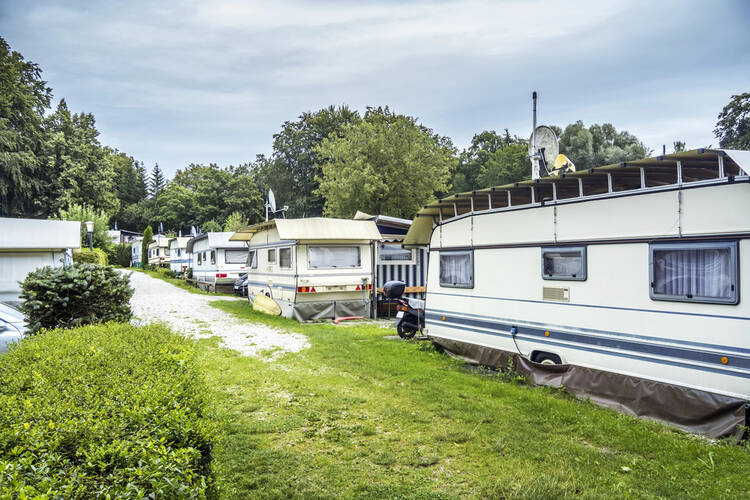
Designing a trailer park requires thoughtful planning, efficient land use, and a strong focus on resident comfort and safety.
This is important because a well-designed layout not only maximizes the number of rentable spaces but also enhances the overall living experience, encourages long-term occupancy, and reduces maintenance challenges.
Proper zoning, road access, drainage systems, and utility placement (water, sewage, electricity) must all be carefully considered from the outset.

In this article, we are going to look at some of the best trailer park layout ideas, including smart amenities design and positioning, as well as practical floor plan tips.
From arranging lots for privacy and accessibility to incorporating green spaces, parking areas, and community facilities, these ideas will help you create a functional, attractive, and profitable trailer park that appeals to a wide range of residents.
Best Trailer Park Layout Ideas
-
Loop Road Layout Design
A loop road layout is one of the most efficient and popular designs for trailer parks.
It features a circular or oval-shaped road that connects back to the main entrance, minimizing traffic congestion and improving accessibility.
This design allows for easy navigation for residents, guests, and service vehicles such as garbage trucks and emergency responders.
Homes can be evenly spaced along both sides of the loop, maximizing land use while maintaining order.
It also enhances safety by reducing through-traffic and creates a quieter, more residential feel for occupants.
-
Clustered Home Layout
Clustered layouts group mobile homes into small sections or “neighborhoods” within the park.
This approach fosters a sense of community among residents while allowing for shared amenities like picnic areas or playgrounds within each cluster. It also creates opportunities for more green space and flexible land use.
By grouping homes, developers can reduce infrastructure costs, such as shorter utility lines and roads. Careful spacing ensures privacy while still promoting social interaction.
This design works well for family-oriented parks or communities that prioritize neighborly connections.
-
Grid Layout for Maximum Density
A grid layout uses straight, intersecting roads to form rectangular blocks, allowing for maximum lot density and easy expansion.
This design simplifies planning, construction, and maintenance of utilities since lines can run in straight paths.
It’s especially useful for urban or high-demand areas where maximizing occupancy is essential.
However, to avoid a rigid or crowded feel, it’s important to incorporate landscaping, sidewalks, and parking areas.
Adding trees or small green pockets can soften the appearance and improve livability while maintaining efficiency.
-
Centralized Amenities Hub
Positioning amenities such as a clubhouse, laundry facility, playground, or convenience store at the center of the park ensures equal access for all residents.
This hub becomes the social and functional heart of the community, encouraging interaction and convenience.
Proper placement reduces walking distance and improves visibility, enhancing safety.
Surrounding the hub with open space or seating areas can create a welcoming atmosphere.
Developers should ensure pathways and lighting lead directly to this central area, making it accessible and appealing at all times.
-
Perimeter Green Space Buffer
Incorporating green spaces along the perimeter of the trailer park provides a natural buffer from surrounding roads, businesses, or neighboring properties.
This design improves privacy, reduces noise pollution, and enhances the overall aesthetic appeal of the park.
Trees, shrubs, and fencing can be combined to create a secure and visually pleasing boundary.
These green buffers can also double as walking trails or recreational areas, adding value for residents.
This layout is especially beneficial for parks located in busy or urban environments.
-
Angled Parking and Driveways
Designing lots with angled parking and driveways improves vehicle flow and makes it easier for residents to enter and exit their spaces.
This layout reduces the risk of accidents and allows for more efficient use of limited space.
Angled configurations also create a more dynamic and less rigid visual layout compared to straight parking.
Proper spacing must be maintained to ensure accessibility for larger vehicles like RVs or trailers.
Including designated visitor parking areas nearby adds convenience and prevents overcrowding on internal roads.
-
Mixed Lot Size Planning
Offering a mix of lot sizes within the trailer park allows you to attract a broader range of residents, from individuals with smaller mobile homes to families with larger units.
This flexibility can increase occupancy rates and overall profitability. Larger lots can be positioned along the perimeter for added privacy, while smaller lots can be placed closer to shared amenities.
This variation also creates visual diversity, making the park feel less uniform and more appealing.
Careful planning ensures all lots still have equal access to utilities and infrastructure.
-
Pedestrian-Friendly Pathways
Incorporating sidewalks and pedestrian pathways throughout the park enhances safety and encourages walking and outdoor activity.
These paths should connect residential areas to amenities such as the clubhouse, playground, and green spaces.
Proper lighting along pathways improves visibility and security, especially at night.
Separating pedestrian routes from vehicle traffic where possible reduces accidents and creates a more family-friendly environment.
Adding benches, landscaping, and signage can further improve usability and comfort, making the park more attractive to long-term residents.
-
Utility Corridor Planning
Efficient utility planning is critical in trailer park design. Creating designated utility corridors for water, sewage, electricity, and internet lines simplifies installation and future maintenance.
These corridors should run behind or alongside lots to minimize disruption to residents during repairs.
Proper grading and drainage systems must also be integrated to prevent flooding or water damage.
By centralizing utilities in accessible areas, you reduce long-term operational costs and improve service reliability.
This approach also ensures compliance with local regulations and safety standards.
-
Recreational and Community Zones
Designating specific areas for recreation, such as playgrounds, sports courts, dog parks, or picnic zones, enhances the overall appeal of the trailer park.
These spaces should be strategically located away from high-traffic roads but still easily accessible to residents.
Including shaded areas, seating, and open lawns encourages social interaction and outdoor activities.
Community zones can also host events, strengthening resident relationships and improving retention rates.
Thoughtful placement ensures noise from recreational areas does not disturb nearby homes while still providing convenient access.
-
Cul-de-Sac Layout Design
A cul-de-sac layout features short dead-end streets branching off a main road, creating quieter and safer living zones.
This design reduces through-traffic, making it ideal for families with children or residents seeking privacy.
Homes arranged around the cul-de-sac enjoy a sense of exclusivity and community.
It also allows for creative landscaping in the center, such as small green spaces or seating areas.
However, adequate turning space must be provided for larger vehicles, such as emergency trucks and delivery vans, to ensure accessibility.
-
Zoned Community Sections
Dividing the trailer park into zones based on resident needs, such as family areas, senior living sections, or short-term rental spaces, can significantly improve functionality.
Each zone can be tailored with specific amenities, such as playgrounds for families or quiet gardens for seniors.
This targeted approach enhances resident satisfaction and helps reduce conflicts between different lifestyles.
Clear signage, pathways, and thoughtful transitions between zones ensure cohesion while maintaining distinct identities within the park.
-
Corner Lot Optimization
Corner lots can often be underutilized, but with smart design, they can become premium spaces.
These lots offer additional frontage, making them ideal for larger units, upgraded homes, or units with extended outdoor features like patios or gardens.
Positioning higher-value lots on corners can increase overall revenue. Proper driveway placement is important to avoid traffic conflicts, especially at intersections.
Landscaping can also be enhanced on these lots to improve the park’s overall appearance and create visual focal points throughout the community.
-
Integrated Stormwater Management Design
Incorporating stormwater management into the layout is essential for long-term sustainability.
Features such as drainage swales, retention ponds, and permeable surfaces can be integrated into green spaces to manage runoff effectively.
These elements not only prevent flooding but can also double as aesthetic features, such as small ponds or landscaped water channels.
Positioning these systems strategically ensures they do not interfere with residential lots while still being easily maintained.
This design approach supports environmental responsibility and can reduce infrastructure repair costs over time.
-
Entrance Feature and Security Layout
The entrance of a trailer park sets the tone for the entire community. Designing a welcoming and secure entrance with clear signage, landscaping, and possibly a gatehouse can enhance curb appeal and safety.
Positioning the entrance for easy visibility from the main road improves accessibility while controlling traffic flow.
Including features like speed bumps, security cameras, or controlled access points can further protect residents.
A well-designed entrance not only creates a strong first impression but also adds to the overall value and professionalism of the park.