
A bicycle courier business provides fast delivery of documents, parcels, food, medicines, retail purchases, legal files, office supplies, and other relatively small items using bicycles, e-bikes, and cargo bikes.
Unlike conventional courier companies that rely heavily on cars and vans, bicycle couriers specialize in short-distance urban deliveries where congestion, parking restrictions, and traffic can make automobiles slower and more expensive.
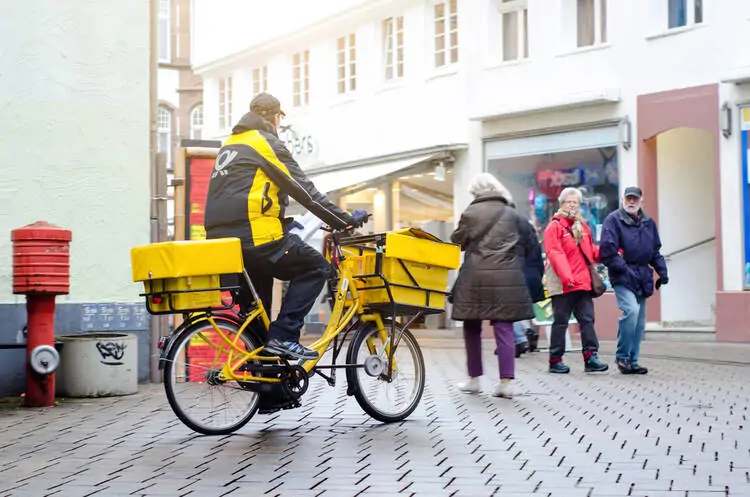
A professionally operated bicycle courier company can serve law firms, pharmacies, healthcare businesses, restaurants, retailers, e-commerce companies, florists, offices, accountants, architects, media companies, corporate headquarters, and individual customers.
The business can generate revenue from rush deliveries, same-day service, scheduled routes, dedicated business contracts, food and retail deliveries, medical courier work, legal document transportation, subscription delivery plans, and last-mile fulfillment.
Dense metropolitan areas are particularly suitable because a rider can complete several closely grouped deliveries without spending excessive time looking for parking.
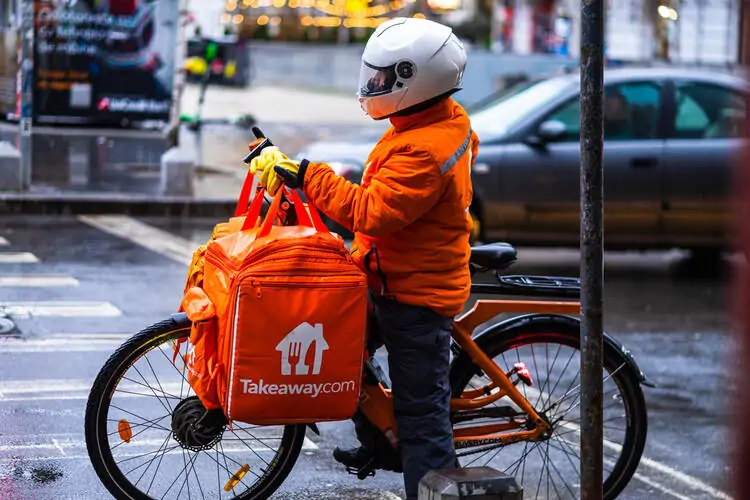
Modern bicycle courier businesses can also use GPS tracking, route optimization, customer portals, electronic proof of delivery, mobile dispatch applications, photographs, timestamps, and digital signatures to operate with the same level of professionalism customers expect from larger courier companies.
Steps on How to Write a Bicycle Courier Business Plan
-
Executive Summary
Speedo® Courier Inc., based in New York City, is an environmentally conscious bicycle courier and last-mile delivery company established to provide fast, secure, trackable, and dependable delivery services to businesses and individuals.
The company will initially serve Manhattan, Brooklyn, Queens, and selected high-density areas where bicycles and cargo bikes can provide a practical advantage over conventional motor vehicles.
Our services will include express document delivery, same-day parcel delivery, scheduled business routes, legal courier services, pharmacy delivery, approved medical deliveries, restaurant and retail delivery, e-commerce last-mile fulfillment, interoffice mail runs, and dedicated bicycle courier contracts.
Speedo® Courier Inc. will operate a mixed fleet consisting of conventional bicycles, pedal-assist e-bikes, and cargo e-bikes.
Traditional bicycles will be suitable for lightweight documents and short-distance assignments.
E-bikes will improve rider productivity over longer distances, while cargo bikes will allow the company to transport larger parcels and multiple packages on commercial routes.
Our primary business strategy will be to secure recurring business-to-business accounts rather than relying entirely on individual app-based deliveries.
The company will target law firms, pharmacies, laboratories, professional offices, local retailers, restaurants, e-commerce businesses, printing companies, architects, advertising agencies, florists, accountants, and corporations with repeated local delivery requirements.
Customers will be able to place delivery requests through our website, telephone line, customer portal, email, and approved software integrations.
Our dispatch platform will track the courier from assignment through pickup and delivery.
Customers will receive electronic proof of delivery including timestamps, recipient information, signatures, photographs where appropriate, and delivery status notifications.
Speedo® Courier Inc. aims to become one of New York City’s most dependable independent bicycle courier brands before expanding into other dense U.S. metropolitan areas.
-
Company Profile
a. Our Products and Services
Speedo® Courier Inc. will provide the following services:
Express Bicycle Courier Service:
- Priority pickup and direct delivery.
- Designed for urgent documents, contracts, business materials, keys, replacement parts, and other small items.
Same-Day Delivery:
- Pickup and delivery within the same day.
- Suitable for businesses that require speed without paying full rush-delivery pricing.
Legal Courier Services:
- Contracts
- Legal documents
- Attorney correspondence
- Court-related documents
- Confidential files
- Time-sensitive paperwork.
Pharmacy and Approved Medical Courier Services:
Depending on applicable regulations and shipment requirements, the company may transport:
- Prescription deliveries
- Medical documents
- Healthcare supplies
- Small medical equipment
- Approved laboratory materials
- Other properly packaged medical items.
E-Commerce Last-Mile Delivery:
- Local online order fulfillment
- Retail store-to-customer delivery
- Same-day e-commerce delivery
- Returns collection
- Micro-fulfillment deliveries.
Restaurant and Food Delivery:
Speedo® Courier Inc. may provide contracted delivery for restaurants and food businesses that prefer to outsource delivery rather than maintain their own fleet.
Retail Delivery:
Suitable items may include:
- Clothing
- Books
- Flowers
- Gifts
- Electronics
- Small household goods
- Specialty retail purchases.
Scheduled Business Routes:
The company will offer recurring daily, weekly, and custom routes. Examples include:
- Interoffice mail runs
- Retail store transfers
- Pharmacy deliveries
- Document collection
- Daily bank or administrative runs where appropriate
- Regular customer distribution routes.
Other Services:
- Dedicated bicycle courier service
- Multi-stop deliveries
- Reverse logistics
- Weekend delivery
- After-hours service
- Corporate subscription plans
- Event material delivery
- Small cargo-bike transportation
- Office-to-office distribution.
b. Nature of the Business
Speedo® Courier Inc. will operate both business-to-business and business-to-consumer models.
However, business-to-business delivery will receive the greatest attention because recurring commercial routes can provide more dependable revenue.
Individual consumers will also be able to request eligible same-day or express deliveries.
c. The Industry
Speedo® Courier Inc. will operate within the transportation and logistics industry, specifically the bicycle courier, messenger, same-day delivery, and urban last-mile logistics segment.
d. Mission Statement
“At Speedo® Courier Inc., our mission is to move important items across congested cities quickly, safely, and efficiently using bicycles and cargo bikes.
We are committed to professional riders, dependable service, responsible cycling, modern tracking technology, excellent customer communication, and environmentally conscious urban logistics.”
e. Vision Statement
“Speedo® Courier Inc. envisions becoming one of America’s most trusted bicycle courier and urban delivery brands.
We aim to demonstrate that bicycles, e-bikes, and cargo bikes can provide commercially viable, environmentally responsible, and highly efficient last-mile delivery solutions in dense metropolitan areas.”
f. Our Tagline (Slogan)
“Speedo® Courier Inc. – Faster Through the City.”
g. Legal Structure of the Business (LLC, C Corp, S Corp, LLP)
Speedo® Courier Inc. will operate as a privately held corporation. The corporate structure will support future investment, fleet expansion, additional city operations, commercial contracts, and eventual geographic expansion.
Management will work with legal and tax professionals when determining the most appropriate corporate tax elections.
h. Our Organizational Structure
- Chief Executive Officer
- Operations Manager
- Dispatch Manager
- Sales and Business Development Manager
- Fleet and Rider Safety Coordinator
- Accountant/Bookkeeper
- Customer Service Representatives
- Dispatchers
- Lead Bicycle Couriers
- Bicycle Couriers
- Cargo Bike Couriers
- Part-Time/Seasonal Couriers where appropriate.
i. Ownership/Shareholder Structure and Board Members
- Stephen Speedo – Founder, Chairman and Chief Executive Officer – 52 Percent Shares
- Richard Speedo – Board Member – 18 Percent Shares
- Daniel Morrison – Board Member – 10 Percent Shares
- Anthony Lewis – Board Member – 10 Percent Shares
- Rebecca Green – Board Member and Corporate Secretary – 10 Percent Shares.
-
SWOT Analysis
a. Strength
- Urban Speed: Bicycle couriers can often move efficiently through congested neighborhoods where cars lose time in traffic.
- No Parking Search: Riders can complete pickups and deliveries without spending the same amount of time searching for vehicle parking.
- Lower Vehicle Costs: Bicycles and cargo bikes generally cost considerably less than delivery vans.
- Lower Fuel Exposure: The business will not depend heavily on gasoline prices.
- Environmental Positioning: Bicycle delivery can appeal to businesses seeking lower-emission delivery options.
- Specialized Urban Knowledge: Experienced couriers can develop detailed knowledge of buildings, streets, loading areas, entrances, and shortcuts.
- Multiple Revenue Streams: Legal, medical, retail, e-commerce, food, and scheduled route delivery provide diversification.
- Scalable Fleet: Additional bicycles and riders can be added gradually as customer demand increases.
b. Weakness
- Bicycle couriers have limited cargo capacity.
- Extreme weather may reduce productivity.
- Rider injuries can disrupt operations.
- Bicycles and batteries can be stolen.
- High rider turnover can affect service quality.
- Some deliveries will still require automobiles or vans.
- E-bike batteries require careful charging and maintenance procedures.
- New companies may initially struggle to secure large commercial accounts.
c. Opportunities
- Same-day e-commerce delivery
- Legal document delivery
- Pharmacy delivery
- Urban medical courier services
- Restaurant delivery contracts
- Retail store delivery
- Corporate interoffice routes
- Micro-fulfillment
- Cargo-bike logistics
- Environmentally conscious corporate contracts
- Reverse logistics
- Additional urban markets.
i. How Big is the Industry?
The bicycle courier business operates within the broader courier and messenger industry.
The overall courier industry handles documents, packages, commercial materials, medical products, parcels, food, retail orders, and other items.
Bicycle couriers represent a specialized segment focused primarily on dense urban markets. Their competitive advantage is strongest when:
- Delivery distances are relatively short.
- Traffic congestion is severe.
- Parking is difficult.
- Items are reasonably small.
- Customers value speed.
- Several stops can be grouped together geographically.
The market has also expanded beyond the traditional image of a bicycle messenger carrying legal envelopes between office towers.
Cargo bikes and e-bikes increasingly allow operators to transport groceries, retail parcels, restaurant orders, pharmacy deliveries, and larger commercial loads.
This broadens the addressable market considerably.
ii. Is the Industry Growing or Declining?
The long-term outlook for urban courier services remains attractive. Demand is being supported by:
- Growth in e-commerce
- Same-day delivery expectations
- Local online retail
- On-demand ordering
- Business outsourcing
- Restaurant delivery
- Pharmacy delivery
- Interest in lower-emission transportation.
At the same time, the market has become highly competitive because app-based delivery platforms make it easy for businesses to access individual couriers.
Speedo® Courier Inc. will differentiate itself through dependable commercial service rather than simply providing random gig workers.
iii. What are the Future Trends in the Industry?
Future trends include:
- Cargo E-Bikes: Larger electric cargo bicycles will allow couriers to carry more parcels.
- Micro-Fulfillment Centers: Inventory may increasingly be stored close to customers for rapid local delivery.
- Route Optimization: Software will help dispatchers combine deliveries more efficiently.
- Electronic Proof of Delivery: Digital signatures, timestamps, photographs, and GPS records will become standard.
- Corporate Sustainability Programs: Businesses may increasingly seek bicycle delivery to reduce emissions from local transportation.
- Dedicated Business Routes: Companies may outsource entire local delivery functions.
- Battery Safety: E-bike fleet operators will place greater emphasis on certified equipment, safe charging, storage, inspection, and battery replacement.
- Subscription Delivery: Businesses may pay monthly fees for defined delivery capacity.
- Reverse Logistics: Bicycle couriers can collect online returns from customers and deliver them to local stores or fulfillment locations.
- Technology Integration: Larger customers may send jobs directly into courier dispatch systems.
iv. Are There Existing Niches in the Industry?
Yes. Bicycle courier niches include:
- Legal document delivery
- Medical courier services
- Pharmacy delivery
- Food delivery
- Retail delivery
- Flower delivery
- Corporate interoffice mail
- E-commerce last-mile delivery
- Cargo-bike freight
- Advertising and media courier services
- Architectural document delivery
- Print shop deliveries
- Financial district courier services.
Speedo® Courier Inc. will focus primarily on business, legal, pharmacy, medical, retail, and e-commerce deliveries.
v. Can You Sell a Franchise of your Business in the Future?
Yes. A bicycle courier company can potentially develop into a franchise or licensed territory system after proving the operating model.
Future franchisees could operate under the Speedo® Courier brand using standardized:
- Dispatch technology
- Rider equipment
- Bicycle specifications
- Safety procedures
- Pricing systems
- Customer service standards
- Sales systems
- Operating procedures.
However, Speedo® Courier Inc. intends to establish company-owned operations before exploring franchising.
d. Threats
- Rider accidents
- Bicycle theft
- E-bike battery fires
- Extreme weather
- Competition from gig delivery apps
- Competition from motor vehicle couriers
- Changes in bicycle regulations
- Higher insurance costs
- Employee turnover
- Traffic enforcement violations
- Package damage
- Package theft
- Loss of major corporate accounts
- Technology failures.
i. Who are the Major Competitors?
Speedo® Courier Inc. will compete with:
- Independent bicycle messenger companies
- Local courier companies
- Uber delivery services
- DoorDash
- Uber Eats
- Grubhub
- Roadie
- Dropoff
- Traditional messenger services
- Local cargo-bike delivery companies
- In-house corporate messengers
- National courier businesses.
Our objective will not be to compete for every available delivery. Speedo® Courier Inc. will prioritize work where bicycle logistics provides a meaningful economic or service advantage.
ii. Is There a Franchise for Bicycle Courier Business?
Bicycle courier franchises are less common than automotive courier franchises.
Most bicycle messenger companies operate independently within specific metropolitan markets. However, the business model can still be expanded through:
- Company-owned branches
- Licensed territories
- Franchises
- Contractor networks
- Joint ventures.
Speedo® Courier Inc. will initially use company-owned branches.
iii. Are There Policies, Regulations, or Zoning Laws Affecting Bicycle Courier Businesses in the United States of America?
Yes. Requirements differ by state and city. Potential requirements include:
- Business registration
- Local business licensing
- Employment law compliance
- Workers’ compensation
- Commercial liability insurance
- Bicycle safety requirements
- E-bike requirements
- Traffic laws
- Worker classification laws
- Safety training
- Medical delivery rules where applicable.
Because Speedo® Courier Inc. will operate in New York City, management will comply with city commercial cycling rules.
The company will ensure that riders complete required bicycle-delivery safety training. Riders will receive or have access to required safety equipment.
The company will issue appropriate rider identification and reflective apparel and maintain required courier records.
Bicycles used for business will have appropriate brakes, bells, lights, reflectors, and other required safety equipment.
The company will also monitor evolving rules concerning commercial e-bikes, powered bicycles, batteries, and delivery workers.
Medical or pharmaceutical deliveries will receive additional compliance review.
Speedo® Courier Inc. will not accept biological, hazardous, controlled, temperature-sensitive, or other regulated materials unless management has confirmed that appropriate packaging, rider training, documentation, insurance, and transportation procedures are in place.
-
Marketing Plan
a. Who is Your Target Audience?
i. Age Range: Individual customers will primarily be adults aged 18 and above.
Commercial marketing will target business decision-makers rather than a specific consumer age.
ii. Level of Education: No specific educational background is required.
iii. Income Level: Individual customers will primarily be middle-income and upper-middle-income consumers willing to pay for convenience.
Business customers will range from small independent firms to large corporate organizations.
iv. Ethnicity: No specific ethnicity.
v. Language: English will be the primary business language, while multilingual rider and customer support may be introduced according to demand.
vi. Geographical Location: Manhattan, Brooklyn, Queens, and selected adjacent business districts.
vii. Lifestyle/Business Profile:
Our target market includes:
- Law firms
- Accounting firms
- Architecture firms
- Advertising agencies
- Printing companies
- Pharmacies
- Medical practices
- Restaurants
- Retail stores
- E-commerce businesses
- Florists
- Corporate offices
- Media companies
- Individuals needing urgent local delivery.
b. Advertising and Promotion Strategies
- Visit office buildings and commercial customers directly.
- Target law firms with rush-document packages.
- Develop recurring pharmacy delivery proposals.
- Approach local retailers offering same-day e-commerce.
- Build relationships with print shops.
- Develop subscription delivery plans for businesses.
- Partner with environmentally conscious companies.
- Offer commercial account trials.
- Brand courier bags and rider uniforms professionally.
- Develop referral programs.
- Build direct relationships with office managers.
- Offer dedicated route proposals.
i. Traditional Marketing Strategies
- Direct business sales
- Cold calling
- Commercial brochures
- Networking
- Business association participation
- Referral programs
- Office visits
- Corporate proposals
- Branded courier equipment.
ii. Digital Marketing Strategies
- Search engine optimization
- Paid search advertising
- Local search marketing
- LinkedIn prospecting
- Email marketing
- Customer portal marketing
- Online quote requests
- Content marketing
- Customer review management.
iii. Social Media Marketing Plan
Social media will emphasize speed, reliability, riders, and sustainable urban delivery. Content will include:
- Courier profiles
- Cargo-bike demonstrations
- Behind-the-scenes dispatch
- Delivery statistics
- Business customer stories
- Safe cycling content
- E-bike maintenance
- Urban logistics tips
- Company milestones
- Sustainability initiatives.
c. Pricing Strategy
Speedo® Courier Inc. will price deliveries according to:
- Distance
- Urgency
- Delivery zone
- Parcel size
- Parcel weight
- Number of stops
- Waiting time
- Required bike type
- Commercial volume
- Service deadline.
The company will not compete solely by offering the lowest possible price. Courier pricing must cover:
- Rider wages
- Payroll costs
- Bicycle maintenance
- Insurance
- Dispatch
- Technology
- Battery replacement
- Equipment
- Administrative expenses.
Recurring commercial customers will receive negotiated volume pricing.
-
Sales and Distribution Plan
a. Sales Channels
Speedo® Courier Inc. will generate sales through:
- Direct corporate sales
- Website bookings
- Telephone bookings
- Customer portal
- Email requests
- Commercial contracts
- Subscription plans
- Pharmacy relationships
- Retail partnerships
- Law firm relationships
- Restaurant contracts.
Commercial accounts will receive priority in the company’s sales strategy. A business requiring 10 deliveries every weekday may be more valuable than hundreds of customers who make only one delivery annually.
b. Inventory Strategy
A bicycle courier does not carry traditional retail inventory. The company’s principal capacity consists of:
- Available riders
- Conventional bicycles
- E-bikes
- Cargo bikes
- Delivery bags
- Battery capacity
- Route capacity.
Management will monitor rider capacity throughout the day. Peak periods may require flexible staffing.
The company will also maintain spare bicycles, batteries, tires, tubes, chains, brake components, lights, locks, helmets, and other essential equipment.
This will reduce downtime when a courier experiences a mechanical problem.
c. Payment Options for Customers
Speedo® Courier Inc. will accept:
- Credit cards
- Debit cards
- ACH payments
- Bank transfers
- Approved digital payments
- Commercial account invoicing.
Qualified commercial accounts may receive approved payment terms.
d. Return Policy, Incentives and Guarantees
Refund and Claims Policy:
Delivery services cannot ordinarily be returned after completion. However, Speedo® Courier Inc. will maintain a documented claims process covering:
- Lost parcels
- Damaged parcels
- Failed delivery
- Late delivery
- Incorrect addresses
- Customer cancellations
- Waiting-time disputes
- Redelivery.
Liability will be governed by the customer agreement, declared value, applicable insurance, and relevant laws.
Incentives:
Speedo® Courier Inc. may offer:
- Commercial volume discounts
- Monthly delivery packages
- Subscription pricing
- Referral credits
- New commercial account credits
- Dedicated route pricing.
Guarantees:
Speedo® Courier Inc. will guarantee professional handling and service according to the delivery level purchased. We will not guarantee unrealistic delivery times simply to win a customer.
Weather emergencies, police activity, road closures, public safety events, and circumstances outside reasonable company control will be addressed within the service agreement.
e. Customer Support Strategy
Customers will be able to contact the company through:
- Telephone
- Website
- Customer portal
- Commercial account managers.
Customers will receive delivery confirmation. Proof may contain:
- Recipient name
- Signature
- Timestamp
- Photograph where appropriate
- Courier notes
- GPS confirmation.
Commercial customers will receive dedicated support once they reach qualifying account volume.
-
Operational Plan
Speedo® Courier Inc. will initially operate from a small dispatch office and secure bicycle storage facility. The initial fleet will consist of approximately:
- 8 pedal-assist e-bikes
- 4 commercial cargo e-bikes
- 4 conventional bicycles
- Several spare bicycles and batteries.
Not every bicycle will necessarily be active simultaneously. Some equipment will provide backup capacity.
Couriers will receive delivery assignments through a mobile dispatch application. The system will track:
- Courier availability
- Current location
- Pickup location
- Delivery destination
- Shipment priority
- Completed jobs
- Proof of delivery.
Rider safety will receive the same importance as delivery speed. Speedo® Courier Inc. will not reward employees for unsafe riding.
a. What Happens During a Typical Day at a Bicycle Courier Business?
A typical operating day begins with dispatchers reviewing scheduled business routes. Riders arriving for their shifts inspect:
- Brakes
- Tires
- Lights
- Bell
- Battery condition
- Reflective equipment
- Courier bags
- Locks.
Scheduled business deliveries begin first. Throughout the day, rush requests enter the dispatch platform.
The dispatcher assigns the closest suitable rider while considering the courier’s existing route.
For example, a courier already traveling from Midtown Manhattan toward Lower Manhattan may receive an additional pickup along the same route.
This improves productivity. The rider arrives at the pickup location, verifies the package, and marks it collected. The customer can then receive tracking updates.
Upon arrival at the destination, the courier obtains the required proof of delivery.
The completed delivery is immediately recorded in the system. During slower periods, riders may reposition themselves near areas generating regular demand.
At the end of each shift, bicycles and equipment are inspected. Batteries are handled and charged according to company safety procedures.
b. Production Process
There is no manufacturing process. The bicycle courier service process includes:
- Customer submits delivery request.
- Pickup and delivery information is recorded.
- Parcel eligibility is confirmed.
- Appropriate service level is selected.
- Delivery price is confirmed.
- Dispatcher assigns a rider.
- Rider accepts assignment.
- Parcel is collected.
- Rider transports the parcel.
- Recipient receives delivery.
- Proof of delivery is captured.
- Customer receives confirmation.
- Payment or invoicing is completed.
c. Service Procedure
Customers requesting a delivery provide:
- Pickup address
- Destination
- Pickup contact
- Recipient contact
- Parcel dimensions
- Approximate weight
- Required delivery time
- Special handling information.
The dispatch system determines whether the item can safely be transported by conventional bicycle, e-bike, or cargo bike.
Oversized or unsuitable items will not be assigned to riders merely to avoid refusing business.
Approved deliveries receive a quote. After confirmation, the job is dispatched.
d. The Supply Chain
Speedo® Courier Inc. will maintain relationships with:
- Commercial bicycle suppliers
- Cargo-bike manufacturers
- E-bike suppliers
- Certified battery suppliers
- Bicycle repair shops
- Tire suppliers
- Helmet manufacturers
- Courier bag suppliers
- Reflective apparel suppliers
- Dispatch software providers
- Mobile telephone providers
- Commercial insurance companies
- Safety training providers.
e. Sources of Income
Speedo® Courier Inc. will generate income from:
- Express courier delivery
- Same-day delivery
- Scheduled commercial routes
- Legal courier services
- Medical courier services
- Pharmacy delivery
- E-commerce delivery
- Restaurant delivery contracts
- Retail delivery
- Dedicated courier services
- Multi-stop routes
- After-hours charges
- Weekend charges
- Waiting-time charges
- Subscription delivery plans.
-
Financial Plan
a. Amount Needed to Start your Bicycle Courier Company?
Speedo® Courier Inc. will require an estimated $150,000 to establish a professional multi-rider bicycle courier operation in New York City. A solo bicycle courier can begin with only a fraction of this amount.
However, our proposed company will launch with multiple e-bikes, cargo bikes, professional safety equipment, dispatch technology, commercial insurance, storage, marketing, and adequate working capital.
b. What are the Costs Involved?
Our estimated startup budget is:
- Commercial E-Bikes, Cargo Bikes and Spare Bicycles: $48,000
- Helmets, Reflective Apparel, Bags, Locks and Safety Equipment: $9,000
- Dispatch Software, Mobile Devices and Technology: $12,000
- Office and Secure Bicycle Storage Setup: $18,000
- Insurance, Legal, Registration and Compliance: $18,000
- Website, Branding and Launch Marketing: $10,000
- Working Capital: $35,000.
Total Estimated Startup Cost: $150,000.
These figures are planning assumptions.
Actual cost will vary according to bicycle specifications, battery systems, fleet size, insurance, facility rent, and staffing.
c. Do You Need to Build a Facility? If YES, How Much Will it Cost?
No. Speedo® Courier Inc. will not construct a new facility during the startup phase.
The company will lease a small secure commercial unit capable of providing:
- Dispatch workspace
- Bicycle storage
- Equipment storage
- Battery handling and charging space designed around appropriate safety requirements
- Administrative space
- Courier meeting area.
Approximately $18,000 has been included for initial deposits, furnishings, storage systems, and startup facility costs.
d. What are the Ongoing Expenses for Running a Bicycle Courier Business?
- Courier wages
- Dispatcher wages
- Payroll taxes
- Workers’ compensation
- Commercial liability insurance
- Bicycle repairs
- Tires and tubes
- Chains and brakes
- Battery replacement
- E-bike maintenance
- Dispatch software
- Mobile phone service
- Office and storage rent
- Electricity
- Safety equipment
- Uniforms
- Marketing
- Accounting
- Legal services
- Training.
e. What is the Average Salary of your Staff?
Our projected compensation structure is:
- Chief Executive Officer – $70,000 Per Year
- Operations Manager – $60,000 Per Year
- Dispatch Manager – $55,000 Per Year
- Sales and Business Development Manager – $55,000 Per Year plus incentives
- Fleet and Rider Safety Coordinator – $50,000 Per Year
- Accountant/Bookkeeper – $42,000 Per Year
- Dispatchers – $45,000 – $55,000 Per Year
- Lead Bicycle Couriers – $45,000 – $55,000 Per Year
- Bicycle Couriers – approximately $38,000 – $48,000 Per Year depending on hours, responsibilities, productivity, and compensation structure.
Actual rider compensation will depend on employment classification, hours, benefits, experience, and current local labor requirements.
f. How Do You Get Funding to Start a Bicycle Courier Business?
Potential funding sources include:
- Personal savings
- Founder contributions
- Business partners
- Bank financing
- SBA-backed financing where eligible
- Equipment financing
- Private investors
- Business credit
- Family and friends
- Reinvested operating profits.
The relatively modest cost of bicycles compared with vans means management can expand the fleet gradually rather than purchasing excessive capacity before demand develops.
-
Financial Projection
a. How Much Should You Charge for Your Product/Service?
Speedo® Courier Inc. will establish prices according to distance, urgency, parcel size, service zone, bicycle type, number of stops, and commercial volume.
Our estimated starting rates are:
Standard Bicycle Delivery
- Short Local Delivery: $15 – $25
- Medium-Distance Delivery: $25 – $40
Rush/Direct Delivery
- $30 – $60+ depending on distance and urgency.
Legal Document Delivery
- Standard: $20 – $35
- Rush: $35 – $65+
Pharmacy/Medical Delivery
- Standard Local Route Stop: $15 – $30
- Urgent Delivery: $30 – $60+
- Recurring Routes: Negotiated contract pricing.
E-Commerce Last-Mile Delivery
- Dense High-Volume Routes: approximately $7 – $15 per completed stop depending on parcel density, size, delivery requirements, and volume.
Cargo Bike Delivery
- Standard Cargo Delivery: $35 – $75
- Specialized or Multi-Stop Cargo Run: $60 – $150+
Dedicated Courier Service
- Half-Day Rider: $175 – $275
- Full-Day Rider: $325 – $500+
b. Sales Forecast?
Based on legal courier accounts, pharmacies, retail deliveries, e-commerce contracts, scheduled business routes, and increasing rider capacity, Speedo® Courier Inc. projects:
- First Fiscal Year (FY1): $300,000
- Second Fiscal Year (FY2): $520,000
- Third Fiscal Year (FY3): $800,000
FY1 will focus on acquiring recurring commercial customers. During FY2, the company expects to expand the cargo-bike fleet and increase route density.
By FY3, management intends to operate several established commercial routes while preparing for a second urban market.
c. Estimated Profit You Will Make a Year?
Our target profit after tax is:
- First Fiscal Year (FY1): 10 Percent
- Second Fiscal Year (FY2): 15 Percent
- Third Fiscal Year (FY3): 20 Percent
At projected revenue levels, this represents approximately:
- FY1: $30,000
- FY2: $78,000
- FY3: $160,000.
d. Profit Margin of a Bicycle Courier Business
The ideal net profit margin Speedo® Courier Inc. hopes to achieve will be approximately 12 to 22 percent once the business reaches stable route density.
The key phrase is route density.
A courier completing six deliveries within a small portion of Manhattan can potentially generate more profit than a courier completing six deliveries spread across three boroughs.
Management will therefore track:
- Revenue per rider hour
- Deliveries per rider hour
- Revenue per route
- Miles traveled per delivery
- Failed delivery rate
- Waiting time
- Bicycle downtime
- Customer profitability.
e. Delivery Volume Projection
Our completed delivery targets are:
- FY1: 15,000 – 18,000 deliveries
- FY2: 25,000 – 32,000 deliveries
- FY3: 40,000 – 50,000 deliveries.
Management will not chase delivery volume if the jobs are unprofitable.
A low-price route involving long waiting times and scattered addresses can lose money even when it produces impressive delivery numbers.
-
Growth Plan
a. How do you intend to grow and expand? By opening more locations or selling a Franchise?
Speedo® Courier Inc. intends to expand initially through company-owned operations. Growth will take place in stages.
Stage One – Build New York City Commercial Accounts
The first priority will be recurring business clients.
Stage Two – Increase Route Density
Management will concentrate on placing several customers within overlapping service areas.
This makes each rider more productive.
Stage Three – Expand Cargo-Bike Capacity
Additional cargo bikes will allow the company to serve larger e-commerce and retail accounts.
Stage Four – Establish Additional City Hubs
Once New York operations become profitable and standardized, Speedo® Courier Inc. will consider other dense metropolitan markets.
Stage Five – Evaluate Licensing or Franchising
A franchise or licensed-territory model may eventually be introduced.
b. Where do you intend to expand to and why? (Geographical Locations)
Speedo® Courier Inc. may eventually consider expansion into:
- Boston, Massachusetts
- Washington, D.C.
- Philadelphia, Pennsylvania
- Chicago, Illinois
- San Francisco, California
- Seattle, Washington
- Portland, Oregon
- Denver, Colorado
- Minneapolis, Minnesota
- Miami, Florida.
These markets will be evaluated according to:
- Population density
- Traffic congestion
- Bike infrastructure
- Weather
- Commercial activity
- E-commerce demand
- Office concentration
- Local regulations
- Existing competition
- Potential customer contracts.
Expansion will not be based simply on a city’s population. Bicycle courier economics work best where several deliveries can be completed within compact geographic areas.
-
Exit Plan
Speedo® Courier Inc. intends to build a scalable urban logistics company capable of eventually being sold, recapitalized, franchised, or transferred to future management.
The preferred long-term exit strategy is acquisition by a larger courier, logistics, e-commerce fulfillment, or transportation company. Potential acquirers may include:
- Regional courier companies
- Last-mile logistics companies
- E-commerce fulfillment businesses
- Third-party logistics companies
- Urban transportation companies
- Private equity firms
- Sustainable logistics companies.
The value of Speedo® Courier Inc. will not primarily come from the bicycles. Bicycles can be purchased relatively easily. The valuable assets will be:
- Recurring commercial contracts
- Dense delivery routes
- Customer relationships
- Dispatch technology
- Trained riders
- Operating procedures
- Route data
- Recognizable branding
- Strong financial records
- Reliable management.
Management will therefore concentrate heavily on contract-based recurring business.
A bicycle courier company that simply waits for random daily delivery requests can be difficult to value.
A company holding profitable recurring contracts with law firms, pharmacies, retailers, and e-commerce businesses has a more predictable financial foundation.
Another potential exit strategy is franchising. After several successful company-owned operations have been established, Speedo® Courier Inc. may offer metropolitan territories to qualified franchisees.
Franchise operators could receive access to the company’s branding, dispatch systems, equipment standards, operating procedures, safety training, pricing models, and sales systems.
Ultimately, Speedo® Courier Inc. will be developed as a professional urban logistics company rather than simply a group of people riding bicycles with packages.
That difference will determine whether the business remains a small messenger service or becomes a scalable company with meaningful long-term value.