
If you want to start a delivery business, you do not necessarily need a warehouse, a fleet of trucks or an expensive office.
In some delivery niches, one reliable vehicle, a smartphone and several good business customers may be enough to get started. The real opportunity is not simply “delivering packages.”

It is finding something people or businesses need moved regularly, urgently or conveniently, then building a dependable service around it.
- A restaurant may need food delivered within 30 minutes.
- An auto repair shop may need a replacement part immediately so a mechanic can finish a customer’s vehicle.
- An online retailer may need dozens of local orders delivered every afternoon.
- A furniture store may need somebody who can deliver a sofa and assemble it in the customer’s home.
Those are very different businesses even though they all involve delivery. That is why you should choose a specific niche rather than starting as a delivery company that promises to carry absolutely anything.
Are Pickup and Delivery Businesses Still Worth Starting?
Yes. Online shopping continues to grow, and customers increasingly expect retailers to provide convenient delivery options.
But faster is not automatically better. A profitable delivery company has to balance speed with route efficiency.
- Driving 15 miles to deliver one $10 order can be a terrible business.
- Delivering 30 orders along one well-planned route can be much more attractive.
So before starting, think about three things:
- What will you deliver?
- Who will pay you?
- Can you group enough deliveries together to make each route profitable?
The strongest delivery businesses usually have repeat customers rather than depending entirely on random one-off requests.
Local and Same-Day Delivery Business ideas
1. Local Courier Service

A local courier business can deliver documents, parcels and small products within one city.
You can begin with a car, motorcycle, bicycle or van depending on the packages you intend to carry. Do not try to cover an enormous territory initially.
A small, dense service area allows you to complete more deliveries with less fuel and driving time.
2. B2B Same-Day Courier Service
Businesses will often pay more than households when a delivery is genuinely urgent.
You can deliver contracts, replacement parts, samples and other business items on the same day.
Law firms, printers, wholesalers and repair companies can become recurring customers.
A handful of dependable business accounts may be worth more than hundreds of occasional consumers.
3. Local E-Commerce Last-Mile Delivery
Small online retailers may receive enough local orders to need delivery but not enough to employ full-time drivers.
You can collect orders from their store or warehouse and complete the last mile. Charge by route, stop or delivery zone.
If you serve several merchants in the same area, you can combine deliveries to improve route economics.
4. Same-Day Retail Delivery Business
Local furniture stores, boutiques, electronics retailers and other merchants may want to compete with large online retailers by offering same-day service.
You can become their outsourced delivery department. Integrating your ordering system with the store can make the service particularly convenient.
Reliable delivery windows matter more than repeatedly promising unrealistic speeds.
5. After-Hours and Emergency Courier Service
Some customers need deliveries after ordinary business hours. You can specialize in evenings, weekends and urgent jobs.
Businesses may be willing to pay a premium when a missing part, document or supply is stopping their operation.
Charge appropriately for the inconvenience rather than treating emergency delivery like an ordinary daytime route.
6. Bicycle Courier Business
In dense urban areas, bicycles and e-bikes can sometimes move more efficiently than cars.
You can deliver documents, small parcels and food without many of the parking and fuel costs associated with vehicles. The model works best within compact districts.
Weather, theft prevention and rider safety need to be factored into your operation.
7. Legal Document Delivery Service
Law firms and other organizations need documents delivered securely and on time.
You can provide ordinary legal courier services or, where properly authorized, more specialized document-service work.
Do not assume that delivering a legal document automatically qualifies you to act as a process server.
Court documents and formal service can have specific legal requirements depending on your jurisdiction.
8. Print and Signage Delivery Business
Printers produce brochures, banners, signs, business cards and other materials that customers often need on a deadline.
You can partner with several printing companies and deliver finished jobs. Large banners and signs may require a van rather than an ordinary car. Rush jobs can justify premium pricing.
9. Interoffice Route Delivery Service
Businesses operating several branches may need mail, documents, supplies and small packages transferred between locations.
You can operate a fixed daily or weekly route. Fixed routes are attractive because you already know where you are going and approximately how much work to expect.
Banks, professional firms and multi-location businesses can become customers.
10. Neighborhood Parcel Pickup and Drop-Off Service
You can operate a convenient parcel point where residents and small businesses leave approved packages for carrier collection or collect incoming parcels.
The model is particularly useful where customers have trouble receiving deliveries at home.
You may operate independently with appropriate logistics partners or as an authorized parcel location.
Food and Grocery Delivery Businesses
11. Grocery Delivery Business
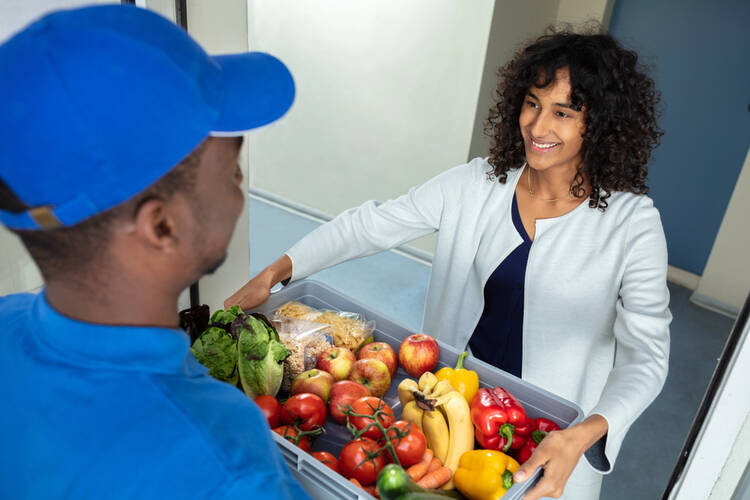
Consumers increasingly expect groceries to be delivered. Instead of competing as another huge ordering platform, you can partner with independent grocers that lack their own delivery fleet.
Route density is critical because grocery orders may be heavy while delivery fees remain relatively modest. You also need procedures for chilled and frozen foods.
12. Restaurant Delivery Service

Independent restaurants may want delivery without depending completely on large third-party platforms.
You can serve a defined neighborhood and charge restaurants, customers or both.
Your advantage may be lower fees, better local service or dedicated restaurant partnerships.
Food should be transported in suitable insulated equipment so it arrives in acceptable condition.
13. Office Lunch Delivery Business

Instead of delivering random restaurant orders, you can specialize in planned office lunches.
Customers can place orders before a cutoff time, allowing you to combine several lunches into one efficient route.
You can partner with restaurants or prepare food yourself if properly licensed. Recurring corporate accounts make this more predictable.
14. Meal Prep Delivery Business

Meal-prep companies need refrigerated meals delivered on specific days. You can create the meals yourself under appropriate food regulations or provide delivery for existing meal-prep businesses.
The route model works well because most customers receive orders on scheduled days. Cold-chain handling needs to be taken seriously.
15. Meal Kit Delivery Business
Meal kits contain measured ingredients customers cook at home. You can build your own local meal-kit service or handle delivery for local food businesses.
A weekly subscription allows you to predict volume. Packaging and refrigeration need to keep ingredients safe throughout the delivery route.
16. Farm-to-Door Produce Delivery

You can collect fruit, vegetables and other produce from local farmers and deliver boxes directly to households. Customers can subscribe to weekly or biweekly deliveries.
One family subscription may not generate much revenue, but dozens of customers on one route can create an efficient business. You can also supply restaurants and offices.
17. Bakery and Breakfast Delivery Business
You can deliver bread, pastries and breakfast packages to homes and offices.
Recurring subscriptions are particularly useful because you know in advance which customers require deliveries.
Partnering with existing bakeries avoids having to manufacture the food yourself.
18. Bottled Water Delivery Business
Homes and offices consuming large containers of drinking water may prefer scheduled replacement deliveries.
You can operate recurring routes rather than waiting for one-off orders. Water is heavy, so calculate vehicle capacity and labor carefully.
The business becomes much more efficient when customers are concentrated geographically.
19. Specialty Food Delivery Business
You can specialize in products that ordinary delivery businesses handle poorly.
For example, you might deliver cakes, catering trays or specialty foods requiring careful handling.
Customers are often willing to pay more when damage would ruin an important event.
The more fragile the product, the stronger your packaging and handling procedures need to be.
20. Cold-Chain Local Food Delivery
Local food producers sometimes need chilled products delivered to restaurants, stores and consumers.
You can operate refrigerated or temperature-controlled vehicles specifically for these businesses. This requires more capital than ordinary parcel delivery.
However, specialization can reduce direct competition and allow you to charge commercial rates.
Household and Recurring Delivery Businesses
21. Pet Food and Pet Supply Delivery
Pet owners buy food, litter and other heavy products repeatedly. You can partner with pet shops or build a subscription-based local service.
Automatic recurring orders make the business convenient for customers and predictable for you.
Heavy pet-food bags also give customers a practical reason to pay for delivery.
22. Laundry and Dry-Cleaning Pickup and Delivery
Customers do not necessarily need another laundry business. They may simply need somebody to make using the existing laundry more convenient.
You can pick up clothes, take them to a partner cleaner and return finished orders. Recurring weekly routes reduce the cost of each individual trip.
23. Prescription Pharmacy Delivery
Pharmacies may need deliveries for older adults, homebound patients and other customers.
You can contract with appropriately licensed pharmacies to perform permitted transportation.
Prescription deliveries can involve patient information, controlled substances, temperature requirements and proof of delivery.
Understand all applicable healthcare and pharmacy rules before entering this niche.
24. Senior Errand and Delivery Service
Older adults may need help collecting groceries, household items and other everyday purchases.
You can charge per trip or sell recurring service packages. This business depends heavily on trust.
Be clear about which errands you will perform and how customers’ money and purchases are handled.
25. Flower Delivery Business
Florists need reliable delivery, particularly around holidays and special occasions. Flowers require careful handling and may need temperature protection.
You can work with several independent florists instead of operating your own flower shop. Weddings and corporate events can produce larger orders.
26. Gift and Gift Basket Delivery
Birthdays, anniversaries and corporate occasions create demand for gift delivery.
You can deliver products created by local gift businesses or assemble packages yourself.
Same-day local gifting can be particularly attractive to people who have forgotten an occasion until the last minute.
27. Baby Essentials Subscription Delivery
Parents repeatedly need diapers, wipes and other basic products. You can create recurring monthly or biweekly deliveries.
The convenience proposition is stronger for bulky essentials than for products customers can easily carry home.
Avoid holding excessive varieties until you understand what customers actually order.
28. Home and Office Plant Delivery Business
Plant nurseries and garden centers may need help delivering large plants, pots and supplies. You can also specialize in scheduled corporate plant deliveries.
Plants require more careful handling than ordinary parcels. A van with appropriate securing systems can reduce damage.
29. Subscription Replenishment Delivery Service
You can build recurring local delivery around products customers consume repeatedly.
Possible categories include household cleaning products, office consumables or other essentials. The advantage is predictability.
Once a customer subscribes, you can group their delivery with other customers in the same area.
Furniture, Equipment and Bulky-Item Delivery Businesses
30. Furniture Delivery and Assembly Business
Furniture retailers and online sellers may need independent delivery partners.
You can transport beds, tables, cabinets and other large products, then assemble them where appropriate. This is much more valuable than simply leaving the item on the curb.
You need appropriate vehicles, tools and insurance for potential property damage.
31. Appliance Delivery Business
Appliances are difficult for ordinary consumers to transport. You can work with independent appliance stores to deliver refrigerators, washing machines and other equipment.
Installation of electrical, gas, plumbing or other connections should only be performed where you are qualified and legally permitted. Otherwise, offer placement and coordinate installation separately.
32. Small Moving and Single-Item Delivery Business
Not every customer needs a full moving company. Some simply need a sofa, bed or several boxes transported across town.
You can specialize in jobs too small for traditional movers but too large for ordinary couriers. Online marketplace purchases create another source of customers.
33. Marketplace Furniture Pickup and Delivery
People buying furniture through local online marketplaces frequently discover they have no way to transport it.
You can collect the item from the seller and deliver it to the buyer. Provide pricing before pickup based on dimensions, stairs and distance.
This is a particularly useful service in cities where many residents do not own trucks.
34. Event Rental Delivery Business
Event companies rent tables, chairs, backdrops and other equipment. You can provide delivery, collection and setup.
A partnership with several rental businesses can keep your vehicle busy throughout the week. Weekend demand can be particularly heavy, so schedule carefully.
35. Tool and Equipment Rental Delivery
Rental stores may need machinery and tools delivered to homes and construction sites.
You can specialize in compact rental equipment that fits within your truck or trailer capacity.
Customers often value delivery because they lack suitable vehicles themselves. Secure equipment properly during transportation.
36. Building Materials Delivery Business
Small contractors and homeowners may need lumber, tiles, plumbing materials and other construction products delivered from suppliers.
You can handle the smaller jobs that large commercial haulers do not want.
Know the weight capacity of your vehicle. Overloading creates serious safety and legal problems.
37. Heavy Equipment and Machinery Hauling
Machinery hauling is at the opposite end of the delivery industry from bicycle courier work.
You may transport construction equipment and other heavy machinery. The revenue per trip can be substantial, but so can the investment.
You need appropriate trucks, trailers, commercial insurance, permits and drivers qualified for the equipment involved.
38. White-Glove Delivery Service
Premium furniture, artwork and other high-value products may need more than ordinary doorstep delivery.
White-glove service can include careful handling, room placement, unpacking and removal of packaging.
Interior designers, galleries and luxury retailers can become customers. Training your team to work carefully inside expensive homes is critical.
Automotive and Business Supply Delivery
39. Auto Parts Delivery Business
Repair shops can lose money while a vehicle occupies a service bay waiting for one missing component. You can provide rapid delivery from parts suppliers to repair businesses.
Because speed directly affects the mechanic’s productivity, commercial customers may value a dependable service highly.
Regular routes can also be established between distributors and workshops.
40. Industrial Spare Parts Courier Business
Factories and commercial facilities may need emergency parts when machinery fails. You can specialize in time-critical industrial deliveries.
A replacement component worth only a few hundred dollars may be stopping equipment that costs thousands of dollars per hour to leave idle. That can justify premium courier fees.
41. Office Supply Delivery Business
Small companies continually use paper, cleaning products and other workplace supplies. You can partner with wholesalers and deliver recurring orders.
A subscription or scheduled replenishment model can be more efficient than waiting for emergency orders. Businesses concentrated in office districts are particularly attractive.
42. School and Daycare Supply Delivery
Schools need paper, classroom materials, cleaning supplies and other consumables.
You can work with suppliers to deliver recurring institutional orders. This is a B2B logistics service rather than transporting students.
Contract customers provide more predictable volume than ordinary household delivery.
43. Medical Supply Delivery Business
Clinics, care facilities and home-health providers consume supplies continually.
You can deliver approved medical products from suppliers to healthcare customers.
Certain medical products require special storage or handling, so define clearly what your company is equipped and authorized to transport.
Specialized Courier and Logistics Businesses
44. Medical Specimen Courier Service

Laboratories and healthcare facilities may need specimens transported between collection sites and testing locations.
This is a specialized courier niche requiring appropriate packaging, training, chain-of-custody procedures and compliance with applicable transportation rules.
Do not treat medical specimens like ordinary parcels. The value is in dependable handling and time-sensitive delivery.
45. Dental Laboratory Courier Business
Dental practices send impressions, models and other approved items to laboratories and receive finished dental products in return.
You can operate scheduled routes between dental offices and labs. The predictable pickup-and-return model can make this easier to route than general courier work.
Handle patient-related material according to applicable privacy and transport requirements.
46. Time-Critical Healthcare Courier Business
Healthcare organizations occasionally have items that require delivery much faster than an ordinary courier network can provide.
A specialist company can provide dedicated, direct transportation where properly qualified. This is an advanced niche.
Hospitals and healthcare companies will expect documented procedures, trained personnel and extremely dependable service.
47. Airport Lost-Luggage Delivery Business
Airlines and baggage-service companies sometimes need delayed luggage delivered to passengers after it arrives.
You can subcontract local luggage delivery from airports to hotels and homes.
Flights operate outside ordinary business hours, so flexibility can become an advantage.
Security, tracking and proof of delivery are essential.
48. E-Commerce Returns Pickup Business
Online shopping creates deliveries in both directions. Customers also need unwanted products returned.
You can collect approved returns from homes or businesses and consolidate them for delivery to carrier locations, warehouses or authorized return centers.
Consolidation is the key to profitability because collecting individual low-value returns across a large area can become expensive.
49. Reverse Logistics and Recommerce Pickup Business
Retailers need returned goods inspected, transported and routed toward resale, refurbishment or other appropriate destinations.
You can build a B2B business around collecting returns from stores or customers and moving them through the reverse-logistics network.
This is more sophisticated than ordinary parcel delivery and can eventually include sorting and consolidation.
50. Micro-Fulfillment and Local Delivery Business
You can combine storage with delivery for small e-commerce companies. Merchants send inventory to your small warehouse. When local orders arrive, your team picks, packs and delivers them.
This gives small sellers access to fast local fulfillment without building their own logistics operation.
Start with a small number of merchants whose products are easy to store and handle, then expand as your systems improve.