

The best catering menu ideas are not necessarily the most expensive or elaborate dishes.
They are meals that suit the occasion, appeal to guests, can be prepared consistently, and are practical to serve at the event venue.
Whether you operate a catering business or are planning food for a wedding, birthday party, corporate event, graduation, baby shower, or family celebration, your menu can influence both the guest experience and the overall event budget.
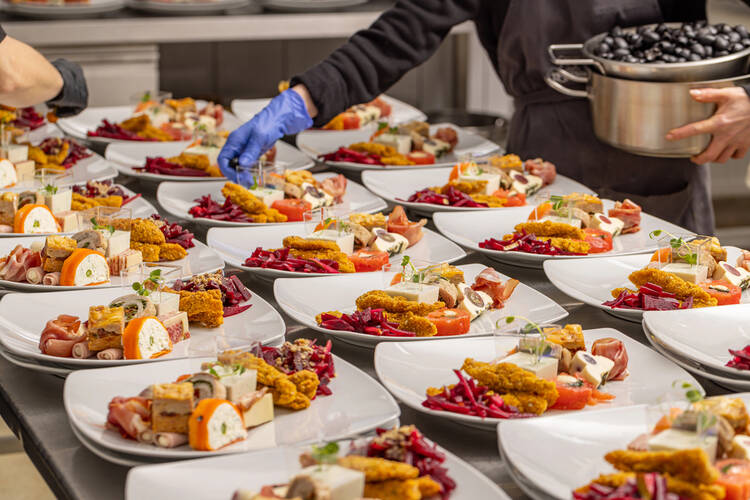
However, choosing a catering menu involves more than selecting attractive dishes.
You also need to consider the number of guests, dietary restrictions, serving style, kitchen facilities, transportation, employee requirements, and the time food will spend between preparation and service.
For example, a plated salmon dinner may be appropriate for an elegant wedding reception, while mini sliders, tacos, and passed appetizers might be better for a casual cocktail party.

Similarly, a self-service buffet can simplify certain aspects of guest service, but it still requires employees to replenish food, monitor temperatures, and maintain cleanliness.
Below are 40 catering menu ideas worth considering, along with practical advice on matching dishes to different events, controlling costs, and creating a menu your team can deliver successfully.
Appetizers and Finger Foods for Catering Events
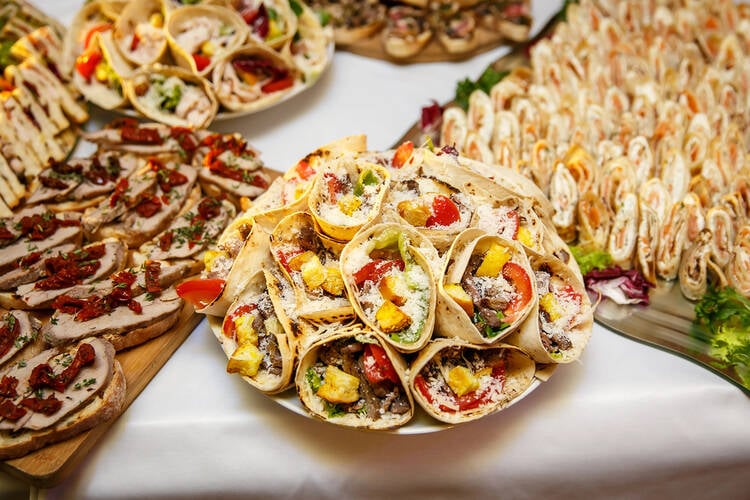
Finger foods are particularly useful for networking events, cocktail receptions, birthday parties, and gatherings where guests spend much of their time standing or socializing.
Choose items that can be served in manageable portions without requiring complicated utensils or excessive assembly.
1. Mini Sliders With Assorted Fillings

Mini sliders are a useful catering option because they are easy to portion and can be prepared with different fillings.
Consider cheeseburger sliders, BBQ pulled pork, grilled chicken, or suitable plant-based patties. Serve them with optional sauces and a small side such as fries or coleslaw.
For an event with several appetizer choices, one or two sliders per guest may be sufficient. If sliders are intended as a main meal, plan larger portions.
Best for: Corporate parties, graduations, casual weddings, and sports-themed celebrations.
Catering consideration: Assemble close to service to prevent buns from becoming soggy. Standardize the amount of filling to control food costs.
2. Passed Hors d’Oeuvres
Passed hors d’oeuvres are small appetizers served to guests by employees carrying trays.
Rather than being a single dish, this is a catering service format that can include mini quiches, bruschetta, chicken skewers, shrimp cocktail portions, and vegetable tartlets.
Choose bite-sized foods that can be eaten conveniently while standing.
Best for: Wedding cocktail hours, business receptions, charity events, and upscale gatherings.
Catering consideration: Tray service requires enough employees to circulate throughout the venue. Avoid dishes that drip, crumble excessively, or need cutting.
3. Mini Chicken, Beef, and Vegetable Pot Pies
Mini pot pies provide individual servings of a familiar comfort food.
You can offer chicken pot pie, beef pot pie, and a vegetable version with a savory filling.
Serve them in small oven-safe containers or another suitable presentation that makes them easy for guests to handle.
Best for: Fall and winter weddings, holiday parties, luncheon events, and comfort-food-themed receptions.
Catering consideration: Pastry can soften during prolonged holding. Test the quality after transportation and plan oven or warming equipment accordingly.
4. Crudité Platters With Hummus and Dips
A crudité platter includes an assortment of fresh vegetables served with suitable dips.
Carrots, cucumbers, celery, bell peppers, broccoli, and other seasonal vegetables can be arranged attractively around hummus, baba ghanoush, or selected dressings.
This provides a useful alternative to fried and meat-based appetizers.
Best for: Business meetings, daytime celebrations, health-focused events, and mixed-diet guest groups.
Catering consideration: Keep prepared vegetables properly refrigerated. Hummus commonly contains sesame, so confirm ingredients and communicate allergens accurately.
5. Cheese and Charcuterie Boards

Charcuterie boards are suitable for guests who want a selection of cured meats, cheeses, crackers, olives, fruit, and other complementary items.
You can prepare small boards for individual tables or a larger display for a reception.
The presentation can be tailored to a client’s budget by adjusting the types and quantities of meats and cheeses.
Best for: Cocktail receptions, bridal showers, wine-tasting events, and smaller corporate gatherings.
Catering consideration: Premium cheeses and cured meats can be expensive.
Account for trimming, display replenishment, refrigeration, and food discarded after service.
6. Spanish Tapas Platters
Spanish-style tapas provide a selection of small plates guests can sample. Options include patatas bravas, tortilla española, marinated olives, roasted peppers, and gambas al ajillo.
Rather than offering numerous dishes, select a few that complement one another and can be prepared efficiently.
Best for: Cocktail parties, milestone birthdays, small weddings, and social gatherings.
Catering consideration: Garlic shrimp requires appropriate seafood temperature control, while hot potato dishes should be served promptly to preserve their texture.
7. Middle Eastern Mezze Platters

A Middle Eastern mezze menu can include hummus, falafel, baba ghanoush, stuffed grape leaves, flatbread, olives, and vegetable salads.
These small plates allow guests to build their own selections and can provide several plant-based options.
You can combine cold dips with freshly prepared falafel or other suitable warm dishes.
Best for: Weddings, corporate lunches, family events, and vegetarian-friendly gatherings.
Catering consideration: Check ingredients carefully. Tahini contains sesame, and some sauces may contain dairy or other allergens.
8. Caprese Skewers and Bruschetta

Caprese skewers made with tomatoes, mozzarella, and basil can provide an attractive appetizer without requiring complicated cooking at the venue.
You can pair them with toasted bruschetta topped with tomatoes, herbs, and suitable seasonings.
Arrange the servings on small platters or serve them as part of a passed appetizer selection.
Best for: Summer weddings, garden parties, corporate receptions, and daytime celebrations.
Catering consideration: Maintain appropriate refrigeration for cheese and prepared toppings. Keep bruschetta toppings separate until shortly before service.
9. Chicken Satay and Vegetable Skewers
Small skewers are convenient appetizers that can be served with sauces or as part of a larger buffet.
Chicken satay, seasoned vegetable skewers, and grilled tofu are suitable variations to consider.
You can offer one meat option and one plant-based choice rather than preparing many separate proteins.
Best for: Corporate receptions, outdoor parties, weddings, and cocktail events.
Catering consideration: Traditional satay sauces often contain peanuts. Clearly identify the ingredients and avoid allergen cross-contact.
10. Three-Bean Chili Cups
Three-bean chili can be served in small cups as a warm appetizer or in larger portions as a main dish.
Prepare it with beans, tomatoes, peppers, and suitable seasonings. You can offer a vegetarian version alongside an optional meat-based chili.
Small individual cups are useful for guests who want to sample several dishes.
Best for: Outdoor fall events, sports-themed gatherings, casual corporate parties, and community celebrations.
Catering consideration: Keep the chili at the required safe holding temperature and serve accompaniments separately.
Buffet-Style Catering Menu Ideas
Buffets are suitable for events where guests want several food choices and the venue has enough space for food stations and guest circulation.
However, buffet service still requires food safety monitoring, portion planning, equipment, and employees to replenish food.
11. Italian Pasta Buffet
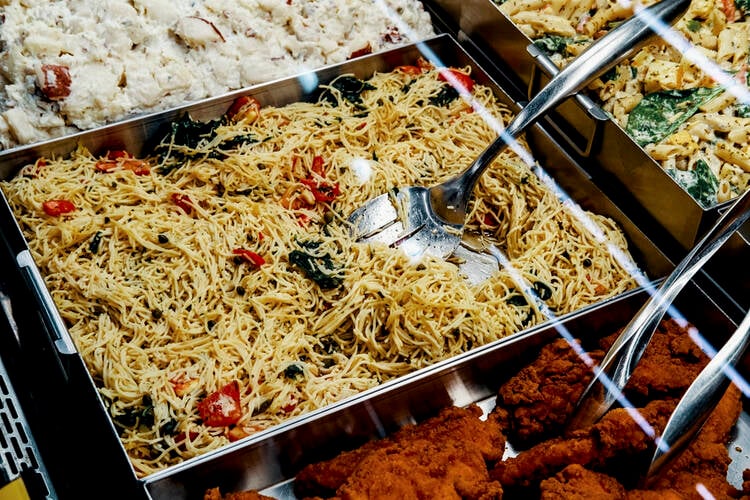
An Italian-inspired pasta buffet can include penne, fettuccine, or another suitable pasta served with a few sauces.
Offer marinara, Alfredo, and a vegetable-based sauce, along with selected toppings such as grilled chicken, mushrooms, and roasted vegetables.
Garlic bread and a simple salad can complete the menu.
Best for: Weddings, graduation parties, corporate dinners, and family reunions.
Catering consideration: Pasta can become soft or sticky during prolonged holding. Prepare suitable batch quantities and replenish the buffet rather than displaying everything at once.
12. BBQ Pulled Chicken and Pork Buffet
A barbecue buffet can include pulled chicken, pulled pork, coleslaw, baked beans, potato salad, and bread rolls.
Offer a selection of suitable sauces and let guests choose their preferred protein.
This menu can be adapted for both indoor and outdoor events.
Best for: Family reunions, company picnics, graduation parties, and outdoor celebrations.
Catering consideration: Include cooking yield and meat shrinkage when preparing your budget. Slow-cooked meat also needs appropriate cooling, reheating, and hot-holding procedures.
13. Texas-Style Smoked Brisket Buffet
A Texas-style barbecue menu can feature sliced smoked brisket with complementary sides such as beans, coleslaw, macaroni and cheese, and cornbread.
Brisket can be presented as a premium option for clients seeking a more substantial catered meal.
However, it requires a different cost calculation from lower-priced meats because cooking shrinkage can be significant.
Best for: Corporate celebrations, weddings with a barbecue theme, and outdoor receptions.
Catering consideration: Account for the difference between raw brisket weight and the amount of cooked meat available for serving.
14. Cajun and Creole-Inspired Buffet
A Louisiana-inspired menu can include jambalaya, gumbo, red beans and rice, and selected seafood or chicken dishes.
You can design a buffet around two main dishes, one rice option, and appropriate sides.
This provides a distinctive alternative to conventional pasta and barbecue menus.
Best for: Cultural celebrations, family events, corporate parties, and themed dinners.
Catering consideration: Rice and seafood dishes require careful temperature control. Offer a clearly labeled option for guests who prefer less spicy food.
15. Mediterranean Grain Bowl Buffet
A Mediterranean-inspired buffet allows guests to combine grains, vegetables, and selected proteins.
Offer rice, quinoa, roasted vegetables, chickpeas, grilled chicken, and suitable sauces.
Guests can choose smaller or larger servings depending on their appetites.
Best for: Corporate lunches, conferences, wellness-oriented events, and casual weddings.
Catering consideration: Keep hot and cold ingredients in appropriate separate service areas and provide accurate allergen information for dressings and sauces.
16. Roasted Chicken and Seasonal Vegetables
Roasted chicken with potatoes, rice, and seasonal vegetables can provide a dependable main-course catering option.
Consider lemon-herb chicken, citrus barbecue chicken, or another flavor that complements the selected sides. This menu can be served buffet-style or plated.
Best for: Weddings, conferences, church events, and family celebrations.
Catering consideration: Standardize chicken portions and use appropriate cooking and holding procedures to prevent food safety problems and inconsistent servings.
17. Indian-Inspired Curry and Rice Buffet
An Indian-inspired buffet can include a chicken curry, chickpea curry, basmati rice, naan, and selected vegetable sides.
Offer dishes with different spice levels and provide clear descriptions so guests can choose what suits them.
A well-designed menu can use overlapping spices and vegetables without requiring an excessive number of dishes.
Best for: Multicultural celebrations, corporate lunches, weddings, and large family gatherings.
Catering consideration: Avoid making assumptions about dietary requirements based on cuisine. Verify ingredients, especially dairy, nuts, and other potential allergens.
18. Rice and Noodle Buffet
A rice and noodle buffet can include stir-fried noodles, seasoned rice, vegetables, and selected meat or tofu options.
Rather than combining unrelated cuisines without planning, choose a coherent menu with complementary sauces and sides.
For example, a Southeast Asian-inspired buffet may feature vegetable noodles, jasmine rice, grilled chicken, and suitable salads.
Best for: Corporate lunches, casual wedding receptions, graduation parties, and community celebrations.
Catering consideration: Cooked rice and noodles must be handled carefully during cooling, transportation, and holding. Do not leave them at unsafe temperatures for prolonged periods.
Interactive Catering Stations
Live and build-your-own stations can create a memorable experience, but they generally require more space, equipment, employees, and coordination than pre-plated meals.
19. Build-Your-Own Taco Bar
A taco bar allows guests to assemble tacos from a selection of tortillas, fillings, and toppings.
Offer seasoned beef, chicken, and a suitable plant-based filling, along with salsa, shredded lettuce, cheese, and other accompaniments.
Limit the number of fillings to keep the station efficient.
Best for: Weddings, birthday parties, corporate gatherings, and casual outdoor celebrations.
Catering consideration: Keep proteins and cold toppings at appropriate temperatures, and design the line to prevent congestion.
20. Build-Your-Own Burger Bar
A burger bar lets guests customize burgers with different buns, patties, cheeses, vegetables, and sauces.
Consider a beef patty, a chicken option, and a plant-based alternative where demand supports it. You can serve burgers with fries, salad, or another suitable side.
Best for: Graduation parties, company picnics, family reunions, and informal weddings.
Catering consideration: Use properly cooked patties and avoid leaving assembled burgers on display for too long. A staffed assembly line may work better than unrestricted self-service.
21. Mac and Cheese Topping Station
A macaroni and cheese station provides guests with a familiar base and a selection of toppings.
Potential toppings include BBQ pulled chicken, bacon, mushrooms, roasted vegetables, and selected cheeses.
Offer a limited menu of combinations to reduce waiting times and ingredient waste.
Best for: Weddings, graduation parties, casual dinners, and comfort-food-themed events.
Catering consideration: Cheese sauces and prepared proteins require safe hot holding. Include the cost of toppings when pricing the station.
22. Nacho and Queso Bar
A nacho bar can feature tortilla chips, queso, beans, salsa, guacamole, jalapeños, and selected protein toppings. Guests can assemble their own plates or order from an attendant.
This is a practical option for casual celebrations where guests may eat at different times.
Best for: Sports parties, birthday celebrations, informal receptions, and corporate social events.
Catering consideration: Keep chips separate from wet toppings until serving, and replenish sauces in manageable quantities.
23. Live Stir-Fry Station
A live stir-fry station allows guests to select vegetables, proteins, noodles or rice, and sauces for preparation by a cook.
Possible choices include chicken, shrimp, tofu, broccoli, carrots, and mushrooms.
The live cooking format can attract attention and provide an interactive experience.
Best for: Corporate celebrations, upscale casual receptions, and events with sufficient kitchen facilities.
Catering consideration: Confirm whether the venue permits live cooking, how cooking odors and ventilation will be managed, and whether electrical or fuel equipment can be operated safely.
24. Chopped Salad Station

A chopped salad station lets guests select from fresh vegetables, greens, toppings, and dressings.
You can also provide grilled chicken, chickpeas, eggs, or another appropriate protein.
This station works well as a complete lunch option when the portions are substantial enough.
Best for: Business meetings, conferences, daytime weddings, and workplace events.
Catering consideration: Keep prepared ingredients refrigerated and use separate utensils where necessary to reduce allergen cross-contact.
25. Grilled Cheese and Panini Station
A grilled cheese and panini station can feature selected bread, cheeses, vegetables, and approved meat fillings.
Offer combinations such as mozzarella with tomato and basil, cheddar with caramelized onions, and grilled chicken with roasted peppers.
Serve sandwiches in halves or quarters for guests who want to sample different options.
Best for: Corporate lunches, smaller weddings, brunch events, and cooler-weather celebrations.
Catering consideration: Cooking sandwiches individually can be labor-intensive. Limit menu choices and ensure enough equipment is available to prevent long lines.
26. Food Truck Catering Station

Food trucks can provide a different catering experience at venues with suitable vehicle access.
Depending on the event, a truck might serve tacos, grilled sandwiches, rice bowls, burgers, or another focused menu.
One or more food trucks can also complement an existing catered event by handling a particular meal or late-night snack service.
Best for: Outdoor weddings, festivals, corporate gatherings, and large family celebrations.
Catering consideration: Confirm vendor permits, vehicle access, parking, power, waste arrangements, and the number of guests each truck can serve within the scheduled period.
Breakfast, Brunch, and Afternoon Catering
27. Pancake and Waffle Bar
A pancake and waffle bar offers guests a selection of breakfast favorites with fruit, syrups, whipped toppings, and other accompaniments.
You can prepare the main items in batches or use an attended station where practical.
For larger groups, limit toppings and provide clear traffic flow around the station.
Best for: Baby showers, bridal showers, morning corporate meetings, and birthday brunches.
Catering consideration: Pancakes and waffles can lose texture during extended holding. Test the service method before offering it at a large event.
28. Southern-Style Brunch Buffet

A Southern-inspired brunch can include scrambled eggs, biscuits, breakfast potatoes, chicken and waffles, fresh fruit, and selected breakfast proteins.
This provides guests with a substantial meal rather than relying entirely on pastries.
Choose dishes appropriate for the venue and the expected age groups of guests.
Best for: Wedding brunches, family celebrations, retirement events, and weekend gatherings.
Catering consideration: Eggs, poultry, and dairy products require appropriate cooking and temperature control.
29. Breakfast Sandwich and Pastry Buffet
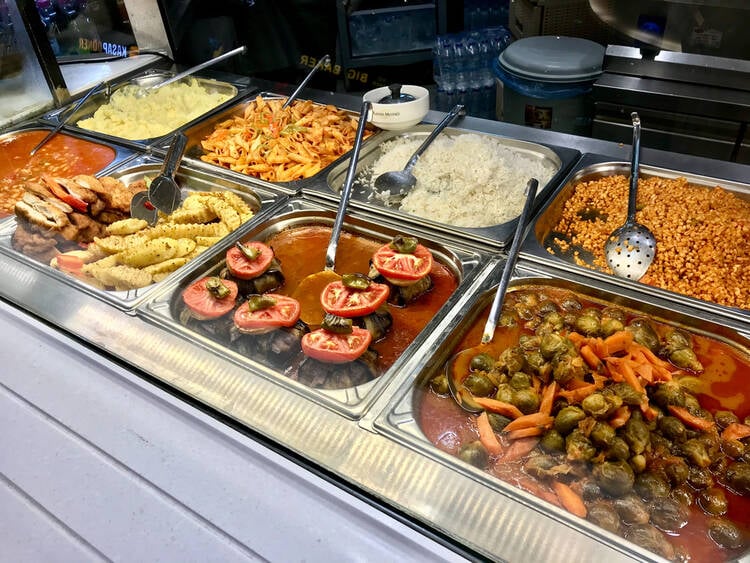
For workplace catering, a practical breakfast menu might include breakfast sandwiches, croissants, muffins, fruit cups, coffee, and tea.
You can offer egg-and-cheese sandwiches, a meat-based variation, and an appropriate plant-based option.
Package individual servings if the event requires quick pickup or staggered meal breaks.
Best for: Corporate meetings, training sessions, conferences, and early-morning events.
Catering consideration: Focus on easy distribution and dependable delivery times. Avoid items that require extensive last-minute assembly.
30. English Afternoon Tea

An afternoon tea menu can include finger sandwiches, scones, jam, clotted cream, tea, and small desserts.
For variety, consider cucumber sandwiches, egg sandwiches, and other suitable fillings.
Present the food in small portions that guests can enjoy while socializing.
Best for: Bridal showers, baby showers, birthdays, and intimate social celebrations.
Catering consideration: Sandwiches should be prepared and stored carefully to prevent drying out or becoming soggy.
Elegant Plated Meals and Themed Catering Menus
31. Grilled Salmon With Quinoa and Roasted Vegetables
Grilled or baked salmon served with quinoa and roasted vegetables can provide an appealing plated meal for clients seeking a seafood option.
Use suitable seasonal vegetables such as carrots, broccoli, or asparagus. You can offer a complementary sauce separately so guests have more control over the final flavor.
Best for: Formal dinners, corporate banquets, weddings, and upscale private celebrations.
Catering consideration: Seafood costs and portion sizes need careful management. Plan the preparation and service schedule so the fish does not become dry during holding.
32. Tuscan-Inspired Italian Dinner
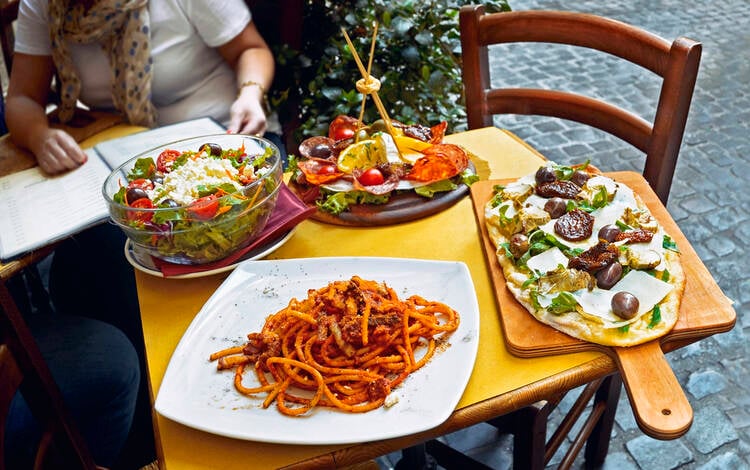
A Tuscan-inspired dinner can include antipasti, rosemary chicken, pasta with seasonal vegetables, and a simple dessert. You can serve it as a plated meal or a coordinated buffet.
For a smaller event, consider one pasta dish, one main protein, and two side options rather than an elaborate multi-course selection.
Best for: Weddings, anniversary dinners, corporate receptions, and private celebrations.
Catering consideration: Coordinate preparation times so pasta, meat, and vegetables are served at appropriate temperatures without overcooking.
33. International Street Food Menu
An international street food menu can provide small portions of dishes from several food traditions.
For example, you might offer Mexican-inspired tacos, Vietnamese-style spring rolls, Indian samosas, and American sliders.
This approach works best when each dish is prepared with attention to its ingredients and serving traditions rather than combining unrelated flavors without planning.
Best for: Multicultural corporate events, festivals, birthday parties, and informal weddings.
Catering consideration: Too many separate cuisines can increase ingredient costs and equipment requirements. Select a manageable range your kitchen can execute confidently.
34. Vegetarian and Plant-Based Dinner Menu
A vegetarian or plant-based menu can feature dishes that are substantial enough to serve as complete meals rather than small side portions.
Consider roasted vegetable lasagna, chickpea curry, lentil stew, stuffed peppers, or a quinoa and vegetable bowl.
For a fully vegan menu, verify every ingredient, including sauces, pastry, cheese substitutes, and cooking fats.
Best for: Weddings, corporate banquets, wellness events, and gatherings with plant-based guests.
Catering consideration: Do not describe a dish as vegan or dairy-free without confirming the recipe and preparation process.
35. Dietary-Inclusive Customized Menu
Some clients need catering arrangements that accommodate guests with allergies, intolerances, religious dietary requirements, or other food preferences.
Instead of offering a generic menu labeled suitable for everyone, identify the actual requirements before preparing the dishes.
You may offer selected gluten-free, dairy-free, vegetarian, or other appropriately prepared meals.
However, the absence of a particular ingredient from a recipe does not automatically guarantee that the finished food is free from that allergen.
Best for: Conferences, weddings, school-related events, and gatherings with confirmed dietary requirements.
Catering consideration: Review ingredients, suppliers, equipment, preparation procedures, and cross-contact risks. When safe accommodation cannot be assured, communicate this honestly and coordinate a suitable alternative.
Dessert and Beverage Catering Ideas
36. Mini Dessert Bar

A mini dessert bar allows guests to sample several sweet items without committing to large portions.
Consider brownies, cupcakes, cookies, miniature cheesecakes, and suitable fruit-based desserts.
You can adjust the selection according to the client’s budget and the number of guests.
Best for: Weddings, corporate celebrations, birthdays, and graduation parties.
Catering consideration: Plan portions based on whether dessert is the only sweet course or one of several options. Keep dairy-based desserts under appropriate refrigeration.
37. Donut Tower and Pastry Display
A donut tower can provide a visually appealing alternative or addition to a traditional dessert table.
Use a selection of compatible flavors and attractive display stands, while keeping the serving arrangement stable and practical.
You can also add croissants, pastries, or other baked goods if they fit the event concept.
Best for: Brunch weddings, birthday parties, graduations, and casual receptions.
Catering consideration: Consider glazing, filling stability, temperature, and exposure time when arranging pastries for display.
38. Staffed Chocolate Dipping Station
A chocolate dipping station can feature strawberries, bananas, marshmallows, pretzels, and other suitable items served with melted chocolate.
Instead of allowing unrestricted access to a large shared chocolate fountain, consider an attended station using portioned dipping containers or a properly maintained fountain.
This can improve portion control and reduce some handling concerns.
Best for: Weddings, formal receptions, birthday parties, and dessert-focused events.
Catering consideration: Manage food handling, temperature, equipment sanitation, and allergens. Do not allow guests to return partially eaten food to a shared chocolate source.
39. Ice Cream Sundae and Gelato Bar

An ice cream or gelato bar can provide an interactive dessert without relying on complicated theatrical preparation techniques.
Offer several flavors with optional toppings such as fruit, chocolate sauce, cookie pieces, and sprinkles.
For smaller events, you can prepare sundae cups in advance or use an attendant to portion desserts.
Best for: Summer weddings, family celebrations, birthdays, and corporate appreciation events.
Catering consideration: Confirm freezer availability and suitable serving equipment.
Avoid liquid-nitrogen demonstrations unless they are handled by appropriately qualified professionals using compliant procedures; liquid nitrogen must never be present in food served for immediate consumption.
40. Lemonade, Iced Tea, and Zero-Proof Beverage Bar

A beverage station can complement a catering menu by giving guests alternatives to plain water or alcoholic drinks.
Consider fresh lemonade, iced tea, flavored sparkling water, and selected zero-proof beverages.
You can use suitable fruits and herbs such as lemon, berries, and mint to create variety.
For a brunch event where alcohol service is authorized, a separate mimosa station may be an option.
Best for: Weddings, brunches, baby showers, corporate gatherings, and outdoor events.
Catering consideration: Budget for beverage quantities, ice, cups, service equipment, and replenishment. Alcoholic beverage service may require additional permits, insurance, and appropriately trained employees.
Sample Catering Menu for a 100-Guest Event
Consider a casual wedding reception with 100 guests and buffet service. A manageable menu might include the following:
| Menu Category | Suggested Dish | Purpose |
|---|---|---|
| Appetizers | Mini chicken skewers and vegetable crudités | Light food during guest arrival |
| Main Dish 1 | Herb-roasted chicken | Main meat option |
| Main Dish 2 | Chickpea and vegetable curry | Plant-based option |
| Starch | Rice pilaf and roasted potatoes | Completes both main meals |
| Vegetables | Seasonal roasted vegetables | Shared side dish |
| Salad | Garden salad with separate dressings | Fresh accompaniment |
| Dessert | Mini brownies and fruit cups | Two dessert choices |
| Beverages | Water, lemonade, and iced tea | Nonalcoholic beverage service |
The exact quantities should be calculated based on guest preferences, service duration, dietary requests, and expected consumption.
For example, 100 guests do not necessarily require 100 full servings of chicken and another 100 full servings of curry if each person is expected to choose one main dish.
However, some guests may select both. The catering team should use a reasonable production allowance and monitor the buffet to avoid shortages or unnecessary waste.
Best Catering Menus for Different Types of Events
Not every catering concept is suitable for every occasion. The table below provides a starting point for matching menu styles with event requirements.
| Event Type | Recommended Menu Ideas | Suitable Service Style | Main Planning Priority |
|---|---|---|---|
| Wedding Reception | Salmon, roasted chicken, Italian dinner, passed appetizers | Plated, buffet, or attended stations | Service timing and dietary requirements |
| Corporate Conference | Breakfast sandwiches, grain bowls, salads, wraps | Buffet or individually packaged | Fast service during scheduled breaks |
| Birthday Party | Sliders, tacos, pasta, mini desserts | Buffet or food stations | Age groups, portion sizes, and budget |
| Baby or Bridal Shower | Afternoon tea, pastries, fruit, salads | Displayed platters or light buffet | Presentation and easy guest access |
| Outdoor Celebration | BBQ buffet, grilled chicken, burgers, food truck meals | Attended buffet or mobile service | Weather, sanitation, power, and temperature control |
| Networking Reception | Hors d’oeuvres, tapas, mezze, charcuterie | Passed trays and small-plate stations | Foods that are easy to eat while standing |
| Graduation Party | Taco bar, sliders, BBQ, donut tower | Casual buffet | Flexible arrival times and replenishment |
These are examples, not fixed rules. The client’s budget, venue conditions, guest preferences, and available service time should guide the final selection.
How to Create a Balanced Catering Menu
A menu with too many dishes can increase ingredient waste and complicate food preparation.
Instead of offering every possible dish, focus on a balanced selection that fits the event.
Choose a Suitable Number of Main Dishes
For many catered events, two or three well-chosen main dishes may be easier to manage than six or seven separate entrees.
For example, a wedding buffet might include roasted chicken, a plant-based main dish, and selected sides.
However, the appropriate number depends on the guest count, service style, and dietary requirements.
Use Ingredients Across Multiple Dishes
Consider ingredients that can support more than one menu item.
For example, roasted vegetables can appear in a pasta dish, grain bowl, and salad, while properly prepared chicken can support selected wraps, sliders, and buffet meals.
This may simplify purchasing and reduce waste. However, ingredient reuse must still follow appropriate storage and handling procedures.
Include Substantial Dietary Alternatives
Guests who cannot eat the main protein should not be left with only bread and a side salad. Where needed, provide a suitable complete meal with adequate portions.
For example, a chickpea curry with rice or stuffed peppers with grains can be more practical than an improvised plate of side dishes.
Plan Service Around the Venue
A menu that works in a commercial kitchen may be impractical at a venue without ovens, refrigeration, electrical capacity, or suitable water access.
Before accepting the job, establish which facilities are available and whether mobile equipment is permitted.
Check delivery access, preparation areas, guest circulation, waste disposal, and setup and breakdown times.
How Much Should You Charge for Catering Per Person?
Catering prices should reflect the ingredients, labor, transportation, equipment, service style, and operating expenses required for the event.
Do not set a selling price solely because another caterer charges a similar amount.
For illustration, suppose you provide a buffet meal for 100 guests at $45 per person.
The following example shows how the event’s costs might affect profitability.
| Revenue or Expense | Amount |
|---|---|
| 100 Guests × $45 Per Person | $4,500 |
| Ingredients and Food Consumables | $1,350 |
| Event Preparation and Service Labor | $950 |
| Transport and Delivery | $250 |
| Equipment Rental and Service Supplies | $350 |
| Setup, Cleanup, and Waste Disposal | $200 |
| Payment Processing and Other Event Charges | $150 |
| Contribution After Listed Event Costs | $1,250 |
Under these hypothetical assumptions, the event generates $1,250 after the listed event-specific expenses, equivalent to approximately 27.8 percent of event revenue.
However, this is not necessarily the catering company’s net profit.
The business still needs to cover fixed kitchen expenses, insurance, licensing, administration, marketing, depreciation, taxes, and other overhead not included in the example.
The amounts are illustrative and should not be interpreted as typical catering industry prices or guaranteed margins.
Your actual costs may be higher or lower depending on the location, menu, equipment, labor, and service requirements.