
If you are planning to open a physiotherapy clinic, certain pieces of equipment are essential for providing quality patient care and ensuring the smooth operation of your practice.
From assessment tools to rehabilitation and exercise equipment, every item plays a vital role in helping patients recover from injuries, manage pain, and regain mobility.
List of Equipment You Need to Start a Physiotherapy Clinic

-
Treatment Tables
Treatment tables provide a comfortable and stable surface for patient assessments, manual therapy, stretching, and rehabilitation exercises.
Adjustable treatment tables allow physiotherapists to position patients correctly while maintaining proper posture during treatment sessions.
Modern tables often come with height-adjustment features, headrests, and cushioning to improve patient comfort and therapist efficiency.
Investing in high-quality treatment tables enhances the overall treatment experience, promotes safety, and supports a wide range of physiotherapy techniques used in daily clinical practice.
-
Exercise Mats
Exercise mats are essential because many rehabilitation exercises are performed on the floor.
They provide a soft, comfortable, and non-slip surface that helps patients perform stretching, strengthening, balance, and mobility exercises safely.
Mats are particularly useful for patients recovering from orthopedic injuries, neurological conditions, or post-surgical procedures.
Available in various sizes and thicknesses, exercise mats help reduce discomfort and minimize the risk of injury during therapy sessions.
Durable, easy-to-clean mats also help maintain a hygienic environment, which is important for both patient safety and professional clinic standards.
-
Resistance Bands
Resistance bands are versatile and affordable tools commonly used in physiotherapy rehabilitation programs.
They help patients improve muscle strength, flexibility, coordination, and joint stability without placing excessive stress on the body.
Available in different resistance levels, these bands allow therapists to gradually increase exercise intensity as patients progress through recovery.
Resistance bands are useful for treating sports injuries, post-surgical rehabilitation, and general strengthening programs.
Their portability makes them suitable for both in-clinic treatment and home exercise programs, helping patients continue their rehabilitation outside the clinic under professional guidance.
-
Ultrasound Therapy Machine
An ultrasound therapy machine is frequently used in physiotherapy clinics to support pain management and tissue healing.
The device uses sound waves to penetrate deep into muscles, tendons, and soft tissues, promoting blood circulation and reducing inflammation.
Physiotherapists often incorporate ultrasound therapy into treatment plans for conditions such as tendon injuries, muscle strains, joint pain, and chronic soft tissue disorders.
While it is typically used alongside exercise and manual therapy, ultrasound treatment can help accelerate recovery and improve patient comfort.
-
TENS Unit (Electrical Stimulation Machine)
A TENS unit, or Transcutaneous Electrical Nerve Stimulation device, is commonly used to relieve pain and support rehabilitation.
The machine delivers low-voltage electrical impulses through electrodes placed on the skin, helping to reduce pain signals and stimulate the body’s natural pain-relieving mechanisms.
TENS therapy is often used for chronic pain, sports injuries, back pain, arthritis, and post-operative recovery.
Many physiotherapists combine electrical stimulation with exercise and manual therapy to maximize treatment effectiveness.
Having a quality TENS unit in your clinic expands your treatment options and allows you to address various patient needs.
-
Exercise Bikes and Treadmills
Exercise bikes and treadmills are valuable cardiovascular rehabilitation tools in physiotherapy clinics.
They help patients improve endurance, mobility, cardiovascular fitness, and lower-body strength during recovery.
These machines are commonly used for patients recovering from surgery, neurological conditions, sports injuries, and general deconditioning.
Physiotherapists can monitor patient progress and gradually increase exercise intensity according to individual rehabilitation goals.
Modern equipment often includes digital monitoring systems that track heart rate, speed, distance, and calories burned.
-
Balance and Stability Equipment
Balance and stability equipment, such as balance boards, wobble cushions, and stability trainers, plays a vital role in physiotherapy rehabilitation.
These tools help patients improve coordination, proprioception, posture, and muscle control.
They are particularly beneficial for individuals recovering from ankle injuries, neurological disorders, falls, and balance-related conditions.
By challenging the body’s stability systems, therapists can design targeted exercises that improve functional movement and reduce the risk of future injuries.
Including balance training equipment in your clinic enhances rehabilitation capabilities and supports patients in regaining confidence and independence in their daily activities.
-
Dumbbells and Free Weights
Dumbbells and free weights are essential tools for strength training and rehabilitation in a physiotherapy clinic.
They help patients rebuild muscle strength, improve endurance, and restore functional movement following injury, surgery, or prolonged inactivity.
Available in different weight ranges, dumbbells allow therapists to customize exercise programs according to each patient’s abilities and recovery stage.
They can be used for upper-body, lower-body, and core-strengthening exercises.
Incorporating free weights into rehabilitation programs enables progressive resistance training, which is important for achieving long-term recovery goals and helping patients return to their normal daily activities.
-
Therapy Balls (Swiss Balls)
Therapy balls, also known as Swiss balls or exercise balls, are widely used in physiotherapy for balance, flexibility, strength, and core stabilization exercises.
These versatile tools help improve posture, coordination, and muscle control while engaging multiple muscle groups simultaneously.
Physiotherapists often use therapy balls during rehabilitation programs for patients recovering from back pain, orthopedic injuries, neurological conditions, and postural disorders.
Available in various sizes, they can accommodate different patient needs and exercise levels.
-
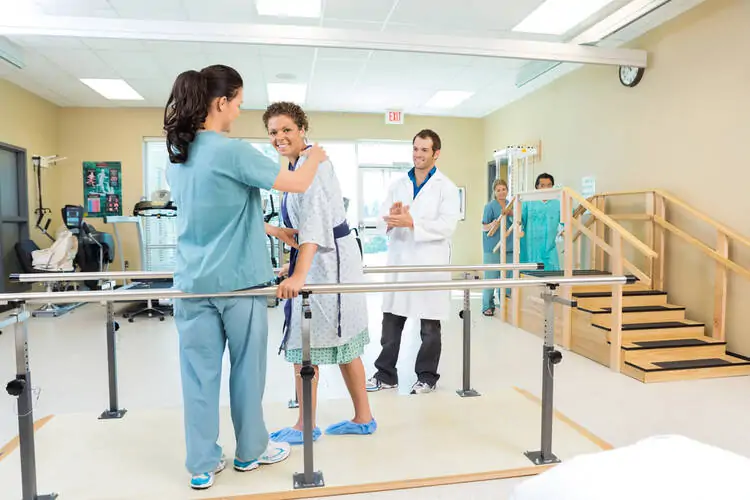
Parallel Bars
Parallel bars are important rehabilitation equipment for patients who need assistance with standing, walking, and balance training.
They provide support and stability while patients practice gait exercises and regain confidence in their mobility.
Parallel bars are especially beneficial for individuals recovering from stroke, neurological disorders, lower-limb injuries, joint replacements, and other conditions that affect movement.
Physiotherapists can safely monitor and guide patients during rehabilitation sessions while gradually reducing support as strength and balance improve.
Having parallel bars in a clinic allows for effective mobility training and enhances overall rehabilitation services.
-
Hot and Cold Therapy Equipment
Hot and cold therapy equipment is commonly used to manage pain, inflammation, muscle tension, and swelling.
Heat therapy helps increase blood circulation, relax muscles, and improve tissue flexibility, making it useful before stretching or exercise sessions.
Cold therapy, on the other hand, helps reduce inflammation and numb pain in acute injuries.
Physiotherapy clinics often use hot packs, cold packs, hydrocollator units, and cryotherapy devices as part of treatment plans.
These simple yet effective therapeutic tools can significantly improve patient comfort and support faster recovery when combined with other physiotherapy interventions.
-
Hand Dynamometer
A hand dynamometer is a valuable assessment tool used to measure grip strength and overall hand function.
Physiotherapists use this device to evaluate patients recovering from hand injuries, neurological conditions, arthritis, and upper-limb surgeries.
Accurate strength measurements help establish baseline data, monitor progress, and adjust treatment plans accordingly.
Hand dynamometers are easy to use, portable, and provide objective information that supports clinical decision-making.
Including assessment tools like a dynamometer in your clinic demonstrates professionalism and enables therapists to track rehabilitation outcomes more effectively throughout the patient’s recovery journey.
-
Traction Equipment
Traction equipment is used in physiotherapy to help relieve pressure on the spine and surrounding structures.
It is commonly used for patients experiencing neck pain, lower back pain, herniated discs, nerve compression, and certain spinal conditions.
Mechanical traction gently stretches the spine, creating space between vertebrae and reducing pressure on nerves and soft tissues.
While traction is not appropriate for every patient, it can be an effective component of a comprehensive rehabilitation plan when used correctly.
Investing in quality traction equipment expands the treatment options available within your clinic.
-
Goniometer
A goniometer is a simple but essential assessment tool used to measure joint range of motion.
Physiotherapists rely on this instrument to evaluate movement limitations caused by injuries, surgeries, arthritis, or musculoskeletal conditions.
Accurate measurements help therapists establish treatment goals, document progress, and determine the effectiveness of rehabilitation interventions.
Goniometers are affordable, portable, and easy to use, making them a standard piece of equipment in virtually every physiotherapy clinic.
By providing objective data, they support evidence-based practice and contribute to more effective patient assessment and treatment planning.
-
Computer System and Electronic Medical Records Software
A reliable computer system and electronic medical records (EMR) software are essential for the efficient management of a modern physiotherapy clinic.
These tools help therapists maintain patient records, schedule appointments, document treatment sessions, manage billing, and communicate with patients.
Digital record-keeping improves accuracy, reduces paperwork, and enhances data security while ensuring compliance with healthcare regulations.
Many EMR systems also provide reporting and analytics features that help clinic owners monitor performance and streamline operations.
Investing in the right technology improves productivity, enhances patient care, and supports the long-term growth of the practice.