
According to industry reports, food truck parks make money in a few ways.
Almost every food truck park charges vendors rent to set up and sell at the park.
Besides collecting rent, some food truck parks charge customers an admission charge and require a payment for parking on the site.

Another great aspect of the food truck park business is operators who do not have long-term leases can change locations if the first one doesn’t work out.
However, note that the exact amount any food truck park can generate will depend on the number of vendors you can recruit and the foot traffic you can generate.
If your vendors see continued value in selling in your spaces, they will come back.

Parks are managed by a small group of leaders who form that park’s association and outline the park’s rules and regulations.
These leaders may be the vendors themselves or a combination of vendors and community members.
One of the first decisions the leadership will make is who can and cannot sell at the park.

This decision is more or less based on what types of foods will be sold and what the criteria for “local” is. Ninety-four percent of all food trucks are considered small businesses.
Vendors who manage their own operations and make less than $250,000 annually are considered small food truck operators.
Have it in mind that small food trucks are the center of vendor membership at food truck parks, but many parks also allow local brick and mortar restaurants to set up shop too.
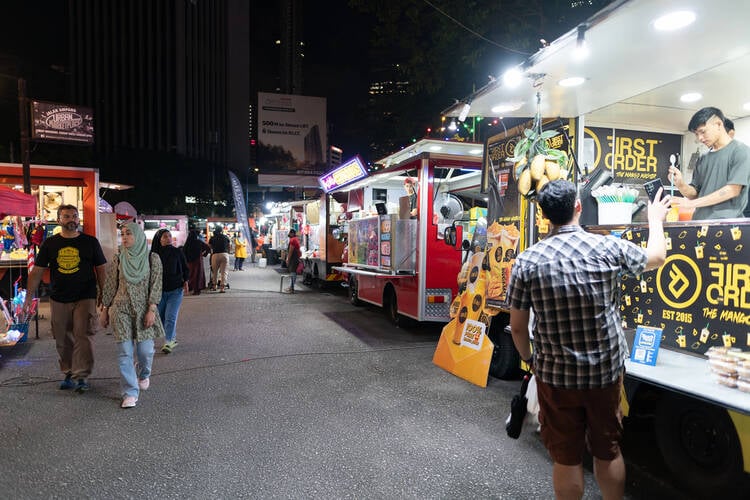
Potential vendors typically apply for space at the food truck park. They let the leadership know about their products and their products’ quality as well as any other detail the park requests.
Vendors pay fees for membership and space and acquire any permits or licenses that may be required by local laws.
Physical liability insurance in case of accident or injury is either provided by the park or purchased by each vendor, depending on that park’s established rules.
Food truck parks are not only spring to fall operations – you can enjoy the foods and festivities year-round in some communities. Food parks in winter are similar to parks in summer but are held indoors.
Food trucks are also available online and they offer the same types of goods as traditional open-air parks.
How Food Truck Parks Make Money
-
Rent from Food Truck Owners
The major source of income for a food truck park is the rent they get from food truck owners.
Basically, food truck parks make available parking spaces for food truck operators to park their food trucks overnight or position their food trucks with the purpose of vending food and drinks to customers.
A food truck park places a fee which is known as rent (short-term rent) on their parking lots. This fee can be paid daily, weekly, or monthly.
-
Percentage of Sales
Apart from the rental fee that a food truck park charges food truck operators, some food truck parks also take a percentage of the sales generated by each food truck in addition to the rent.
In this type of arrangement, the operator of the food truck park may also drive traffic to the food truck park.
This is indeed a cool means of generating income for a food truck park especially if the food truck park operator knows how to pull traffic.
-
Event Hosting
Generally, food truck parks host special events, such as food festivals, community events, live music performances, or themed nights.
Usually, these events attract visitors and tourists, and of course, when food truck parks host events, they usually sell tickets to attendees of the events, and they will also generate revenue through food and beverage sales.
-
Vendor Fees
The fact that the facility is primarily meant for food trucks, does not mean you cannot engage other related businesses.
For that reason, it is common to find food truck parks lease space to other vendors, such as beverage stands, dessert vendors, flea market organizers, or craft vendors.
As expected, these vendors pay rent or a percentage of their sales to the park.
-
Advertising and Sponsorships
If a food truck park is strategically located, it is easier for other corporate organizations, and businesses to partner with the food truck park for advertising and sponsorship deals.
For example, these organizations and businesses may pay to have their banners or signage displayed in strategic positions in the park or even sponsor specific events that will be taking place in the food truck park.
-
Hosting Private Events
Of course, it is common to find quite a number of food truck parks offering their space for private events like weddings, corporate parties, or family gatherings.
Anyone who wants to host their private event in a food truck park will be ready to pay some money.
Apart from the rental fees, a food truck park pay also offers additional services such as the rental of party supplies, catering charges et al. It is a cool way a food truck can make additional income.
-
Membership Programs
Some food truck parks offer membership programs where food truck operators or even vendors pay a monthly or annual subscription fee in exchange for incentives such as discounts, early access, strategic positions, or exclusive events.
Please note that if your membership program is well organized and comes with attractive packages, you will generate a significant amount from it.
-
Food Truck Commissary Services
The average food truck park usually offers food truck commissary services.
A food truck commissary service is a shared commercial kitchen and operational facility where food truck operators can perform various tasks necessary for running their mobile food businesses.
Commissary services are essential for food truck owners because they provide a central location for all food trucks within the parking facility to handle several important aspects of their operations.
Interestingly, the fees generated from food truck commissary services make up a significant portion of the total income generated by a food truck park.