
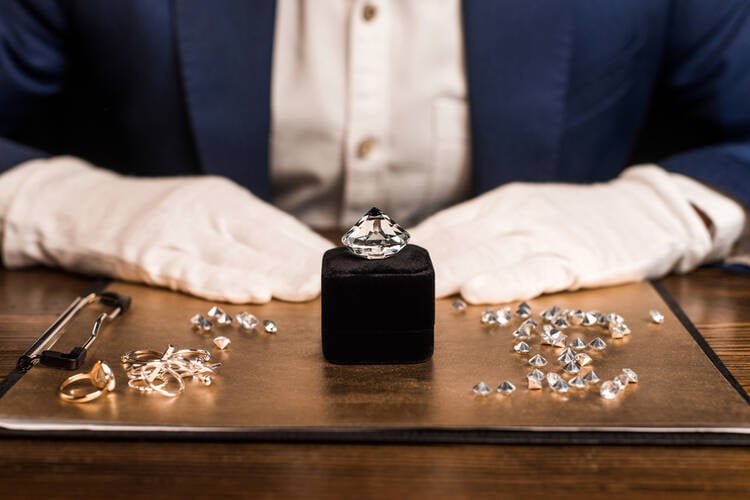
A gemstone business involves buying, selling, and often cutting and polishing precious and semi‑precious stones like diamonds, rubies, sapphires, and emeralds for use in jewelry, luxury goods, collectibles, and even investment assets.
Entrepreneurs in this industry may source stones from miners, work with gemologists for grading and certification, and sell to designers, retailers, or directly to consumers online or in‑store.
Gemstone ventures combine art, science, and commerce; understanding market trends, ensuring ethical sourcing, and building customer trust through authenticity checks and certifications are essential parts of running a successful operation.

The gemstone industry is large and growing. For example, the global market was valued at about USD 100 billion in 2024 and is projected to reach around USD 183 billion by 2033 with a compound annual growth rate near 7%.
Diamonds typically dominate sales, while Asia‑Pacific accounts for the largest share of demand.
Ethical and lab‑grown stones are increasingly influencing consumer preferences.

Steps on How to Start a Gemstone Business
-
Conduct Market Research
Market research for a gemstone business starts with defining your objectives and understanding your niche.
This means identifying who your ideal customers are, what types of gemstones they’re most interested in (e.g., luxury diamonds, healing crystals, or fashion jewelry), and what motivates their purchases.
You should also map out your competitors both direct sellers of similar stones and indirect competitors offering alternative products to see where gaps exist in pricing, quality, or marketing strategies.
A segmenting‑targeting‑positioning (STP) framework can help break down the market into meaningful customer groups to target.
The next step is data collection, using both primary and secondary methods.
Primary research includes surveys, interviews, focus groups, and even observation of how customers browse gemstone products.
Secondary research uses industry reports, government statistics, and competitor websites to build a big‑picture view of market trends.
Secondary sources give you broad industry insights, while primary data lets you understand specific customer preferences.
After gathering data, analyze it with tools like SWOT (strengths, weaknesses, opportunities, threats) or PESTEL (political, economic, social, technological, environmental, legal) analysis to assess market dynamics and external influences.
This step helps you identify opportunities — like rising demand for ethically sourced gems and threats like strong competition or regulatory hurdles.
Finally, interpret findings and implement strategies. Use your research to refine pricing, tailor marketing campaigns, choose the best sales channels (online, local events, or retail partners), and position your brand effectively.
Continuous customer feedback and trend monitoring will help you adapt strategies as the gemstone market evolves.
a. Who is the Target Market for Gemstone Business?
- Luxury Buyers and Jewelry Enthusiasts: These are customers seeking high-quality, rare, or certified gemstones for engagement rings, fine jewelry, or investment purposes.
- Fashion and Accessory Consumers: Customers who buy gemstones for trendy jewelry, accessories, or custom designs at a more affordable price point.
- Collectors and Investors: Individuals purchasing gemstones as a store of value or collectible items.
- Spiritual and Healing Market: Some customers buy gemstones for metaphysical, wellness, or healing purposes.
- Corporate and Gift Market: Businesses or individuals buying gemstones as corporate gifts, awards, or commemorative items.
b. Is Gemstone Business a Profitable Business?
Yes, a gemstone business can be profitable. The global gemstone industry is large and growing, with the market valued around USD 101.7 billion in 2024 and expected to reach USD 183 billion by 2033 (about 7 % CAGR) as demand for luxury and fine jewelry rises.
Profit margins in gemstone retail especially for polished and certified stones can be substantial, often 40 % – 100 % or more, depending on your sales channel and niche.
Growth trends like lab‑grown stones and ethically sourced gems also expand opportunities as consumers increasingly seek transparency and value.
c. Are There Existing Niches in the Industry?
No, there are no existing niches when it comes to gemstone business.
d. Who are the Major Competitors?
- GIA (Gemological Institute of America)
- Blue Nile
- James Allen
- Tiffany & Co.
- Cartier
- Swarovski
- Leibish & Co.
- Borsheims Fine Jewelry
- Ben Bridge Jeweler
- Rio Grande Jewelry Supply
- Stuller, Inc.
- Brilliant Earth
- The Natural Sapphire Company
- Helzberg Diamonds
- Zales
- Jared The Galleria of Jewelry
- Kay Jewelers
- Harry Winston
- Graff USA
- Charles & Colvard, Ltd.
e. Are There County or State Regulations or Zoning Laws for Gemstone Business in the United States?
Yes, gemstone and jewelry businesses operating in the U.S. are subject to various state, county, and local regulations.
Most jurisdictions require a general business license issued by a city or county before you can legally operate.
In states with sales tax, you must also obtain a seller’s permit to collect and remit tax on sales.
These registrations help authorities track commercial activities, especially in retail sectors like gemstones.
At the state level, specific requirements vary. Some states mandate additional permits or compliance if you sell high‑value goods like gemstones or if your business model includes buying used stones from the public, which can trigger second‑hand dealer rules.
States may also have their own consumer‑protection and advertising standards, especially on how gemstones are described and marketed.
County and city zoning laws affect where you can operate a gemstone business.
If you plan a brick‑and‑mortar store, property must be zoned for commercial use, and you may need a Certificate of Occupancy to confirm your location meets building codes and zoning requirements.
Home‑based gemstone businesses often require home occupation permits with restrictions on signage, customer visits, and inventory storage.
Finally, federal regulations like anti‑money‑laundering (AML) requirements and Federal Trade Commission (FTC) guidelines apply to gemstone dealers too.
These set standards on sales practices and accurate labeling regardless of your state or county, so compliance is important at all levels.
f. Is There a Franchise for Gemstone Business?
Yes, there are gemstone and jewelry related franchise opportunities you can explore. Here are 10 (U.S. and international) franchises to consider:
- Stoneage Natural Rocks & Crystals
- Fast Fix Jewelry & Watch Repairs
- HOLYGEMS
- The Colored Stone Co.
- IGL Labs franchise program
- Gem Studio
- Style Encore (jewelry & accessories)
- Filthy Rich (jewelry and accessories)
- Monkee’s (jewelry & fashion)
- Slonvish (designer accessories).
g. What Do You Need to Start a Gemstone Business?
- Business plan
- Business license and permits
- Seller’s permit or sales tax registration
- Zoning approval or home occupation permit
- Startup capital or funding
- Supplier or sourcing contacts for gemstones
- Inventory management system
- Certification and grading tools (e.g., gem tester, loupe)
- Insurance (liability, property, or theft)
- Physical store or e-commerce platform
- Marketing strategy and branding
- Knowledge of gemstone appraisal and industry standards.
-
Choose a Memorable Business Name
When looking to start a business, before you can begin to file the necessary documents with the constituted authorities or start your website, it is necessary that you come up with a name that you will be recognized with.
It is essential that the name you come up with can easily be pronounced, is unique and easily memorable.
Some of the catchy business name ideas suitable for a gemstone business are:
- Aurora Vale® Gemstone Company, Inc.
- Cobalt Crest® Gemstone Shop, Co.
- Radiant Stone® Gemstone Company, Inc.
- Luxe Terra® Gemstone Shop, Co.
- Celestica Gems® Gemstone Company, Inc.
- Everglow® Gemstone Shop, Co.
- Crystal Haven® Gemstone Company, Inc.
- Opal Horizon® Gemstone Shop, Co.
- Gemspire® Gemstone Company, Inc.
- Nova Stone® Gemstone Shop, Co.
- Vellore Gems® Gemstone Company, Inc.
- Brilliant Ridge® Gemstone Shop, Co.
- Prismatic® Gemstone Company, Inc.
- Auric Gem® Gemstone Shop, Co.
- Luminous Rock® Gemstone Company, Inc.
- Eterna Gems® Gemstone Shop, Co.
- Stone Aura® Gemstone Company, Inc.
- Lulea Roche® Gemstone Shop, Co.
- Radiance Rock® Gemstone Company, Inc.
- Amie Brown® Gemstone Shop, Co..
-
Register Your Business
a. What Type of Business Structure is Best for Gemstone Business?
The ideal business structure is determined by a variety of factors, including the size of the company, the number of owners, the level of personal liability the owners are ready to accept, and the tax consequences of the various business structures.
However, we normally recommend a limited liability company structure. This is so because, an LLC is a hybrid corporate form that provides the flexibility of a partnership while also providing its owners with limited liability protection.
An LLC can have one or more owners, and the owners are not personally accountable for the debts or liabilities of the business.
This business form is frequently used for small to medium-sized organizations.
b. Steps to Form an LLC
- Choose a Name for Your LLC.
- File Articles of Organization.
- Choose a registered agent.
- Decide on member vs. manager management.
- Create an LLC operating agreement.
- Comply with other tax and regulatory requirements.
- File annual reports.
c. What Type of License is Needed to Start a Gemstone Business?
- Business License
- Environmental Permit
- Mining License
- Air Quality Permit
- Water Use Permit
- Hazardous Waste Permit
- Industrial Discharge Permit
- Occupational Safety Permit
- Land Use Permit
- Zoning Permit
- Building Permit
- Operating Permit
- Waste Disposal Permit
- Health and Safety License
- Fire Safety Permit
- Chemical Handling License.
d. What Type of Certification is Needed to Open a Gemstone Business?
- General Business License
- Seller’s Permit/Sales Tax Permit
- Resale Certificate
- Home Occupation Permit (for home-based businesses)
- Zoning Approval/Certificate of Occupancy
- Second-Hand Dealer License (if buying used stones)
- Federal Employer Identification Number (EIN)
- Precious Metals Dealer License (in some states)
- Jewelry Appraisal Certification (optional but recommended)
- Anti-Money Laundering (AML) Compliance Registration (for high-value transactions).
e. What Documents are Needed to Open a Gemstone Business?
- Business plan
- Business registration certificate
- Federal Employer Identification Number (EIN)
- State tax ID or seller’s permit
- Resale certificate
- Zoning approval or Certificate of Occupancy
- Home occupation permit (if applicable)
- Lease agreement or property ownership documents
- Supplier contracts or purchase agreements
- Gemstone certification and grading reports
- Insurance policies (liability, property, theft)
- Bank account documents
- Business licenses and permits
- Employee records (if hiring staff)
- Financial statements or proof of startup capital.
f. Do You Need a Trademark, Copyright, or Patent?
For a gemstone business, trademarks, copyrights, and patents serve distinct purposes in protecting intellectual property.
Trademarks safeguard the company’s brand identity, including logos, product names, and slogans, ensuring competitors cannot use them without permission.
This helps build brand recognition and customer trust while preventing market confusion.
Copyrights protect original creative works, such as marketing materials, website content, product photography, and gemstone design illustrations.
Patents can apply to unique tools, cutting techniques, or jewelry-setting methods, giving the business exclusive rights to innovative processes or inventions for a set period.
-
Cost Analysis and Budgeting
a. How Much Does It Cost to Start a Gemstone Business?
The cost to start a gemstone business can vary greatly based on factors like business size, location, equipment, inventory, staffing, and marketing.
Generally, startup expenses can range from $10,000 for a small home-based operation to over $1 million for a full-scale retail store with premium inventory, professional staff, and a strong marketing presence.
b. What are the Cost Involved in Starting a Gemstone Business?
- Business registration and licensing fees – $100 to $1,000 depending on state and permits
- Rent or lease for retail/office space – $500 to $5,000 per month depending on location
- Inventory purchase (gemstones and jewelry) – $5,000 to $50,000 for initial stock
- Equipment and tools (gem testing, polishing, display cases) – $1,000 to $10,000
- Insurance (liability, property, theft) – $500 to $3,000 annually
- Marketing and advertising expenses – $500 to $5,000 initially
- Website development and e-commerce setup – $1,000 to $10,000
- Staffing and employee salaries – $2,000 to $8,000 per month for small staff
- Packaging and shipping materials – $200 to $1,500 depending on volume
- Professional services (accounting, legal, consulting) – $500 to $5,000.
c. What Factors Determine the Cost of Opening a Gemstone Business?
- Business size and scale (home-based, retail store, or online)
- Location and rental or lease expenses
- Type and quality of gemstones and inventory
- Equipment, tools, and display setup
- Staffing and labor costs
- Marketing, branding, and advertising budget
- Licensing, permits, and legal compliance requirements.
d. Do You Need to Build a Facility? If YES, How Much Will It Cost?
No, you don’t need to build a facility for your gemstone business. All you need is a small, well-organized workspace or home office, reliable inventory storage, and an online presence to reach customers.
With proper tools for gemstone testing, packaging, and display, along with strong marketing and supplier connections, you can operate efficiently without a large physical storefront.
e. What are the Ongoing Expenses of a Gemstone Business?
- Inventory replenishment (gemstones and jewelry)
- Rent or lease payments for retail or storage space
- Employee salaries and benefits
- Marketing and advertising campaigns
- Website maintenance and e-commerce fees
- Utilities (electricity, internet, phone)
- Insurance premiums (liability, property, theft)
- Packaging and shipping costs
- Accounting and professional service fees
- Equipment maintenance and replacement.
f. What is the Average Salary of your Staff?
- Gemologist/Jewelry Appraiser – $60,000 to $90,000 per year
- Store Manager/Operations Manager – $45,000 to $70,000 per year
- Sales Associate/Jewelry Salesperson – $30,000 to $50,000 per year
- Administrative/Support Staff – $25,000 to $40,000 per year.
g. How Do You Get Funding to Start a Gemstone Business?
- Raising money from personal savings and sale of personal stocks and properties
- Raising money from investors and business partners
- Sell shares to interested investors
- Applying for a loan from your bank/banks
- Pitching your business idea and applying for business grants and seed funding from the government, donor organizations, and angel investors
- Source for soft loans from your family members and your friends.
-
Write a Business Plan
a. Executive Summary
Shavonne Roche® Gemstone Company, Inc., based in Las Vegas, Nevada, is a premier gemstone retailer specializing in high-quality, ethically sourced precious and semi-precious stones.
The company offers a curated selection of diamonds, sapphires, rubies, emeralds, and unique crystals for jewelry designers, collectors, and luxury consumers.
By combining exceptional product quality with professional gemological services, including grading, certification, and custom consultations, Shavonne Roche® aims to establish itself as a trusted leader in the gemstone industry.
The company plans to operate both a physical showroom in Las Vegas and an e-commerce platform to reach a broader market.
With a strong focus on ethical sourcing, customer education, and personalized service, Shavonne Roche® Gemstone Company, Inc. seeks to capture a growing market driven by demand for luxury, investment-grade gemstones, and high-end jewelry.
The business projects sustainable revenue growth and long-term brand recognition in the U.S. and international markets.
b. Products and Service
Shavonne Roche® Gemstone Company, Inc. offers a curated selection of precious and semi-precious gemstones, including diamonds, rubies, sapphires, emeralds, and rare crystals.
The company provides gemological services such as grading, certification, custom consultations, and bespoke jewelry design, ensuring clients receive authentic, high-quality stones and personalized guidance for investment, collection, or luxury jewelry creation.
c. Mission Statement
At Shavonne Roche® Gemstone Company, Inc., our mission is to provide exceptional, ethically sourced gemstones while delivering personalized, expert guidance to our clients.
We aim to inspire trust and confidence through quality, authenticity, and education, helping customers create lasting value in their jewelry, collections, or investments, while promoting sustainable practices and excellence in the gemstone industry.
Vision Statement:
Our vision at Shavonne Roche® Gemstone Company, Inc. is to become a leading gemstone brand recognized for quality, authenticity, and ethical sourcing.
We strive to set industry standards, inspire customer trust, and expand our presence nationally and internationally, creating lasting value for clients, collectors, and jewelry designers alike.
d. Goals and Objectives
At Shavonne Roche® Gemstone Company, Inc., our goals and objectives are to deliver high-quality, ethically sourced gemstones while ensuring exceptional customer service.
We aim to build long-term relationships with clients, designers, and collectors through trust, transparency, and professional expertise.
We also strive to expand our market presence both online and in physical locations, increase brand recognition, and promote sustainable practices in the gemstone industry, ensuring steady growth and profitability over time.
e. Organizational Structure
- Gemologist/Jewelry Appraiser
- Store Manager/Operations Manager
- Sales Associate/Jewelry Salesperson
- Administrative/Support Staff.
Marketing Plan
a. SWOT Analysis
Strength
- Premium Product Quality – Offers high-quality, ethically sourced precious and semi-precious gemstones, building trust and credibility.
- Expertise and Certification – Provides gemological services, grading, and certification, differentiating the company from generic retailers.
- Brand Identity – Strong, memorable brand with a luxury-focused image appealing to collectors and designers.
- Dual Sales Channels – Operates both a physical showroom in Las Vegas and an e-commerce platform, reaching local and international clients.
- Personalized Customer Service – Customized consultations and bespoke design services enhance client satisfaction and loyalty.
Weakness
- High Operating Costs – Inventory, insurance, and retail space expenses are significant.
- Limited Brand Awareness – As a newer company, national and international recognition may be limited.
- Dependence on Suppliers – Reliance on gemstone suppliers can affect inventory consistency and costs.
- Small Team Size – Limited staff may constrain scalability and service capacity.
Opportunities
- Growing Luxury Market – Rising global demand for gemstones and fine jewelry offers expansion potential.
- Lab-Grown and Ethical Gems Trend – Increasing consumer interest in sustainable, ethically sourced, and lab-grown gemstones.
- Online Market Growth – E-commerce allows access to international collectors and designers.
- Partnerships with Designers – Collaborations can expand market reach and brand visibility.
Threats
- High Competition – Established brands like Tiffany & Co., Blue Nile, and local jewelers present strong competition.
- Economic Fluctuations – Luxury goods sales are sensitive to economic downturns.
- Regulatory Risks – Changes in state or federal gemstone trading laws, import/export regulations, or ethical sourcing standards.
- Market Volatility – Gemstone prices can fluctuate due to global supply and demand changes.
b. How Do Gemstone Business Make Money?
Gemstone businesses make money primarily by buying gemstones at wholesale prices and selling them at a markup to jewelry designers, collectors, and retail customers.
Profit margins vary depending on the type, quality, and rarity of the stones, with precious gemstones like diamonds and rubies often yielding higher returns.
Additional revenue comes from value-added services such as gemstone grading, certification, custom jewelry design, and consulting, which enhance customer trust and allow businesses to charge premium prices for expertise and authenticity.
c. Payment Options
- Cash
- Credit Card
- Debit Card
- Bank Transfer
- Electronic Funds Transfer (EFT)
- Check
- Purchase Order.
d. Sales & Advertising Strategies
- High-Quality Website & E-Commerce Store – Showcase products with professional photos, detailed descriptions, and secure online purchasing.
- Social Media Marketing – Use platforms like Instagram, Pinterest, and TikTok to reach jewelry enthusiasts and collectors.
- Search Engine Optimization (SEO) – Optimize website content to rank for gemstone-related searches.
- Email Marketing Campaigns – Build a mailing list to promote new arrivals, discounts, and events.
- Influencer Collaborations – Partner with jewelry designers, fashion influencers, or lifestyle bloggers.
- Trade Shows & Gem Fairs – Exhibit at industry events to connect with retailers and collectors.
- Referral Programs – Encourage satisfied customers to refer friends with incentives.
- Content Marketing & Blogging – Share educational articles, gemstone guides, and buying tips.
- Local Partnerships – Collaborate with jewelers, boutiques, and gift shops for cross-promotions.
- Paid Advertising – Use Google Ads, social media ads, and retargeting campaigns to drive traffic and sales.
Financial Projection
a. How Much Should You Charge for your Product/Service?
Here’s an itemized list of how much gemstone businesses typically sell their products for, with approximate price ranges:
- Loose Semi Precious Stones (e.g., amethyst, garnet) – $5 to $200+ per carat
- Loose Precious Stones (e.g., ruby, sapphire) – $100 to $5,000+ per carat
- Loose Diamonds (small sizes) – $500 to $4,000+ per carat
- High Grade Diamonds (premium cut and color) – $5,000 to $20,000+ per carat
- Custom Cut Rare Gemstones – $500 to $10,000+ each depending on rarity and size
- Polished Gemstone Cabochons – $10 to $500+ each based on quality and type
- Finished Fine Jewelry with Gemstones – $300 to $50,000+ per piece depending on metal and gem value
- Collector or Investment Grade Gems – $10,000 to $1,000,000+ for exceptionally rare stones
- Crystal Healing or Decor Stones – $5 to $1,000+ depending on size and uniqueness
- Gemstone Jewelry Sets (earrings, necklace, ring) – $500 to $100,000+ based on design and materials
Please note that these are typical retail price ranges, but actual prices vary widely by quality, certification, size, market demand, and brand positioning.
b. How Much Profit Do Gemstone Business Owners Make a Year?
Gemstone business owners can earn significant profits depending on the type, quality, and rarity of the stones they sell.
Small or home-based businesses may generate $30,000 to $100,000 annually, while larger retail or luxury-focused operations can earn $200,000 to $500,000 or more per year.
c. What Factors Determine the Amount of Profit to Be Made?
- Type and Quality of Gemstones
- Source and Purchase Price – Wholesale costs, supplier reliability, and ethical sourcing affect profitability.
- Sales Channels – Retail, online, or direct-to-designer sales influence revenue and overhead costs.
- Market Demand – Popularity and trends in gemstones affect pricing and turnover.
- Brand Reputation – Strong branding and customer trust allow premium pricing.
- Value-Added Services – Grading, certification, and custom designs increase profit margins.
- Operational Costs – Rent, staffing, marketing, and insurance reduce net profits.
- Competition – High competition may require discounts or marketing investments, affecting margins.
- Economic Conditions – Luxury goods like gemstones are sensitive to economic downturns.
- Inventory Management – Efficient stock control reduces losses and maximizes sales.
d. What is the Profit Margin of a Gemstone Business Product/Service?
In general, a profitable gemstone business may have a profit margin ranging from 10 percent to 30 percent or more.
However, this can vary widely depending on the specific business and market.
e. What is the Sales Forecast?
- First Fiscal Year (FY1): $350,000
- Second Fiscal Year (FY2): $500,000
- Third Fiscal Year (FY3): $1.5 million
-
Set Up your Shop/Office
a. How Do You Choose a Perfect Location for Gemstone Business?
- Target Market Proximity – Choose an area near high-income neighborhoods, jewelry districts, or areas frequented by collectors, designers, and luxury shoppers. Visibility to your ideal customer base is essential.
- Foot Traffic & Accessibility – High pedestrian traffic or a location near popular shopping areas, malls, or tourist destinations can boost walk-in sales.
- Safety & Security – Gemstone businesses deal with high-value inventory, so secure neighborhoods and buildings with advanced security systems are crucial.
- Zoning & Permits – Verify that local zoning laws allow retail, jewelry, or gemstone sales, and obtain any required permits or certificates of occupancy.
- Cost vs. Benefit – Balance rent or lease costs with potential revenue. Prime locations often cost more but can yield higher sales, whereas smaller or secondary areas may reduce expenses but attract fewer high-value clients.
- Competitor Analysis – Consider the presence of competitors. Being near complementary businesses (e.g., jewelry stores, luxury boutiques) can be beneficial, but direct saturation may reduce margins.
- Expansion Potential – Choose a location that allows future growth, such as adding showroom space, workshops, or an e-commerce fulfillment area.
b. What State and City is Best to Open a Gemstone Business?
- Las Vegas, Nevada
- New York City, New York
- Los Angeles, California
- Miami, Florida
- Chicago, Illinois
- Houston, Texas
- Atlanta, Georgia
- Dallas, Texas
- San Francisco, California
- Boston, Massachusetts.
c. What Equipment is Needed to Operate a Gemstone Business?
- Gemstone Testing Tools – Refractometer, polariscope, dichroscope, and UV light for verifying authenticity.
- Magnification Tools – Loupes (10x or higher) and microscopes for inspection and grading.
- Gemstone Scales – Precision scales to measure carat weight accurately.
- Cutting and Polishing Equipment – Lapidary machines, grinding wheels, and polishing kits (if offering cutting services).
- Display Cases – Secure, lockable showcases for in-store presentation.
- Storage Solutions – Safe boxes, vaults, and padded storage for inventory protection.
- Packaging Materials – Pouches, boxes, and wrapping materials for shipping or retail sales.
- Point of Sale (POS) System – Cash register, card processing, and inventory tracking software.
- Lighting Equipment – LED or natural-spectrum lights to showcase gemstone color and brilliance.
- Security Systems – Cameras, alarms, and safes to protect high-value inventory.
- Gemstone Cleaning Tools – Ultrasonic cleaners and polishing cloths for presentation.
-
Hire Employees
Hiring competent employees for a gemstone business is essential for several reasons.
Competent workers ensure accurate gemstone grading, proper handling, and ethical sales practices, protecting both inventory and the company’s reputation.
They provide exceptional customer service, helping clients make informed purchases and building trust.
Skilled staff also support operations efficiently, manage inventory, and assist with marketing or e-commerce tasks.
Overall, a knowledgeable team enhances profitability, brand credibility, and long-term growth in the competitive gemstone industry.
-
Launch the Business Proper
Organizing a launch party for a new gemstone business is important for building brand awareness, fostering connections with potential customers, and creating a positive first impression.
The event provides an opportunity to showcase the company’s premium gemstones, unique collections, and expert services, allowing attendees to experience the quality and elegance of the products firsthand.
In addition, a launch party helps establish relationships with jewelry designers, influencers, local media, and collectors, generating word-of-mouth marketing and social media buzz.
It also reinforces the brand’s identity, values, and commitment to ethical sourcing and customer satisfaction.
a. What Makes a Gemstone Business Successful?
- High-Quality and Authentic Products
- Strong Brand and Reputation
- Effective Marketing and Sales Strategies
- Skilled and Knowledgeable Staff
- Efficient Operations and Inventory Management
b. What Happens During a Typical Day at a Gemstone Business?
A typical day at a gemstone business begins with checking and organizing inventory, ensuring all gemstones are secure, accurately labeled, and in optimal condition.
Staff may inspect new shipments, verify certifications, and update inventory records.
The team prepares the showroom or online store for customers, arranging displays and highlighting featured pieces.
Throughout the day, employees assist walk-in clients, handle sales transactions, and provide consultations on gemstone quality, grading, and custom jewelry designs.
Behind the scenes, administrative tasks like bookkeeping, marketing updates, and supplier communications are completed.
The day often ends with security checks and preparing shipments for customers or retailers.
c. What Skills and Experience Do You Need to Build a Gemstone Business?
- Gemology Knowledge – Understanding gemstone types, grading, and quality assessment.
- Jewelry Design & Appraisal Skills – Ability to evaluate and create jewelry pieces.
- Business Management Experience – Running operations, finances, and staff effectively.
- Sales and Negotiation Skills – Closing deals and maintaining client relationships.
- Marketing and Branding Expertise – Promoting products online and offline.
- Inventory Management Skills – Tracking and organizing high-value stock efficiently.
- Customer Service Skills – Providing personalized consultations and building trust.
- Financial Literacy – Budgeting, pricing, and profit margin analysis.
- Knowledge of Regulations & Ethics – Understanding licensing, permits, and ethical sourcing.
- Networking & Industry Connections – Building relationships with suppliers, designers, and collectors.