
A Christmas tree farm is an agricultural business that grows evergreen trees specifically for sale during the Christmas season. Depending on your business model, you can sell trees wholesale to:
Retailers, operate a roadside retail lot, allow families to choose and cut their own trees, sell pre-cut trees, produce wreaths and garlands, host holiday photo sessions, organize Christmas activities, or combine several of these revenue streams.
The business can be attractive because one piece of farmland can produce trees repeatedly for decades when harvested areas are replanted properly.
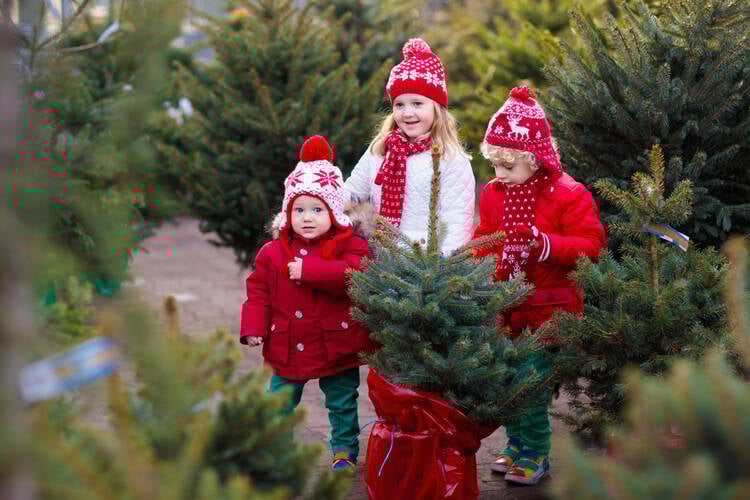
A choose-and-cut farm can also earn considerably more from a tree than a grower selling the same tree wholesale because you are selling both the tree and the farm experience.
There is one major issue you need to understand before starting. Christmas trees are a long-term crop.
You cannot plant thousands of seedlings in March and expect to sell them in December.
Depending on species, climate, planting stock, desired height, and growing conditions, a Christmas tree may require approximately 5 to 12 years before it is ready to harvest.
This delay changes the economics of the business completely. A person starting a coffee shop might know within several months whether customers like the concept.
A Christmas tree grower may spend years planting, mowing, fertilizing, controlling weeds, pruning, shearing, and replacing dead trees before significant farm-grown-tree revenue arrives.
That does not mean you have to wait eight years before the business earns a dollar. Many operators generate bridge revenue by:
Selling pre-cut trees sourced from established growers, making wreaths and garlands, offering holiday photo sessions, running a pumpkin patch in autumn, selling ornaments, hosting wreath workshops, or creating other farm experiences while their own trees mature.
The most important thing is to understand the difference between Christmas tree production and Christmas tree retailing or agritourism.
The farm may eventually combine all three, but the cash flow and operating requirements are different.
Steps on How to Start a Christmas Tree Farm
-
Conduct Market Research
Your market research should begin with the people who will eventually buy your trees, but it should also include your soil, climate, elevation, rainfall, local tree species, competitors, road access, and distance from population centers.
A beautiful 50-acre property can be a terrible Christmas tree farm if the species you want to grow perform poorly there.
Likewise, an excellent growing site can be difficult for a choose-and-cut operation if customers have to drive two hours over poor roads to reach it.
Start by visiting Christmas tree farms within approximately 50 to 100 miles of the property you are considering. Visit during the actual selling season rather than only looking at websites.
Pay attention to how busy they are on the Friday after Thanksgiving, Saturday afternoons, weekday evenings, and the first two weekends of December. Observe what customers actually buy.
- Do they mainly want 6- to 7-foot trees?
- Are larger 9- to 12-foot trees selling?
- Which species disappear first?
- Are customers purchasing wreaths, garlands, ornaments, hot chocolate, photography sessions, or other add-ons?
Also look at the experience.
- Does the farm have hayrides?
- Is there a children’s play area?
- Are saws provided?
- Are employees available to cut the tree?
- Is the tree shaken and baled before it is loaded onto the customer’s vehicle?
Those services can influence how much customers are willing to pay. You should also talk to wholesale buyers if you intend to sell commercially.
Garden centers, independent tree lots, grocery stores, landscaping companies, churches, nonprofit organizations, and seasonal tree retailers may purchase large quantities.
Wholesale customers generally pay less per tree than choose-and-cut customers, but they may purchase hundreds or thousands of trees at a time.
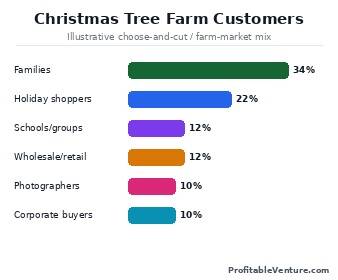
a. Who is the Target Market for a Christmas Tree Farm?
- Families purchasing Christmas trees
- Couples looking for a Christmas tradition
- Parents with young children
- Holiday shoppers
- Garden centers
- Independent Christmas tree lots
- Grocery stores
- Home improvement retailers
- Churches
- Schools
- Nonprofit organizations
- Corporate offices
- Hotels
- Restaurants
- Event decorators
- Professional photographers
- Wedding and event venues
- Landscapers
- Wreath and greenery manufacturers
- Wholesale tree distributors
b. Is a Christmas Tree Farm Profitable?
Yes, a Christmas tree farm can be profitable, particularly after the farm develops a staggered inventory of mature trees and a loyal customer base.
However, this is not a business where profitability should be judged only by the difference between the cost of a seedling and the selling price of a finished tree.
A seedling may be inexpensive, but the tree occupies land for years. During that time you may have expenses for:
Planting, mowing, weed control, fertilizer, pest management, pruning, shearing, replacing dead trees, insurance, property taxes, equipment, labor, and marketing.
You also will not successfully harvest every tree you plant. Some seedlings will die.
Others may develop poor shapes, suffer pest or disease damage, grow unevenly, or become unsaleable. Profitability therefore depends heavily on:
- Tree survival rate
- Number of marketable trees per acre
- Years required to reach harvest
- Retail versus wholesale pricing
- Labor cost
- Equipment cost
- Land cost
- Customer traffic
- Agritourism revenue
- Wreath and greenery sales.
A well-run choose-and-cut farm can improve its economics because the customer performs part of the harvesting process and may pay a premium for the experience.
c. Are There Existing Niches in the Industry?
Yes. You can specialize in one or combine several Christmas tree farm niches:
- Choose-and-cut Christmas tree farms
- Wholesale Christmas tree production
- Pre-cut Christmas tree retailing
- Premium Fraser fir production
- Noble fir production
- Douglas fir production
- Virginia pine farms
- Leyland cypress Christmas trees
- Organic or low-input Christmas tree production
- Large commercial Christmas trees
- Tabletop Christmas trees
- Living potted Christmas trees
- Wreath and garland production
- Christmas greenery production
- Holiday agritourism
- Christmas photography farms
- Corporate Christmas tree supply
- Christmas tree delivery.
The best niche depends heavily on your climate and market. A tree species that performs beautifully in Oregon may not be the right choice for Georgia or North Carolina.
d. Who are the Major Competitors?
Your most important competitors will normally be local Christmas tree farms and seasonal retailers, but you should also consider indirect competition. Competitors can include:
- Local choose-and-cut Christmas tree farms
- Wholesale Christmas tree growers
- Garden centers
- Independent seasonal tree lots
- The Home Depot
- Lowe’s
- Walmart
- Costco
- Grocery-store Christmas tree lots
- Online Christmas tree delivery companies
- Artificial Christmas tree sellers.
Artificial trees are an important indirect competitor because a household buying a high-quality artificial tree may stop purchasing a real tree for several years.
Your advantage as a choose-and-cut farm is that you can sell something an artificial-tree retailer cannot easily duplicate: the family experience of visiting the farm and choosing a tree together.
e. Are There County, State, or Federal Regulations for a Christmas Tree Farm?
Yes, although many requirements come from state and local authorities rather than one nationwide Christmas-tree-farm license.
The agricultural growing operation itself may qualify for agricultural or forestry land-use treatment, but the situation can change when you begin bringing hundreds or thousands of members of the public onto the farm.
A choose-and-cut or agritourism operation may need to consider:
- Agricultural zoning
- Agritourism zoning
- Conditional-use permits
- Parking requirements
- Road entrances
- Traffic control
- Signs
- Public restrooms
- Accessibility
- Retail buildings
- Fire and building codes
- Food-service permits if selling food
- Special-event permits
- Sales-tax requirements.
Do not assume that because the property is classified as a farm you can automatically add a large parking lot, retail barn, petting zoo, food service, live entertainment, and thousands of visitors without additional approval.
Pesticide rules are another important consideration. If you use restricted-use pesticides, federal law requires the person applying or supervising those products to have the appropriate pesticide applicator certification. States may impose additional requirements.
You should also keep accurate records of pesticide applications, fertilizer, tree treatments, and other farm activities.
If employees use tractors, chainsaws, sprayers, balers, and other machinery, workplace safety becomes important as well.
Once customers enter the farm, your insurance needs can also increase substantially.
Farm liability coverage designed only for agricultural production may not automatically cover every agritourism activity you add.
f. Is There a Franchise for a Christmas Tree Farm?
Christmas tree farming is not typically a franchise-driven industry. Most farms are independently owned because the success of the operation depends heavily on the land, species, climate, local market, and farming knowledge.
You may find franchise opportunities in seasonal retail, holiday decorating, or related businesses, but purchasing a Christmas tree farm franchise is generally not necessary.
A beginner may get more value from joining regional grower associations, attending Extension programs, visiting experienced growers, and developing relationships with seedling nurseries and wholesale buyers.
g. What Do You Need to Start a Christmas Tree Farm?
- Suitable farmland
- Soil testing
- Species suited to your climate
- Christmas tree seedlings or transplants
- Farm business plan
- Planting schedule
- Tractor
- Mower
- Sprayer
- Shearing tools
- Chainsaws
- Water or irrigation where necessary
- Farm roads
- Storage building
- Liability insurance
- Farm records
- Labor
- Marketing plan
- Several years of working capital.
h. How Many Christmas Trees Can You Plant Per Acre?
The answer depends on tree spacing, access roads, equipment width, species, and desired finished-tree size.
| Tree Spacing | Theoretical Trees per Acre | Practical Consideration |
|---|---|---|
| 5 ft × 5 ft | About 1,742 | High density but tighter equipment access as trees mature. |
| 6 ft × 6 ft | About 1,210 | Provides more working space around growing trees. |
| 6 ft × 8 ft | About 907 | Better tractor access and useful for choose-and-cut operations. |
Theoretical density is not the same as saleable trees. Roads, drainage, slopes, parking, loading areas, dead trees, and unsaleable trees reduce the actual number you eventually harvest.
Once the farm reaches full rotation, the goal is usually not to harvest every acre in one year.
Instead, you plant different blocks in different years so a portion of your acreage becomes ready every Christmas season.
-
Choose a Memorable Business Name
A Christmas tree farm name should feel warm, seasonal, trustworthy, and easy for families to remember.
It should also work on roadside signs, social media, wreath tags, ornaments, and merchandise. Some name ideas are:
- Evergreen Ridge Christmas Tree Farm, LLC
- Merry Pines Christmas Tree Farm, LLC
- North Star Christmas Trees, LLC
- Holiday Hills Tree Farm, LLC
- Snowy Ridge Christmas Farm, LLC
- Evergreen Valley Tree Farm, LLC
- Christmas Creek Tree Farm, LLC
- Silver Bell Christmas Trees, LLC
- Winter Pine Tree Farm, LLC
- Family Tradition Christmas Farm, LLC
- Frosty Acres Christmas Trees, LLC
- Santa’s Ridge Tree Farm, LLC
- Holiday Grove Christmas Trees, LLC
- Mistletoe Mountain Tree Farm, LLC
- Evergreen Lane Christmas Farm, LLC
- Christmas Meadow Tree Farm, LLC
- Yuletide Acres, LLC
- North Woods Christmas Farm, LLC
- Winter Star Tree Farm, LLC
- Holiday Pine Acres, LLC.
-
Register Your Business
a. What Type of Business Structure is Best for a Christmas Tree Farm?
An LLC can be a practical structure for an independently owned Christmas tree farm because it creates separation between the business and the owner’s personal affairs while remaining relatively flexible.
This can become particularly important when customers visit the property, employees operate machinery, delivery vehicles are used, or you add agritourism activities.
If the land is valuable, speak with an agricultural attorney and accountant about whether the property should be owned by the operating company or by a separate real-estate entity that leases the farm to the operating business.
b. Steps to Form an LLC
- Choose an available farm name
- File formation documents with your state
- Choose a registered agent
- Create an operating agreement
- Obtain an EIN where appropriate
- Register for applicable taxes
- Open a farm bank account
- Register agricultural activities where required
- Purchase appropriate farm insurance
- Maintain required annual filings.
c. What Type of License is Needed to Start a Christmas Tree Farm?
Requirements depend on the farm and the activities you add. You may need:
- General business registration
- Agricultural or farm registration where applicable
- Local zoning approval
- Agritourism approval
- Retail sales permit
- Sales-tax registration where required
- Building permits
- Sign permits
- Food-service permit if selling prepared food
- Special-event permits
- Pesticide applicator certification when required
- Employer registrations
- Commercial vehicle registrations where applicable.
d. What Type of Certification is Needed?
There is no single national Christmas tree grower certification. Useful or potentially required training includes:
- Private pesticide applicator certification
- Chainsaw safety
- Tractor safety
- First aid and CPR
- Farm equipment safety
- Integrated pest management
- Christmas tree shearing and pruning training
- Agritourism safety training.
e. What Documents are Needed?
- Business formation documents
- EIN where applicable
- Property deed or agricultural lease
- Farm map
- Zoning approvals
- Insurance policies
- Soil test records
- Seedling purchase records
- Pesticide records where applicable
- Equipment records
- Employee records
- Farm safety procedures
- Customer liability procedures
- Sales-tax documentation
- Wholesale customer contracts
- Agritourism permits where applicable.
f. Do You Need a Trademark, Copyright, or Patent?
You normally do not need a patent to grow Christmas trees. A trademark can protect your farm name, logo, slogan, or branded holiday products.
Copyright can protect your website photographs, farm maps, advertising materials, videos, brochures, and original printed designs.
-
Cost Analysis and Budgeting
a. How Much Does It Cost to Start a Christmas Tree Farm?
The startup amount depends on acreage, land condition, equipment, species, and whether you intend to operate only as a grower or develop a full choose-and-cut destination.
A small 5- to 10-acre operation using some existing equipment may require approximately $50,000 to $100,000, excluding land purchase.
A medium-scale 20- to 30-acre diversified choose-and-cut farm may require approximately $175,000 to $350,000.
A larger 60- to 100-acre operation with substantial equipment, roads, parking, retail buildings, customer amenities, multiple plantings, and strong working capital can require approximately $500,000 to $1 million or more.
For this guide, we will use:
- Small Christmas tree farm: approximately $75,000
- Medium Christmas tree farm: approximately $250,000
- Large Christmas tree farm: approximately $750,000.
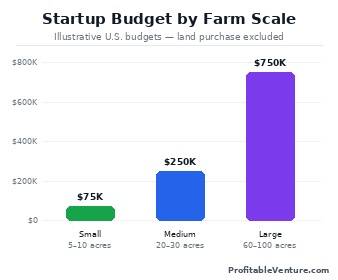
Land purchase is excluded because farmland prices vary too widely to produce one meaningful national figure.
b. What are the Costs Involved in Starting a Christmas Tree Farm?
Small Christmas Tree Farm – Approximately $75,000
- Site preparation – $15,000
- Seedlings and planting – $10,000
- Used tractor, mower, sprayer, and tools – $18,000
- Water and irrigation improvements – $6,000
- Roads, fencing, and basic parking – $7,000
- Shed and seasonal sales area – $6,000
- Insurance, permits, and professional fees – $3,000
- Marketing and signage – $2,000
- Working capital – $8,000
- Estimated Total – $75,000.
Medium Christmas Tree Farm – Approximately $250,000
- Tractor, mower, sprayer, trailers, shearing equipment, saws, and tree-handling equipment – $55,000
- Site preparation, drainage, roads, and fencing – $45,000
- Working capital reserve – $40,000
- Barn, storage, baling area, and seasonal retail setup – $30,000
- Seedlings, planting, replacements, and initial field materials – $25,000
- Irrigation, water systems, and related improvements – $20,000
- Parking and basic agritourism improvements – $20,000
- Insurance, permits, professional fees, branding, and launch marketing – $15,000
- Estimated Total – $250,000.
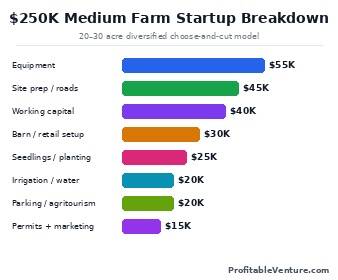
This is the model used in the financial projection later in this article.
Large Christmas Tree Farm – Approximately $750,000
- Tractors, trucks, trailers, mowers, sprayers, loaders, and specialized equipment – $150,000
- Site preparation, roads, drainage, and large parking areas – $140,000
- Seedlings and large-scale planting program – $80,000
- Irrigation and water infrastructure – $60,000
- Barn, retail building, storage, processing, and baling facilities – $80,000
- Agritourism structures and customer amenities – $70,000
- Fencing, signage, lighting, and security – $35,000
- Permits, engineering, insurance, and professional expenses – $25,000
- Marketing and opening program – $20,000
- Working capital – $90,000
- Estimated Total – $750,000.
c. What Factors Determine the Cost of Starting a Christmas Tree Farm?
- Number of acres
- Land ownership versus leasing
- Land-clearing requirements
- Topography
- Drainage
- Tree species
- Seedling prices
- Planting density
- Equipment ownership
- Irrigation requirements
- Farm roads
- Retail facilities
- Parking
- Agritourism amenities
- Labor costs
- Working capital.
d. Do You Need to Build a Facility?
You do not need a conventional commercial building simply to grow Christmas trees.
However, a practical farm usually benefits from a barn, equipment shed, chemical storage area, tool storage, and covered workspace.
A choose-and-cut operation may eventually need a checkout area, restrooms, wreath workshop, tree baling area, merchandise shop, sheltered waiting area, and parking.
You can phase these improvements rather than building everything before your first tree is ready.
e. What are the Ongoing Expenses?
- Seedlings and replacement trees
- Planting labor
- Mowing
- Weed management
- Fertilizer
- Pest and disease control
- Pruning and shearing
- Equipment fuel
- Equipment repairs
- Insurance
- Property taxes or lease payments
- Seasonal labor
- Marketing
- Wreath supplies
- Tree baling material
- Retail supplies
- Utilities
- Road and parking maintenance.
f. What is the Average Salary of Your Staff?
Christmas tree farming is highly seasonal, so many operations use a combination of year-round farm employees and temporary workers during planting, shearing, and harvest. Potential positions include:
- Farm Manager
- Field Supervisor
- Tractor Operator
- Tree Planters
- Shearing Crew
- Equipment Technician
- Retail Manager
- Seasonal Cashiers
- Tree Cutting Crew
- Tree Baling and Loading Crew
- Wreath Makers
- Parking Attendants
- Agritourism Staff.
Use local agricultural and seasonal wage rates when preparing the actual payroll budget.
g. How Do You Get Funding to Start a Christmas Tree Farm?
- Personal savings
- Farm ownership loans
- Farm operating loans
- Agricultural lenders
- Equipment financing
- Farm Credit lenders
- Business partners
- Private investors
- Seller financing on agricultural property
- Beginning-farmer programs where eligible
- Reinvesting seasonal retail revenue.
The major financing challenge is the delayed harvest. A lender and farmer need to understand how expenses will be paid while immature trees are still growing.
This is why working capital and supplemental farm revenue are especially important.
a. Executive Summary
Evergreen Ridge Christmas Tree Farm, LLC is a proposed diversified Christmas tree farm located on approximately 25 acres outside Asheville, North Carolina.
The farm will grow Christmas trees suitable for the local climate while developing a choose-and-cut retail operation centered on families seeking a traditional holiday experience.
Evergreen Ridge will begin with staggered annual plantings rather than planting all available acreage during the first year.
During the establishment period, the business will supplement farm income through pre-cut Christmas trees sourced from established regional growers, wreaths, garlands, holiday greenery, professional photography sessions, seasonal merchandise, and selected farm activities.
Once Evergreen Ridge’s own trees reach maturity, locally grown choose-and-cut trees will become the core revenue source.
The company will launch with approximately $250,000 in startup capital, excluding land acquisition.
The long-term objective is to maintain trees at several stages of development so customers can purchase farm-grown trees every year without exhausting the farm’s inventory.
b. Products and Services
- Choose-and-cut Christmas trees
- Farm-cut Christmas trees
- Pre-cut Christmas trees during the establishment years
- Large premium Christmas trees
- Wreaths
- Garlands
- Fresh greenery
- Tree stands
- Tree shaking
- Tree baling
- Tree loading
- Christmas ornaments
- Holiday merchandise
- Professional photography sessions
- Wreath-making workshops
- Holiday farm experiences.
c. Mission Statement
“At Evergreen Ridge Christmas Tree Farm, LLC, our mission is to grow quality Christmas trees while creating a welcoming farm experience where families can build traditions, enjoy the outdoors, and take home a fresh tree they are proud to make part of their Christmas celebration.”
Vision Statement
“Our vision is to build Evergreen Ridge into a respected regional Christmas tree farm known for healthy trees, responsible land management, friendly service, memorable family experiences, and dependable seasonal operations.”
d. Goals and Objectives
The first goal is to establish healthy tree blocks at different ages. Management will plant a controlled amount each year rather than filling the entire farm at once.
This creates a rotation in which some trees are seedlings, others are being shaped, and older blocks are approaching harvest.
Another objective is to keep detailed records by planting block. Management will track:
- Species
- Planting date
- Seedling supplier
- Survival rate
- Fertilizer applications
- Pest treatments
- Shearing
- Expected harvest year
- Actual harvest volume.
The company will also develop bridge revenue during the establishment years so the land is not expected to carry the full financial burden before trees are mature.
The long-term objective is to build a mature operation capable of producing dependable annual Christmas tree inventory, wreaths, greenery, and profitable holiday agritourism.
e. Organizational Structure
- Owner/General Manager
- Farm Manager
- Field Supervisor
- Farm Equipment Operators
- Seasonal Field Workers
- Retail Manager
- Wreath and Greenery Staff
- Tree Cutting/Baling Crew
- Customer Service Staff
- Parking Attendants
- Marketing Coordinator
- Bookkeeper/Accountant.
Marketing Plan
a. SWOT Analysis
Strengths
The farm eventually owns a renewable inventory that can be replanted after harvest.
A choose-and-cut operation can also create a memorable customer experience that conventional retailers have difficulty copying.
Additional revenue can come from wreaths, greenery, photography, workshops, and other seasonal activities.
Weaknesses
The biggest weakness is the long establishment period. Capital may be tied up for years before significant farm-grown-tree revenue arrives.
The business is also highly seasonal and dependent on weather, crop quality, and customer turnout during a relatively short selling period.
Opportunities
Growth opportunities include wreath production, corporate trees, farm photography, Christmas markets, private events, school visits, holiday merchandise, delivery, online reservations, and fall agritourism.
Threats
Major threats include drought, excessive rainfall, pests, disease, deer damage, storms, fire, labor shortages, equipment failures, artificial tree competition, poor holiday weather, and planting mistakes that may not become obvious until years later.
b. How Do Christmas Tree Farms Make Money?
- Choose-and-cut tree sales
- Pre-cut tree sales
- Wholesale trees
- Large premium trees
- Wreaths
- Garlands
- Greenery
- Tree stands
- Tree delivery
- Tree baling
- Holiday merchandise
- Farm photography
- Wreath workshops
- Christmas events
- Food and beverages where properly permitted
- Corporate tree orders.
c. Payment Options
- Credit cards
- Debit cards
- Cash
- Apple Pay
- Google Pay
- Online reservations
- Corporate invoices
- Gift certificates.
d. Sales and Advertising Strategies
- Create a Google Business Profile
- Maintain a professional farm website
- Publish opening dates clearly
- Post weekly tree availability
- Use Instagram and Facebook
- Create family photography opportunities
- Partner with professional photographers
- Invite schools and community groups
- Create a Christmas email list
- Offer opening-weekend reservations
- Partner with hotels and cabins
- Create corporate tree packages
- Sell wreaths online for local pickup
- Use roadside signage strategically
- Encourage reviews from satisfied families
- Create annual traditions customers anticipate.
The biggest marketing advantage of a Christmas tree farm is repeat tradition.
A family that enjoys your farm when its children are five years old may return every December for years.
Your objective should therefore be to turn a first-time buyer into an annual customer.
Financial Projection
a. How Much Should You Charge for Christmas Trees?
Pricing should reflect species, height, shape, local competition, growing costs, customer experience, and whether you sell wholesale or retail.
A simple choose-and-cut farm can use either flat pricing or height-based pricing. Illustrative retail prices might look like:
- 5- to 6-foot standard tree: $60 to $90
- 6- to 7-foot standard tree: $75 to $110
- Premium 6- to 7-foot fir: $90 to $150
- 8- to 9-foot tree: $130 to $220
- 10-foot-plus premium tree: $200 to $400 or more
- Fresh wreath: $30 to $60
- Premium decorated wreath: $50 to $100 or more.
These are planning examples rather than national price rules. Do not price a tree simply by comparing your seedling cost with its retail value.
You have carried that tree for years, and your price needs to help recover the land, labor, equipment, crop losses, and overhead associated with producing it.
b. How Much Revenue Can a Christmas Tree Farm Generate?
Revenue depends enormously on farm maturity. A newly planted farm may generate very little from its own trees for several years, while a mature choose-and-cut destination can sell hundreds or thousands of trees during a short holiday period.
For a mature operation, illustrative planning ranges could include:
- Small 5- to 10-acre farm: approximately $50,000 to $150,000 in annual gross revenue
- Medium 20- to 30-acre diversified farm: approximately $150,000 to $400,000
- Large established operation: approximately $400,000 to $1 million or more.
These figures assume the farm has developed saleable inventory. They should not be used to justify expecting immediate revenue from newly planted acreage.
c. Five-Year Establishment-Phase Revenue and Profit Projection
This projection intentionally does not pretend the farm has thousands of mature home-grown trees during Year 1.
The medium-scale model assumes revenue is initially generated through pre-cut trees purchased from established growers, wreaths, greenery, photography, small holiday events, and other seasonal activities. Farm-grown tree sales begin contributing gradually as suitable trees reach market size.
| Fiscal Year | Revenue | Total Expenses | Net Result | Net Margin |
|---|---|---|---|---|
| Year 1 | $35,000 | $55,000 | -$20,000 | -57.1% |
| Year 2 | $48,000 | $56,000 | -$8,000 | -16.7% |
| Year 3 | $62,000 | $58,000 | $4,000 | 6.5% |
| Year 4 | $80,000 | $63,000 | $17,000 | 21.3% |
| Year 5 | $105,000 | $78,000 | $27,000 | 25.7% |
Cumulative revenue during the first five years would be approximately $330,000, with a cumulative projected operating result of only about $20,000.
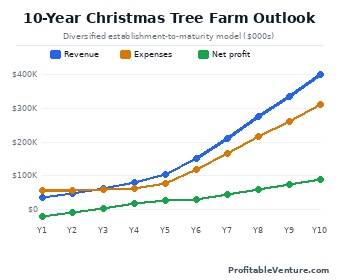
That modest result is deliberate. A Christmas tree farmer should not construct a business plan that depends on mature-tree income before the crop actually exists.
d. Sample Five-Year Profit and Loss Projection
| Item | Year 1 | Year 2 | Year 3 | Year 4 | Year 5 |
|---|---|---|---|---|---|
| Revenue | $35,000 | $48,000 | $62,000 | $80,000 | $105,000 |
| Labor and Contractors | $12,000 | $13,000 | $14,000 | $16,000 | $20,000 |
| Seedlings and Replanting | $8,000 | $8,000 | $8,000 | $8,000 | $9,000 |
| Mowing, Shearing, Fertilizer and Pest Management | $7,000 | $8,000 | $9,000 | $10,000 | $12,000 |
| Equipment Fuel and Maintenance | $6,000 | $6,000 | $7,000 | $8,000 | $9,000 |
| Insurance, Licenses and Property Costs | $5,000 | $5,000 | $5,000 | $5,000 | $6,000 |
| Marketing, Retail and Agritourism | $5,000 | $5,000 | $5,000 | $6,000 | $7,000 |
| Pre-Cut Trees and Greenery Purchased for Resale | $8,000 | $8,000 | $7,000 | $7,000 | $10,000 |
| Administration, Utilities and Miscellaneous | $4,000 | $3,000 | $3,000 | $3,000 | $5,000 |
| Total Expenses | $55,000 | $56,000 | $58,000 | $63,000 | $78,000 |
| Projected Net Result | -$20,000 | -$8,000 | $4,000 | $17,000 | $27,000 |
e. Years 6 to 10: What Happens When More Trees Reach Maturity?
The economics begin to change as significant blocks of farm-grown trees become marketable.
The following maturity-phase outlook assumes the farm continues replanting harvested areas and develops strong choose-and-cut, wreath, greenery, and agritourism sales.
| Fiscal Year | Revenue | Expenses | Net Profit | Net Margin |
|---|---|---|---|---|
| Year 6 | $150,000 | $120,000 | $30,000 | 20.0% |
| Year 7 | $210,000 | $165,000 | $45,000 | 21.4% |
| Year 8 | $275,000 | $215,000 | $60,000 | 21.8% |
| Year 9 | $335,000 | $260,000 | $75,000 | 22.4% |
| Year 10 | $400,000 | $310,000 | $90,000 | 22.5% |
Under this illustration, Years 6 through 10 generate approximately $1.37 million in cumulative revenue and approximately $300,000 in cumulative net profit.
This is why the planting rotation matters so much. You are building an inventory pipeline that may take most of a decade to become fully productive.
f. How Much Profit Do Christmas Tree Farm Owners Make a Year?
There is no standard income because acreage, land ownership, species, retail pricing, and agritourism can change the economics dramatically.
Using the medium-scale diversified model in this guide, annual profit grows from losses during the establishment period toward approximately $30,000 to $90,000 per year as the farm reaches stronger maturity.
A larger established farm selling thousands of trees, wreaths, greenery, and agritourism experiences can earn considerably more, but its labor, equipment, property, and operating expenses will also be much greater.
g. What Factors Determine the Amount of Profit?
- Number of saleable trees
- Retail tree price
- Wholesale versus retail sales
- Species
- Growing cycle
- Tree mortality
- Labor
- Land cost
- Equipment cost
- Customer traffic
- Wreath and greenery revenue
- Agritourism income
- Weather
- Pest and disease losses
- Marketing.
h. What is the Profit Margin of a Christmas Tree Farm?
Profit margin can be negative during the establishment years because you are maintaining a crop that is not yet ready for sale.
Once the farm reaches a sustainable harvest rotation, margins can improve considerably.
The mature portion of the planning model used here produces net margins of approximately 20% to 23%. This is a planning assumption, not a guaranteed industry margin.
i. What is the Sales Forecast?
- Year 1: $35,000
- Year 2: $48,000
- Year 3: $62,000
- Year 4: $80,000
- Year 5: $105,000
- Year 6: $150,000
- Year 7: $210,000
- Year 8: $275,000
- Year 9: $335,000
- Year 10: $400,000.
-
Set Up Your Christmas Tree Farm
a. How Do You Choose the Perfect Location?
Tree-growing suitability comes first. Before buying land, investigate:
- Soil type
- Soil drainage
- Elevation
- Annual rainfall
- Winter temperatures
- Summer heat
- Wind exposure
- Tree species suitability
- Water availability
- Deer pressure
- Disease history
- Access for tractors and trucks.
A choose-and-cut operation has additional requirements. You want the farm close enough to population centers that families will visit without turning the trip into an exhausting journey.
A rural property within roughly 30 to 90 minutes of a sizable population can sometimes work better than farmland far from customers. The entrance also needs to handle seasonal traffic safely.
b. What States and Regions are Worth Researching?
Christmas trees are grown commercially across the United States, but some regions have particularly established industries. States and regions worth researching include:
- Oregon
- North Carolina
- Michigan
- Washington
- Pennsylvania
- Wisconsin
- Virginia
- New York
- Minnesota
- Ohio.
For a choose-and-cut farm, proximity to customers matters almost as much as being located in a major production state.
Areas near Asheville and Boone, North Carolina; Portland and Salem, Oregon; Grand Rapids, Michigan; Madison, Wisconsin; or population centers in Pennsylvania and Virginia may be worth researching, but the exact property must still be evaluated for species suitability, land prices, competition, zoning, and customer access.
c. What Equipment is Needed?
- Tractor
- Rotary mower
- Sprayer
- Fertilizer spreader
- Tree planter
- Utility trailer
- ATV or UTV
- Shearing knives
- Pruning tools
- Chainsaws
- Hand saws for customers
- Tree baler
- Tree shaker
- Netting
- Tree carts
- Wagons
- Loading equipment
- Safety equipment
- First-aid supplies
- Retail POS system.
-
Hire Employees
You do not need a huge year-round workforce when the farm is young. Much of the routine work can be performed by the owner and a small crew, with additional workers hired for planting, shearing, and the November-December retail season.
Train employees carefully on tractor operation, chainsaws, tree cutting, customer safety, parking, loading trees onto vehicles, handling money, and emergency procedures.
During busy weekends, assign employees to specific duties rather than expecting everyone to do everything. For example:
- Parking attendants guide vehicles
- Field staff direct customers to available blocks
- Cutting crews assist customers who cannot cut trees themselves
- Transport crews bring trees to the retail area
- Baling employees shake and wrap trees
- Loading crews secure trees to vehicles
- Cashiers process payments
- Retail staff sell wreaths and merchandise.
This creates a faster and safer customer experience.
-
Launch the Business Proper
Your first public Christmas season should be treated as an operational test rather than an attempt to attract every household in the county. Before opening, walk every customer-accessible part of the property.
- Check farm roads, muddy areas, holes, low branches, fences, parking, restrooms, signs, lighting, tree inventory, and emergency access.
- Count the trees actually ready for sale.
- Do not advertise “thousands of trees” if only 300 are genuinely marketable.
- Tag or map saleable blocks before customers arrive.
You should also test the entire customer journey.
- Where does the customer park?
- Where do they get a saw?
- How do they know which trees are available?
- What happens after the tree is cut?
- How does it get back to the checkout area?
- Where is it shaken and baled?
- How is it loaded?
If those answers are not obvious to you, they will not be obvious to customers.
a. What Makes a Christmas Tree Farm Successful?
- The right species for the land – Poor species selection can waste years.
- Staggered planting – You need future trees at several ages.
- Strong survival rates – Dead seedlings cost time as well as money.
- Good shaping – Customers want attractive trees.
- Accurate inventory – Know how many trees will be marketable each season.
- Working capital – The crop takes years to mature.
- Safe customer access – Important for choose-and-cut farms.
- Good agritourism – Families remember the experience.
- Additional products – Wreaths and greenery increase each customer’s spend.
- Repeat customers – Christmas traditions can produce annual loyalty.
- Careful recordkeeping – Every planting block should have a history.
b. What Happens During a Typical Day at a Christmas Tree Farm?
The answer depends on the season. During planting season, crews prepare planting areas, receive seedlings, mark rows, plant trees, irrigate where necessary, and replace failed plants.
During the growing season, the work focuses on mowing, weed control, pest scouting, fertilizer, road maintenance, and monitoring tree health.
As trees become established, shearing and shaping become extremely important.
Crews work through planting blocks maintaining the conical shape customers expect from a Christmas tree.
The farm becomes a completely different business after Thanksgiving. Parking areas fill with vehicles.
Employees provide saws, answer questions about species, direct families to tree blocks, cut trees for customers when necessary, transport trees back from the field, shake loose needles, bale the trees, collect payment, and help secure trees onto vehicles.
At the same time, another team may be making and selling wreaths, garlands, ornaments, food, or beverages.
The owner needs to monitor tree inventory carefully. If 200 premium 7-foot trees are sold during one weekend, those trees are gone permanently and must have younger trees behind them in the production pipeline.
c. What Skills and Experience Do You Need?
- Basic crop management – Trees need years of care.
- Soil and site understanding – Species selection begins with the land.
- Equipment operation – Tractors and mowers are central to production.
- Pruning and shearing – Tree shape affects value.
- Pest management – Problems can damage entire planting blocks.
- Financial planning – Revenue may be delayed for years.
- Retail management – Essential for choose-and-cut operations.
- Agritourism management – You may host hundreds of visitors in a day.
- Customer service – Families are buying an experience.
- Safety management – Farms contain equipment, saws, vehicles, uneven ground, and weather hazards.
- Marketing – Customers need to know when you are open and what inventory is available.
You can start a Christmas tree farm without having spent your entire life in forestry, but this is not a business where you should learn everything after planting thousands of trees.
- Talk to Extension specialists and experienced growers before choosing species.
- Test the soil
- Study neighboring farms
- Plant a manageable first block
- Keep records
- Learn how to shear trees properly
- Understand pest problems in your region and calculate how much cash you will need during the establishment years.
Most importantly, think in rotations rather than individual Christmas seasons.
The trees you plant this year may be the trees a family takes home six, seven, eight, or even ten Christmases from now.
If you choose the right land, plant suitable species, stagger your acreage, maintain healthy trees, control costs, build supplemental seasonal revenue, and create a farm experience families want to repeat every December, you can build a successful Christmas tree farm even if you started with no previous industry experience.