
Creating activities for nursing home residents, especially those living with dementia, could be both meaningful and therapeutic when designed with care and simplicity.
The right activities can improve mood, reduce anxiety, stimulate memory, and encourage social interaction among residents.
When thoughtfully planned, these activities help residents feel valued, engaged, and connected to their surroundings, even as cognitive abilities decline.

In this article, we will look at some of the most effective dementia-friendly activities.
From sensory exercises and music therapy to crafts, games, and reminiscence activities, these ideas are designed to support emotional well-being and gentle cognitive stimulation, safely and enjoyably.
Best Dementiability Activities for Nursing Home Residents
-
Music Therapy Sessions

Familiar songs can trigger memories, improve mood, and reduce anxiety. Residents can sing along, clap, or simply listen to calming tunes.
Live music or recorded playlists from their younger years work especially well.
Music creates an emotional connection even when verbal communication is limited. Group sessions also encourage social interaction and joy.
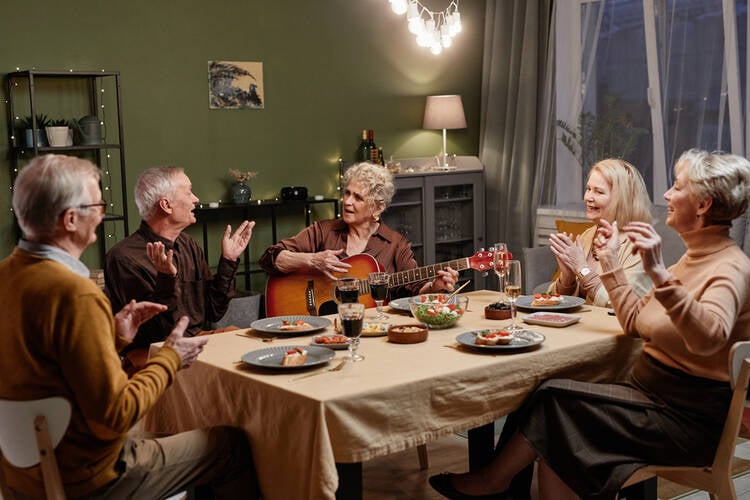
This activity is easy to organize and can be adapted for different energy levels, making it both flexible and highly beneficial for overall well-being.
-
Reminiscence Therapy Activities

Reminiscence activities encourage residents to recall and share past experiences using photos, objects, or storytelling prompts.
These sessions help strengthen memory and identity while promoting conversation.
Items like old household tools, clothing, or family pictures can spark meaningful discussions.
Caregivers guide gently, allowing residents to express themselves without pressure.
This activity fosters emotional connection, reduces feelings of isolation, and builds social bonds among participants.
It is especially effective in group settings where shared memories can lead to laughter and engagement.
-
Sensory Stimulation Activities

Sensory activities involve engaging the five senses through textures, scents, sounds, and visual stimuli.
Examples include scented lotions, textured fabrics, soft music, or nature sounds.
These activities help calm agitation and improve focus in residents with dementia.
Sensory boxes filled with familiar items can also trigger positive memories. Caregivers can adjust stimulation levels based on individual needs.
This type of activity is especially helpful for residents who may struggle with verbal communication, as it allows them to connect with their environment in a non-verbal way.
-
Simple Arts and Crafts

Arts and crafts provide a creative outlet that promotes relaxation and self-expression.
Activities such as coloring, painting, or collage-making are ideal because they are simple and flexible. Residents can work at their own pace without pressure for perfection.
These activities improve fine motor skills and encourage focus. Finished artwork gives a sense of accomplishment and pride.
Group crafting sessions also promote social interaction and shared enjoyment.
-
Gardening Activities
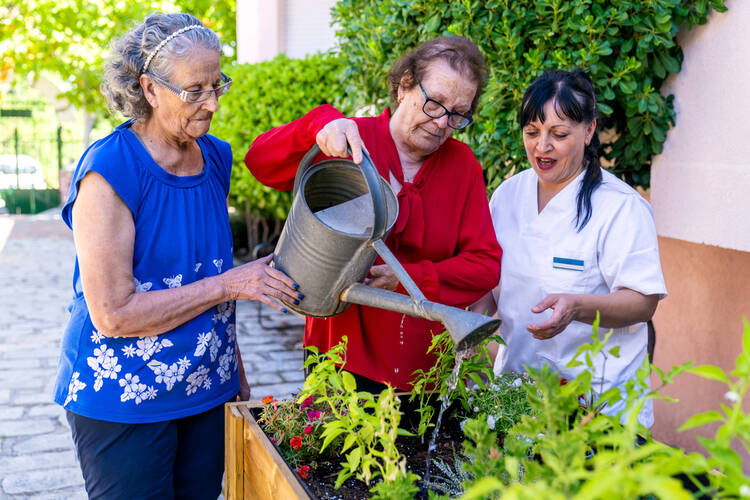
Gardening is a calming and therapeutic activity that connects residents with nature.
Tasks like planting flowers, watering plants, or arranging pots provide gentle physical movement and sensory engagement.
The smell of soil and sight of greenery can trigger positive emotions and memories.
Gardening also promotes responsibility and routine, which can be comforting for individuals with dementia. Even small indoor gardens or container plants can be effective.
This activity supports relaxation, reduces stress, and provides a meaningful sense of purpose.
-
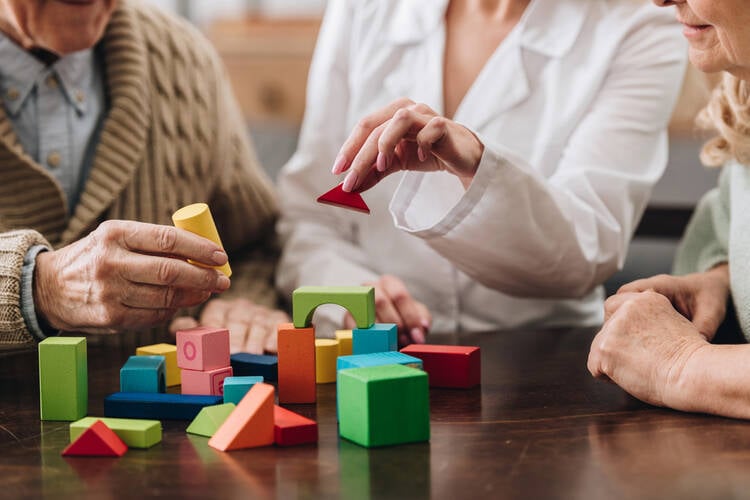
Puzzle and Sorting Games

Simple puzzles and sorting activities help stimulate cognitive function while remaining easy to manage.
Large-piece puzzles, color sorting, or matching games are ideal for dementia-friendly settings.
These tasks improve concentration, hand-eye coordination, and problem-solving skills.
They can be done individually or in groups, encouraging both focus and social interaction.
Caregivers can adjust difficulty levels based on ability. The goal is not competition but engagement and enjoyment, making this a low-stress and rewarding activity for residents.
-
Physical Movement Exercises
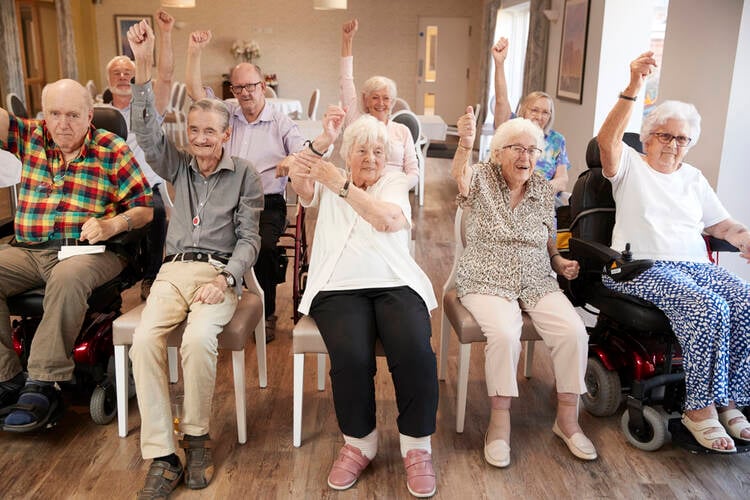
Gentle physical activities such as chair exercises, stretching, or guided movement sessions help improve mobility and circulation.
These exercises can be done safely indoors and adapted to different ability levels. Music can be added to make the session more enjoyable.
Physical movement also helps reduce restlessness and improve sleep patterns. Group exercises encourage social interaction and a sense of community.
Regular movement activities support both physical health and emotional well-being, making them an essential part of dementia care programs.
-
Baking and Cooking Activities
Simple baking or cooking activities allow residents to engage in familiar, comforting routines.
Tasks like mixing ingredients, decorating cookies, or assembling simple snacks can be enjoyable and stimulating. The smell of baked goods often triggers positive memories and emotions.
These activities encourage participation, even if residents only assist with small steps. They also promote social interaction in group settings.
Safety is important, so supervision and simplified tasks are essential. This activity provides a sense of purpose and accomplishment.
-
Pet Therapy Sessions
Pet therapy involves interaction with trained animals such as dogs or cats. These sessions provide comfort, reduce stress, and encourage emotional connection.
Many residents respond positively to the presence of animals, even without verbal communication.
Petting or observing animals can calm agitation and improve mood. These sessions also encourage social interaction among residents and caregivers.
Pet therapy is especially beneficial for individuals who may feel lonely or withdrawn, offering companionship and joy in a natural, soothing way.
-
Storytelling and Reading Groups
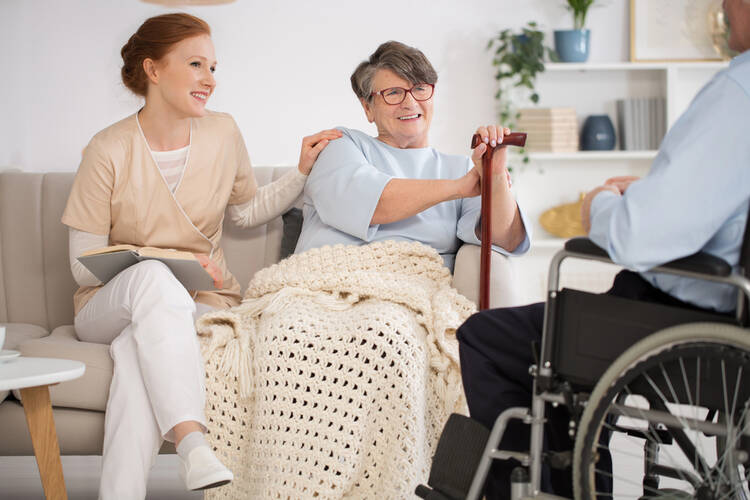
Storytelling and reading activities engage memory, imagination, and communication skills.
Caregivers can read short stories, poems, or news articles aloud, or encourage residents to share their own stories.
Familiar themes often spark discussion and laughter. Group reading sessions create a shared experience that promotes connection.
This activity is adaptable, allowing participation at different cognitive levels. Visual aids or large-print books can be used for accessibility.
Storytelling helps preserve identity and encourages meaningful interaction in a relaxed setting.
-
Balloon Volleyball
Balloon volleyball is a fun, safe, and low-impact group activity where residents gently tap a balloon back and forth.
The slow movement of the balloon makes it easy to follow, even for those with limited mobility or coordination.
It encourages light physical activity, hand-eye coordination, and social interaction.
Residents often laugh and enjoy the relaxed nature of the game. Caregivers can adjust the difficulty by changing balloon size or play style.
This activity is excellent for boosting mood and creating shared enjoyment in group settings.
-
Sorting Household Items
Sorting everyday objects like buttons, utensils, socks, or colored items provides a calming and structured activity.
It taps into familiar life skills, which can be comforting for residents with dementia.
The repetitive nature helps improve focus and reduces anxiety. Items should be safe, large, and easy to handle.
This activity can be done individually or in groups, encouraging conversation and cooperation.
It also gives residents a sense of usefulness, which supports confidence and emotional well-being in a simple, meaningful way.
-
Picture Matching Games
Picture matching involves pairing identical images, such as animals, household items, or familiar objects.
Large, clear cards work best for accessibility. This activity helps stimulate memory, recognition, and concentration without being overwhelming.
It can be played alone or in small groups, promoting both cognitive engagement and social interaction.
Caregivers can adjust the difficulty by reducing or increasing the number of cards.
The familiar visuals often spark conversation and positive emotions, making it a gentle yet effective mental exercise for residents.
-
Scent Identification Activities
Scent-based activities involve identifying familiar smells such as coffee, cinnamon, lemon, or flowers.
Smell is strongly linked to memory, making this activity especially powerful for dementia care.
Residents can guess scents, share memories associated with them, or simply enjoy the sensory experience.
It encourages conversation and emotional engagement in a relaxed setting. Caregivers should ensure scents are mild and safe.
This activity is simple to set up and provides meaningful stimulation without requiring physical or cognitive strain.
-
Simple Board Games

Simple board games like large-piece bingo, dominoes, or modified checkers can be enjoyable and stimulating.
These games encourage turn-taking, focus, and social interaction. Rules should be simplified to reduce confusion and frustration. Visual aids and caregiver assistance help ensure participation.
The goal is enjoyment rather than competition. Board games also help maintain routine and structure, which can be comforting for residents.
Group play encourages laughter and connection, making it a valuable social and cognitive activity.
-
Hand Massage and Relaxation Sessions
Hand massage activities provide comfort, relaxation, and sensory stimulation.
Using gentle lotion or oils, caregivers or trained staff can massage residents’ hands slowly and carefully.
This activity helps reduce anxiety, improve circulation, and promote calmness.
Soft background music can enhance the experience. It is especially helpful for residents who may feel restless or agitated.
Hand massage also encourages trust and emotional connection between caregivers and residents. It is a simple but powerful way to provide comfort and reassurance.
-
Memory Box Exploration
Memory boxes contain personal items such as photos, jewelry, letters, or small keepsakes that reflect a resident’s past. Exploring these items can trigger memories and spark conversation.
This activity helps reinforce identity and emotional connection. Residents can share stories or simply enjoy holding familiar objects.
Caregivers can help guide discussions gently without pressure. Memory boxes are highly individualized, making them especially meaningful.
-
Baking Aromatherapy Experience
Even without full cooking, the experience of baking aromas can be soothing and stimulating.
Activities may include smelling ingredients like vanilla, cinnamon, or fresh bread while discussing baking memories. Residents can also assist with simple mixing or decorating tasks.
The familiar scents often trigger positive memories and emotions. This activity is calming and works well in group settings.
It encourages conversation and engagement without requiring complex steps, making it suitable for various cognitive levels.
-
Chair Dancing or Movement to Music

Chair dancing involves gentle rhythmic movements while seated, often done to familiar or upbeat music. Residents can clap, sway, or move their arms in time with the beat.
This activity improves mood, encourages physical movement, and supports coordination.
It is safe and adaptable for different mobility levels. Music adds energy and excitement, making the session enjoyable and social.
Group participation fosters a sense of community and shared joy, helping reduce feelings of isolation or inactivity.
-
Simple Origami or Folding Activities
Simple paper-folding activities like making fans, hats, or basic shapes can be engaging for residents with dementia.
Pre-folded guides or large paper sheets make the task easier. This activity supports fine motor skills, focus, and hand coordination.
It is calming and repetitive, which can help reduce anxiety. Caregivers can provide step-by-step assistance to ensure success.
Completed pieces give residents a sense of accomplishment. This creative but simple activity encourages concentration and gentle mental stimulation.