
Designing a trampoline park requires careful planning, creativity, and attention to safety.
No doubt, the layout, equipment placement, and overall flow are critical to ensuring a fun, engaging, and secure environment for visitors of all ages.
From wall-to-wall trampolines and foam pits to dodgeball courts and obstacle courses, every element must be strategically arranged to maximize space, enhance the user experience, and minimize risk.

In this article, we are going to explore some of the best trampoline park design ideas, including floor plans and layout tips.
We will cover themes, color schemes, safety zones, and equipment placement strategies that optimize visitor enjoyment while keeping staff and guests safe.
Best Trampoline Park Design Ideas With Floor Plan and Layout
-
Open Jump Area

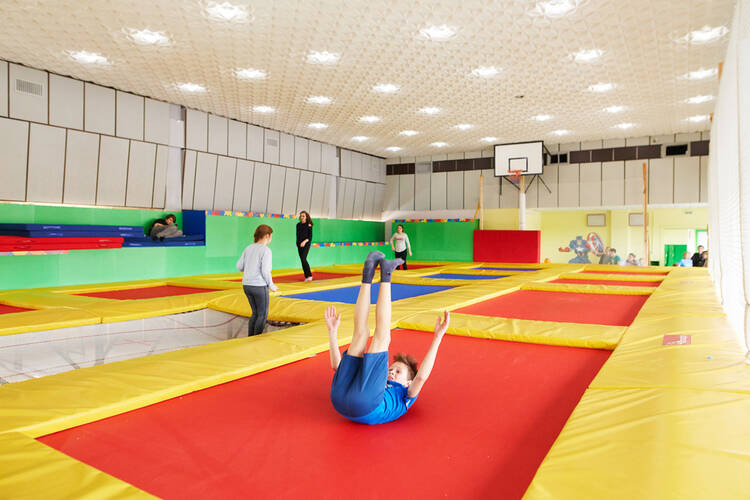
An open jump area is the heart of any trampoline park, offering wall-to-wall trampolines for free jumping. Position this section centrally to allow easy access and supervision.
Ensure adequate padding along edges and between trampolines to reduce injury risks.
The open layout encourages social interaction, high-energy activity, and flexibility for various games.
Incorporate adjustable trampolines to cater to different age groups and skill levels. Clearly mark boundaries and provide walkways for staff and visitors.
-
Foam Pit Zone
Foam pits provide a safe landing area for flips and aerial tricks. Place the pit near wall trampolines or elevated platforms to encourage creative stunts.
Surround with padded surfaces and guardrails for safety. Offer different pit depths or foam densities for beginners and advanced jumpers.
Ensure easy access for staff supervision and maintain clear walkways around the pit.
Foam pits enhance the park’s appeal for trick enthusiasts and attract repeat visitors.
-
Dodgeball Court
Use a rectangular area with trampolines on the floor and along walls for bounce effects. Install padded barriers and netting to separate courts and ensure safety.
Designate spectator seating nearby for engagement. Clearly mark entry and exit points to control traffic flow.
Providing multiple courts allows for tournaments or group bookings. The court layout encourages teamwork and social interaction.
Including this area in your floor plan diversifies offerings, attracts older children and teens, and enhances the park’s overall experience and revenue potential.
-
Slam Dunk Zone
A slam dunk zone combines trampolines with basketball hoops, creating a high-energy attraction.
Position the zone along a wall with reinforced padding and non-slip surfaces. Adjustable hoop heights cater to various age groups and skill levels.
Include a small landing area beyond the trampoline for safety. Ensure clear sightlines for staff supervision and easy access for participants.
This feature draws attention, encourages photo opportunities, and is perfect for events or competitions.
Strategically placing it near the main entrance or central area can enhance visibility, making it an exciting focal point in your trampoline park layout.
-
Obstacle Course
Trampoline obstacle courses challenge agility, balance, and strength. Combine trampolines with climbing walls, rope swings, balance beams, and foam blocks.
Arrange elements sequentially to create a flow that guides participants safely through the course.
Include varying difficulty levels to engage different ages. Place the course away from open jump areas to avoid collisions.
Incorporate spectator seating for engagement. This dynamic design keeps visitors active, encourages repeated attempts, and enhances the park’s versatility.
-
Toddler Zone
A toddler zone caters to younger visitors with age-appropriate trampolines and soft play equipment. Position it in a quieter area to minimize interference with older children.
Include padded floors, low-height trampolines, mini foam pits, and safe climbing structures.
Provide clear boundaries and easy visibility for parents and staff. The space should include seating for guardians and safe access points.
A dedicated toddler area increases family appeal, ensures safety, and promotes a welcoming environment for all ages.
-
Interactive LED Floors
Interactive LED floors add a high-tech, visually stimulating feature to the trampoline park.
Use sensors and LED lighting on trampolines or surrounding areas to create games, patterns, or challenges.
Place them in high-traffic zones or near open jump areas. Ensure the equipment is durable, slip-resistant, and easy to maintain.
Interactive floors increase engagement, encourage repeat visits, and enhance social media shareability. Staff should supervise to prevent misuse or collisions.
Incorporating this feature into your layout elevates the park’s modern appeal, provides entertainment for all ages, and encourages participation in interactive challenges.
-
Wall Trampolines
Wall trampolines allow jumpers to bounce off angled walls for flips and tricks.
Install them along key sections with reinforced padding and non-slip surfaces.
Position away from main walking paths to avoid collisions. Clearly mark height and skill guidelines for safe use.
Wall trampolines create dynamic, exciting areas for active visitors. Include viewing zones for spectators and ensure staff supervision.
Strategically placing them near foam pits or open jump areas maximizes usage.
This design element encourages advanced maneuvers, attracts teens and young adults, and adds visual appeal to the park layout.
-
Party or Private Rooms
Private rooms for birthday parties or events allow controlled group experiences. Design rooms with trampolines, themed décor, tables, and seating.
Ensure visibility from staff areas for supervision and safety. Rooms can include audio-visual equipment for music or games.
Offer flexible layouts to accommodate different group sizes. Private rooms enhance the park’s family appeal, provide exclusive experiences, and reduce crowding in general areas.
Integrating them into the floor plan supports smooth traffic flow and event management.
-
Safety Padding and Walkways
Adequate safety padding and designated walkways are critical for a functional trampoline park. Place thick mats along trampoline edges, walls, and high-traffic zones.
Clearly mark pathways to guide guests safely between sections. Use contrasting colors to improve visibility and reduce accidents.
Strategically placing padding near obstacle courses, foam pits, and dunk zones enhances safety.
Safety-first design increases guest confidence, reduces liability risks, and ensures compliance with regulations.
Well-planned walkways improve circulation and overall guest experience while maintaining a secure environment.
-
Ninja Warrior Section
A Ninja Warrior-style section adds challenge and excitement, featuring rope climbs, monkey bars, swinging obstacles, and angled trampolines.
Arrange obstacles in a sequential course with safety padding underneath and around each station.
Clearly mark difficulty levels for different age groups and skill levels. Place the area away from open jump zones to minimize collisions.
This section attracts teens and adults seeking a high-energy experience, encourages repeated attempts, and enhances the park’s appeal for competitions or special events.
-
Rock Climbing Walls

Incorporate rock climbing walls adjacent to trampolines or foam pits for added vertical activity.
Ensure walls are securely mounted and padded at the base to prevent injuries. Include multiple difficulty levels to cater to children and adults.
Rock climbing walls diversify the park’s offerings, encourage physical fitness, and attract adventure-seeking visitors.

This design element complements trampolines and obstacle courses, creating a dynamic, multi-level environment that keeps guests engaged for longer periods.
-
Lounge and Spectator Areas
Create designated lounge and spectator areas for parents, guardians, or non-jumping visitors. Include comfortable seating, tables, and charging stations.
Position these areas with clear sightlines to trampoline zones for supervision.
Consider incorporating screens or TVs displaying live feeds of the jump zones.
Lounges improve visitor comfort, encourage longer visits, and increase food and beverage sales.
A well-planned spectator area balances active and passive experiences, making the park welcoming for families and groups.
-
Snack and Concession Zone
Include a snack and concession zone with quick access from all trampoline areas. Position counters, seating, and display shelves for efficient service.
Offer healthy snacks, drinks, and quick meals to accommodate different visitor preferences.
A dedicated food area enhances guest satisfaction, encourages longer dwell time, and increases per-visitor revenue.
By integrating it into the floor plan, you create a convenient, profitable, and enjoyable experience for visitors.
-
Themed Zones and Color Coding
Design themed trampoline zones with distinct colors, graphics, and décor to create a visually engaging environment.
Use color coding to differentiate age-appropriate or skill-based areas, making navigation easier and safer.
Themes like space, jungle, or adventure can enhance excitement and provide photo opportunities.
Themed zones increase visitor engagement, improve safety by guiding participants to appropriate areas, and create memorable experiences.
Incorporating creative décor and color coding throughout the floor plan elevates the park’s aesthetic appeal, encourages social sharing, and strengthens brand identity while enhancing overall guest satisfaction.