A data center business provides highly secure, continuously powered, climate-controlled facilities where businesses, cloud providers, technology companies, government organizations, financial institutions, healthcare companies, software developers, artificial intelligence companies, and other customers can house servers, storage systems, networking equipment, and other critical computing infrastructure.
Unlike an ordinary commercial building, a data center is specifically engineered to keep computer equipment operating continuously.
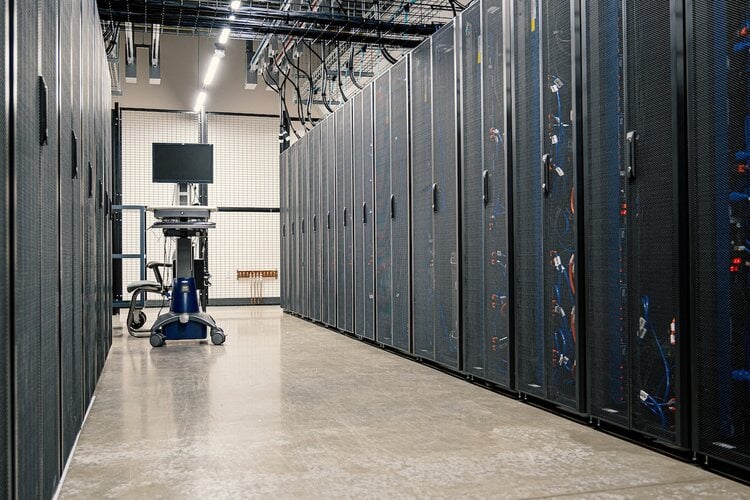
A professionally developed facility may include utility power feeds, substations, transformers, switchgear,
Uninterruptible power supply systems, battery systems, standby generators, precision cooling, fire detection and suppression, network connectivity, carrier rooms, security checkpoints,
CCTV systems, biometric access controls, raised or slab data halls, server cabinets, cages, monitoring software, and 24-hour technical support.
Data center companies can generate income from colocation, power capacity, private cages, dedicated suites, cross-connects, internet connectivity,
Remote hands, managed infrastructure, equipment installation, disaster-recovery services, storage, cloud connectivity, and other technical services.
The business is capital intensive, but once a facility achieves strong occupancy, long-term customer contracts and recurring monthly billing can produce predictable revenue.
Demand for data centers is being supported by cloud computing, artificial intelligence, streaming media, software-as-a-service applications, e-commerce, financial technology, healthcare technology, enterprise digitization, cybersecurity, and the enormous amount of information being created and stored every day.
However, the modern data center business is increasingly constrained by one resource above everything else:
Reliable electrical power.
For this reason, successful data center development begins with power availability, fiber connectivity, permitting, cooling requirements, and site feasibility rather than simply finding inexpensive real estate.
Steps on How to Write a Data Center Business Plan
-
Executive Summary
Utech Datacenters is a proposed carrier-neutral colocation and edge-data-center company based in the Dallas-Fort Worth metropolitan area of Texas.
The company will develop and operate secure, professionally engineered facilities where businesses can colocate servers, network equipment, storage systems, and other mission-critical computing infrastructure.
Our initial Phase 1 facility will be designed around approximately 2 megawatts of critical IT capacity with roughly 160 customer cabinets, depending on final cabinet density and engineering design.
The facility will occupy approximately 40,000 to 50,000 square feet and will include:
- Secure data halls
- Standard and high-density cabinets
- Private customer cages
- Meet-me/network rooms
- UPS systems
- Battery backup
- Standby generator capacity
- Redundant cooling
- Multiple fiber pathways
- Carrier-neutral network connectivity
- Fire detection and suppression
- 24-hour monitoring
- Controlled physical access
- CCTV surveillance
- Loading and staging areas
- Network Operations Center facilities.
The design objective will be to provide high availability and maintainability using recognized industry engineering principles.
Utech Datacenters will not claim formal Tier certification unless the facility has actually completed the appropriate independent certification process. The business will primarily serve:
- Small and medium-sized enterprises
- Software companies
- Managed service providers
- Cloud service companies
- Artificial intelligence businesses
- Financial services firms
- Healthcare organizations
- E-commerce companies
- Telecommunications companies
- Government contractors
- Content providers
- Enterprise IT departments.
Our principal revenue will come from recurring colocation agreements involving cabinet space and contracted power capacity. Additional income will come from:
- Cross-connects
- Remote hands
- Network connectivity
- Private cages
- Equipment installation
- Managed infrastructure services
- Customer staging
- Cloud connectivity
- Other value-added data center services.
Phase 1 is expected to require approximately $30 million in development capital.
The company will initially concentrate on filling the first 2 MW of capacity before developing additional data halls.
The longer-term objective is to expand Utech Datacenters into a multi-facility regional platform with 10 MW or more of capacity across Dallas-Fort Worth and other strategic U.S. markets.
-
Company Profile
a. Our Products and Services
Utech Datacenters will provide the following products and services:
Colocation Services
Customers will rent secure cabinet space together with contracted electrical capacity. Options will include:
- Quarter cabinets
- Half cabinets
- Full cabinets
- High-density cabinets
- Private cages
- Dedicated customer suites.
Customers will install their own servers, networking equipment, storage systems, and related hardware unless managed services are purchased separately.
Standard Cabinet Colocation
Standard cabinets will serve businesses requiring moderate power densities. Services may include:
- Lockable cabinets
- Metered power
- Redundant power feeds where contracted
- Cooling
- Physical security
- Network availability
- Environmental monitoring.
High-Density Colocation
Selected data halls will support higher-density workloads. High-density configurations may serve:
- Artificial intelligence workloads
- GPU servers
- High-performance computing
- Analytics platforms
- Scientific computing
- Dense private cloud deployments.
Exact power density will depend on the final electrical and cooling design.
Private Cages
Enterprise customers requiring greater separation may rent private secured areas containing multiple cabinets. Cage customers may receive:
- Dedicated access control
- Customized cabinet layouts
- Dedicated power allocations
- Additional cameras where appropriate
- Customized connectivity.
Cross-Connect Services
Customers will be able to connect directly to:
- Internet service providers
- Telecommunications carriers
- Cloud providers
- Other customers
- Network exchanges where available.
Cross-connects may include:
- Single-mode fiber
- Multimode fiber
- Copper connections
- Other supported media.
Remote Hands
Customers who cannot send technicians to the facility may request Utech employees to perform approved tasks. Examples include:
- Rebooting servers
- Replacing cables
- Checking indicator lights
- Installing equipment
- Swapping approved components
- Taking photographs
- Connecting console cables
- Receiving equipment.
Managed Infrastructure Services
Depending on customer demand, Utech Datacenters may provide:
- Server monitoring
- Network monitoring
- Operating system support
- Backup services
- Managed firewalls
- Managed network equipment
- Infrastructure monitoring
- Hardware support coordination.
Cloud and Network Connectivity
Utech Datacenters will develop relationships with carriers and cloud-connectivity providers. Customers may purchase:
- Internet transit
- Private network connectivity
- Cloud interconnections
- Redundant carrier services.
Disaster Recovery Infrastructure
Businesses may use Utech Datacenters to house:
- Backup servers
- Replication systems
- Recovery infrastructure
- Secondary network equipment.
b. Nature of the Business
Utech Datacenters will operate primarily using a business-to-business model. Customers will enter monthly, annual, or multi-year service agreements.
The business will emphasize recurring revenue. Rather than making one-time equipment sales, Utech will primarily sell:
- Space
- Power
- Cooling
- Connectivity
- Security
- Technical support.
c. The Industry
Utech Datacenters will operate within the data center, digital infrastructure, colocation, telecommunications, cloud infrastructure, and information technology services industries.
d. Mission Statement
“At Utech Datacenters, our mission is to provide businesses with secure, reliable, scalable, and professionally operated infrastructure for their most important digital systems.
We are committed to dependable power, efficient cooling, carrier-neutral connectivity, strong physical security, responsive technical support, and transparent customer service.”
e. Vision Statement
“Utech Datacenters envisions becoming one of America’s most trusted independent regional data center platforms.
Our long-term goal is to develop highly reliable facilities in strategically selected markets where businesses can securely operate cloud, artificial intelligence, enterprise, financial, healthcare, communications, and other mission-critical workloads.”
f. Our Tagline (Slogan)
“Utech Datacenters – Powering What Never Stops.”
g. Legal Structure of the Business (LLC, C Corp, S Corp, LLP)
Utech Datacenters will be incorporated as a privately held corporation. The corporate structure is appropriate because the business will require substantial outside capital. Future financing may involve:
- Founder equity
- Institutional investors
- Private equity
- Infrastructure funds
- Commercial lenders
- Real estate financing
- Joint venture partners.
Management may establish separate special-purpose property entities for individual data center locations.
This can separate the operating business from individual real estate assets and facilitate project financing.
h. Our Organizational Structure
- Chief Executive Officer
- Chief Operating Officer
- Chief Technology Officer
- Data Center General Manager
- Facilities Engineering Manager
- Network Engineering Manager
- Critical Facilities Engineers
- Network Engineers
- Systems Administrators
- Network Operations Center Technicians
- Remote Hands Technicians
- Physical Security Supervisor
- Security Officers
- Sales and Business Development Director
- Customer Success Manager
- Finance and Administration Manager.
Certain specialist services may initially be outsourced. These may include:
- Generator maintenance
- UPS maintenance
- Fire suppression inspection
- Mechanical maintenance
- Electrical testing
- Security staffing.
i. Ownership/Shareholder Structure and Board Members
Our proposed initial ownership structure is:
- Victor Utech – Founder, Chairman and Chief Executive Officer – 42 Percent Shares
- Michael Utech – Co-Founder and Board Member – 18 Percent Shares
- Digital Infrastructure Investment Partners – 20 Percent Shares
- Rebecca Thomas – Board Member – 10 Percent Shares
- Anthony Mitchell – Board Member – 10 Percent Shares.
Additional equity may be issued during future financing rounds.
-
SWOT Analysis
a. Strength
- Recurring Revenue: Colocation customers typically purchase capacity through ongoing contracts rather than one-time transactions.
- High Customer Switching Costs: Physically relocating servers and network equipment can be expensive and disruptive.
- Dallas-Fort Worth Location: The region is one of America’s major data center markets.
- Carrier-Neutral Model: Multiple network providers can make the facility more attractive to enterprise customers.
- Scalable Facility: Data halls can be developed in phases as demand grows.
- Growing Digital Demand: Cloud computing, AI, e-commerce, and enterprise digitization continue increasing demand for computing infrastructure.
- Value-Added Revenue: Cross-connects, remote hands, managed services, and private cages can increase revenue beyond basic cabinet rent.
- Enterprise Customer Retention: Well-served customers may remain in the same data center for many years.
b. Weakness
- Extremely high initial capital requirements.
- Long development timelines.
- Power availability can delay projects.
- Specialized electrical and mechanical equipment has long lead times.
- Highly skilled employees can be expensive.
- A significant portion of operating expenses comes from electricity.
- New operators must establish credibility before major enterprises entrust them with critical systems.
- Construction delays can materially affect financial projections.
- Debt servicing can reduce early-year profitability.
c. Opportunities
- Artificial intelligence infrastructure
- GPU colocation
- Private cloud infrastructure
- Disaster recovery
- Edge computing
- Healthcare IT
- Financial services
- Cloud connectivity
- Managed infrastructure
- Enterprise outsourcing
- High-density computing
- Acquisition of smaller facilities
- Additional regional data centers.
i. How Big is the Industry?
The data center industry has become one of the most important parts of modern digital infrastructure. Facilities support:
- Cloud computing
- Artificial intelligence
- Streaming media
- Online banking
- Software applications
- E-commerce
- Government systems
- Healthcare applications
- Social media
- Telecommunications
- Enterprise IT.
Major U.S. data center markets contain thousands of megawatts of installed capacity.
Dallas-Fort Worth itself has developed into one of the country’s largest data center markets.
Demand remains strong enough that newly constructed capacity in major markets is frequently committed well before buildings are completed.
This creates substantial opportunities for operators that can secure power, land, financing, and customer commitments.
ii. Is the Industry Growing or Declining?
The industry is experiencing significant growth. Several forces are contributing:
- Artificial intelligence
- Cloud migration
- Data storage
- Streaming
- Enterprise digitization
- Cybersecurity
- Internet-connected devices
- Online services.
However, industry growth does not mean every proposed data center will succeed.
The largest challenge is increasingly the ability to actually deliver infrastructure. Potential bottlenecks include:
- Electrical power
- Transmission capacity
- Transformers
- Switchgear
- Generators
- Skilled construction labor
- Cooling equipment
- Permitting
- Community acceptance.
Therefore, Utech Datacenters will treat secured power capacity as one of the most important development milestones.
iii. What are the Future Trends in the Industry?
Future trends include:
- Artificial Intelligence: AI infrastructure is creating demand for far higher computing and power densities.
- Liquid Cooling: Higher-density servers may increasingly require direct liquid cooling rather than traditional air cooling alone.
- Power-Constrained Development: Facilities may increasingly be developed in markets where electricity is available rather than simply where land is inexpensive.
- Alternative Power: Operators may explore onsite generation, energy storage, renewable power arrangements, and other solutions.
- Higher Rack Density: Traditional low-density cabinets will increasingly coexist with high-density GPU cabinets.
- Edge Data Centers: Smaller facilities closer to customers can support latency-sensitive workloads.
- Sustainability: Customers and investors will increasingly monitor power usage effectiveness, water use, renewable energy, and carbon emissions.
- Prefabrication: Modular electrical and mechanical systems may reduce construction timelines.
- Carrier Neutrality: Customers will continue valuing facilities where multiple network carriers compete.
- Long-Term Preleasing: Customers may contract for capacity years before delivery.
iv. Are There Existing Niches in the Industry?
Yes. Data center niches include:
- Retail colocation
- Wholesale colocation
- Hyperscale data centers
- Edge data centers
- AI/GPU data centers
- High-performance computing
- Managed hosting
- Cloud infrastructure
- Disaster recovery
- Government data centers
- Financial services facilities
- Healthcare-focused facilities
- Carrier hotels
- Green/sustainable data centers.
Utech Datacenters will initially operate as a retail and mid-market colocation provider with selective high-density capacity.
v. Can You Sell a Franchise of your Business in the Future?
Technically, a data center operating model could potentially be licensed. However, conventional franchising is not the most appropriate expansion strategy. Data centers require:
- Large amounts of capital
- Power agreements
- Engineering
- Technical expertise
- Real estate
- Long-term financing
- Complex operational standards.
Utech Datacenters will therefore expand primarily through:
- Company-owned facilities
- Joint ventures
- Institutional investment partnerships
- Acquisitions
- Development partnerships.
d. Threats
- Power shortages
- Utility interconnection delays
- Construction cost inflation
- Interest rate increases
- Transformer and switchgear shortages
- Equipment failures
- Cybersecurity incidents
- Physical security breaches
- Fire
- Cooling failures
- Generator failures
- Natural disasters
- Community opposition
- Large competitors
- Changing technology
- Customer concentration.
i. Who are the Major Competitors?
Major data center companies competing in Dallas-Fort Worth and other U.S. markets include:
- Equinix
- Digital Realty
- CyrusOne
- QTS Data Centers
- DataBank
- Flexential
- Stream Data Centers
- Aligned Data Centers
- Compass Datacenters
- STACK Infrastructure
- NTT Global Data Centers
- TierPoint
- Regional independent colocation providers.
Utech Datacenters will not attempt to compete with hyperscale providers solely on total facility size. Instead, our competitive advantages will include:
- Mid-market customer focus
- Responsive management
- Flexible contract structures
- Carrier neutrality
- High-quality remote hands
- Ability to support smaller deployments
- Personalized enterprise support.
ii. Is There a Franchise for Data Center Business?
Traditional data center franchises are uncommon. Most data center companies grow through:
- Direct development
- Acquisitions
- Real estate partnerships
- Joint ventures
- Private equity investment
- Infrastructure funds.
Utech Datacenters will follow this model.
iii. Are There Policies, Regulations, or Zoning Laws Affecting Data Center Businesses in the United States of America?
Yes. Data center development involves numerous federal, state, county, city, environmental, construction, utility, and safety requirements. Potential requirements include:
- Zoning approval
- Site-plan approval
- Building permits
- Electrical permits
- Mechanical permits
- Plumbing permits
- Fire department approval
- Certificate of occupancy
- Accessibility requirements
- Stormwater requirements
- Fuel-storage requirements
- Air-quality requirements
- Generator permitting
- Cooling-system permitting
- Utility interconnection approval
- Workplace safety requirements.
Backup generation requires particular attention. Diesel or natural-gas generators can create air emissions and may require environmental authorization depending on facility design and operating characteristics.
Cooling towers, refrigerants, and fuel storage may also create environmental compliance requirements.
Management will retain experienced environmental and permitting professionals before finalizing facility design.
Electrical design will comply with applicable electrical and fire codes. The company may also design around recognized data center industry practices and standards such as:
- TIA-942 principles
- Relevant NFPA standards
- ASHRAE thermal guidance
- Uptime Institute availability concepts.
These industry standards should not automatically be confused with government licensing requirements.
If Utech Datacenters seeks formal certification, the applicable independent certification process will be completed before the company advertises itself as certified.
The facility may eventually pursue security and operational certifications such as:
- SOC reporting
- ISO 27001
- Other customer-driven compliance frameworks.
Industry-specific customer requirements may also apply. For example, financial, healthcare, government, or payment-card customers may impose additional contractual security and compliance obligations.
Texas also provides potential sales-tax incentives for certain very large qualifying data center projects.
However, Utech Datacenters’ proposed Phase 1 is substantially smaller than the investment and facility thresholds normally required for those programs.
Management will therefore not include such incentives in the initial financial plan.
-
Marketing Plan
a. Who is Your Target Audience?
Because Utech Datacenters is a business-to-business infrastructure company, traditional consumer demographic measures are less important.
i. Age Range:
Our decision-makers will generally be experienced professionals rather than a specific age group. These may include:
- Chief Information Officers
- Chief Technology Officers
- IT Directors
- Infrastructure Managers
- Network Engineers
- Cloud Architects
- Chief Information Security Officers
- Procurement Managers
- Business Owners.
ii. Level of Education:
Many decision-makers will have university degrees or substantial professional experience in technology, engineering, networking, cybersecurity, or business management.
iii. Income Level:
Not applicable in the traditional consumer sense. Our customer companies will range from funded startups to large enterprises.
iv. Ethnicity:
No specific ethnicity.
v. Language:
English will be the primary operating language.
vi. Geographical Location:
Our first facility will primarily target companies in:
- Dallas
- Fort Worth
- Plano
- Irving
- Richardson
- Frisco
- Arlington
- Other Dallas-Fort Worth communities.
National and international companies needing a Texas colocation location will also be targeted.
vii. Business Profile:
Our ideal customers include:
- Managed service providers
- Software companies
- Financial companies
- Healthcare organizations
- Cloud service providers
- E-commerce companies
- AI companies
- Telecommunications companies
- Professional service firms
- Government contractors
- Content and media companies.
b. Advertising and Promotion Strategies
- Direct enterprise sales
- Technology conferences
- Channel partnerships
- Managed service provider partnerships
- Telecommunications carrier relationships
- Cloud partner relationships
- Data center tours
- Technology networking events
- IT executive events
- Referral partnerships
- Broker and agent programs.
i. Traditional Marketing Strategies
- Direct corporate presentations
- Trade shows
- Data center tours
- Technology conferences
- Industry networking
- Channel partnerships
- Corporate sales teams
- Technology broker relationships.
ii. Digital Marketing Strategies
- Search engine optimization
- Paid search advertising
- LinkedIn marketing
- Email campaigns
- Technical content marketing
- Webinars
- Virtual facility tours
- Online quote requests
- Technical white papers
- Customer case studies.
iii. Social Media Marketing Plan
LinkedIn will be our principal social platform. Content may include:
- Data center construction milestones
- Infrastructure explanations
- Employee profiles
- Facility expansion announcements
- Network carrier announcements
- Technical education
- Power efficiency initiatives
- Customer case studies with permission
- Community engagement.
Sensitive facility information will not be published merely for marketing purposes.
Detailed security layouts, camera positions, access procedures, utility diagrams, and other sensitive operational information will remain confidential.
c. Pricing Strategy
Utech Datacenters will use recurring contract pricing based primarily on:
- Cabinet space
- Power capacity
- Power redundancy
- Cabinet density
- Contract length
- Connectivity
- Support services
- Customer scale.
Larger commitments and longer contracts may receive lower unit pricing. The company will avoid underpricing long-term power commitments simply to fill the facility. Electrical capacity is one of the company’s most valuable assets.
-
Sales and Distribution Plan
a. Sales Channels
Utech Datacenters will generate sales through:
- Direct enterprise sales
- Data center brokers
- Technology consultants
- Managed service providers
- Telecommunications carriers
- Cloud partners
- Website inquiries
- Referral partners
- Technology conferences.
Direct sales representatives will target organizations facing:
- Office data center closures
- Cloud migration challenges
- Capacity shortages
- Disaster recovery requirements
- New AI workloads
- Business expansion
- Compliance requirements
- Network growth.
b. Inventory Strategy
A data center’s principal sellable inventory is:
- Critical power capacity
- Cabinets
- Cage space
- Data hall capacity
- Cross-connect capacity
- Cooling capacity.
Management will track:
- Total commissioned MW
- Contracted MW
- Installed MW
- Available MW
- Cabinets sold
- Cabinets available
- Reserved future capacity.
Utech Datacenters will not oversell the facility. Customer contracts must remain aligned with actual electrical and cooling capability.
c. Payment Options for Customers
Utech Datacenters will accept:
- ACH payments
- Wire transfers
- Corporate checks
- Approved automated billing
- Other commercial payment methods.
Customers will typically receive recurring monthly invoices. Long-term agreements may require:
- Security deposits
- Installation fees
- Advance payments
- Credit approval.
d. Return Policy, Incentives and Guarantees
Cancellation Policy:
Colocation contracts will clearly specify:
- Contract term
- Renewal
- Cancellation
- Early termination
- Installation fees
- Decommissioning
- Equipment removal
- Payment obligations.
Once infrastructure has been reserved or customized for a customer, certain fees may be non-refundable.
Incentives:
Utech Datacenters may offer:
- Long-term contract pricing
- Volume discounts
- Reduced installation charges
- Bundled cross-connect packages
- Migration assistance
- Reserved expansion capacity.
Guarantees:
Services will operate under formal Service Level Agreements. SLAs may cover:
- Power availability
- Temperature
- Network service where applicable
- Support response times.
Financial service credits may apply if contracted service levels are not achieved.
The company will not make uptime guarantees beyond what its engineering, contracts, and insurance can responsibly support.
e. Customer Support Strategy
Utech Datacenters will provide 24-hour technical support. Customers may contact:
- Network Operations Center
- Customer portal
- Telephone support
- Email support
- Dedicated account managers.
Enterprise customers will receive designated account support. Tickets will be prioritized according to severity. Emergency infrastructure issues will receive immediate escalation.
-
Operational Plan
Utech Datacenters will operate 24 hours a day, 365 days a year. The facility cannot close at night, on weekends, or during holidays.
Critical systems will be continuously monitored. Major infrastructure will include:
- Utility electrical service
- Transformers
- Switchgear
- UPS systems
- Battery systems
- Standby generators
- Fuel systems
- Cooling systems
- Building management systems
- Data center infrastructure management systems
- Fire detection
- Fire suppression
- Security systems
- Fiber connectivity.
Preventive maintenance will be essential. Electrical and cooling equipment will be serviced according to defined schedules.
Maintenance procedures will minimize the possibility that maintenance itself creates an outage.
a. What Happens During a Typical Day at a Data Center?
There is no true “opening” or “closing” period. The data center remains operational continuously. At every shift change, the outgoing team briefs the incoming team on:
- Open incidents
- Maintenance activity
- Customer work orders
- Environmental conditions
- Power systems
- Cooling systems
- Security events.
Network Operations Center technicians monitor:
- Alarms
- Network connectivity
- Customer tickets
- Environmental systems.
Critical facilities personnel monitor:
- UPS load
- Generator readiness
- Electrical distribution
- Cooling equipment
- Temperature
- Humidity
- Fuel levels.
Security personnel monitor entrances, cameras, visitor activity, and access systems.
Customers or approved contractors arriving at the facility complete security procedures before entering authorized areas.
Remote hands technicians perform scheduled work for clients. Preventive maintenance may take place throughout the day.
Major maintenance will be planned through formal procedures and reviewed before execution.
b. Production Process
A data center does not manufacture a conventional product. Its service-production process consists of:
- Secure land and power.
- Engineer the facility.
- Construct and commission infrastructure.
- Connect network carriers.
- Install cabinets.
- Market available capacity.
- Sign customer contracts.
- Provision power and connectivity.
- Install or receive customer equipment.
- Monitor systems continuously.
- Provide support.
- Invoice recurring services.
c. Service Procedure
A potential customer first contacts the sales team. Sales engineers identify:
- Number of cabinets
- Required power
- Power redundancy
- Expected equipment density
- Network providers
- Cross-connect requirements
- Security requirements
- Expansion plans.
Utech prepares a technical and commercial proposal. Once the customer signs the agreement, the implementation team reserves capacity.
Customer cabinets, power distribution, network connections, and access permissions are prepared.
Equipment is then installed. After testing, the customer environment enters production.
d. The Supply Chain
Utech Datacenters will maintain relationships with:
- Electric utilities
- Electrical contractors
- Mechanical contractors
- Generator manufacturers
- UPS manufacturers
- Switchgear suppliers
- Transformer suppliers
- Cooling-system manufacturers
- Battery suppliers
- Server cabinet suppliers
- Fire suppression companies
- Security companies
- Fiber carriers
- Internet service providers
- Cloud-connectivity providers
- Fuel suppliers
- Engineering firms
- Construction contractors.
Long-lead electrical equipment will be ordered early in the development process.
e. Sources of Income
Utech Datacenters will generate income from:
- Quarter-rack colocation
- Half-rack colocation
- Full cabinets
- High-density cabinets
- Private cages
- Private suites
- Power capacity
- Cross-connects
- Internet connectivity
- Cloud connectivity
- Remote hands
- Managed infrastructure
- Equipment installation
- Customer staging
- Disaster recovery infrastructure
- Other technical services.
-
Financial Plan
a. Amount Needed to Start Utech Datacenters?
Utech Datacenters will require approximately $30 million to develop Phase 1 of the proposed Dallas-Fort Worth facility.
This budget assumes approximately 2 MW of critical IT capacity. A hyperscale campus would require dramatically more capital.
Likewise, acquiring and refurbishing an existing data center could produce a different cost structure.
The $30 million estimate does not include the cost of servers, GPUs, or other IT hardware owned by customers.
Utech’s investment will primarily fund the building and critical infrastructure needed to support customer equipment.
b. What are the Costs Involved?
Our preliminary Phase 1 budget is:
- Land/Site Acquisition, Utility Deposits and Power Development: $2,500,000
- Building Shell, Civil Work and Site Development: $5,000,000
- Electrical Infrastructure, UPS, Generators, Transformers and Switchgear: $9,500,000
- Cooling and Mechanical Infrastructure: $4,000,000
- Network, Fiber and Physical Security Infrastructure: $1,500,000
- Racks, Fire Systems and DCIM/BMS Systems: $1,500,000
- Engineering, Design, Legal and Permitting: $1,500,000
- Working Capital, Preopening Costs and Contingency: $4,500,000.
Total Estimated Phase 1 Requirement: $30,000,000.
Management will carry meaningful contingency because data center development is vulnerable to:
- Equipment escalation
- Design changes
- Utility requirements
- Long lead times
- Construction delays.
c. Do You Need to Build a Facility? If YES, How Much Will it Cost?
Yes. The physical facility is the core product. Utech Datacenters expects to invest approximately $23 million to $25 million of the initial budget directly into:
- Land and site development
- Building construction
- Power infrastructure
- Cooling
- Security
- Network infrastructure
- Fire protection
- Data center equipment.
The final project cost can vary significantly according to:
- Power availability
- Land conditions
- Redundancy level
- Cooling design
- Rack density
- Generator configuration
- Building type
- Equipment prices
- Construction schedule.
d. What are the Ongoing Expenses for Running a Data Center?
Major ongoing expenses include:
- Electricity
- Employee salaries
- Network connectivity
- Generator maintenance
- UPS maintenance
- Cooling-system maintenance
- Fuel
- Property insurance
- Cyber insurance
- General liability insurance
- Property taxes
- Security
- Building maintenance
- Fire-system inspection
- Software and monitoring
- Replacement batteries
- Spare parts
- Professional services
- Debt service.
Electricity will be one of the largest operating expenses. Management will therefore monitor Power Usage Effectiveness (PUE) continuously.
The long-term operating objective will be to achieve an efficient PUE appropriate to the design, local climate, load level, and cooling technology.
e. What is the Average Salary of your Staff?
Our preliminary compensation assumptions are:
- Chief Executive Officer – $175,000 Per Year
- Chief Operating Officer – $155,000 Per Year
- Chief Technology Officer – $165,000 Per Year
- Data Center General Manager – $135,000 Per Year
- Facilities Engineering Manager – $125,000 Per Year
- Network Engineering Manager – $125,000 Per Year
- Critical Facilities Engineers – $85,000 – $110,000 Per Year
- Network Engineers – $95,000 – $125,000 Per Year
- Systems Administrators – $85,000 – $110,000 Per Year
- NOC Technicians – $60,000 – $80,000 Per Year
- Remote Hands Technicians – $55,000 – $75,000 Per Year
- Sales Director – $110,000 Per Year plus commission
- Customer Success Manager – $80,000 Per Year
- Security Supervisor – $60,000 Per Year.
Highly specialized electrical and mechanical personnel may command higher compensation.
Some maintenance functions may initially be performed by specialist contractors.
f. How Do You Get Funding to Start a Data Center?
Potential funding sources include:
- Founder equity
- Private equity
- Infrastructure investment funds
- Commercial bank loans
- Real estate financing
- Construction loans
- Institutional investors
- Family offices
- Joint venture partners
- Strategic technology investors
- Equipment financing
- Sale-leaseback arrangements
- Customer precommitments.
Customer preleasing can be extremely valuable. A lender may view a facility with signed customer commitments differently from a speculative facility with no contracted revenue.
Utech Datacenters will therefore begin enterprise sales activity before Phase 1 construction is complete.
-
Financial Projection
a. How Much Should You Charge for Your Product/Service?
Actual colocation pricing depends heavily on power density, contract duration, redundancy, market conditions, and customer volume.
The following figures represent Utech’s preliminary planning ranges rather than guaranteed market rates.
Quarter Cabinet
- $400 – $800 per month plus applicable power and connectivity.
Half Cabinet
- $750 – $1,500 per month depending on power.
Standard Full Cabinet
- 3 – 5 kW deployment: approximately $1,500 – $2,500 per month
- 5 – 10 kW deployment: approximately $2,500 – $4,500 per month
High-Density Cabinet
- 15 – 30+ kW: approximately $5,000 – $12,000+ per month depending on cooling, power, and configuration.
Private Cages and Suites
- Custom contract pricing based on floor area and committed power.
Cross-Connects
- Installation: approximately $250 – $600
- Recurring Cross-Connect: approximately $150 – $350 per month
Remote Hands
- $150 – $250 per technician hour
Emergency or after-hours support may carry premium rates.
Managed Infrastructure Services
- Approximately $500 – $5,000+ per month depending on service scope.
b. Sales Forecast?
Based on a gradual ramp toward mature occupancy, Utech Datacenters projects:
- First Fiscal Year (FY1): $3,200,000
- Second Fiscal Year (FY2): $5,000,000
- Third Fiscal Year (FY3): $6,800,000
These projections assume Phase 1 becomes operational and occupancy increases steadily. Management will target:
- FY1: approximately 35 – 45 Percent utilized capacity
- FY2: approximately 60 – 70 Percent utilized capacity
- FY3: approximately 80 – 88 Percent utilized capacity.
c. Estimated Profit You Will Make a Year?
Because data centers require substantial depreciation, financing, and startup expenses, EBITDA and net income should be evaluated separately.
Our preliminary EBITDA targets are:
- FY1: approximately 10 Percent – $320,000
- FY2: approximately 25 Percent – $1,250,000
- FY3: approximately 30 Percent – $2,040,000.
After depreciation, interest, taxes, and financing expenses, estimated net income may be:
- FY1: approximately $750,000 net loss
- FY2: approximately $150,000 net profit
- FY3: approximately $850,000 net profit.
An early accounting loss does not necessarily mean that a newly constructed data center is failing.
Large depreciation and financing expenses are normal in capital-intensive infrastructure businesses. The more important early measures include:
- Occupancy
- Contracted power
- Recurring monthly revenue
- EBITDA
- Customer retention
- Operating reliability.
d. Profit Margin of a Data Center Business
Once occupancy stabilizes, mature colocation businesses can generate attractive operating margins.
Utech Datacenters will target a long-term EBITDA margin of approximately 30 to 40 percent once facilities reach strong utilization. Actual net income will depend heavily on:
- Debt
- Interest rates
- Depreciation
- Electricity costs
- Power utilization
- Customer pricing
- Property taxes
- Maintenance.
e. Key Performance Indicators
Management will track:
- Contracted MW
- Installed MW
- Available MW
- Cabinet occupancy
- Monthly recurring revenue
- Revenue per contracted kW
- Customer churn
- Power Usage Effectiveness
- Uptime
- Remote hands revenue
- Cross-connect revenue
- Sales pipeline.
These measures provide a more accurate picture of performance than revenue alone.
-
Growth Plan
a. How do you intend to grow and expand? By opening more locations or selling a Franchise?
Utech Datacenters will grow through facility expansion rather than franchising. Growth will occur in stages.
Stage One – Complete Phase 1
The first objective will be commissioning approximately 2 MW of critical IT capacity.
Stage Two – Achieve Strong Occupancy
Management will target 70 to 80 percent contracted capacity before committing significant capital to unnecessary speculative expansion.
Stage Three – Develop Phase 2
Depending on site capacity, Utech may add another 2 to 3 MW at the original campus.
Stage Four – Build Second Facility
A second data center may be developed elsewhere in Texas.
Stage Five – Regional Platform
The company will target 10 MW or more across several facilities.
Stage Six – Acquire Existing Facilities
Utech Datacenters may acquire smaller independent facilities where the customer base, power, real estate, and infrastructure justify the transaction.
b. Where do you intend to expand to and why? (Geographical Locations)
Potential markets include:
- Additional Dallas-Fort Worth locations
- Austin, Texas
- San Antonio, Texas
- Houston, Texas
- Phoenix, Arizona
- Atlanta, Georgia
- Denver, Colorado
- Salt Lake City, Utah
- Columbus, Ohio
- Kansas City, Missouri.
However, market selection will be driven primarily by:
- Available electrical power
- Fiber connectivity
- Land
- Customer demand
- Construction cost
- Tax environment
- Water availability
- Natural disaster risk
- Community support
- Utility timelines.
Utech Datacenters will not purchase a site simply because a city has strong demand.
A market with excellent demand but no realistic power delivery can produce years of stranded development capital.
c. Long-Term Capacity Target
Our preliminary capacity objectives are:
- Years 1 – 3: 2 MW operational
- Years 3 – 5: 4 – 5 MW operational or under development
- Years 5 – 8: 10+ MW across multiple facilities
- Long Term: 25+ MW regional platform subject to financing, power availability, and customer demand.
-
Exit Plan
Utech Datacenters intends to build a scalable digital infrastructure company capable of eventually being sold, recapitalized, merged with a larger platform, or taken through another institutional liquidity event.
The preferred long-term exit strategy is strategic acquisition. Potential acquirers could include:
- Large colocation companies
- Data center REITs
- Infrastructure investment funds
- Private equity firms
- Telecommunications companies
- Cloud infrastructure companies
- Global data center operators.
The value of Utech Datacenters will not be determined simply by the cost of its buildings. A potential buyer will evaluate:
- MW of secured power
- MW of commissioned capacity
- Contracted capacity
- Customer quality
- Contract duration
- Recurring revenue
- EBITDA
- Expansion land
- Fiber connectivity
- Operating reliability
- Energy efficiency
- Management quality.
Secured future power capacity may become one of the company’s most strategically valuable assets.
Management will therefore negotiate utility capacity and expansion rights carefully. Another exit strategy could involve recapitalization.
Once Utech develops stable facilities with long-term contracts, institutional infrastructure investors may provide capital in exchange for ownership while the original management team continues operating the company.
The founders could also retain a minority interest following the sale of a controlling stake.
An eventual public listing is theoretically possible if Utech grows into a sufficiently large multi-market infrastructure platform, although this is not part of the initial planning assumptions.
Ultimately, Utech Datacenters will be built as more than a building containing server racks.
The objective is to create a professionally managed digital infrastructure platform with scarce power capacity, strong customer contracts, dependable operations, resilient engineering, carrier-neutral connectivity, recurring revenue, and physical assets capable of producing value for decades.