

If you came to me asking what type of pet business you should start today, I would advise you not to choose simply because you love animals.
Your love for pets will certainly help, but you still need a business that solves a problem pet owners are willing to pay you to solve repeatedly.
Think about it this way: people may postpone buying another dog costume, but a dog still needs to be walked.

A pet owner travelling for a week still needs somewhere safe for the animal to stay.
Dogs still need grooming, sick pets need veterinary care and busy owners will continue paying businesses that make pet ownership easier. That is where I would concentrate.
The pet industry is also changing. Owners increasingly treat pets as members of the family, which means they are spending beyond basic food and veterinary care.
Convenience services, premium nutrition, grooming, boarding, pet technology, insurance, recreation and services for aging pets are creating opportunities that were much smaller a decade ago.
So, if you want a pet business capable of remaining relevant over the next several years, you should pay particular attention to businesses built around recurring services, convenience, health and wellness, pet experiences and technology.
Are Pet Businesses Still Worth Starting?
Yes, but I would be selective. The attraction of the pet industry is that many purchases are recurring.
A customer may need dog walking five days every week, grooming every few weeks, pet sitting several times a year and food every month.
That recurring demand can make a well-run pet business more attractive than one that depends entirely on occasional purchases.
I would think about the opportunities in five broad groups:
- Convenience businesses: dog walking, pet sitting, mobile grooming, transportation and waste removal.
- Recurring care businesses: daycare, boarding, grooming, training and senior-pet care.
- Pet health and wellness: veterinary services, rehabilitation, insurance and specialized nutrition.
- Products and retail: treats, food, accessories, pet technology and subscription products.
- Emerging pet services: software, indoor recreation, pet relocation and technology-enabled services.
If I were starting with limited capital, I would generally begin with a service rather than opening a large store.
Services allow you to prove demand before tying up substantial amounts of money in property and inventory.
Best Pet Business Ideas
Pet Care and Convenience Business Ideas
1. Dog Walking Business

If you want a pet business you can start without renting a facility, dog walking is one of the first I would consider.
Your ideal customers are professionals, elderly dog owners, frequent travelers and households where nobody is available during working hours.
The opportunity becomes more interesting when you move beyond occasional walks and sell recurring weekly packages.
Five customers paying you for walks every weekday are much more valuable than twenty customers who call you randomly.
As the business grows, you can hire additional walkers, divide your city into territories and add pet sitting or transportation.
2. Pet Sitting Business

Pet sitting works particularly well for owners who prefer leaving their pets at home rather than putting them in a boarding facility.
You visit the client’s home to feed the pet, change water, clean litter boxes, administer permitted routine care, exercise the animal and provide companionship.
Trust is everything in this business because customers are giving you access to both their pets and their homes.
Background checks, insurance, clear service agreements, photo updates and dependable scheduling can therefore become important selling points.
3. Dog Daycare Business
A dog daycare solves a simple problem: owners do not always want their dogs sitting alone for eight or ten hours while they work.
You provide supervised exercise, socialization, rest areas and play during the day before owners collect their dogs in the evening.
The business requires more capital than dog walking because you need an appropriate facility, staff, cleaning systems, insurance and procedures for separating dogs according to size and temperament.
Where demand is strong, however, daycare creates recurring weekday revenue.
4. Pet Hotel and Boarding Business

A pet hotel takes boarding further by offering more comfortable accommodation and additional services.
Depending on your market, you can provide private rooms, supervised play, webcams, grooming, medication administration, pickup and drop-off and premium feeding packages.
What I particularly like about this business is the opportunity to increase the value of each booking.
A customer coming to you for seven nights of boarding may also purchase grooming, transportation and extra play sessions before collecting the pet.
5. Mobile Pet Grooming Business
Instead of waiting for pet owners to bring their dogs to your salon, you take the salon to them.
A properly equipped grooming van can provide washing, clipping, drying, nail trimming and coat care outside the customer’s home.
Convenience allows mobile groomers to position themselves differently from traditional salons.
It can be especially attractive to owners with several pets, elderly customers, busy professionals and animals that become stressed travelling to a grooming shop.
6. Self-Service Dog Wash Business
A self-service dog wash gives owners access to professional bathing stations without requiring them to pay for a full grooming appointment.
Customers use raised tubs, water, dryers and approved shampoos while you charge per wash or sell memberships.
I would consider locating this near apartments, dog parks, pet stores or neighborhoods where owners may not have a convenient place to wash large dogs at home.
You can increase revenue with shampoos, brushes, treats, towels, nail trimming and other add-ons.
7. Pet Waste Removal Business
This is not the most glamorous pet business on the list, but that can actually work in your favor.
Many dog owners dislike cleaning yards, apartment pet areas and communal dog spaces.
Your business visits properties on an agreed schedule and removes the waste.
Residential subscriptions can give you predictable recurring revenue, while apartment complexes, dog parks, boarding businesses and property managers can provide larger commercial accounts.
Route density matters. The closer your clients are to one another, the less time and fuel you waste travelling.
8. Pet Transportation Business
Some owners need help transporting pets to veterinary clinics, grooming appointments, airports, boarding facilities or another city.
You can provide scheduled local transportation or specialize in longer-distance journeys.
Your vehicle needs to be appropriate for the animals you transport, with suitable crates, ventilation, cleaning procedures and safety systems.
Building referral arrangements with veterinarians, groomers, breeders and boarding businesses can provide a steady source of customers.
9. Senior Pet Care Service
An aging pet may need more attention than an ordinary pet sitter provides.
Owners may need someone to make daytime visits, assist with feeding, take slow walks, help with mobility routines prescribed by professionals or transport the animal to veterinary appointments.
I expect services built around older pets to become increasingly important as owners spend more to keep animals comfortable later in life.
This is a trust-based business, so experience handling older animals can become a major advantage.
10. Pet Concierge Service
A pet concierge handles several pet-related tasks for one customer. You might arrange grooming appointments, purchase food, transport the pet, schedule sitting, collect supplies or coordinate with a boarding facility.
The best customers are likely to be busy professionals and higher-income households that value time more than doing everything themselves.
Rather than charging for individual errands, consider monthly service packages.
Pet Food, Retail and Product Business Ideas
11. Pet Supply Store
A modern pet shop should do more than fill shelves with products customers can easily buy elsewhere. Choose a specific customer group and stock products around its needs.
You could specialize in premium dog and cat supplies, natural products, small animals, aquariums or products for active dogs.
You can also combine the shop with grooming, self-service washing, food delivery or online ordering.
The more reasons customers have to return regularly, the better the business becomes.
12. Dog Bakery and Pet Treat Business
The business opportunity is actually much simpler. You manufacture or sell dog-safe biscuits, cakes, chews and specialty treats.
Birthday cakes, personalized biscuits and gift boxes can attract customers who treat pets as family members.
Before producing anything commercially, understand the pet-food rules, labeling requirements and approved ingredients applicable in your market.
13. Specialty Pet Food Shop
Instead of opening a general pet shop, you can specialize primarily in food.
Potential niches include premium diets, limited-ingredient products, breed-specific products or foods designed for particular life stages.
The benefit is repeat purchasing. Customers do not buy food once; they return every few weeks. A delivery or subscription option can make the model even stronger.
14. Pet Food Delivery Subscription Business
You can build a subscription business around scheduled pet-food deliveries.
Rather than waiting for the customer to remember that the bag is almost empty, you deliver at predetermined intervals.
This can work with packaged food, fresh food or a curated range of products depending on local regulations.
The difficult part is not delivering the food. It is achieving enough customers within a compact area that delivery costs do not consume your margin.
15. Pet Boutique
Pet boutiques sell products that go beyond basic food and litter. You can carry attractive beds, collars, harnesses, carriers, clothing, toys and premium accessories. I would not open a boutique merely because wealthy pet owners exist.
You need a strong brand and a customer base willing to pay for distinctive products they cannot easily find in ordinary stores. An online store alongside the physical location can broaden your market.
16. Personalized Pet Accessories Business
Names and photographs make ordinary pet products more personal. You could produce engraved identification tags, customized collars, bowls, blankets, memorial items, portraits and personalized pet gifts.
This business is particularly suitable for online sales because products are made to order and are relatively easy to ship. You can also sell to pet stores and groomers wholesale.
17. Pet Subscription Box Business
A subscription box sends customers a curated collection of toys, treats and accessories every month.
The attraction from your perspective is recurring revenue. However, do not simply copy existing generic pet boxes.
You could specialize in puppies, cats, senior dogs, heavy chewers, birthdays or particular breeds.
The economics will depend on controlling product and shipping costs while keeping the contents interesting enough that customers do not cancel.
18. Pet Grooming Products Business
Another option is developing or private-labeling shampoos, conditioners, coat sprays, paw-care products and other grooming products.
You can sell online, through groomers or directly to pet stores. Do not make unsupported medical claims about the products.
Your advantage should come from quality, branding, convenience or serving a particular coat or grooming need.
19. Pet Technology Store
Pet products increasingly include technology. You can specialize in automatic feeders, pet cameras, smart doors, tracking devices, electronic identification accessories, water fountains and other connected products.
A useful business model would combine retailing with setup and customer support.
Consumers sometimes buy smart pet products but struggle to configure them properly. That creates an opportunity beyond merely selling the hardware.
20. Eco-Friendly Pet Products Business
You can build a niche around durable or lower-waste pet products such as washable pads, reusable accessories, long-lasting toys, recycled-material products and responsibly sourced goods.
But do not assume the word “eco-friendly” will automatically sell the product.
It still needs to be durable, attractive and reasonably priced.
Pet Health and Wellness Business Ideas
21. Veterinary Clinic

If you are a qualified veterinarian, opening a veterinary clinic remains one of the most direct ways to build a business around pet healthcare.
Income can come from consultations, diagnostic testing, vaccinations, surgery, dental treatment, preventive care and other permitted services.
Location is important, but reputation matters even more. Pet owners who trust a veterinarian can remain clients for many years.
You can also create preventive-care plans that encourage customers to visit the clinic routinely rather than only when an animal becomes sick.
22. Mobile Veterinary Service
Instead of requiring every client to bring a pet into your clinic, you can provide certain veterinary services at the customer’s home.
Mobile care can appeal to owners of anxious animals, households with several pets, elderly owners and customers who value convenience.
A mobile veterinarian can also serve rural or underserved communities. Naturally, veterinary licensing and local regulations apply just as they would in a conventional clinic.
23. Pet Insurance Business

Pet owners can face expensive veterinary bills, which creates a market for insurance.
However, I would make an important distinction from the old version of this article.
Starting an actual insurance company is a heavily regulated, capital-intensive undertaking.
For many entrepreneurs, becoming an appropriately licensed agent, broker or distribution partner may be more realistic than creating an insurer from scratch.
Understand the insurance regulations in your jurisdiction before deciding which model you can legally operate.
24. Pet Rehabilitation and Hydrotherapy Business
Pets recovering from surgery, injury or mobility problems may require structured rehabilitation.
Depending on local professional rules, appropriately qualified providers can offer services such as therapeutic exercise, rehabilitation programs and hydrotherapy in coordination with veterinarians.
This is a specialist business rather than something I would recommend to a beginner with no animal-health background.
But where the skills and qualifications exist, it serves a growing premium-care segment.
25. Pet Behavior Consulting Business
Some owners do not need basic obedience classes; they need help understanding unwanted behavior such as excessive barking, fear, reactivity or destructive habits.
A qualified behavior professional can work with owners to identify triggers and implement appropriate training plans.
Your reputation will depend heavily on competence. Avoid promising instant transformations and know when a veterinary or specialist referral is appropriate.
26. Puppy Socialization and Training Classes
New dog owners frequently need help teaching basic household behavior and safely socializing puppies.
You can run scheduled group programs teaching owners practical skills such as leash manners, recall, settling and handling.
Classes create an efficient business model because one trainer works with several customers simultaneously. Successful puppy clients can later progress into advanced training classes.
27. Senior Pet Wellness Service
This is broader than basic sitting. You can build services specifically around the practical needs of households caring for aging pets.
Offer scheduled check-ins, gentle exercise, transportation, home-comfort assistance and coordination with the owner’s veterinarian or other professionals. As with senior human care, reliability and empathy matter enormously.
28. Pet First-Aid Training Business
Pet owners, dog walkers, groomers, boarding employees and pet sitters can benefit from learning what to do during common emergencies while professional veterinary assistance is being sought.
If you possess the relevant training and authorization, you can conduct pet first-aid and emergency-preparedness classes.
Business customers such as boarding facilities and grooming salons can be particularly useful because they may train several employees at once.
29. Pet Cremation Business

Pet aftercare has become a legitimate specialist service. A cremation business can work directly with owners or receive referrals from veterinary clinics.
You may also offer urns, paw-print keepsakes, pickup services and other memorial products.
This business requires substantial sensitivity as well as compliance with the rules governing cremation equipment, emissions, zoning and the handling of animal remains.
30. Pet Cemetery and Memorial Service

Some owners prefer burial rather than cremation. A pet cemetery can provide burial plots, markers, memorial services and long-term grounds maintenance. You could also sell pet memorial products without owning a cemetery.
Land availability, environmental requirements, zoning and local regulations make the full cemetery model much more complicated than a normal pet service. Research those issues before purchasing property.
Pet Training, Recreation and Experience Business Ideas
31. Dog Training Business
Rather than splitting dog training into hunting dogs, security dogs and dogs that “run errands,” as the previous article did, I would treat professional training as one scalable business.
You can specialize later. Possible services include basic obedience, puppy training, private lessons, group classes, leash training and advanced behavior programs.
The strongest trainers are usually teaching the owner as much as they are teaching the dog.
32. Indoor Dog Park Business
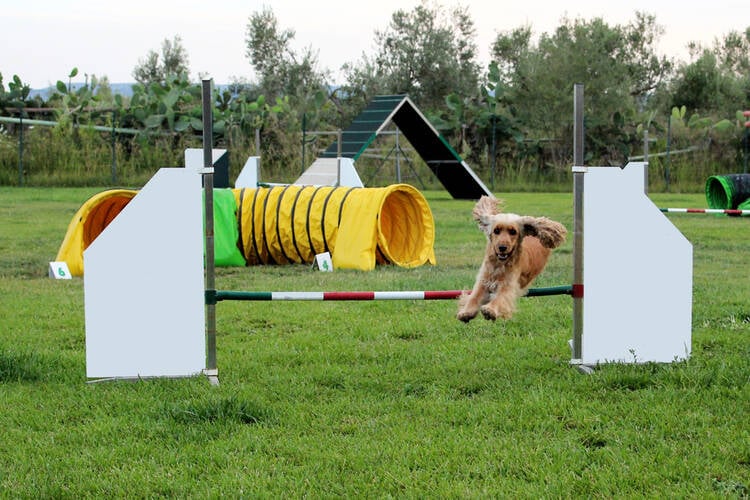
An indoor dog park provides a controlled place where dogs can play and exercise regardless of rain, excessive heat or cold weather.
You can charge admission, sell memberships and add daycare, training, retail products or grooming. This is a location-sensitive business.
You need enough dog owners nearby to support recurring memberships, and you must design the facility carefully around ventilation, noise, cleaning and safe separation of dogs.
33. Dog Swimming Pool or Water Park Business

A dog swimming facility can provide recreation, exercise and supervised play.
You can charge per session, offer memberships or rent the facility for private dog groups and events.
A recreational water park should be distinguished from veterinary rehabilitation or hydrotherapy, which may require professional oversight.
Your operating plan must cover water quality, supervision, cleaning, dog compatibility and safety.
34. Dog Agility and Sports Center
Dog owners increasingly look for activities they can enjoy with their animals.
You can provide agility obstacles, training sessions, structured classes and practice time.
Income can come from memberships, lessons, facility rental, competitions and events.
You may also combine agility with an indoor dog park or training center to make better use of the space.
35. Pet Photography Business
Pet photography still works, but I would position it differently from ordinary portrait photography.
Your customers may want studio portraits, outdoor sessions, birthday shoots, puppy photographs or memorial photographs of older pets.
You can also work commercially with pet brands, groomers, breeders and pet product companies.
You need photography ability, of course, but being able to keep animals calm and get their attention is equally important.
36. Cat Café Business
A cat café combines an ordinary hospitality concept with a supervised cat experience.
Some operators work with rescue organizations so visitors can meet cats that are available for adoption. The challenge is regulation.
Food-service rules and animal rules can require physical separation between preparation areas and animals.
Confirm your local health and zoning requirements before leasing a property.
37. Pet Birthday and Event Business
There is a niche market for owners who celebrate pet birthdays, adoption anniversaries and other occasions.
You can organize the venue, decorations, pet-safe cakes, photography, gift bags and entertainment.
Rather than depending only on private parties, you could also organize larger dog-owner meetups or sponsored pet events.
This business works particularly well when partnered with bakeries, photographers, dog parks and pet boutiques.
38. Dog Hiking and Adventure Service
Dog walking usually involves a neighborhood walk. An adventure service offers longer supervised outdoor activities.
You can take approved dogs on hikes, trail walks or carefully planned group excursions.
Customers are likely to be busy owners with energetic dogs that need more exercise than a short walk provides.
Transportation, dog compatibility, weather conditions and emergency procedures have to be carefully managed.
39. Pet-Friendly Travel Planning Business
Traveling with an animal introduces questions about transportation, hotels, documentation and destination rules.
A specialist travel adviser can help owners plan pet-friendly trips and identify suitable accommodation and transportation options.
You can also work with customers relocating rather than merely taking holidays.
International travel is more complex, so avoid representing yourself as an authority on veterinary or government documentation unless you actually possess that expertise.
40. Pet Content Creation Business
Pet food manufacturers, groomers, veterinary practices, pet stores and product brands all need photographs, short videos, social-media content and advertising material.
If you understand both pets and digital content, you can operate a specialist content studio or agency serving pet brands, groomers, veterinary practices and pet stores. You do not need to own a television station or buy radio airtime.
Pet Technology and Business-to-Business Service Ideas
41. Pet Care Booking Software
Dog walkers, groomers, boarders and pet sitters have recurring scheduling problems.
They need appointments, customer records, payments, staff schedules, vaccination information and automated reminders.
A software entrepreneur can build tools specifically for one of these niches and charge businesses monthly subscriptions.
I would choose one narrow category first rather than trying to create software for every kind of pet business from day one.
42. Pet Care Marketplace App
You can build a platform connecting owners with walkers, sitters, groomers, trainers or other pet-service providers.
The obvious challenge is that marketplaces need both customers and service providers at the same time.
Starting in one city and one service category can therefore be more realistic than attempting to launch nationally.
Your revenue might come from booking commissions, provider subscriptions or a combination of both.
43. Digital Marketing Agency for Pet Businesses
Many small pet businesses are excellent at handling animals but not particularly good at marketing themselves.
You can specialize in websites, local search visibility, advertising, email marketing, content and customer-review management for groomers, boarding facilities, trainers, pet stores and veterinary businesses.
A niche agency can become more knowledgeable about the industry’s customer-acquisition problems than a general marketing agency.
44. Pet Identification and Lost-Pet Recovery Products
Owners worry about pets becoming lost. You can sell engraved identification tags, QR-code tags, GPS trackers and other approved identification products.
The business becomes more interesting if customers pay a recurring subscription for tracking or digital profile services.
Do not confuse consumer identification products with regulated veterinary procedures such as implanting microchips unless you are authorized to provide them.
45. Dog House and Kennel Construction Business
You can build insulated dog houses, outdoor runs, secure enclosures, indoor boarding kennels and customized pet spaces.
Customers may include households, breeders, boarding businesses, trainers and shelters.
A contractor with carpentry or fabrication skills can also offer installation rather than simply selling prefabricated structures.
46. Aquarium Setup and Maintenance Business
Instead of simply selling tropical fish, consider the recurring service around the aquarium.
Homes, offices, restaurants, hotels and medical facilities may want attractive aquariums without wanting employees to clean and maintain them.
You can design and install tanks and then charge monthly for water changes, equipment servicing, cleaning and livestock care. The recurring maintenance agreement is the valuable part of the business.
47. Pet Laundry and Bedding Service
Boarding facilities, daycare centers, groomers and veterinary businesses generate large quantities of towels, blankets and pet bedding.
You can provide collection, washing, sanitizing and scheduled return. This is more of a business-to-business opportunity than a household laundry service.
Before buying equipment, identify how many facilities operate within a practical collection route and whether they would outsource this work.
48. Pet Facility Cleaning and Sanitation Business
Pet boarding facilities, daycare centers, kennels, grooming salons and certain animal-care facilities require frequent cleaning and odor control.
A specialist cleaning company can understand animal-safe products, waste handling and the cleaning requirements of pet facilities better than a general janitorial company. Recurring commercial contracts are the goal.
49. Pet Relocation Service
Moving a pet internationally or across long distances can involve far more than putting an animal into a vehicle.
Owners may need help coordinating airline requirements, suitable travel crates, veterinary appointments, government documents, airport handling and destination arrangements.
A pet-relocation business helps coordinate the process. Regulations differ substantially between countries, so accuracy is critical. Never guess about entry or health requirements.
50. Pet-Friendly Property Consulting Business
Lastly, there is an opportunity created by apartments, hotels, vacation rentals and residential developments wanting to attract pet owners.
You can advise property operators on practical pet amenities such as relief areas, washing stations, dog runs, waste stations, durable flooring and pet policies.
You could also coordinate installation and ongoing maintenance through contractors.