
If you came to me today and said, “I want to start a business, but I don’t want to invest my money in something that might become irrelevant in a few years.
I would tell you to look at where the world is already heading. You don’t need to predict the future perfectly. Nobody can.
What you can do is pay attention to problems that are becoming bigger, industries attracting serious investment, technologies businesses are beginning to adopt, and changes in the way people live, work, travel, receive healthcare and consume energy.

Think about electric vehicles. You don’t necessarily have to manufacture the next Tesla to make money from electric cars.
Somebody has to install the charging stations. Somebody has to repair them. Fleet owners will need consultants.
Batteries will need to be recycled. Apartment buildings will need charging infrastructure.
The same thing is happening with artificial intelligence, robotics, renewable energy, biotechnology and even commercial space travel.
That is how I want you to approach the business ideas below. Don’t just ask, “Can I start this?” Ask:
“If this industry becomes much bigger between 2028 and 2034, what service can I provide to the people operating inside it?”
That question can lead you to some very interesting businesses.
Best Business Ideas for the Future
Artificial Intelligence and Automation Business Ideas
Let me start with the most obvious one. Artificial intelligence is going to affect almost every industry, but that does not mean your best opportunity is creating another ChatGPT.
For most entrepreneurs, the easier money may come from helping ordinary businesses actually use AI.

1. AI Automation Agency
If you understand how to connect AI tools with business software, this is one of the opportunities I would watch closely.
Thousands of small companies still manually answer emails, prepare quotations, qualify leads, schedule appointments and move information between different applications.
You can build AI-powered systems that automate those tasks and charge businesses for setting them up and maintaining them.
2. Industry-Specific AI Software
Instead of trying to build software for everybody, choose one industry. You might create AI software specifically for dentists, trucking companies, hotels, construction contractors, law firms, property managers or insurance brokers.
The narrower the problem you solve, the easier it can be to explain why a customer should pay you.
3. AI Agent Implementation Service
AI agents are being developed to complete multi-step tasks rather than simply answer questions.
Companies will need people who can install these agents, connect them to company databases and make sure they are performing the correct tasks.
That creates an opportunity similar to the early days of business software consulting.
4. AI Governance Consulting
Once companies allow employees and automated systems to use AI, questions quickly appear.
What information can employees upload? Who checks AI-generated decisions? How should customer information be protected?
Businesses will increasingly need consultants who help them establish sensible AI policies and procedures.
5. AI Testing and Auditing
Imagine a company launches an AI customer-service system that starts giving customers incorrect pricing. That can become expensive very quickly.
Independent testing companies can check AI systems for accuracy, security weaknesses, bias and unreliable behavior before they are widely deployed.
6. AI Data Preparation Business
Many businesses have decades of documents, spreadsheets, manuals and customer records scattered across different systems.
Before AI can make good use of this information, somebody needs to organize it.
A company that cleans, categorizes and prepares business data for AI systems could become surprisingly valuable.
7. Synthetic Data Company
Sometimes businesses need large amounts of data to train software but cannot use real customer information because of privacy concerns.
Synthetic data imitates real-world information without necessarily identifying real people. It is a more technical business, but potentially a very valuable one.
8. AI Cybersecurity Company
As criminals use AI to make cyberattacks more sophisticated, businesses will need better defensive tools.
You could specialize in protecting small and medium-sized businesses that cannot afford large internal cybersecurity departments.
9. Deepfake Detection Service
One problem I expect businesses and individuals to take much more seriously is fake video, audio and images.
If anyone can imitate the voice of a CEO, politician or family member, verification becomes valuable.
Businesses that help detect manipulated content and verify digital identities could have an interesting market.
10. AI-Assisted Virtual Assistant Agency

I would not start an old-fashioned virtual assistant business and pretend AI does not exist. Instead, you can build the business around it.
Give each assistant access to AI tools so one person can handle considerably more research, scheduling, documentation and administration than before.
You can then sell premium executive support rather than cheap hourly labor.
Cybersecurity and Digital Infrastructure Ideas
The more businesses depend on technology, the more valuable security and infrastructure become.
This is one of those industries where the underlying problem is unlikely to disappear.
11. Post-Quantum Cybersecurity Consulting
You may have heard about quantum computers. One concern is that sufficiently powerful quantum computers could eventually make some existing forms of encryption vulnerable.
Companies and governments are already beginning to prepare. If you have serious cybersecurity skills, helping organizations move toward quantum-resistant systems could become a valuable niche.
12. Small-Business Managed Cybersecurity
Most small companies cannot hire a full cybersecurity department. You can essentially become that department for them.
For a monthly fee, you could provide monitoring, backups, employee training, security updates and incident response.
I particularly like businesses with recurring monthly revenue, and this fits that model well.
13. Digital Identity Protection
People already worry about identity theft. Now add facial recognition, AI-generated voices, leaked passwords and enormous online databases.
You could build services that monitor impersonation, leaked personal information and suspicious account activity.
14. Cloud Migration Services
Businesses will continue changing software systems. The problem is that moving years of customer, accounting or operational data between platforms can be painful.
If you become very good at moving companies from one platform to another without disrupting their operations, there will be people willing to pay you.
15. Business Software Integration
A business may use ten or twenty different applications that barely communicate with one another. Your job is to make them work together.
It may not sound glamorous, but solving expensive frustrations is usually a better foundation for a business than chasing glamorous ideas.
16. Data Center Cooling Services
AI computing requires a lot of energy and creates enormous amounts of heat. That means cooling is becoming a major issue for data centers.
Companies developing cooling systems, monitoring equipment, heat-recovery solutions or maintenance services could benefit from continued AI infrastructure growth.
17. Edge Computing Solutions
Not every company wants to send every piece of information to a distant data center.
Factories, vehicles, cameras and machines increasingly process information locally.
If you have the technical knowledge, you can develop specialized edge-computing solutions for particular industries.
18. Digital Twin Consulting
A digital twin is essentially a digital version of a real machine, building or facility.
Companies can use it to experiment, identify problems and predict failures without interfering with the real asset.
Engineering and technology businesses could build digital twins for factories, buildings, utilities and logistics operations.
Robotics and Advanced Manufacturing

If robots become much more common, remember what I said earlier: you don’t necessarily need to manufacture the robot.
There will be an entire economy around installing, renting, repairing and operating them.
19. Robotics Integration Business
A warehouse owner may want robots but have no idea how to redesign the warehouse around them. That is where an integrator comes in.
You can help businesses select equipment, install it, connect the software and train employees.
20. Robot Repair and Maintenance
More robots means more machines that eventually break. I can easily imagine specialized robot maintenance companies becoming much more common by the early 2030s.
21. Robotics-as-a-Service
This is a business model I particularly like. Instead of asking a customer to spend $100,000 purchasing a robot, your company owns the robot and rents it to them.
You could charge monthly or according to usage. That model could work for cleaning, agriculture, warehousing, security and manufacturing.
22. Commercial Cleaning Robots

Large offices, shopping centers, airports, hospitals and warehouses have enormous floors that need cleaning every day.
Rather than manufacturing cleaning robots yourself, you could lease, operate and maintain fleets for commercial customers.
23. Predictive Maintenance Company
Machines usually give warning signs before they fail. Sensors can monitor temperature, sound, vibration and electricity consumption and identify those warning signs.
You can sell predictive maintenance as a service to factories, fleets, warehouses and commercial facilities.
24. Industrial 3D Printing

I would not recommend opening a generic 3D-printing shop and waiting for customers to walk in. Look for a specialty.
Replacement machine parts, dental products, architectural prototypes, customized equipment and low-volume industrial components are much more interesting markets.
25. Semiconductor Support Services
You probably cannot afford to build a semiconductor factory. But semiconductor manufacturers need testing, equipment maintenance, thermal management, logistics, specialty cleaning and engineering services. When a huge industry expands, suppliers often grow with it.
Energy and Electric Vehicle Business Ideas

Energy is another area I would pay close attention to. More solar panels, batteries, electric vehicles and data centers mean more opportunities for installation and maintenance businesses.
26. Solar Installation Business

Solar itself is no longer futuristic. What keeps the opportunity attractive is the enormous amount of installation work still ahead in many markets.
Homes, warehouses, farms, schools and commercial buildings can all become customers.
27. Solar Maintenance and Cleaning
Once millions of solar panels have been installed, somebody has to maintain them.
You can specialize in inspections, cleaning, inverter replacement, performance monitoring and repairs.
28. Battery Energy Storage Business
Solar power is most useful when excess electricity can be stored.
Homes and businesses are increasingly combining batteries with renewable energy. You can sell, install and maintain these systems.
29. Battery Recycling
Millions of electric-vehicle and energy-storage batteries will eventually reach the end of their useful lives.
Those batteries contain valuable materials. Collection, testing, repurposing and recycling could become a very large business.
30. Microgrid Installation
A hospital, factory or university may not want its entire operation to depend on the public electricity grid.
Microgrids combine local power generation, batteries and control technology.
Designing and maintaining these systems could become an attractive engineering business.
31. EV Charging Stations

If electric vehicles keep gaining market share, they need convenient places to charge.
Hotels, apartment buildings, workplaces, shopping centers and highway locations could all support charging businesses.
32. EV Charger Installation and Repair
You don’t necessarily have to own charging stations. You can make money installing them for other people.
Then add maintenance contracts so the customer continues paying you after installation.
33. Mobile EV Charging
An electric vehicle can still run out of power. Mobile charging businesses could assist stranded drivers, commercial fleets and locations that temporarily need extra charging capacity.
34. Commercial EV Fleet Consulting
Imagine a delivery company replacing 200 gasoline vans with electric vehicles.
The owner now has to think about charging schedules, electrical capacity, routes and battery performance. You can help solve those problems.
35. Heat Pump Installation
More buildings are replacing conventional heating systems with efficient electric heat pumps.
That means opportunities for installers, repair technicians and HVAC companies that specialize early.
36. Smart Building Energy Management
Commercial buildings waste enormous amounts of electricity. Sensors and software can automatically manage lighting, cooling, heating and equipment. You can retrofit existing buildings and help owners lower their bills.
37. E-Waste Recycling
Old computers, phones, batteries and electronics contain reusable components and valuable metals.
A properly operated collection, refurbishment and recycling company can benefit from the growing amount of electronic waste.
Climate, Water and Sustainability Businesses

If you are trying to choose a business that could still matter in 2034, look for problems we know are unlikely to disappear.
Water shortages, extreme heat, flooding and rising energy costs certainly qualify.
38. Water Leak Detection
Businesses, farms and cities lose enormous amounts of water through leaks.
Sensors and monitoring systems can find problems much earlier. You can sell leak detection as an installation or monitoring service.
39. Water Recycling Systems
Factories, hotels, apartment buildings and farms can reuse certain types of water instead of constantly drawing fresh supplies.
Companies that install greywater and industrial water-recycling systems could find growing demand.
40. Precision Irrigation
Farmers don’t want to waste water or electricity. Smart irrigation systems use sensors and weather information to determine when crops genuinely need watering. Installation and support can become a business of its own.
41. Climate Resilience Consulting
A warehouse located in a flood-prone area faces a different problem from a hotel dealing with extreme heat.
You could help businesses understand their climate risks and make their properties more resilient.
42. Carbon Accounting Services
Large businesses increasingly want to know how much carbon is associated with their operations and supply chains.
Smaller suppliers may eventually be asked for the same information. You can help them calculate and organize it.
43. Sustainable Construction Materials
Buildings require enormous quantities of concrete, steel, insulation and other materials.
Products that reduce waste, improve efficiency or lower environmental impact could have a strong market as construction standards change.
Future Transportation and Drone Businesses

44. Commercial Drone Inspection
You don’t need to wait for drones to start delivering everyone’s groceries. They already have a very practical use: inspection.
Roofing companies, utilities, solar farms, construction firms, farmers and insurers can use drones to inspect property quickly.
45. Drone Repair Business
Commercial drones are expensive equipment. As their usage increases, repairing motors, cameras, sensors and other components can become a specialized technical business.
46. Drone Fleet Management
Companies operating dozens or hundreds of drones will need help managing batteries, software, maintenance, flight records and compliance.
That opens another business opportunity around the technology.
47. Drone Delivery Service
Some of the best early markets may not be ordinary household parcels. Medical supplies, industrial parts, remote communities and urgent deliveries could make more financial sense.
48. Agricultural Drone Services
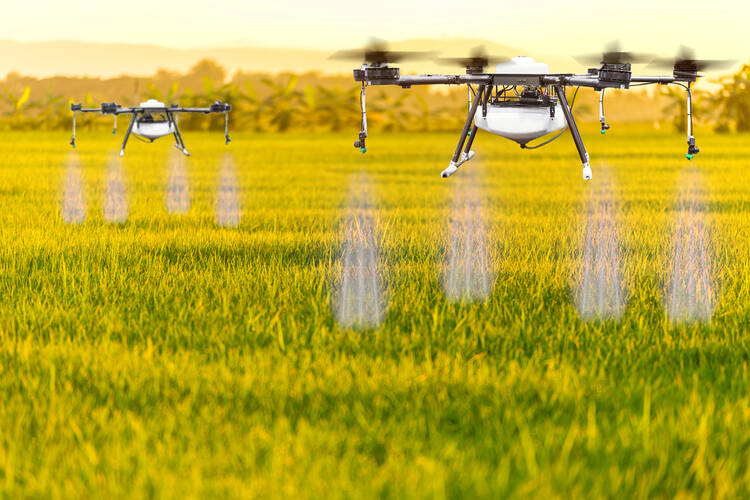
Farmers can hire drone operators to inspect crops, monitor irrigation and identify areas showing signs of disease.
You can provide the service without requiring the farmer to purchase and learn to operate the equipment.
49. Autonomous Vehicle Fleet Support
Even driverless vehicles will need cleaning, charging, maintenance, tire replacement, sensor calibration and repairs.
An autonomous taxi company might eventually operate thousands of vehicles. Think about all the supporting businesses that fleet will require.
50. Delivery Robot Operations
Small autonomous delivery robots may work well on university campuses, residential communities, resorts and industrial facilities.
Instead of building them, you could operate fleets for property owners and retailers.
Healthcare and Longevity Business Ideas

If you want an industry driven by something stronger than a technological fad, look at demographics.
People are getting older. That creates long-term demand for businesses helping people live healthier and remain independent.
51. Home Care for Older Adults

Many older people would prefer to remain in their own homes. A home-care company can provide companionship, assistance with everyday activities, transportation and other permitted services.
52. Aging-in-Place Home Modification
You can specialize in modifying homes so older adults can live there safely. That might include handrails, accessible bathrooms, improved lighting, ramps and smart monitoring systems.
53. Senior Transportation Services

Not every older adult wants or is able to drive. Reliable transportation for medical appointments, shopping and social activities can become an excellent local business.
54. Remote Patient Monitoring
Connected devices allow healthcare providers to monitor some patients without keeping them inside a hospital.
Companies can provide the technology, installation and patient-support services around those systems.
55. Personalized Nutrition
Instead of giving everyone the same diet, nutrition businesses can increasingly combine professional advice with information from wearables and laboratory tests.
56. Genomics Interpretation

Genetic testing can produce information ordinary consumers may struggle to understand.
Qualified healthcare and genetics professionals can build services around responsible interpretation and counseling.
57. Cell and Gene Therapy Support Services
You do not need to invent a new medical therapy to benefit from biotechnology.
Advanced treatments need specialized transportation, laboratory testing, manufacturing, storage and patient coordination. Those supporting services can become businesses.
58. Biomanufacturing
Biological processes are increasingly being used to manufacture medicines, ingredients and specialty materials.
This is a higher-capital opportunity, but contract manufacturing and laboratory services surrounding the sector may grow significantly.
59. Regenerative Medicine Support
Regenerative medicine and tissue engineering remain highly technical and heavily regulated.
However, legitimate opportunities may exist in laboratory equipment, materials, testing and clinical support.
60. Medical Robot Maintenance

Hospitals are purchasing more sophisticated robotic equipment. Somebody must install, calibrate and maintain those machines.
Technicians who specialize in medical robotics could become increasingly valuable.
61. Laboratory Automation
Laboratories perform large numbers of repetitive tasks. Robotic systems can automate sample preparation, liquid handling and testing.
Companies that install and maintain laboratory automation equipment can serve hospitals, universities and biotech firms.
62. Digital Mental Health Services

Technology can make professional mental-health services easier to access. Licensed providers can combine telehealth with digital tools while still keeping trained professionals at the center of care.
63. Premium Pet Healthcare

People increasingly treat pets like members of the family. That means more spending on diagnostics, specialized treatment, rehabilitation, nutrition and insurance-related services.
Future Agriculture and Food Businesses
64. Specialized Vertical Farming

I would be careful about starting a huge vertical farm producing cheap vegetables. Electricity costs can make the economics difficult.
I would rather look at high-value crops, seedlings, herbs, pharmaceutical plants or markets where conventional produce is expensive to transport.
65. Farm Robotics
Farms face labor shortages and pressure to improve productivity. Robots can assist with weeding, harvesting, spraying and monitoring. You could sell, rent or repair these machines.
66. Precision Agriculture Analytics
Farmers increasingly generate information from drones, soil sensors, machinery and satellites.
A business can turn all that information into practical recommendations about fertilizer, irrigation and crop health.
67. Controlled-Environment Agriculture Equipment
You don’t necessarily have to grow crops yourself. You can supply lighting, sensors, irrigation systems, climate controls and software to businesses that do.
68. Cultivated Meat Support Services
Rather than trying to become the next giant cultivated-meat producer, look at the supporting infrastructure.
The industry needs bioreactors, laboratory services, ingredients, testing, quality control and specialized equipment.
69. Precision Fermentation Business
Microorganisms can be used to produce proteins and other valuable ingredients.
The opportunities may eventually extend beyond food into cosmetics, pharmaceuticals and specialty chemicals.
Education and Future-of-Work Businesses

70. AI Tutoring
I don’t expect teachers to disappear. What I do expect is more students using AI to receive one-on-one practice and explanations.
A strong business could combine AI tutoring technology with qualified human instructors.
71. Technical Skills Academy
People will need practical training in cybersecurity, robotics, solar installation, AI, data centers and electric vehicles.
Short employment-focused courses may be attractive to workers who cannot spend four years earning another degree.
72. Virtual Reality Workforce Training

Virtual reality becomes much more interesting to me when it saves a company money.
Training an employee to operate dangerous or expensive machinery in a simulation can reduce risk.
That makes industrial training more promising than simply opening another VR gaming center.
Space Economy Business Ideas
I would put these opportunities in a different category from home care or cybersecurity.
They are much more speculative. But if you have substantial technical expertise, capital and patience, they are worth watching.
73. Small Satellite Services

Satellites are becoming smaller and increasingly useful. Companies need components, communications systems, software, testing and ground support.
You don’t necessarily need to own a rocket to participate in the space industry.
74. Satellite Data Analytics
This is the space-related business I would consider more approachable. Satellites collect information useful for agriculture, insurance, mapping, energy, shipping and environmental monitoring.
Your business can buy or access that information, analyze it and sell useful insights to customers on Earth.
75. Commercial Space Research Support
Private companies are becoming more involved in low-Earth orbit. If that continues, businesses will be needed to support experiments, train personnel, develop specialized components, handle data and provide engineering services. It is high risk, but the opportunity is no longer pure science fiction.